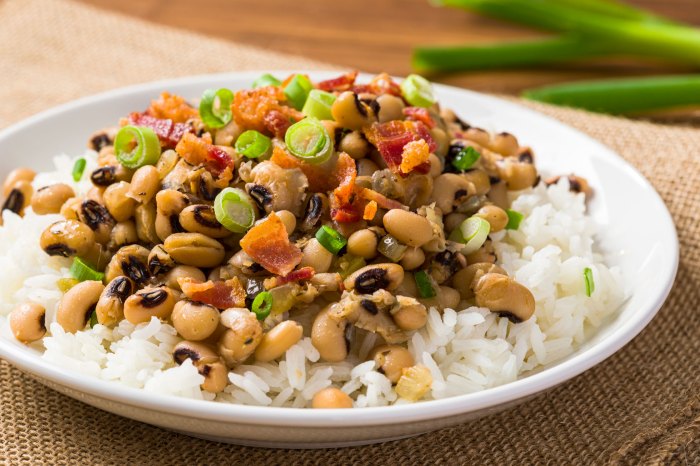
Black Eyed Peas and Rice: A Culinary Journey
Black eyed peas and rice, a dish steeped in history and cultural significance, is a culinary treasure that transcends borders and generations. From its humble origins in the African diaspora to its cherished place on tables around the world, this simple yet flavorful combination has captured hearts and palates for centuries.
This blog post delves into the fascinating world of black eyed peas and rice, exploring its culinary history, nutritional value, cooking techniques, cultural traditions, and modern interpretations. Join me as we uncover the secrets behind this beloved dish and discover why it continues to be a culinary staple for many.
Culinary History
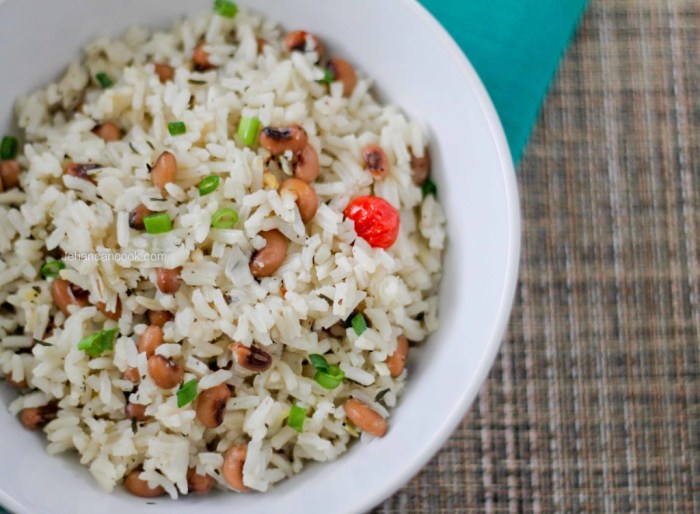
Black-eyed peas and rice, a simple yet satisfying dish, boasts a rich history intertwined with diverse cultures and culinary traditions. Its origins can be traced back to the African continent, where black-eyed peas were a staple food for centuries. The dish’s journey across the globe is a testament to its adaptability and enduring appeal.
Origins and Historical Significance
Black-eyed peas, also known as cowpeas, originated in Africa and were cultivated for centuries. These legumes were an essential part of the diet for many African communities, providing a valuable source of protein and other nutrients. Rice, a staple grain in many parts of Asia, was introduced to Africa during the transatlantic slave trade.
The combination of black-eyed peas and rice emerged as a practical and nourishing dish for enslaved people in the Americas.
Cultural Significance in Different Regions
Black-eyed peas and rice have become a cherished dish in various regions, each with its unique traditions and variations.
Southern United States
In the Southern United States, black-eyed peas and rice, often referred to as “Hoppin’ John,” hold a special place in culinary traditions. It is believed to bring good luck and prosperity in the New Year, particularly when served with collard greens and cornbread.
Brazil
In Brazil, black-eyed peas and rice are known as “feijão de corda” and are a staple food in many households. They are often served with various side dishes, such as farofa (toasted cassava flour) and greens.
Caribbean Islands
The Caribbean Islands also have their own unique versions of black-eyed peas and rice, with variations in seasonings and ingredients. In Jamaica, it is known as “rice and peas” and is often seasoned with coconut milk, thyme, and scotch bonnet peppers.
Historical Recipes and Variations
Black-eyed peas and rice have been adapted and reinterpreted over centuries, resulting in a diverse range of recipes and variations.
Traditional Hoppin’ John
A classic Southern recipe, Hoppin’ John typically includes black-eyed peas, rice, diced onion, bacon or ham hocks, and seasonings. The dish is cooked until the peas are tender and the rice is fluffy.
Black eyed peas and rice is a comforting dish that always reminds me of home. It’s simple, hearty, and perfect for a chilly evening. Speaking of hearty, I recently tried making some bbq country style ribs that were absolutely incredible! The smoky flavor and tender meat were a real treat.
Now, I’m thinking about pairing those ribs with a side of black eyed peas and rice for a truly satisfying meal.
Brazilian Feijão de Corda
In Brazil, Feijão de Corda is often prepared with black-eyed peas, rice, onions, garlic, and seasonings like cumin and paprika. It is typically cooked in a large pot with water until the peas are tender and the rice is cooked through.
Jamaican Rice and Peas
Jamaican Rice and Peas is a flavorful dish that includes black-eyed peas, rice, coconut milk, thyme, scotch bonnet peppers, and often diced vegetables like carrots and onions. The dish is cooked until the rice is fluffy and the peas are tender.
Nutritional Value
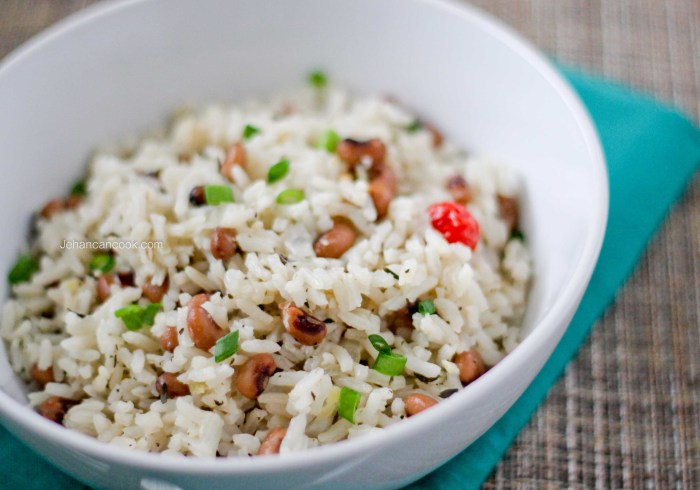
Black-eyed peas and rice, a staple dish in many cultures, is a nutritional powerhouse, offering a balanced blend of carbohydrates, protein, and fiber. This combination makes it a satisfying and healthy meal option, providing essential nutrients for overall well-being.
Nutritional Composition of Black-eyed Peas and Rice, Black eyed peas and rice
The nutritional value of black-eyed peas and rice stems from the unique combination of these ingredients.
- Black-eyed peasare an excellent source of protein, dietary fiber, and essential vitamins and minerals. They are particularly rich in iron, folate, and potassium.
- Rice, especially brown rice, is a good source of carbohydrates, providing energy and fiber. It also contains essential vitamins and minerals, including thiamin, niacin, and magnesium.
Health Benefits of Black-eyed Peas and Rice
The combined nutritional profile of black-eyed peas and rice offers a wide range of health benefits.
- Improved Digestion: The high fiber content in black-eyed peas and brown rice promotes digestive health by adding bulk to stool and facilitating regular bowel movements.
- Blood Sugar Control: The complex carbohydrates in brown rice release energy gradually, helping to stabilize blood sugar levels and prevent sudden spikes.
- Heart Health: The potassium in black-eyed peas helps regulate blood pressure, while the fiber in both ingredients can lower cholesterol levels, contributing to heart health.
- Weight Management: The combination of protein and fiber in black-eyed peas and rice promotes satiety, keeping you feeling full for longer and reducing overall calorie intake.
- Increased Energy Levels: The carbohydrates in rice provide a sustained source of energy, while the iron in black-eyed peas supports red blood cell production, aiding in oxygen transport and energy production.
Nutritional Value Comparison
Black-eyed peas and rice provide a balanced nutritional profile compared to other common food sources.
Black-eyed peas and rice are a hearty and comforting dish, especially when served with a dollop of spicy hot sauce. It’s a classic Southern comfort food, and I always find myself craving it when the weather turns chilly. For a different kind of comfort, try a warm and cheesy corned beef and swiss dip , perfect for a cozy evening in.
But when it comes to a soul-satisfying meal, black-eyed peas and rice always hit the spot.
- Protein: Black-eyed peas are a good source of plant-based protein, comparable to other legumes like lentils and chickpeas.
- Fiber: The fiber content in black-eyed peas and brown rice is higher than many other grains, such as white rice or pasta.
- Iron: Black-eyed peas are an excellent source of iron, surpassing many other vegetables and grains.
- Folate: Black-eyed peas are rich in folate, a crucial nutrient for cell growth and development.
Cooking Techniques and Variations
Black-eyed peas and rice, a staple dish in many cultures, can be prepared using various cooking methods, each offering unique textures and flavors. From pressure cooking to slow cooking and stovetop methods, there are numerous ways to achieve a delicious and satisfying meal.
This section explores different cooking techniques and variations, highlighting regional nuances and providing a step-by-step guide for a classic recipe.
Cooking Methods
Black-eyed peas and rice can be cooked using different methods, each with its advantages and disadvantages.
- Pressure Cooking: This method is the fastest and most efficient way to cook black-eyed peas and rice. The pressure cooker traps steam, creating a high-pressure environment that significantly reduces cooking time. This method is ideal for busy weeknights or when you need a quick meal.
- Slow Cooking: Slow cookers are perfect for hands-off cooking, allowing you to prepare black-eyed peas and rice while attending to other tasks. The slow cooking process results in tender peas and flavorful rice, making it a popular choice for weekend meals or gatherings.
- Stovetop Cooking: This traditional method involves simmering black-eyed peas and rice in a pot on the stovetop. It requires a bit more attention and time but allows for greater control over the cooking process. Stovetop cooking is ideal for those who prefer a more hands-on approach and want to adjust the seasonings and ingredients to their liking.
Regional Variations
Black-eyed peas and rice are a versatile dish with numerous regional variations. These variations often reflect the local culinary traditions and available ingredients.
| Region | Ingredients | Spices | Cooking Style |
|---|---|---|---|
| Southern United States | Black-eyed peas, rice, ham hock, onion, celery, bell pepper | Salt, black pepper, cayenne pepper | Simmered on the stovetop until peas are tender |
| Caribbean | Black-eyed peas, rice, coconut milk, onions, garlic, ginger | Curry powder, thyme, bay leaves | Cooked in a pot with coconut milk and spices |
| West Africa | Black-eyed peas, rice, smoked fish, palm oil, onions, tomatoes | Salt, pepper, chili flakes, smoked paprika | Simmered in a pot with smoked fish and spices |
Classic Black-Eyed Peas and Rice Recipe
This step-by-step guide provides a classic recipe for black-eyed peas and rice, a flavorful and satisfying dish that can be enjoyed as a main course or side dish.
- Rinse and Soak the Peas: Rinse the black-eyed peas thoroughly under cold water. Soak them in fresh water for at least 4 hours or overnight. This helps soften the peas and reduces cooking time.
- Prepare the Ingredients: While the peas are soaking, chop the onion, celery, and bell pepper. You can also add other vegetables like carrots or tomatoes to your liking.
- Sauté the Vegetables: Heat a large pot or Dutch oven over medium heat. Add a tablespoon of olive oil and sauté the chopped onion, celery, and bell pepper until softened, about 5 minutes.
- Add the Peas and Broth: Drain the soaked black-eyed peas and add them to the pot with the sautéed vegetables. Pour in vegetable broth or water, ensuring the peas are fully submerged.
- Simmer the Peas: Bring the pot to a boil, then reduce heat to low and simmer for 45 minutes to an hour, or until the peas are tender. Stir occasionally to prevent sticking.
- Cook the Rice: While the peas are simmering, cook the rice according to package instructions.
- Season and Serve: Once the peas are tender, season with salt, black pepper, and cayenne pepper to taste. Add the cooked rice to the pot and stir gently to combine. Serve hot, garnished with fresh parsley or cilantro.
Cultural Significance and Traditions
Black-eyed peas and rice, a humble yet hearty dish, holds a special place in the hearts and kitchens of many cultures around the world. This seemingly simple combination transcends its culinary purpose, weaving itself into the fabric of traditions, celebrations, and beliefs, particularly in the Southern United States and parts of the Caribbean.
New Year’s Day Traditions
The association of black-eyed peas and rice with good luck and prosperity, especially on New Year’s Day, is a deeply rooted tradition. This belief, prevalent in the Southern United States, stems from the historical significance of the dish during the Civil War.
Black-eyed peas and rice is a hearty and comforting dish that’s perfect for a chilly evening. But sometimes, you need a little something extra to warm you up from the inside out. That’s where a good homemade Irish whiskey cream comes in.
If you’re looking for a recipe that’s easy to make and sure to impress, check out this recipe for homemade Irish whiskey cream – it’s a perfect complement to the earthy flavors of black-eyed peas and rice.
When Union soldiers marched through the South, they confiscated most food supplies, leaving behind only black-eyed peas and rice. This act of unintentional generosity led to the dish becoming a symbol of resilience and survival, paving the way for the New Year’s Day tradition.
- The symbolism of black-eyed peas:The black-eyed peas, with their dark, round shape, represent coins, symbolizing wealth and prosperity in the coming year.
- The symbolism of rice:The rice, a staple food, symbolizes abundance and a plentiful year ahead.
- The importance of serving the dish:It is considered good luck to serve black-eyed peas and rice on New Year’s Day, and many families make it a tradition to enjoy this dish as their first meal of the year.
Flavor Profiles and Pairings
The flavor profile of black-eyed peas and rice is a delightful blend of earthy, nutty, and savory notes. The black-eyed peas contribute a creamy, slightly sweet, and earthy flavor, while the rice provides a neutral canvas that complements the other ingredients.
This combination is further enhanced by the addition of complementary spices and ingredients that bring out the inherent flavors and create a harmonious taste experience.
Complementary Ingredients and Spices
The versatility of black-eyed peas and rice allows for a wide range of flavor combinations. Here are some key ingredients and spices that enhance the dish:* Smoky Flavors:Smoked paprika, chipotle powder, and smoked ham hock add depth and complexity to the dish, creating a warm and inviting aroma.
Citrusy Notes
Lemon juice, lime juice, and orange zest bring a bright and refreshing element, balancing the richness of the dish.
Herbs and Aromatics
Fresh herbs like parsley, cilantro, and thyme add a vibrant and aromatic touch, while garlic and onions provide a savory base.
Spicy Kick
Cayenne pepper, hot sauce, and chili flakes add a touch of heat, making the dish more exciting and flavorful.
Sweetness
Coconut milk, brown sugar, and maple syrup add a touch of sweetness, balancing the savory notes.
Flavor Combinations and Pairings
The following table showcases different flavor combinations and suggested pairings with black-eyed peas and rice:
| Flavor Profile | Ingredients and Spices | Suggested Pairings |
|---|---|---|
| Spicy and Savory | Smoked paprika, cayenne pepper, garlic, onion, cilantro | Fried plantains, avocado salsa, grilled chicken |
| Citrusy and Fresh | Lime juice, orange zest, parsley, cilantro, jalapeno | Grilled fish, mango salsa, corn salad |
| Earthy and Nutty | Smoked ham hock, thyme, garlic, onion, black pepper | Collard greens, sweet potato casserole, cornbread |
| Sweet and Savory | Coconut milk, brown sugar, ginger, garlic, onion | Pineapple chunks, mango chutney, roasted vegetables |
| West African Inspired | Palm oil, smoked fish, tomatoes, onions, garlic, habanero peppers | Fried plantains, grilled chicken, jollof rice |
Modern Interpretations and Innovations: Black Eyed Peas And Rice
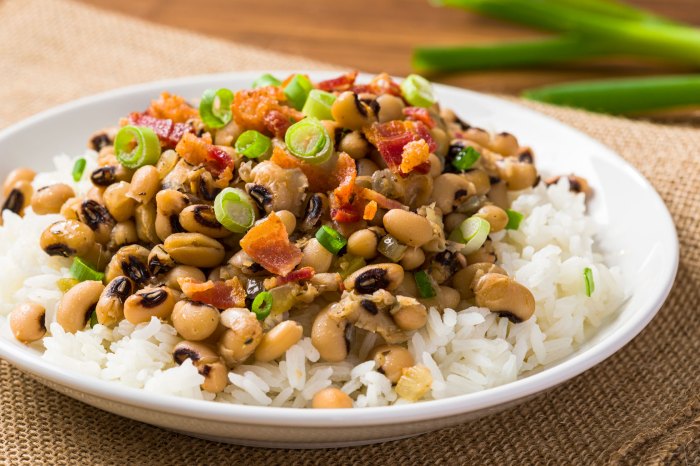
Black-eyed peas and rice, a staple in many cultures, have seen a resurgence in popularity, thanks to modern interpretations that elevate the dish to new heights of culinary sophistication. Chefs and home cooks alike are experimenting with diverse ingredients, innovative techniques, and bold flavor profiles, creating a vibrant tapestry of contemporary variations.
Modern Interpretations and Innovations
The traditional black-eyed peas and rice dish has been reimagined in countless ways, showcasing the versatility of these humble ingredients. Modern interpretations often incorporate fresh, seasonal ingredients, bold spices, and innovative cooking techniques, resulting in dishes that are both familiar and exciting.
Global Influences
Modern interpretations of black-eyed peas and rice often draw inspiration from global cuisines, infusing the dish with new flavors and textures. For example, a Moroccan-inspired version might incorporate preserved lemons, cumin, and harissa paste, adding a spicy and tangy dimension to the dish.
A Caribbean-inspired variation might feature coconut milk, jerk seasoning, and fresh cilantro, bringing a vibrant and aromatic twist.
Innovative Techniques
Contemporary chefs are employing innovative cooking techniques to elevate the traditional black-eyed peas and rice dish. For instance, slow-cooking the peas in a flavorful broth with aromatic vegetables results in a tender and deeply satisfying dish. Using a pressure cooker can significantly reduce cooking time, while still delivering a flavorful and creamy result.
New Ingredients and Flavor Profiles
Modern interpretations of black-eyed peas and rice often incorporate new ingredients and flavor profiles, pushing the boundaries of traditional cuisine. For example, adding roasted sweet potatoes or butternut squash adds a touch of sweetness and depth to the dish. Using smoked paprika or chipotle powder introduces a smoky and savory element.
Visual Appeal
Modern interpretations of black-eyed peas and rice often prioritize visual appeal, creating dishes that are as pleasing to the eye as they are to the palate. For instance, a colorful salad featuring black-eyed peas, rice, roasted vegetables, and a vibrant vinaigrette is both delicious and visually appealing.
Examples of Modern Interpretations
Here are a few examples of modern interpretations of black-eyed peas and rice: