
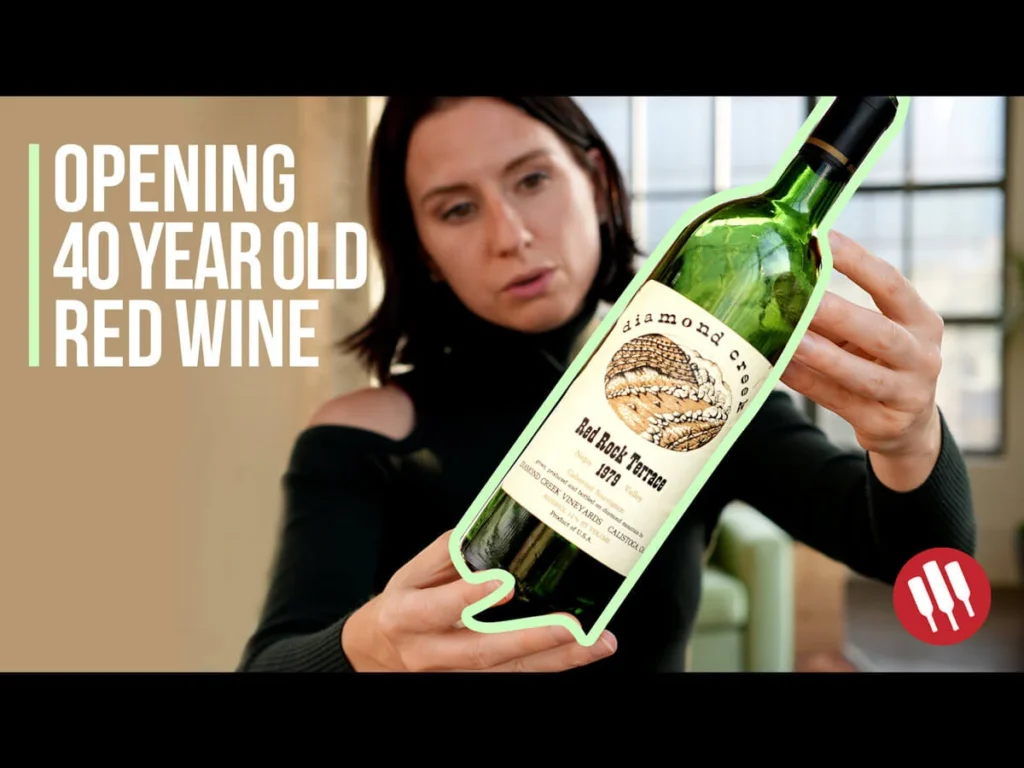
The pursuit of aged vintage wine remains one of the most exclusive and infrequent experiences in the culinary world, typically reserved for monumental life celebrations, high-end auctions, and specialized oenological studies. Recently, a gathering of wine professionals, collectors, and industry authorities convened to examine, uncork, and taste a rare bottle of 1979 Diamond Creek Red Rock Terrace Napa Valley Cabernet Sauvignon. This 40-year-old bottle offered a rare window into the aging potential of California red wines, challenging preconceived notions regarding vintage longevity, storage chemistry, and the physical degradation of cork closures over extended periods.
For decades, European wine critics have scrutinized New World wine regions, particularly California’s Napa Valley, for producing fruit-forward, high-alcohol wines meant for immediate consumption rather than long-term cellaring. The opening of this 1979 vintage served not merely as a tasting exercise, but as a formal test of structural endurance. Led in part by Master Sommelier Jackson Rohrbaugh, the assembled panel documented the mechanical, chemical, and sensory realities of opening a 40-year-old bottle of wine, yielding insights valuable to both serious collectors and casual enthusiasts navigating secondary wine markets.
The Mechanical Challenge: Navigating Fragile Corks and Specialized Openers
The primary physical obstacle encountered when dealing with vintage wine older than three decades is the extraction of the closure. Standard two-step corkscrews and traditional waiters’ friends, while effective for young or moderately aged bottles, frequently fail when applied to historical vintages. Over forty years, natural cork loses its elasticity, drying out on the exterior while remaining saturated and softened by continuous contact with the wine inside the bottle.
Consequently, traditional spiral worms tend to tear, crumble, or push fractured pieces of cork directly into the liquid, potentially ruining the contents. To mitigate this risk, wine professionals rely on specialized instruments. The most common tool recommended for fragile vintage bottles is the "Ah-So" wine opener, also known as a twin-prong puller. This device slides two parallel metal blades down the sides of the cork, gripping it securely without piercing or breaking the deteriorating material. Alternatively, advanced preservation and extraction systems such as the Coravin can be utilized in specific contexts, though traditional extraction remains necessary for a full-bottle tasting.
The physical state of the cork serves as the first indicator of storage quality. A cork that has maintained its structural integrity indicates a stable storage environment, whereas a severely degraded or pushed-out cork often signals exposure to extreme temperature fluctuations that compromise the seal.
Evaluating Ullage: Understanding Shoulder Levels and Evaporation
Beyond the physical condition of the closure, evaluating a vintage bottle prior to purchase or opening requires a careful visual inspection of the fluid level, known in the industry as ullage or shoulder level. Over decades, minute amounts of liquid and alcohol evaporate through the porous structure of natural cork, a process accelerated by dry storage environments or fluctuating ambient temperatures.
In professional wine appraisal, particularly within auction houses such as Winebid, Spectrum, and K&L Wine Merchants, fill levels are categorized systematically:
- Into Neck / Base of Neck: The ideal condition for an aged wine, indicating minimal evaporation and proper storage.
- High Shoulder: The wine level sits just below the neck where the bottle curves outward. This level is considered normal and acceptable for wines older than 25 to 30 years, presenting a very low risk of oxidation.
- Mid Shoulder: The fluid level has dropped significantly to the middle of the bottle’s shoulder slope. Wines at this level carry a moderate risk of premature oxidation, often resulting in cooked or faded flavor profiles.
- Low Shoulder and Below: The wine level is well below the shoulder. Bottles at this level are generally considered high-risk, frequently compromised by excessive air exposure that turns the liquid into vinegar or strips away its aromatic complexity.
Understanding shoulder levels is critical for collectors participating in secondary market auctions, where provenance and storage history dictate financial value. A bottle with poor ullage, regardless of its prestigious label, will often underperform during a tasting.
Chemical Longevity: Why Some Cabernets Defy the Decades
The prevailing scientific consensus in viticulture suggests that the vast majority of commercial wines are produced for consumption within three to five years of release. Premium structural components—specifically high concentrations of tannin, balanced acidity, and sufficient alcohol levels—are required for a dry red wine to endure for decades.
In the case of the 1979 Diamond Creek Red Rock Terrace Cabernet Sauvignon, the structural components aligned precisely to permit extended aging. Diamond Creek Vineyards, founded by Al and Hillis Brounstein in 1968, was among the first estates in Napa Valley to exclusively produce single-vineyard Cabernet Sauvignon, modeling their approach closely after traditional Bordeaux estates. The Red Rock Terrace block features distinct iron-rich, red clay soils that impart unique mineral characteristics and firm, structured tannins to the grapes.
When Master Sommelier Jackson Rohrbaugh performed the first pour of the 1979 vintage, his initial reaction was one of profound surprise. The wine exhibited a deep, evolved brick-red hue with an amber rim, yet maintained a vibrant core of secondary and tertiary aromas, including dried blackcurrant, leather, cedar, forest floor, and subtle tobacco notes. The acidity remained bright, providing a structural backbone that kept the mature fruit flavors from tasting flabby or tired. The impact of the tasting left the professional panel momentarily silent, challenging the assumption that New World Cabernets inevitably peak within a decade.
Historical Context and the Evolution of Napa Valley Vintages
To contextualize the 1979 vintage, it is necessary to examine the state of the California wine industry during the late 1970s. This era preceded the massive industrial consolidation and stylistic shifts that occurred in Napa Valley during the 1990s and 2000s. Winemaking practices in 1979 relied on traditional techniques, lower extraction rates, and lower average alcohol by volume (ABV) levels compared to contemporary standards.
Many wines produced in Napa Valley during this period hovered between 12.5% and 13.5% ABV, closer to traditional European parameters than the robust 14.5% to 15.5% alcohol levels seen in later decades. This lower alcohol profile, combined with traditional oak aging regimens utilizing neutral or lightly toasted barrels, allowed the inherent terroir and grape-derived characteristics to evolve slowly over time without being overwhelmed by excessive wood tannins or residual sugar.
The success of the 1979 Diamond Creek bottle provides empirical data for oenologists studying the aging trajectory of Cabernet Sauvignon from California’s cooler microclimates. While European critics have historically dismissed Napa Valley wines as overly simplistic or lacking the structural complexity required for long-term cellaring, benchmark tastings of mature California vintages consistently demonstrate that exceptional terroir and meticulous viticulture can yield wines capable of competing with premier cru Bordeaux on the global stage.
Industry Implications and Future Outlook
The formal tasting of this 40-year-old vintage raised broader questions among the attending winemakers, collectors, and critics regarding contemporary production methods. Specifically, the group debated whether wines produced in modern vintages—such as the highly praised 2018 Napa Valley harvest—possess the necessary chemical composition to achieve similar longevity four decades into the future.
The discussion highlighted a division within the modern wine community:
- Proponents of modern viticulture argue that advanced vineyard management, precise canopy control, and sophisticated sorting technology yield healthier fruit with superior phenolic ripeness, allowing modern wines to age gracefully for 30 to 50 years.
- Skeptics contend that shifting climate patterns, rising average growing-season temperatures, and consumer preferences for riper, higher-alcohol flavor profiles may result in wines that lack the structural acidity and balance required for extended cellaring.
Ultimately, the definitive answer to whether current vintages will match the endurance of the 1979 Diamond Creek Cabernet Sauvignon remains unknown. As climatic conditions continue to evolve and winemaking techniques adapt, the wine industry must rely on continuous empirical observation, rigorous chemical analysis, and historical reference points like this tasting to understand the limits of age-worthy wine. For collectors and connoisseurs, the event underscored the enduring value of proper cellar management, careful bottle sourcing, and the unpredictable, rewarding nature of exploring historical vintages.









0 Komentar
Sampaikan opini dan diskusi yang membangun dengan bahasa yang santun.
No Comments Yet
Be the first to share your thoughts on this story.