Beyond Practices: Why the Regen10 Outcomes Framework is Redefining Global Agriculture

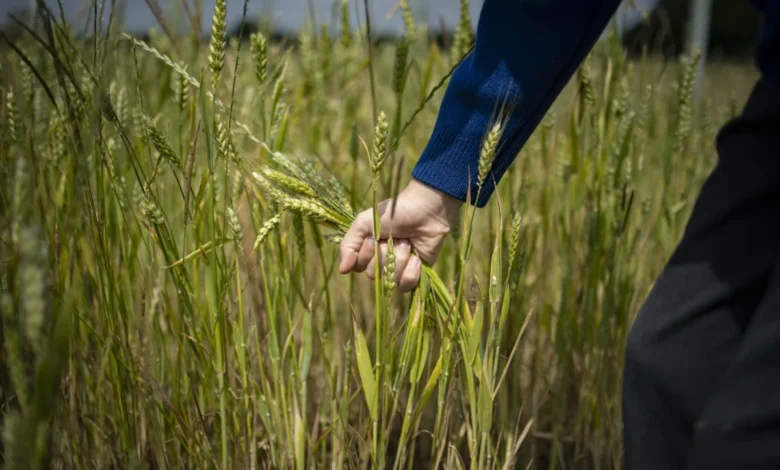
The global food system stands at a critical juncture, facing the dual pressures of climate change and biodiversity loss while tasked with feeding an ever-growing population. For years, the conversation surrounding sustainable farming has been dominated by the term "regenerative agriculture." However, as the movement has gained traction, it has suffered from a lack of universal definition, often resulting in a patchwork of disparate practices rather than a cohesive strategy for planetary health. To address this, the Regen10 Outcomes Framework has emerged as a groundbreaking, globally co-developed initiative designed to pivot the focus from specific farming practices to the measurable outcomes those practices produce.
The Evolution of Regenerative Agriculture
Regenerative agriculture is not a novel concept; it finds its roots in Indigenous land management practices and traditional ecological knowledge that have prioritized soil health for millennia. In the modern industrial era, however, farming became increasingly extractive, relying on synthetic inputs and heavy tillage to maximize short-term yields. By the early 2020s, a convergence of events—most notably the COVID-19 pandemic, which exposed the fragility of global supply chains—catalyzed a shift in the public and political consciousness.
During the pandemic, local farmers in regions such as Cornwall, UK, demonstrated the resilience of localized, small-scale, and regenerative systems. This period acted as a "stress test" for global food systems, prompting a realization among policymakers and the agricultural sector that the industry needed to move toward a model that views farming as stewardship of culture, ecology, and place.
The Problem with Practice-Based Standards
Historically, the transition to regenerative agriculture has been defined by checklists: no-till, cover cropping, crop rotation, and livestock integration. While these principles provide essential guidance, they are not universally applicable. A farm in the arid regions of sub-Saharan Africa faces different challenges than a dairy farm in the lush landscapes of Northern Europe.
When standards are limited to specific practices, they can become restrictive. For example, a farmer in a drought-prone area might find that maintaining permanent ground cover—a staple of regenerative checklists—actually depletes limited water resources. By focusing solely on the "how," the industry has often ignored the "what." The Regen10 Outcomes Framework argues that if the end goal—healthy soil, resilient biodiversity, and stable livelihoods—is achieved, the path taken to reach that goal should be left to the expertise of the farmer, who understands their land’s unique context.
The Regen10 Outcomes Framework: A New Paradigm
The Regen10 Outcomes Framework, which integrates the methodologies of the Global Farm Metric (GFM), seeks to standardize the language of success. It provides a shared vision for stakeholders across the agrifood spectrum, from NGOs and investors to government policymakers.
The development of this framework was a multi-year process involving extensive global consultations. It required input from farmers’ organizations, Indigenous groups, civil society, and corporate stakeholders. The primary objective is to create a "common language" similar to that of the United Nations Sustainable Development Goals (SDGs) or the Kunming-Montreal Global Biodiversity Framework (GBF). These frameworks do not mandate specific policy actions but set the bar for what success looks like, allowing for regional nuances while maintaining global accountability.
Data-Driven Stewardship and Measurement
One of the most significant hurdles in scaling regenerative agriculture is the lack of standardized data. Without a common metric, it is difficult to quantify the environmental and social impacts of farming shifts. The Regen10 framework aims to address this by focusing on four primary pillars:
- Ecological Health: Assessing soil organic matter, water quality, and the presence of indigenous flora and fauna.
- Climate Resilience: Measuring carbon sequestration and the capacity of the land to withstand extreme weather events.
- Economic Prosperity: Evaluating the long-term financial viability for farmers, ensuring they are not dependent on debt-cycles associated with high-input systems.
- Social Well-being: Monitoring the health of rural communities and the accessibility of nutrient-dense food.
By utilizing the GFM, which provides a comprehensive scorecard for farms, the Regen10 framework allows producers to track their progress over time. This creates a feedback loop where the farmer can see the tangible benefits of their management choices, which in turn provides evidence for investors and governments to justify subsidies or green financing.
Timeline of Development and Adoption
- 2020–2021: The COVID-19 pandemic highlights the fragility of global food supply chains, accelerating interest in localized and regenerative systems.
- 2022: Global stakeholders begin initial discussions on the need for a unified definition of regenerative outcomes to prevent "greenwashing" of the term.
- 2023: Drafting of the Regen10 Outcomes Framework begins, incorporating global feedback from diverse geographical and cultural contexts.
- 2024: The framework is officially disseminated as a global reference point, with pilot programs launched to test the integration of the framework into national agricultural policies.
Implications for the Global Food System
The transition to an outcome-based model has profound implications for the global economy. Firstly, it changes the nature of investment. Currently, ESG (Environmental, Social, and Governance) investment in agriculture is often plagued by ambiguity. A standardized framework allows capital to flow toward projects that can prove their impact, effectively de-risking the transition for farmers who are otherwise hesitant to move away from conventional, high-yield-oriented models.
Secondly, it empowers the farming community. By acknowledging that no farm is a "blank canvas," the framework respects the historical and cultural layers of land use. It shifts the role of the farmer from a mere producer of commodities to a manager of ecological assets.
However, the challenge remains in implementation. Critics argue that even with an outcomes-based framework, the transition requires substantial government support. Subsidies, which currently favor high-input industrial agriculture, must be realigned to reward outcomes such as biodiversity improvement and carbon sequestration. Without a shift in financial incentives, the adoption of these frameworks may remain confined to early adopters or those with access to premium markets.
Future Outlook
The Regen10 initiative represents a shift from "doing" to "achieving." As Olivia Boothman, Projects Manager at the Global Farm Metric, notes, regeneration is not a fixed state but a continuous process. There is no point at which a farm is "fully regenerative." Instead, the focus must remain on the trajectory of improvement.
The success of this framework will ultimately depend on its adoption by major international bodies and the private sector. If the global food industry can move toward a system where the value of a product is linked to its contribution to planetary health, the Regen10 Outcomes Framework will have succeeded in its primary goal: to make the regeneration of our ecological and human systems the new standard for the global agricultural economy. By anchoring conversations in agreed-upon outcomes, stakeholders can move beyond the polarization of farming philosophies and toward a unified strategy for a sustainable future.