The 250th Anniversary of Amedeo Avogadro Inspires the Launch of a Parametric Waffle Recipe Generator

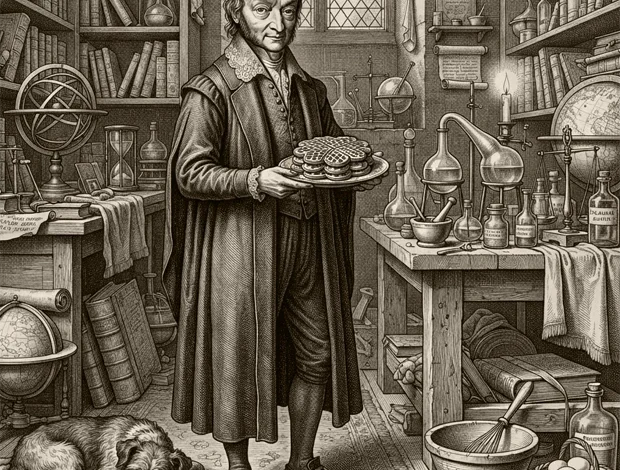
The intersection of molecular chemistry and culinary arts has yielded an unusual digital creation as food scientists and baking enthusiasts mark a major historical milestone. Exactly 250 years after the birth of Italian physicist and chemist Amedeo Avogadro, a Norwegian culinary platform has officially unveiled a parametric waffle recipe generator named in his honor. The tool, dubbed Avogadro, allows users to dynamically compute custom waffle batters on the fly by combining select ingredients with adjustable slider properties, bridging the gap between historical empirical baking and modern computational gastronomy.
Background Context and Historical Significance
Amedeo Avogadro was born in Turin, Italy, on August 9, 1776. He is best remembered for Avogadro’s Hypothesis—formulated in 1811—which posits that equal volumes of all gases, at the same temperature and pressure, contain the same number of molecules. This foundational concept led to the establishment of Avogadro’s number ($6.02214076 times 10^23$), a fundamental physical constant defining the number of constituent particles, usually atoms or molecules, that are contained in the amount of a given substance determined by a mole.
While Avogadro spent his career calculating the microscopic building blocks of matter, the newly launched digital generator applies a similar combinatorial scale to the kitchen. The developer behind the tool noted that the possible configurations of ingredient selections and slider controls yield roughly $10^27$ theoretical recipe permutations. This vast operational space equates to approximately 1,660 moles’ worth of distinct waffle batter compositions, providing the direct conceptual link that inspired both the tool’s name and its August 9 launch date.
Chronology of a Twelve-Year Project
The path to the release of the Avogadro waffle generator spans more than a decade, evolving from a dormant conceptual sketch into a fully realized web application.
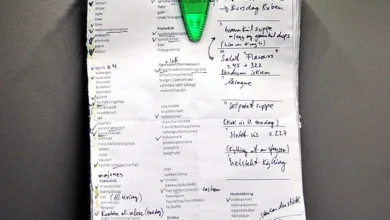
- 2014: The foundational concept was first conceived. Initial design iterations included rudimentary mockup screenshots and a basic spreadsheet model built in Microsoft Excel to test the viability of parametric recipe scaling. The project subsequently stalled due to technological and architectural limitations.
- 2015–2025: Throughout a decade of quiet development, the underlying dataset expanded. The creator systematically cataloged and analyzed a corpus of approximately 1,000 traditional waffle recipes, predominantly sourced from Norway and broader Scandinavian culinary traditions. These historical records frequently relied on tacit knowledge, utilizing qualitative instructions such as "add flour until the batter has the right consistency."
- August 9, 2026: Coinciding with the global bicentennial quincentenary—specifically the 250th anniversary of Avogadro’s birth—the parametric generator officially went live to the public across standard and expert tiers.
Technical Architecture and Functionality
Unlike conventional digital recipe repositories, the Avogadro generator does not rely on a static database of pre-existing documents. Instead, it utilizes an algorithmic approach to generate recipes in real time based on user inputs.

Users begin by selecting fundamental ingredient categories, including liquids, dairy products, fats, eggs, starches, and sweeteners. Once selected, users manipulate a series of interface sliders governing key culinary metrics such as sweetness, richness, and tanginess. The software immediately computes precise ingredient weights in grams, automatically scaling quantities to match the number of eggs designated by the user.
A central feature of the application is the "waffle heart quality indicator." This diagnostic tool provides instantaneous feedback regarding two critical metrics: whether the synthesized batter possesses the physical and chemical properties required to bake successfully, and how closely its composition aligns with empirical standards derived from the analysis of real-world waffle recipes. Notably, the tool demonstrates that commercially successful mixes often occupy fringe positions on the spectrum of traditional ingredients, proving that unconventional formulations can still yield structurally sound results.
The platform is divided into two operational modes:
- Standard Mode: Features a streamlined interface with a reduced selection of ingredients and a constrained set of control sliders, ensuring that any generated combination results in a dependable, workable batter.
- Expert Mode: Unlocks the full spectrum of available ingredients, eight distinct control sliders, and advanced presets. This mode is designed for advanced culinary experimentation, granting users access to uncharted territory in batter formulation.
Supporting Data and Mathematical Scope
The sheer scale of the generator’s output capabilities underscores its mathematical homage to its namesake constant. By multiplying the permutations of ingredient picks and slider positions, the system spans roughly $10^27$ distinct control settings.
However, culinary researchers have offered an honest caveat regarding these figures. While the interface permits $10^27$ control settings, this number does not translate directly to an equivalent number of meaningfully distinct recipes. Due to software rounding parameters and the algorithmic pruning of trace ingredients, multiple distinct control configurations ultimately resolve to identical batter compositions. Furthermore, a percentage of theoretical combinations fall outside the parameters of workable physics, a status clearly flagged by the absence of lobes on the interactive quality indicator.
Despite these limitations, the remaining functional output space is vast enough to ensure that users exploring the application frequently encounter unique formulations that have never before been documented in culinary literature.

Implications for Computational Gastronomy
The launch of the Avogadro generator highlights a broader trend within food science and computational gastronomy: the shift from static, qualitative recipe sharing to dynamic, quantitative modeling. For centuries, culinary proficiency relied heavily on oral tradition, sensory evaluation, and tacit knowledge—such as the elusive "right consistency" referenced in historical Scandinavian cookbooks.
Tools like Avogadro attempt to codify these empirical observations into mathematical relationships. By defining the precise boundaries of what constitutes a functional waffle batter versus a non-viable mixture, the software contributes to a deeper understanding of food physics. It raises fundamental questions regarding structural limits in baking: namely, the precise quantitative thresholds where a batter ceases to function as a waffle mixture and transforms into something else entirely.
Future Outlook and User Engagement
The developer has emphasized that the platform is fundamentally an ongoing experiment in crowdsourced culinary validation. Because testing $10^27$ individual batters is a physical impossibility, the algorithm acts as an educated statistical model estimating the boundaries of workable baking chemistry.
Culinary professionals, data scientists, and home bakers have been invited to stress-test the application. Feedback mechanisms have been established to collect reports on edge cases where the model produces absurd results or fails to handle specific ingredient interactions correctly. Conversely, users who discover exceptional, high-performing batter formulations are encouraged to share their discoveries using direct recipe URLs generated by the platform.
As celebrations for Amedeo Avogadro’s 250th birthday continue globally, the intersection of his historic contributions to molecular theory and the modern kitchen offers a unique method of commemoration: inviting the public to apply computational rigor to the art of baking a waffle.