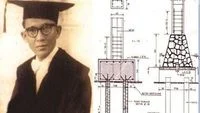
The Forgotten Private Railway of Colonial Java: How a Dynasty Built Its Own 30-Kilometer Transit Line to Move Agricultural Wealth


Long before modern logistics corporations optimized supply chains with multi-modal transport networks, a powerful European family enterprise in colonial Indonesia engineered its own bespoke industrial solution. In 1924, amidst the rolling agricultural vistas south of Batavia, a 30-kilometer railway line materialized. Unlike the vast state-run networks designed to connect cities and facilitate public mobilization, this iron pathway served a singular, highly exclusive purpose: transporting agricultural yields exclusively harvested from private landholdings owned by a singular business dynasty.
This infrastructure project stands as a testament to the staggering economic power wielded by private estate owners during the Dutch East Indies era. Constructed under the direction of Alfred Ernest Reinier Arnold, the railway linked Jonggol and Lemahabang, functioning as an economic umbilical cord that fed raw agricultural products directly from corporate plantations to broader distribution channels. This historical vignette, part of the CNBC Insight historical analysis series, sheds light on how historical private interests shaped modern geographical landscapes through infrastructure development built solely for capital extraction.
The Architect of an Empire: Alfred Ernest Reinier Arnold and the Michiels-Arnold Legacy
The man behind the 1924 railway was Alfred Ernest Reinier Arnold (1873–1959), a prominent Dutch entrepreneur operating at the apex of colonial commerce. Arnold served as the managing director of the Maatschappij tot Exploitatie van Rijstlanden op Java Michiels-Arnold, an agribusiness conglomerate deeply rooted in the fertile soils of western Java. According to historical records published in the Dutch newspaper De Telegraaf on December 24, 1926, the Jonggol-Lemahabang railway was an entirely private enterprise, constructed without public utility mandates, reflecting the immense autonomy granted to large estate owners under colonial administration policies.
To understand the scale of Arnold’s enterprise, one must examine the generational wealth accumulation that preceded him. The business found its origins in the legendary and controversial figure of Augustijn Michiels (1769–1833), popularly known in colonial lore as "Mayor Jantje." A former military man who transitioned into massive land ownership, Michiels acquired vast tracts of land across the southern periphery of Batavia—modern-day Jakarta—including Cileungsi, Klapanunggal, Citeureup, Nanggewer, and Nambo. Through strategic land consolidation and agricultural exploitation, Michiels cemented his status as one of the wealthiest individuals in the Indonesian archipelago during the early 19th century.
Following his death, these sprawling estates were partitioned and inherited by his descendants. A pivotal merger of wealth occurred when Augustina Michiels married Jan Willem Arnold (1813–1885). Together, the couple consolidated extensive property rights across Cileungsi, Cibarusah, Cipamingkis, Tanah Baru, and Klapanunggal. To safeguard these assets against the complexities of succession and to institutionalize agricultural production, the family formally established the Maatschappij tot Exploitatie van Rijstlanden op Java Michiels-Arnold in 1887. This corporate vehicle specialized in managing large-scale agricultural operations, focusing heavily on rice cultivation, which served as a primary dietary staple and a lucrative commodity in the colonial market.
By the 1930s, operational control had passed to Alfred Ernest Reinier Arnold, representing the grandchild generation of the original Michiels-Arnold union. Under his stewardship, the company modernized its operations, a process that directly culminated in the construction of the 1924 railway line. This capital-intensive investment demonstrated the family’s commitment to cutting transportation overheads and accelerating the transit of perishable harvests from inland estates to processing and export hubs.
Chronology of an Agrarian Dynasty: From Mayor Jantje to the Pacific War
A chronological review of the Michiels-Arnold enterprise illustrates the trajectory of private land ownership and corporate consolidation in the Dutch East Indies:
- 1769–1833 (The Era of Augustijn Michiels): Augustijn Michiels, known as Mayor Jantje, builds a massive fortune through military service and subsequent acquisition of expansive private estates (particuliere landerijen) south of Batavia.
- 1813–1885 (Consolidation under Jan Willem Arnold): Jan Willem Arnold marries into the Michiels family, uniting substantial landholdings and laying the groundwork for a multi-generational corporate family office.
- 1887 (Corporate Incorporation): The family establishes the Maatschappij tot Exploitatie van Rijstlanden op Java Michiels-Arnold, formalizing the management of agricultural lands, particularly rice-producing fields across West Java.
- 1924 (Infrastructure Expansion): Alfred Ernest Reinier Arnold commissions and completes a 30-kilometer private railway connecting Jonggol and Lemahabang to streamline cargo transit for company estates.
- December 1926: De Telegraaf publishes reports detailing the private nature and operational mechanics of the Jonggol-Lemahabang railway, highlighting its role in corporate logistics.
- June 1932: Bataviaasch nieuwsblad reports that the Michiels-Arnold agricultural corporation posted net profits approaching 400,000 guilders, signaling robust financial health despite the global economic depression.
- 1942 (The Collapse of Colonial Enterprise): The Japanese Imperial Army invades and occupies the Dutch East Indies, leading to the immediate seizure and nationalization of assets belonging to European estate owners, effectively ending the Michiels-Arnold family business empire.
Financial Might and Economic Scale in the Late Colonial Period
The economic potency of the Michiels-Arnold corporation was not merely a relic of nineteenth-century expansionism; it remained remarkably resilient well into the twentieth century. Even as the global economy reeled from the Great Depression, colonial agricultural enterprises operating in the Dutch East Indies continued to generate substantial capital returns, insulated by cheap indigenous labor and preferential colonial trade policies.
Evidence of this financial robustness is preserved in contemporary media archives. On June 16, 1932, the Bataviaasch nieuwsblad reported that the Maatschappij tot Exploitatie van Rijstlanden op Java Michiels-Arnold recorded a net profit of nearly 400,000 guilders for that fiscal year. To contextualize this figure within the economic realities of the 1930s, 400,000 guilders represented massive purchasing power, capable of funding extensive land acquisitions, infrastructure development, and luxurious lifestyles for the colonial elite residing in Batavia’s upscale Menteng district or country villas. Furthermore, archival financial data indicated that these profit margins expanded further in the subsequent years leading up to World War II, driven by high demand for staple crops and optimized logistics courtesy of private infrastructure like the Jonggol-Lemahabang rail line.
The ability to construct a 30-kilometer railway solely for corporate balance sheets underscores the immense capital reserves commanded by these family-run enterprises. While the colonial government (Landsdrukkerij and state railway operators like Staatsspoorwegen) managed public lines, private concessionaires held broad legal authorities over their particuliere landerijen, functioning almost as sovereign economic entities within their borders.
Colonial Administration and Contemporary Reactions
The concentration of such vast land and infrastructural power in the hands of a few European families inevitably drew scrutiny from contemporary observers, colonial reformers, and regional administrators. While the colonial government officially welcomed private investments that boosted export figures and contributed to the treasury through taxation, the socio-economic disparity inherent in the particuliere landerijen system sparked ongoing debates.
Local populations residing within the boundaries of these private estates often found themselves subject to heavy feudal-like obligations (landrente and traditional corvée labor remnants), even as modern capitalist enterprises like the Michiels-Arnold company introduced industrial techniques such as private rail transport. Contemporary reports from Dutch-language newspapers suggest that while urban business communities lauded the efficiency and high profitability of companies like Michiels-Arnold, critical voices within the Volksraad (the colonial people’s council) increasingly questioned the legality and social equity of granting quasi-seigneurial rights to private landowners over entire regions populated by thousands of indigenous farmers.
Though formal corporate statements from the era framed investments like the Jonggol-Lemahabang railway as progressive contributions to agricultural productivity, economic historians note that these private networks prioritized extraction over regional integration. The rail lines bypassed population centers unless transport served corporate logistics, reinforcing an enclave economy designed to funnel wealth outward rather than elevate local living standards.
Broader Impact and Historical Implications
The sudden termination of the Michiels-Arnold enterprise in 1942 serves as a stark reminder of the vulnerability of colonial capital structures to geopolitical upheaval. With the arrival of Japanese occupation forces, the era of the European particuliere landerijen effectively drew to a close. Assets were confiscated, Dutch managers were interned, and the complex legal architectures of private land concessions were dismantled or rendered obsolete by subsequent agrarian reforms in the post-independence Indonesian republic.
Analyzing the legacy of infrastructure projects like the 1924 Jonggol-Lemahabang railway offers crucial insights into spatial development patterns in contemporary Indonesia. The agricultural corridors carved out by colonial capitalists laid the groundwork for modern suburban expansion, industrial zoning, and regional transport planning in the Jakarta metropolitan fringe, including areas like Bogor, Bekasi, and Jonggol.
Ultimately, the history of Alfred Arnold’s private railway transcends a mere corporate anecdote. It encapsulates the apex and eventual collapse of corporate colonialism, where private wealth could alter the geography of West Java to suit the bottom line of a single family dynasty—until global conflict redrew the geopolitical map of Southeast Asia forever.