Ultimate High Altitude Chocolate Chip Cookies: Baking Success at Any Elevation
Ultimate high altitude chocolate chip cookies are a baking challenge that can be overcome with the right knowledge and techniques. Living at a high altitude presents unique obstacles for bakers, as the thinner air affects how ingredients behave, often resulting in cookies that are flat, dry, or spread too much.
But don’t despair! With a few adjustments and tips, you can conquer these challenges and create perfectly chewy, delicious chocolate chip cookies, even if you live in the mountains.
This guide will explore the science behind high altitude baking, provide essential tips for adapting recipes, and offer a variety of variations to satisfy every craving. We’ll dive into the importance of adjusting ingredient ratios, baking times, and understanding the impact of altitude on cookie texture.
Get ready to unlock the secrets to achieving ultimate high altitude chocolate chip cookie perfection!
Baking Techniques and Tips: Ultimate High Altitude Chocolate Chip Cookies

High altitude baking presents unique challenges due to the lower atmospheric pressure, which affects how ingredients interact and how cookies bake. Understanding these changes and implementing appropriate adjustments is key to achieving delicious, perfectly baked cookies.
Baking at High Altitude
Baking at high altitude requires specific adjustments to ensure successful results. The lower air pressure causes ingredients to expand more quickly, resulting in cookies that spread excessively and become flat. To compensate for this, it’s essential to reduce the amount of baking soda and increase the amount of flour.
Here are some key tips for baking high altitude chocolate chip cookies:
- Reduce Baking Soda:The lower pressure at high altitudes causes baking soda to react more vigorously, resulting in cookies that spread too much. Reduce the amount of baking soda by 1/4 teaspoon for every 5000 feet above sea level.
- Increase Flour:To compensate for the increased expansion, increase the amount of flour by 1-2 tablespoons for every 5000 feet above sea level. This helps to thicken the batter and prevent excessive spreading.
- Adjust Baking Time:Cookies may bake faster at high altitude due to the lower boiling point of water. Monitor the cookies closely and adjust the baking time accordingly.
- Use a High-Quality Oven Thermometer:Ensure your oven is calibrated accurately. High altitude ovens may fluctuate in temperature, so using a thermometer is essential for consistent baking.
Achieving the Perfect Golden Brown Color and Chewy Texture
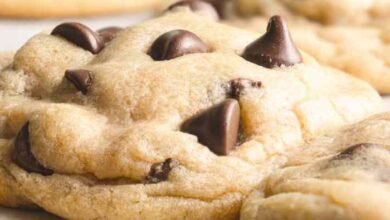
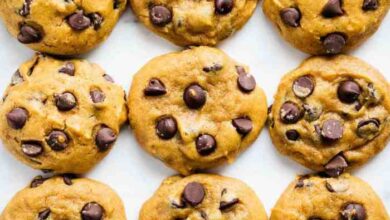
The ideal chocolate chip cookie has a golden brown color and a chewy texture. Achieving this requires careful attention to ingredients and baking techniques.
- Use High-Quality Chocolate Chips:The type of chocolate chips used significantly affects the flavor and texture of the cookies. Choose high-quality chocolate chips with a high cocoa content for a rich chocolate flavor.
- Don’t Overmix the Dough:Overmixing develops gluten, resulting in tough cookies. Mix the dough until just combined, leaving a few streaks of flour.
- Chill the Dough:Chilling the dough for at least 30 minutes before baking allows the gluten to relax and the flavors to meld. This also prevents the cookies from spreading too much.
- Bake at the Correct Temperature:Baking at the correct temperature is crucial for achieving the desired golden brown color. If the oven is too hot, the cookies will brown too quickly and become dry. If the oven is too cool, the cookies will bake unevenly and may not brown sufficiently.
Ensuring Even Baking and Preventing Excessive Spreading
Achieving even baking and preventing excessive spreading requires careful attention to baking techniques and cookie sheet preparation.
- Use a Baking Sheet with a Light-Colored Surface:A light-colored baking sheet absorbs less heat, preventing the cookies from browning too quickly on the bottom.
- Space Cookies Evenly on the Baking Sheet:Allow ample space between cookies for even airflow and browning. Crowding the cookies will result in uneven baking and soggy bottoms.
- Rotate the Baking Sheet During Baking:Rotating the baking sheet halfway through the baking time ensures even browning and prevents cookies from burning on one side.
- Avoid Overbaking:Overbaked cookies become dry and crumbly. Remove the cookies from the oven when they are just slightly golden brown around the edges and still soft in the center.
Variations and Experimentation
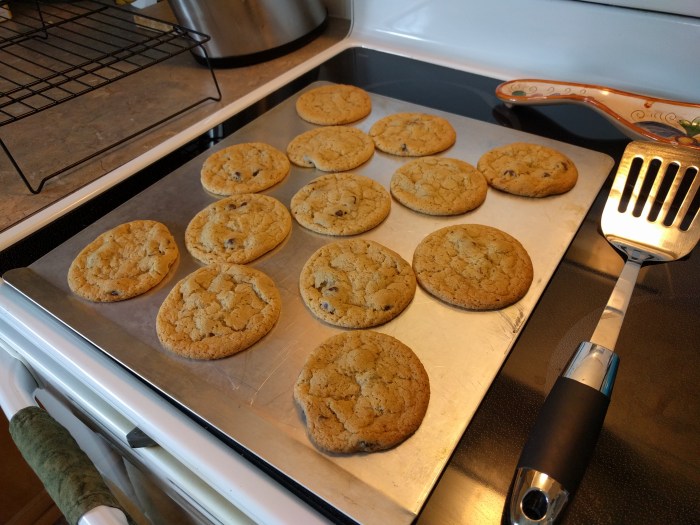
The beauty of chocolate chip cookies lies in their versatility. You can easily adapt the basic recipe to create a wide range of flavors and textures, making them perfect for any occasion.
Flavor Combinations
Here are some ideas for flavor combinations you can try:
- Nutty Delights:Add chopped walnuts, pecans, or almonds for a crunchy and nutty flavor. You can also try adding a tablespoon of peanut butter for a richer flavor.
- Fruity Fusion:Fold in dried cranberries, raisins, or chopped apricots for a sweet and tangy twist. Consider adding a teaspoon of orange zest for a citrusy aroma.
- Spiced Up:Incorporate cinnamon, nutmeg, or ginger for a warm and comforting flavor. A pinch of cayenne pepper can add a subtle kick.
- Chocolate Overload:Add more chocolate chips or try using different types of chocolate, such as dark chocolate, milk chocolate, or white chocolate. You can also experiment with chocolate chunks for a more decadent experience.
Ingredient Substitutions, Ultimate high altitude chocolate chip cookies
If you find it difficult to source specific ingredients at high altitudes, here are some potential substitutions:
- Butter:Use unsalted butter, as it allows you to control the salt content in the recipe. You can also substitute with a plant-based butter alternative like vegan butter or margarine.
- Flour:If you can’t find all-purpose flour, you can use a blend of cake flour and bread flour. For a gluten-free option, use a certified gluten-free flour blend.
- Baking Soda:If you don’t have baking soda, you can use baking powder. However, you’ll need to adjust the amount based on the recipe.
- Sugar:You can use granulated sugar, brown sugar, or a combination of both. Honey or maple syrup can also be used as a substitute, but you may need to adjust the amount based on the recipe.
I’ve been on a baking kick lately, especially perfecting the ultimate high altitude chocolate chip cookie. It’s a delicate dance of ingredients and baking times, but the results are worth it! While I’m on the subject of deliciousness, I recently tried chef John’s Yucatan style grilled pork and it was an explosion of flavor.
Now I’m thinking of pairing those cookies with a side of that pork for the perfect sweet and savory combination. Back to the cookies though, I’m still experimenting with different types of chocolate chips to find the perfect balance of sweetness and chewiness.
You know how sometimes you crave that perfect, chewy chocolate chip cookie, the kind that’s just a little bit crispy on the edges? Well, baking at high altitude can be a challenge, but with the right recipe, you can achieve that ultimate cookie experience.
And while I’m on the topic of deliciousness, have you ever tried a really good spicy sushi dipping sauce? This recipe is a favorite of mine, and the combination of sweet, savory, and spicy flavors is just incredible. Back to those cookies, though, the key is to adjust the ingredients for the thinner air, and you’ll be rewarded with cookies that are just as amazing as those you’d bake at sea level.
I’ve been on a baking spree lately, perfecting my ultimate high altitude chocolate chip cookies. They’re so good, in fact, that I’m starting to think they’re the perfect companion for a hearty bowl of beef bean and beer chili.
The sweet and salty combo is just irresistible! Now, back to those cookies… I think I need to whip up another batch to test out some new flavor combinations.