
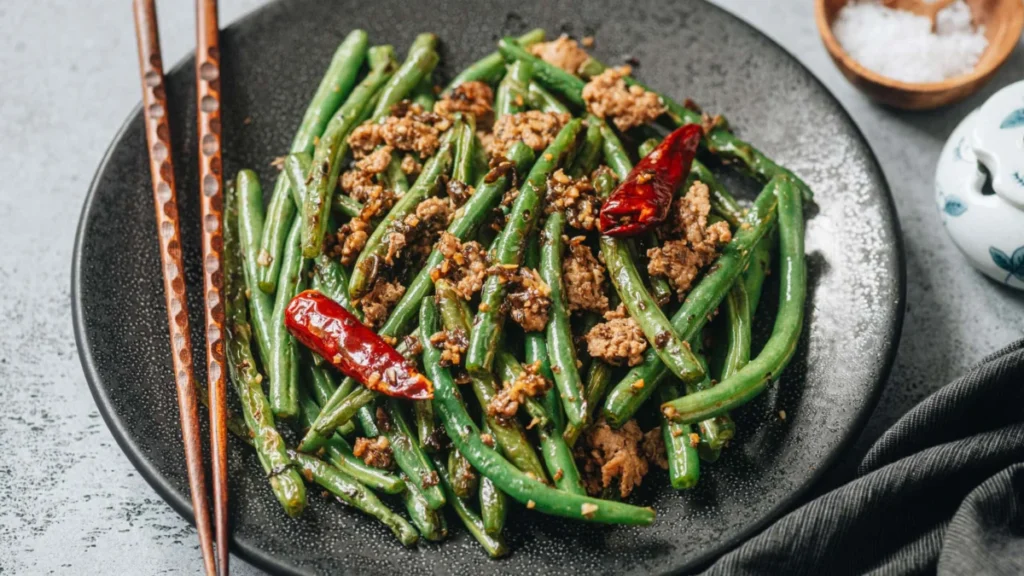
The culinary landscape of Sichuan cuisine is defined by bold, complex flavor profiles that harmonize heat, numbness, sweetness, and umami. Among its most celebrated vegetable preparations is Gan Bian Si Ji Dou, universally known as Sichuan dry-fried green beans. This classic dish transforms simple green beans through a specialized dehydration technique, yielding a blistered, smoky texture that absorbs aromatic compounds with exceptional efficiency. While commercial dining establishments traditionally rely on high-temperature deep-frying to achieve this characteristic finish, contemporary home-cooking methodologies demonstrate that a streamlined skillet-based approach can replicate traditional sensory qualities while significantly reducing oil consumption.
Culinary Origins and the Technique of Gan Bian
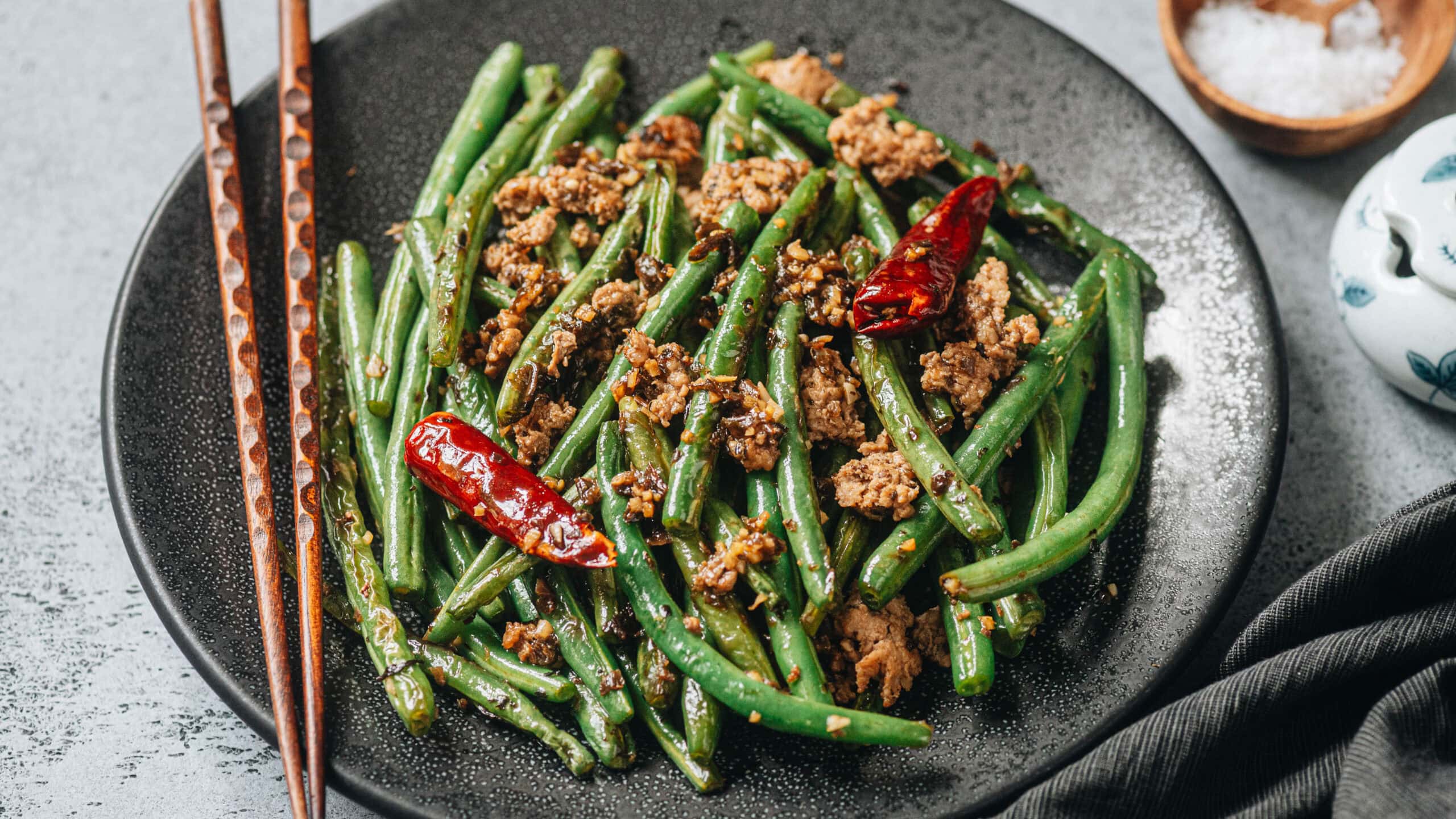
The foundation of Sichuan dry-frying, or Gan Bian (干煸), lies in a distinct thermal process that sits at the intersection of pan-searing and frying. Unlike standard Western sautéing, which aims to quickly cook vegetables while retaining internal moisture, Gan Bian utilizes controlled heat over an extended duration to deliberately draw out moisture from the ingredient. This partial dehydration creates a wrinkled, charred surface similar to the results of grilling, introducing a subtle smokiness without the need for an open flame.
Historically developed in the rugged terrain of southwest China, Sichuan cuisine adapted to preservation methods and intense seasoning to withstand humid summers and mountainous winters. The technique of dry-frying vegetables allows the fibrous exterior of green beans to become porous, acting as a natural sponge for subsequent aromatics, fermented elements, and spices. Consequently, the dish delivers an intense sensory impact built on texture and seasoning adhesion rather than heavy, liquid-based sauces.
Essential Components and the Role of Sui Mi Ya Cai
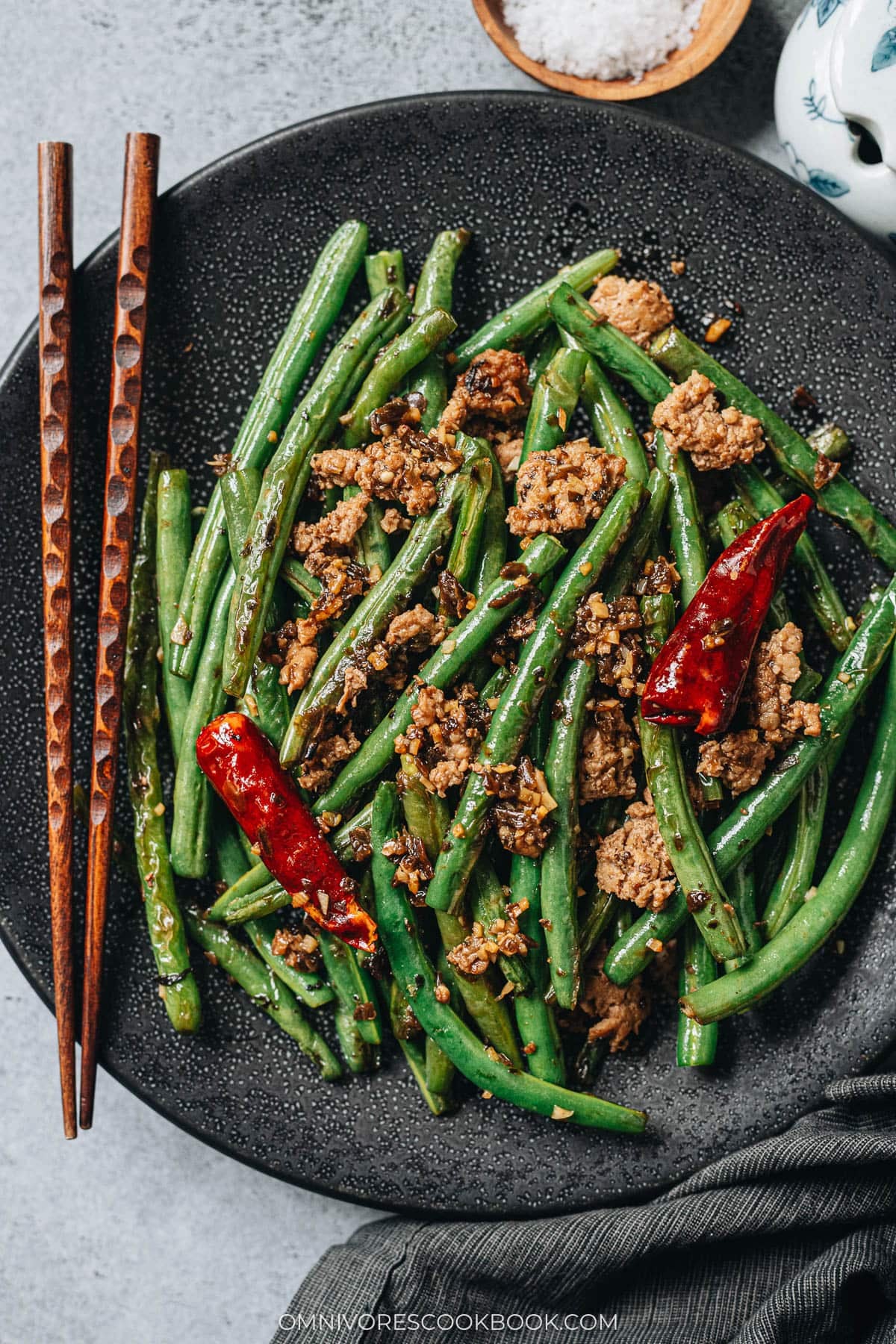
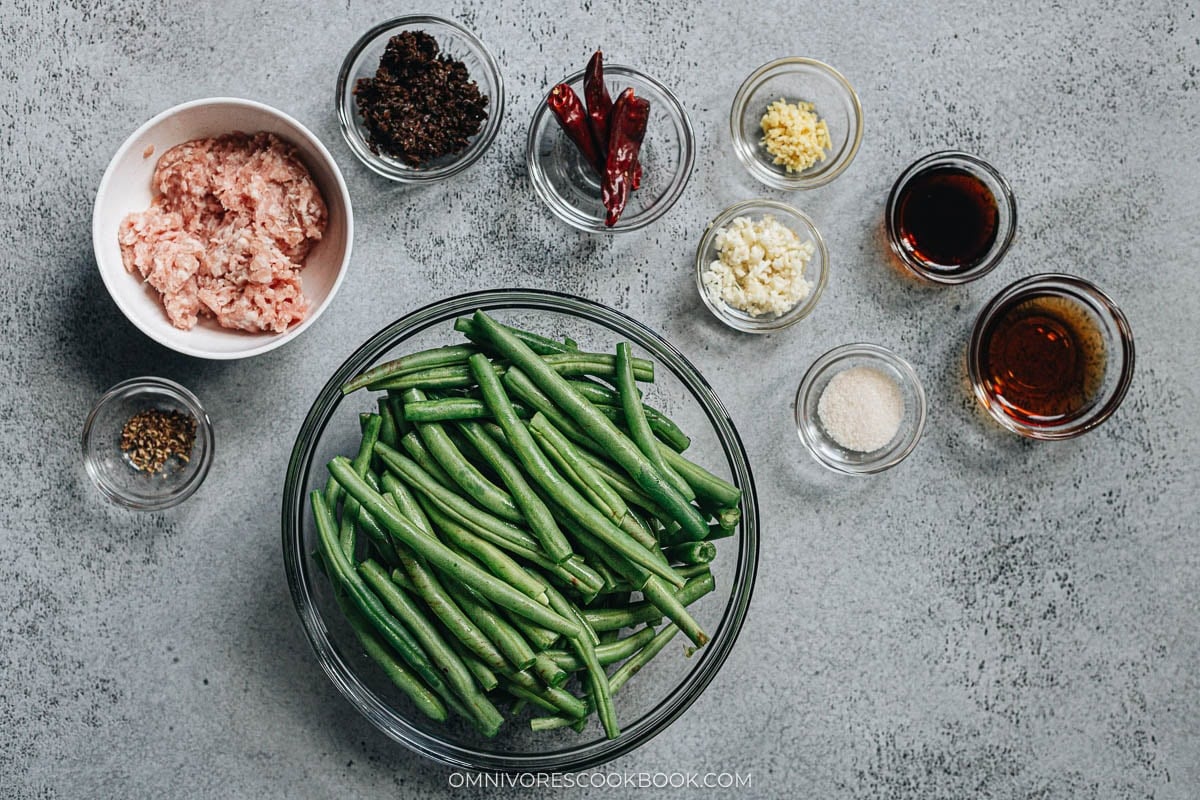
Achieving an authentic flavor profile in Gan Bian Si Ji Dou requires specific ingredients that contribute distinct chemical and structural qualities to the dish. While fresh, slender green beans form the bulk of the preparation, the inclusion of specific regional preserves distinguishes authentic renditions from standard stir-fries.
At the heart of this distinction is Sui Mi Ya Cai (碎米芽菜), a traditional Sichuan fermented pickled mustard green originating from Yibin. The production of Ya Cai involves a meticulous multi-step process. Harvested mustard stems are hand-sliced, salted, and subjected to an initial ceramic-pot fermentation lasting three to six months. Following this primary phase, the greens are boiled with brown sugar for up to nine hours, dried once more, and sealed for a secondary maturation period infused with star anise and Sichuan peppercorns. This laborious aging yields a concentrated umami and mild sweetness that elevates the savory baseline of the dish.
Complementing the preserved greens is the Sichuan peppercorn (Hua Jiao), celebrated for its unique citrusy aroma and characteristic tingling sensation—known scientifically as paresthesia—triggered by the molecule hydroxy-alpha-sanshool. Paired with whole dried chili peppers, garlic, ginger, Shaoxing rice wine, and light soy sauce, these elements construct a layered flavor matrix that balances pungency with aromatic warmth.
Step-by-Step Preparation Methodology
The preparation of dry-fried green beans at home follows a precise chronological sequence designed to maximize texture and flavor integration within a 30-minute timeframe.
Phase One: Dehydration and Charring
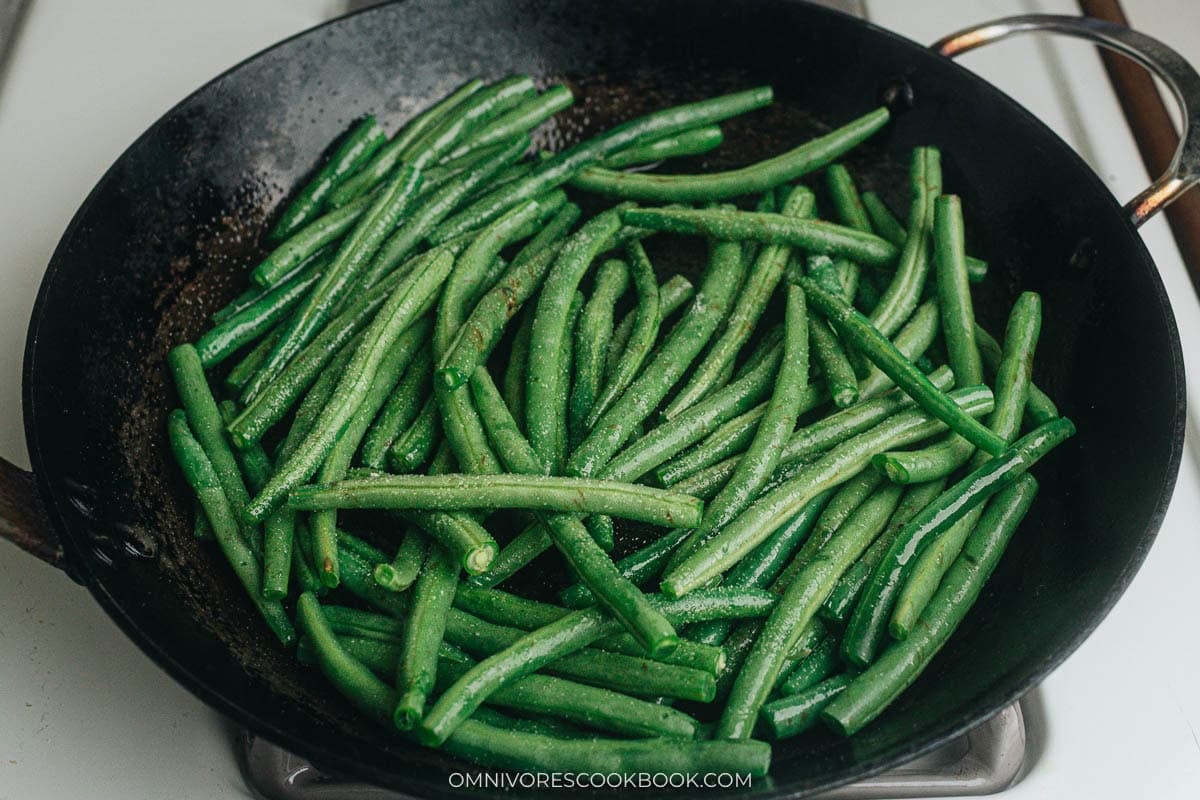
- Surface Preparation: Fresh green beans are trimmed of their tough ends and meticulously patted dry with paper towels to prevent hazardous oil splatter upon contact with heated fat.
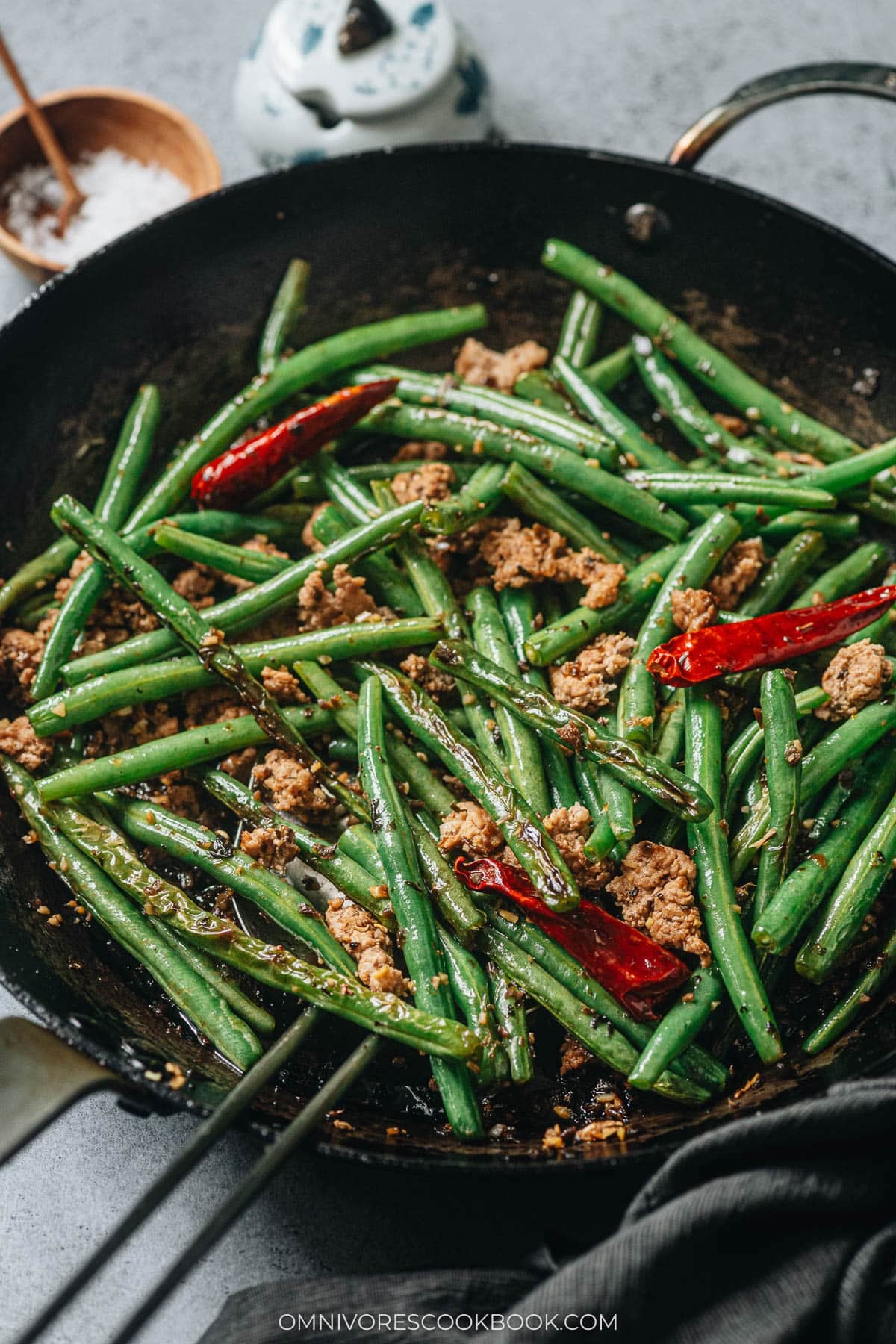
- Thermal Treatment: Approximately two tablespoons of neutral oil are heated in a wide nonstick skillet over medium-high heat. The beans are introduced with a pinch of salt and arranged in a single, non-overlapping layer to ensure direct contact with the cooking surface.
- Monitoring Texture: The beans are turned periodically over six to eight minutes until the exterior exhibits characteristic brown, withered patches while maintaining a tender-crisp interior. For a softer consistency, cooking time is extended to ten or twelve minutes. The processed beans are then transferred to a holding plate.
Phase Two: Aromatics and Protein Integration
- Pork and Preserve Sauté: In the same skillet, an additional tablespoon of oil is introduced alongside ground pork, Sui Mi Ya Cai, and ground Sichuan peppercorn. The protein is continuously broken down into fine particles while rendering its fat alongside the pickled greens.
- Aromatic Infusion: Once the pork is cooked through, dried chili peppers, minced garlic, and minced ginger are incorporated, stirred rapidly for several seconds until their essential oils release into the pan.
Phase Three: Final Assembly
- Unification: The reserved charred green beans are returned to the skillet. Shaoxing wine, light soy sauce, and a small quantity of sugar are swirled along the perimeter of the pan, deglazing the surface and allowing the ingredients to absorb the liquid over one to two minutes.
- Seasoning Adjustment: The heat is reduced to low for a final quality check, adjusting salt levels if necessary before transferring the finished dish to a serving platter.
Nutritional Profile and Dietary Adaptability
From a nutritional perspective, Gan Bian Si Ji Dou offers a balanced macronutrient profile when consumed as part of a grain-based meal. A standard single-serving portion contains approximately 159 kilocalories, driven by 14 grams of carbohydrates, 9.9 grams of protein, and 7.9 grams of fat, of which only 1.5 grams are saturated. The dish also provides a notable dietary fiber content of 4 grams per serving, supported by essential micronutrients including potassium, calcium, and iron.
Modern adaptations of the recipe accommodate various dietary restrictions without sacrificing culinary integrity. For vegetarian or vegan diets, the ground pork can be omitted or replaced with finely chopped rehydrated shiitake mushrooms, fermented black beans (douchi), or spicy fermented bean paste (doubanjiang). The inclusion of Sui Mi Ya Cai ensures that the savory umami depth remains intact even in the absence of animal proteins.
Broader Culinary Implications and Cultural Integration
The rising global popularity of Sichuan vegetable dishes reflects a broader shift in international dining trends toward plant-forward meals characterized by bold, complex seasoning. While protein-heavy centerpieces traditionally dominated Asian-inspired menus in Western markets, vegetable preparations such as dry-fried green beans and Sichuan eggplant have increasingly emerged as guest favorites.
Culinary analysts note that dishes utilizing high-heat techniques like Gan Bian bridge the gap between traditional regional cooking and accessible home preparation. By adapting commercial deep-frying methods into manageable skillet protocols, home cooks can replicate authentic restaurant-quality textures without specialized commercial equipment. Furthermore, the dish’s versatility allows it to function seamlessly as an everyday accompaniment to plain rice, a component of festive multi-course banquets, or an unconventional side dish for holiday gatherings, demonstrating the enduring global appeal of Sichuan flavor engineering.



0 Komentar
Sampaikan opini dan diskusi yang membangun dengan bahasa yang santun.
No Comments Yet
Be the first to share your thoughts on this story.