
The coastal historic town of Melaka, situated along the Straits of Malacca in Peninsular Malaysia, has long functioned as a vital crossroads of maritime trade, colonial influence, and indigenous Malay culture. This convergence of civilizations has fostered a singular gastronomic landscape defined by robust spice profiles, aromatic herbs, and intricate flavor combinations. Recognized globally as a UNESCO World Heritage site, Melaka’s cultural significance is rivaled only by its vibrant culinary tradition, which heavily incorporates Peranakan (Baba-Nyonya), Malay, Chinese, and Indian elements. For culinary tourists and international travelers charting a gastronomic journey through Southeast Asia, Melaka presents an essential itinerary characterized by specific regional specialties that cannot be replicated elsewhere.
Urban Evolution and the Rise of Melaka Food Tourism
In recent decades, culinary tourism has emerged as a primary economic driver for the historic municipality, drawing millions of domestic and international visitors annually. Local municipal authorities and tourism boards have increasingly leveraged the town’s unique culinary heritage to bolster the regional service sector. The historical context of Melaka—dating back to its origins as a 15th-century Malay sultanate and subsequent periods under Portuguese, Dutch, and British colonial rule—directly informed its contemporary palate, characterized by the heavy use of galangal, lemongrass, tamarind, and chili peppers.

Against this historical backdrop, food journalists and travel documentarians have systematically mapped the town’s most enduring culinary institutions. Below is an exhaustive journalistic review of five cornerstone eateries that define the contemporary Melaka dining scene, evaluated through historical context, preparation methodologies, and economic value.
- Kedai Kopi Chung Wah: The Pinnacle of Hainanese Chicken Rice
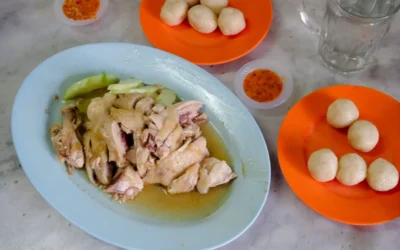
Operating within a traditional kopitiam (coffee shop) framework at the prominent corner of Jonker Street—Melaka’s historical commercial thoroughfare—Kedai Kopi Chung Wah represents the intersection of early Chinese migration and local ingredient adaptation. Hainanese chicken rice is a staple across Southeast Asia, but Chung Wah distinguishes itself through the regional preparation of compressing the seasoned rice into spherical balls.

Preparation and Culinary Mechanics
The production process begins early each morning, utilizing rich chicken broth infused with substantial quantities of garlic, ginger, and rendered poultry fat to boil the short-grain rice. Once cooked, the hot rice is manually shaped into compact, dense spheres. This technique historically served the dual purpose of keeping the rice warm for laborers working long shifts and facilitating easy transport.

Accomompanying the rice balls is the traditional poached Hainanese chicken. The poultry is cooked at sub-boiling temperatures to ensure the retention of moisture, yielding tender meat beneath a fragrant, gelatinous skin. The dish is served alongside a specialized dipping sauce composed of pounded fresh red chilies, garlic, vinegar, and calamansi lime juice. This acidic and pungent formulation cuts through the richness of the poultry and the dense, smoky profile of the garlic-infused rice.
Operational Metrics and Economic Data

- Location: Corner of Jonker Street, Melaka (Coordinates: VME2WcDrcSB2)
- Operating Hours: 9:00 AM to 3:00 PM (Weekdays); 9:00 AM to 4:00 PM (Weekends)
- Average Expenditure: Approximately 28 MYR (approx. $6.77 USD) for a comprehensive meal for multiple patrons.
- Historical Significance: Exemplifies early 20th-century Straits Chinese immigrant culinary adaptation, maintaining traditional charcoal-stovetop methodologies despite modern commercial pressures.
- Asam Pedas Pak Man: Mastery of Sour and Spicy Curry
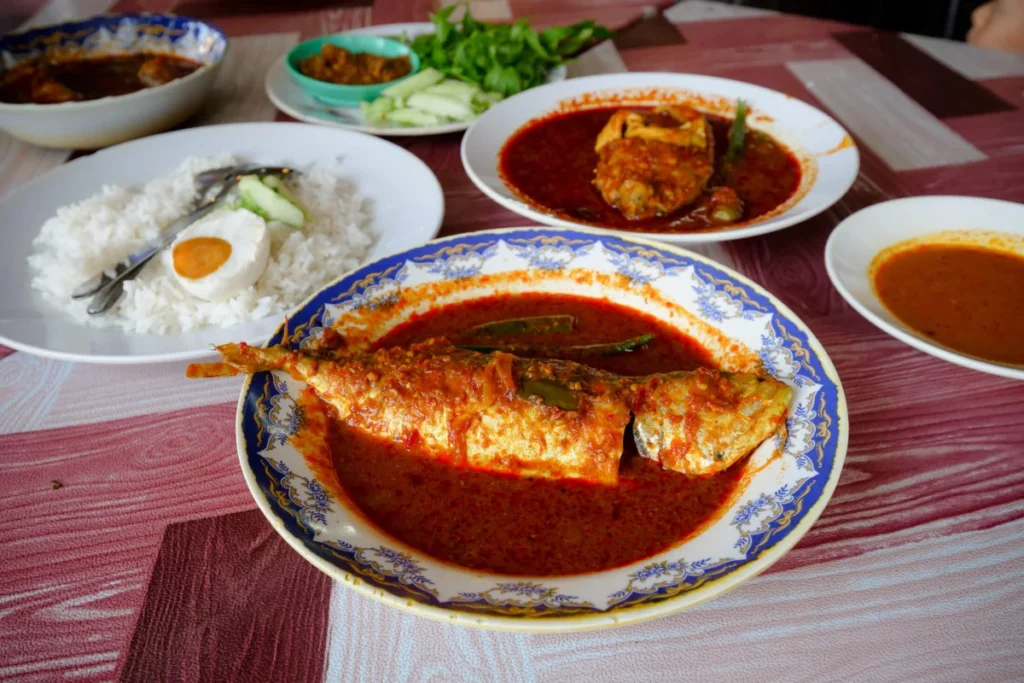
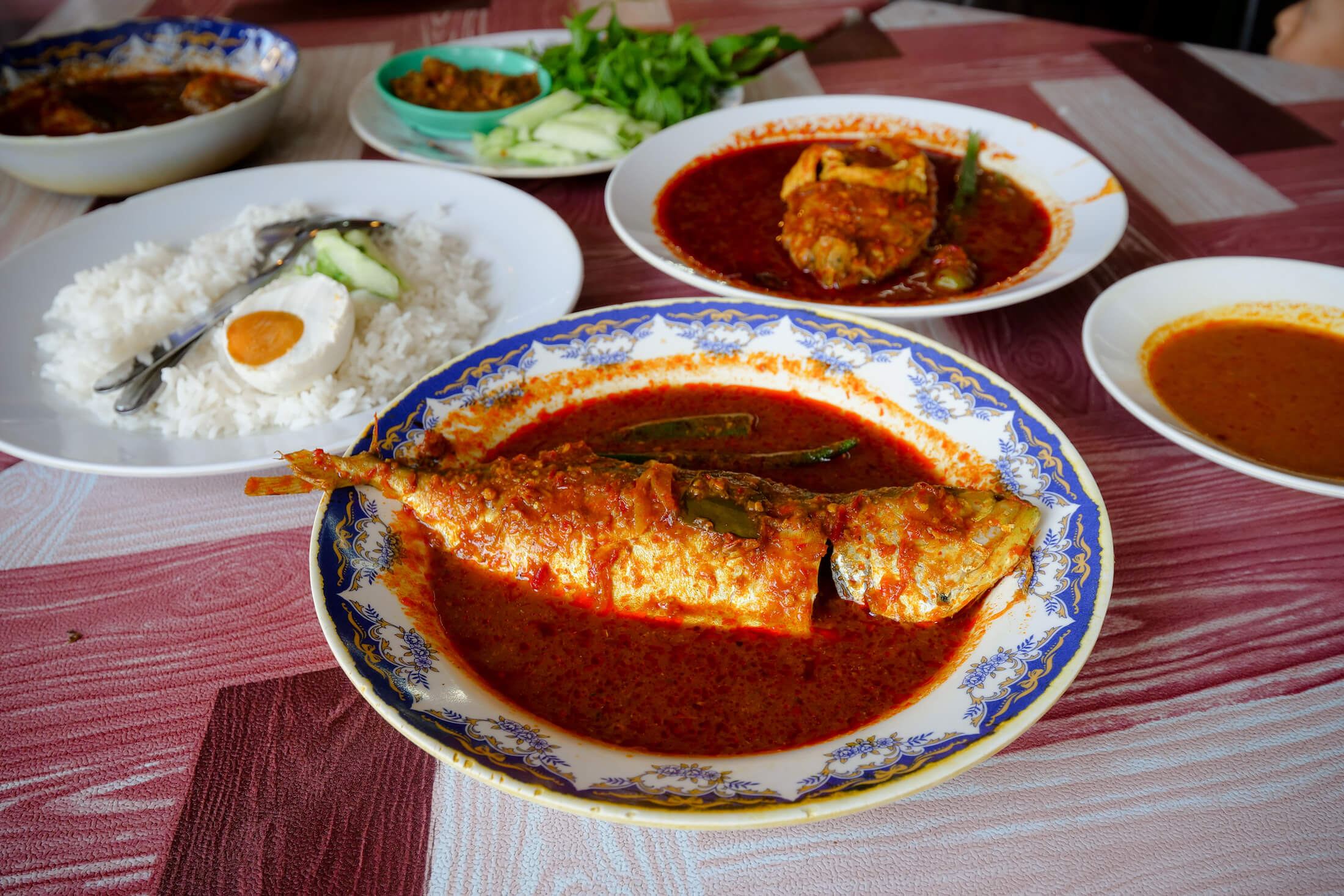
Moving southward toward the coastal fringes, the culinary landscape shifts toward Malay-Peranakan fusion, prominently anchored by asam pedas—a sour, spicy, and deeply aromatic fish curry. Among the numerous establishments offering this regional delicacy, Asam Pedas Pak Man has achieved significant renown among both local residents and regional travelers.
The Chemistry of Asam Pedas

The defining characteristic of asam pedas lies in its complex broth, which balances the astringent sourness of tamarind (asam) with the searing heat of ground bird’s eye and dried chilies (pedas). The foundational paste typically includes shallots, garlic, galangal, and turmeric, simmered alongside aromatics such as torch ginger flower and Vietnamese mint (daun kesum).
At Asam Pedas Pak Man, the broth is prepared in large volumes beginning in the early morning hours. Fresh marine catches—most notably baramundi (ikan tongkol) and skipjack tuna—are submerged into the boiling, ruby-red broth, allowing the fish proteins to absorb the acidic and spicy reduction over hours of slow simmering. The establishment also offers traditional accompaniments including roti canai and a wide array of Peranakan coconut-based snacks known locally as kuih, though these items routinely sell out prior to midday.

Operational Metrics and Economic Data
- Location: Taman Kota Laksamana, Melaka (Coordinates: o57hHnpBUvm)
- Operating Hours: 8:00 AM to 7:00 PM (Daily)
- Average Expenditure: Approximately 73 MYR (approx. $17.75 USD) for a full multi-dish table setting.
- Sociological Impact: Serves as a cultural touchstone for regional Malay cuisine, preserving heritage recipes that require labor-intensive paste preparation and precise sourcing of marine ingredients.
- Klebang Original Coconut Shake: Modern Refreshment Innovation
While traditional hot dishes dominate Melaka’s culinary identity, the municipality has simultaneously birthed modern commercial food phenomena. The Klebang Original Coconut Shake, situated just outside the immediate historic city center near the coastline, represents a contemporary beverage innovation that has achieved viral status across digital media platforms.

Product Formulation and Supply Chain
The beverage departs from standard coconut water service by integrating multiple structural elements of the coconut fruit. Tender white coconut flesh is scraped from the shell and mechanically blended with young coconut water, crushed ice, and a measured quantity of vanilla ice cream. The resulting hybrid beverage offers a balance of natural electrolytes, high-fat dairy richness, and textural density.

Originally operating as a modest roadside cart, the enterprise has expanded its physical footprint to accommodate unprecedented tourist volumes, frequently processing thousands of orders daily. The adjacent menu includes supplementary local snacks such as nasi lemak and keropok (traditional fish crackers), maintaining an accessible pricing model designed to cater to both budget travelers and domestic weekend visitors.
Operational Metrics and Economic Data

- Location: Jalan Klebang Besar, Melaka (Coordinates: 7QdB4n3UHS82)
- Operating Hours: 11:00 AM to 6:30 PM (Daily; restricted afternoon hours on Fridays)
- Pricing: Regular Shake: 2.40 MYR ($0.58 USD); Special Shake (with double ice cream): 2.95 MYR ($0.70 USD).
- Economic Implications: Demonstrates the scalability of localized street-food concepts into high-volume commercial tourism anchors through digital consumer engagement.
- Ban Lee Siang Satay Celup: Interactive Communal Dining
Satay celup is a distinctly Melakan variation of the traditional Malaysian satay. Unlike conventional satay—where skewered meats are grilled over open coals and served with a side dipping sauce—satay celup employs a communal, self-service hotpot methodology reminiscent of Chinese steamboat dining, adapted with a rich, spiced Malay peanut gravy.
The Satay Celup Protocol

Patrons select from a refrigerated display containing dozens of raw and processed skewers, including seafood, poultry, offal, quail eggs, mushrooms, and various vegetables such as Chinese brown tofu. Once selected, the skewers are submerged directly into a large, communal pot of bubbling, thick peanut and chili sauce embedded within the center of the dining table.
The sauce undergoes continuous transformation throughout the evening as residual fats, proteins, and spices from hundreds of immersed skewers enrich the broth. The billing methodology relies on an analog counting system: at the conclusion of the meal, the wooden sticks left behind on the table are tallied by the serving staff to calculate the final invoice.

Operational Metrics and Economic Data
- Location: Jalan Ong Kim Wee, Melaka (Coordinates: RTpBBcLT3pH2)
- Operating Hours: 4:00 PM to 12:30 AM (Daily)
- Pricing: Uniform rate of 1.00 MYR ($0.22 USD) per skewer; total group expenditures average approximately 38 MYR ($9.35 USD) for three diners.
- Cultural Fusion: Serves as a prime institutional example of Peranakan and Chinese-Malaysian syncretism, fostering interactive, social dining dynamics.
- Ikan Bakar Hj Musa: Artisanal Charcoal-Grilled Seafood
Concluding the Melaka gastronomic itinerary is the coastal institution of Ikan Bakar Hj Musa, specializing in charcoal-grilled seafood (ikan bakar). Located near the Straits of Malacca, the establishment utilizes a raw-material selection model wherein patrons inspect daily maritime catches displayed on ice, weighing selections per 100 grams to determine cost before dictating preparation styles.

Techniques of the Charcoal Grill
The defining characteristic of Ikan Bakar Hj Musa is its proprietary chili sambal. As marine proteins—predominantly stingray (ikan pari), squid, and tiger prawns—undergo high-heat grilling over open coconut-husks and charcoal, a thick layer of raw chili sambal is applied directly to the surface. The residual heat of the fish partially cooks the outer layer of the paste, creating a jam-like, caramelized crust infused with shallots, fermented shrimp paste (belacan), and torch ginger.

The establishment’s operational model emphasizes volume, affordability, and precise control over charcoal temperatures to prevent the delicate marine flesh from drying out. Side dishes, including stir-fried local greens (kangkung belacan), complement the rich, protein-heavy main courses.
Operational Metrics and Economic Data

- Location: Umbai Seafood Complex, Melaka (Coordinates: 43P8ZRAPYjN2)
- Operating Hours: 5:00 PM to 12:00 AM (Daily)
- Average Expenditure: Approximately 99 MYR ($24.00 USD) for a comprehensive three-person seafood feast.
- Regional Impact: Recognized by local culinary historians as a preservationist of coastal Malay grilling techniques, sustaining local fishing economies through direct B2C supply chains.
Broader Economic and Cultural Implications
The enduring appeal of Melaka’s food culture extends far beyond immediate gastronomic satisfaction; it underpins the socio-economic vitality of the region. Culinary tourism drives employment across agriculture, fishing, retail, and hospitality sectors, ensuring that ancestral recipes are economically viable across generations. As regional infrastructure continues to modernize, institutions such as Chung Wah, Pak Man, and Hj Musa remain critical cultural repositories, demonstrating how historical trade routes and multi-ethnic populations can coalesce into one of the world’s most dynamic culinary destinations.





0 Komentar
Sampaikan opini dan diskusi yang membangun dengan bahasa yang santun.
No Comments Yet
Be the first to share your thoughts on this story.