Unearthing the History and Culinary Significance of Melaka’s Iconic Hainanese Chicken Rice Balls at Kedai Kopi Chung Wah

The historic city of Melaka, Malaysia, recognized globally as a UNESCO World Heritage site, is celebrated not only for its colonial architecture and multicultural heritage but also for its distinctive culinary landscape. Among the myriad gastronomic offerings that draw domestic and international travelers to this coastal destination, the Hainanese chicken rice ball stands out as a unique regional variant of a Southeast Asian staple. At the center of this culinary tradition is Kedai Kopi Chung Wah, a generational family-owned coffeeshop situated at the nexus of Jonker Street. For decades, this establishment has drawn daily queues for its singular interpretation of Hainanese chicken rice, transforming a humble portable meal into a cornerstone of Melaka’s intangible cultural heritage.
Historical Context and Cultural Origins
The presence of Hainanese chicken rice in Southeast Asia is directly linked to historical migration patterns. Beginning in the mid-19th century and extending into the early 20th century, large waves of immigrants from China’s Hainan province arrived in British Malaya, Singapore, and other parts of the region. Bringing with them the culinary traditions of their homeland, particularly Wenchang chicken—a dish featuring poached chicken served with seasoned rice—these immigrants adapted their recipes to local ingredients and available resources.
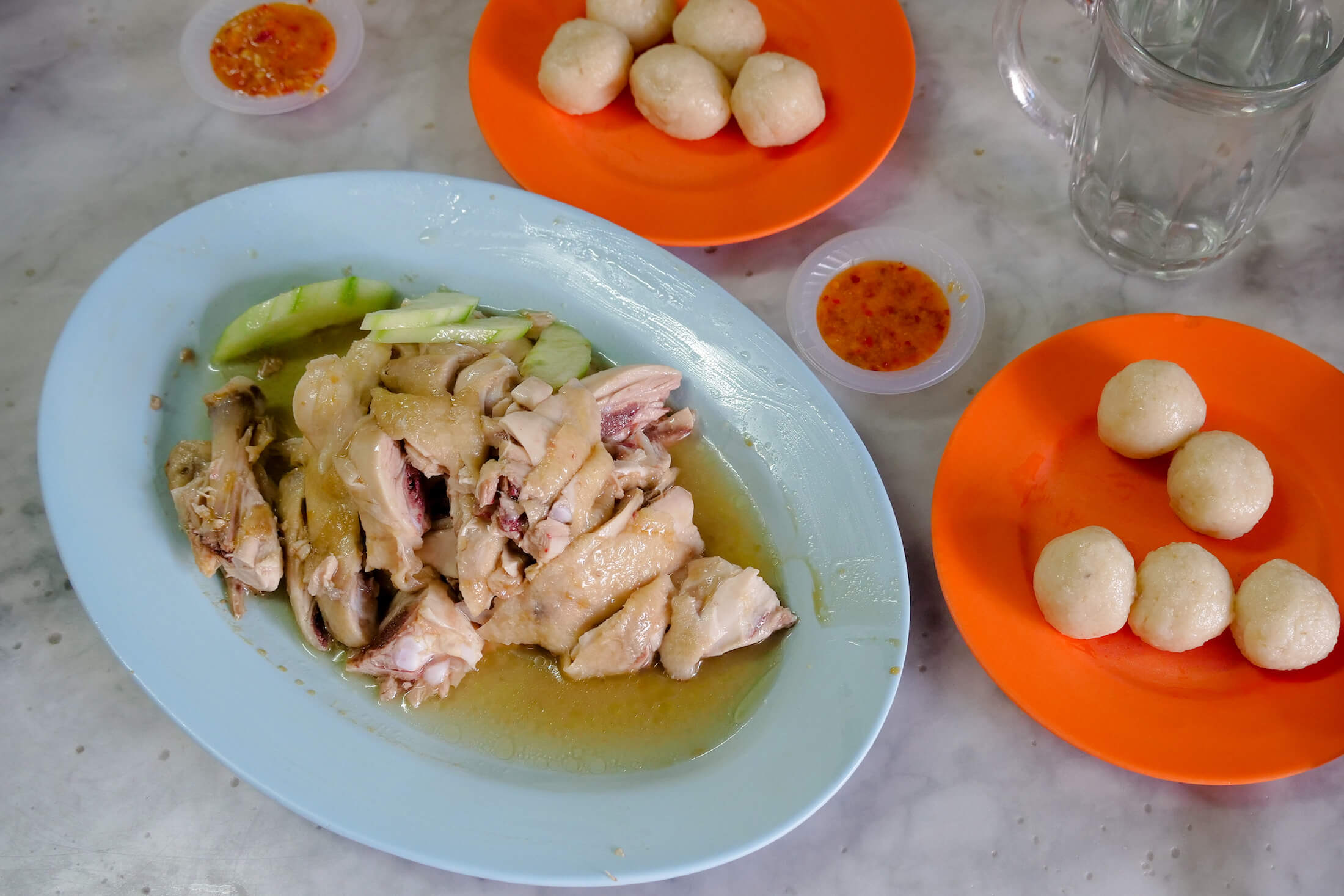
In Melaka, this adaptation took a distinct physical form: the rice ball. Historical accounts indicate that early Hainanese laborers, fishermen, and itinerant vendors needed a practical method to transport their midday meals into the rubber estates, tin mines, and hills where they worked. By compressing the warm, chicken-broth-infused rice tightly by hand into spherical shapes, workers created a portable, resilient meal that remained intact throughout the workday. Over generations, what began as a pragmatic solution for field laborers evolved into a localized delicacy unique to Melaka and select regions of the Malay Peninsula.
Culinary Anatomy of a Melaka Staple
Kedai Kopi Chung Wah continues to produce chicken rice balls using traditional methodology that prioritizes labor-intensive preparation over industrial efficiency. The operational process begins hours before the establishment opens its doors at 9:00 a.m.
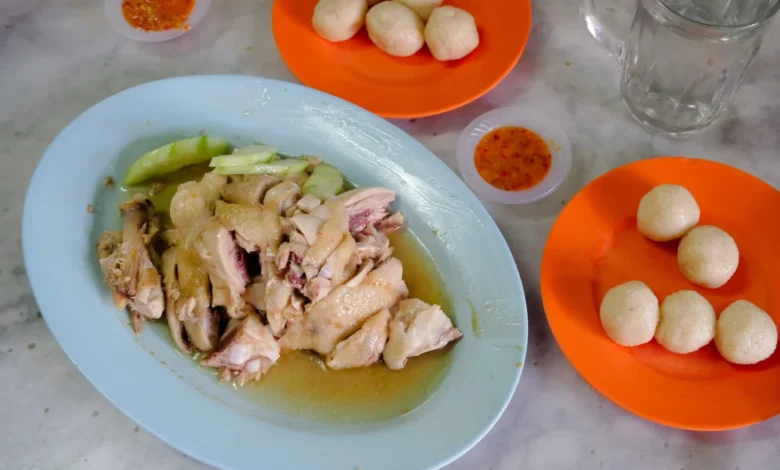
The rice preparation is distinct from standard steamed white rice. High-quality rice is cooked in rich chicken stock rendered from boiling whole birds, infused with rendered poultry fat, ginger, garlic, and pandan leaves. Once cooked, while still hot, the rice is meticulously shaped by hand into dense, cohesive spheres. This technique compresses the starch, yielding a firm yet tender texture reminiscent of scorched rice crusts found at the bottom of traditional cooking vessels, imparting a subtle, smoky aroma and savory depth.

The accompanying protein consists of poached chicken, chopped swiftly into bite-sized portions while retaining its succulence. The poultry is typically served at room temperature or slightly warm, featuring a delicate, gelatinous skin seasoned with sesame oil and soy-based infusions.
Crucial to the dish is the proprietary dipping sauce. Diverging from the ginger-scented scallion oils or dark soy sauces common in Singaporean or Hainanese-style chicken rice outlets elsewhere, the version served at Kedai Kopi Chung Wah relies on a heavy vinegar base infused with substantial quantities of garlic and bird’s eye chilies. This sharp, acidic, and fiery profile cuts through the rich, gelatinous qualities of the chicken and the starchy density of the rice balls, creating a balanced flavor profile characteristic of Malaccan-Chinese fusion cuisine.
Operational Dynamics and Consumer Experience
Located strategically at the foot of the bridge leading to Jonker Street—Melaka’s primary pedestrian thoroughfare—Kedai Kopi Chung Wah operates within a traditional kopitiam (coffeeshop) environment. The establishment runs on high-volume, rapid-turnover logistics designed to manage continuous daily queues.

The ordering process is streamlined to maximize efficiency during peak morning and afternoon rushes. Servers evaluate party sizes upon entry, dictating the volume of rice balls served, typically quantified by the head count. Diners then select their chicken portions—available in half or whole configurations. Given the limited seating capacity and sustained demand, the dining experience is intentionally brisk; patrons frequently secure tables in coordination with incoming staff bearing food orders.
Economic and Tourism Impact
Gastronomy tourism serves as a major economic driver for Melaka, contributing significantly to the state’s hospitality and retail sectors. Kedai Kopi Chung Wah exemplifies the intersection of heritage preservation and commercial tourism. Priced affordably—with average meals, including chicken, rice balls, and traditional beverages like Nanyang-style coffee or tea, totaling approximately 28 Malaysian Ringgit (USD $6.77)—the restaurant provides high-value cultural tourism accessible to a broad demographic.
Local food historians and tourism authorities note that establishments like Kedai Kopi Chung Wah play a critical role in safeguarding intangible cultural heritage. As modernization alters urban landscapes across Southeast Asia, family-run culinary institutions preserve pre-war cooking techniques that might otherwise be lost to industrialization and commercial standardization.

Broader Culinary Ecosystem of Melaka and Malaysia
While Hainanese chicken rice balls remain a primary draw for visitors to Jonker Street, they exist within a broader culinary ecosystem shaped by Melaka’s history as a major maritime trading hub. The region is equally renowned for Peranakan (Straits Chinese) and Nyonya cuisines, which synthesize Chinese ingredients with Malay spices, herbs, and cooking methods.
Furthermore, culinary exploration extending northward toward states such as Kelantan and Terengganu reveals distinct regional dishes, including culinary preparations utilizing fermented durian, locally known as tempoyak. These diverse foodways underscore Malaysia’s broader cultural mosaic, where immigration, trade, and indigenous traditions have converged to create one of the world’s most dynamic gastronomic landscapes.
Practical Information for Visitors

For travelers planning to visit Kedai Kopi Chung Wah, practical logistical considerations include:
- Location: Situated on a prominent corner facing Jonker Street, Melaka, immediately across the local pedestrian bridge.
- Operating Hours: Open daily from 9:00 a.m. to 3:00 p.m. on weekdays, and extending until 4:00 p.m. on weekends, subject to early closure upon selling out of daily provisions.
- Recommendations: Arriving promptly at opening is advised to minimize wait times, given the consistent queues formed by tourists and culinary researchers alike. Parking in the immediate vicinity requires careful attention to local municipal road markings and traffic regulations.