Nutritional Composition and Dietary Utility
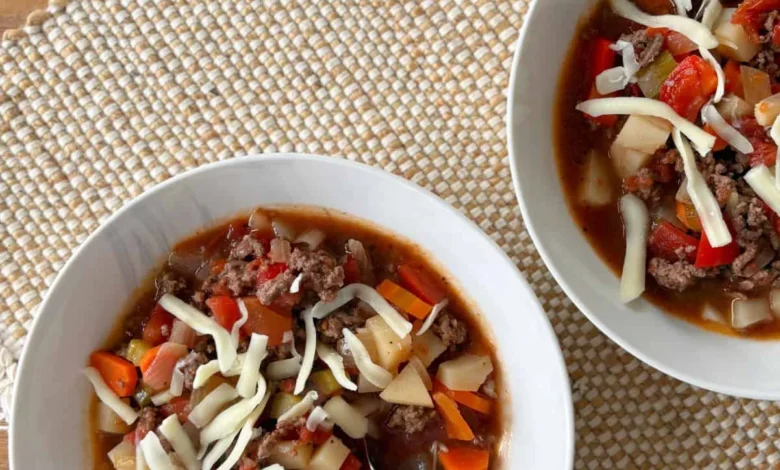
The structural integrity of this stew is rooted in a balance of lean protein and complex carbohydrates. Nutritional analysis indicates that a standard serving of this dish provides approximately 178 kilocalories, containing roughly 14 grams of protein and 16 grams of carbohydrates. The inclusion of carrots and celery contributes essential dietary fiber and a significant volume of Vitamin A, while potatoes serve as the primary source of sustained energy.

From a dietician’s perspective, the use of ground beef allows for easier portion control and faster nutrient absorption compared to whole-muscle cuts. Because the preparation method involves simmering all ingredients in a single vessel, the water-soluble vitamins leached from the vegetables during the cooking process are retained within the broth, preventing the common nutritional loss associated with boiling or steaming vegetables separately.
Historical Context and Evolution of the One-Pot Method
The origins of hamburger-based stews can be traced to the mid-20th century, a period marked by the widespread adoption of domestic appliances like the Dutch oven and the emergence of more accessible, pre-processed ground meats in grocery retail. Before this era, stews were primarily long-form affairs, requiring tougher cuts of beef—such as chuck or round—that demanded slow-cooking to break down collagen and connective tissues.

The pivot toward ground beef represented a shift in domestic efficiency. During the post-war economic expansion, the demographic increase in two-income households necessitated faster dinner solutions. Culinary historians often point to the 1950s and 60s as the decade where "quick-stew" variations began appearing in community cookbooks, emphasizing the ability to produce a meal in under 60 minutes. This shift mirrors broader trends in the American food industry, where convenience and time-to-table metrics became as critical as flavor profiles.
Technical Preparation and Cooking Methodology
The efficiency of this dish relies on the Maillard reaction, which occurs during the initial browning of the ground beef. By searing the meat in the bottom of a heavy-bottomed pot or Dutch oven, cooks create a foundation of caramelized proteins that provide depth to the final broth. The subsequent deglazing process—often involving the addition of liquid such as water, stock, or a small amount of wine—releases these browned bits, known as fond, which act as the primary flavoring agent.

A critical aspect of the preparation involves the timing of vegetable integration. To maintain the structural integrity of potatoes and carrots, they are added after the meat has been browned. The simmering phase, which typically lasts between 30 and 40 minutes, is designed to soften the starches in the potatoes until they begin to release a small amount of amylose, which acts as a natural thickening agent for the broth. This removes the need for traditional flour-based roux, further streamlining the process.
Economic Implications for Household Budgeting
In the current economic climate, where food inflation remains a concern for many households, the economics of hamburger stew are particularly relevant. Ground beef is consistently priced lower than steak or roast cuts, making it a highly accessible protein. Furthermore, the vegetable components—potatoes, onions, and carrots—are categorized as "storable staples."

Data from consumer research groups suggests that families can reduce their weekly grocery expenditure by approximately 15% when incorporating one-pot meals that utilize seasonal root vegetables. Because the recipe is highly modular, it allows for the integration of "near-expiry" produce, effectively acting as a strategy for household waste reduction. By incorporating frozen peas or corn, families can extend the shelf life of the meal, with the stew maintaining its quality in refrigeration for up to four days.
Culinary Versatility and Modern Adaptations
The adaptability of the dish allows it to serve as a baseline for various dietary modifications. For consumers seeking lower fat content, ground turkey or chicken serves as a viable substitute, though this often requires the addition of herbs or a higher-quality beef bouillon to replicate the savory depth provided by red meat.

The question of potato selection remains a point of technical debate among home chefs. While yellow or Yukon Gold potatoes are favored for their creamy texture and ability to maintain shape during extended simmering, the use of Russet potatoes is a strategic choice for those desiring a thicker, more rustic consistency. The high starch content of the Russet facilitates a natural emulsification of the tomato-based broth, resulting in a more cohesive, "heartier" final product.
Strategic Storage and Reheating Protocols
One of the often-overlooked benefits of hamburger stew is its performance as a "next-day" meal. Unlike many delicate dishes, the chemical composition of the stew benefits from a resting period in the refrigerator. During this time, the flavors of the aromatics—specifically onion, celery, and the tomato base—continue to penetrate the beef and potatoes, resulting in a more complex flavor profile upon reheating.

For optimal food safety and quality, the stew should be cooled to room temperature within two hours of cooking and stored in an airtight, non-reactive container. When reheating, it is recommended to add a small amount of water or beef stock, as the starches in the potatoes will continue to absorb moisture even while chilled. Gentle heating on a stovetop, rather than high-heat microwave intervals, prevents the vegetables from becoming overly mushy, preserving the intended texture.
Broader Implications for Modern Nutrition
The continued relevance of recipes like this signifies a return to foundational, ingredient-focused cooking. In an era dominated by processed, ready-to-eat meals, the resurgence of one-pot stews reflects a growing consumer preference for "visible ingredients." When a consumer prepares a dish with fresh produce and minimal processing, they regain control over the salt and fat content, two variables that are often excessively high in pre-packaged alternatives.

Furthermore, the social aspect of such meals cannot be discounted. Unlike individual-portion meals, the batch-cooking nature of a stew encourages communal dining, which is linked to better digestion and improved psychological well-being. By providing a low-barrier-to-entry recipe that yields multiple servings, the hamburger stew serves as a vital tool for families navigating the pressures of time-constrained modern life.
As the culinary landscape evolves, the focus on efficiency will likely remain a priority. Future iterations of this dish may incorporate modern kitchen technologies such as pressure cookers or induction heating, which could potentially reduce the cooking time to under 20 minutes. However, the fundamental structure—a combination of accessible protein, root vegetables, and a savory liquid base—will undoubtedly remain a cornerstone of home-cooked, nutritious, and economically responsible dining for years to come.