A Vibrant Twist on Tradition: Sweet Potato and Russet Mash Drizzled with Smoky Chipotle Cashew Cheese Garnishes Holiday Tables Worldwide

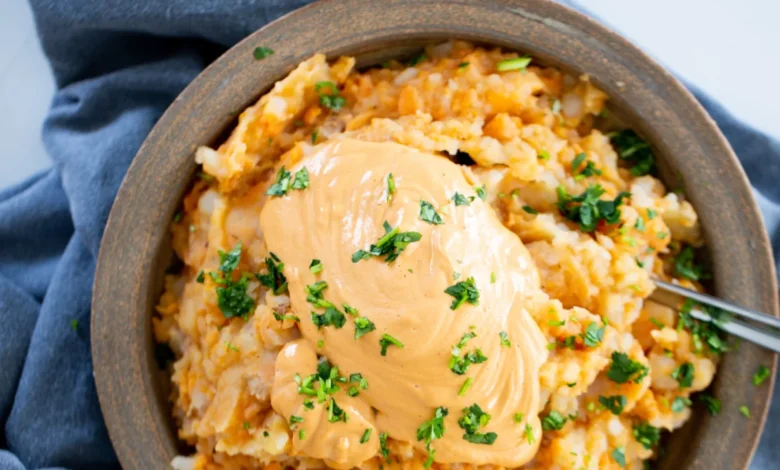
The culinary landscape of contemporary holiday celebrations has undergone a quiet yet profound revolution over the past decade, shifting away from heavily dairy-laden comfort foods toward plant-forward innovations that do not sacrifice richness or flavor. Among the most notable contributions to this gastronomic evolution is a creative reimagining of the classic holiday side dish: a blended potato and sweet potato mash topped with a dairy-free, smoky chipotle cashew cheese sauce. Originally conceptualized and published by culinary writer and recipe developer Alejandra Graf on her platform Piloncillo y Vainilla, this vibrant orange dish has transcended its origins as a seasonal alternative for Thanksgiving and Christmas to become a year-round staple in modern households. By combining traditional agricultural staples with contemporary vegan techniques, this recipe highlights how global home cooking continues to adapt to the rising demand for inclusive, allergen-friendly, and flexitarian dining options.
Main Facts and Culinary Mechanics

At its core, the dish relies on a deliberate balance of starches and textures. Traditional holiday mashes often lean entirely on Russet or Yukon Gold potatoes, resulting in a uniform pale color and a heavy reliance on butter and heavy cream for moisture. Graf’s variation introduces sweet potatoes into the mix, which not only imparts a naturally brilliant orange hue and subtle sweetness but also increases the nutritional profile of the side dish by introducing higher levels of beta-carotene, Vitamin A, and dietary fiber.
However, achieving the proper texture requires adherence to strict culinary science. According to professional culinary guidelines emphasized in the recipe, blenders and immersion blenders must be strictly avoided when processing potatoes and sweet potatoes. Mechanical blades rupture the plant cell walls, releasing excess starch and converting the mixture into an unpalatable, gummy, and gluey paste. Instead, traditional hand-mashing techniques are required to preserve a rustic, comforting texture that holds its structure on the plate. Furthermore, utilizing reserved cooking water—rich in released starches—acts as a natural emulsifier to achieve creaminess without relying on heavy dairy products.
Complementing the starchy base is a vibrant, dairy-free chipotle cashew cheese sauce. Designed to be prepared in a standard blender, the sauce utilizes raw cashew nuts soaked in hot water for thirty minutes or room temperature water for four hours to soften them. Once blended with chipotle peppers in adobo and other complementary seasonings, the cashews emulsify into a rich, velvety sauce that mimics the mouthfeel of traditional cheddar or queso sauces. This component provides a sharp, smoky contrast to the earthy sweetness of the potato and sweet potato blend, elevating a humble side dish into a sophisticated centerpiece of flavor.
Chronology of Plant-Based Holiday Evolution
The trajectory of plant-based cooking within mainstream holiday menus can be traced through distinct phases over the last fifteen years.
In the early 2010s, vegan and gluten-free recipes were largely marginalized, frequently treated as niche alternatives relegated to specialized blogs or separate cookbooks. When Graf initially published her sweet potato and potato mash recipe in November 2014, the mainstream culinary market was only beginning to acknowledge the demand for inclusive holiday dishes that could cater to vegans, vegetarians, and those with lactose or gluten intolerances simultaneously.

Between 2015 and 2020, societal shifts toward flexitarianism accelerated rapidly. Consumer data from major market research firms indicated a massive surge in plant-based product sales, driven by health consciousness, environmental concerns, and ethical considerations. During this period, recipes that bridged traditional comfort food with modern dietary restrictions gained mainstream traction. Food media outlets began dedicating significant portions of their November and December publications to inclusive holiday menus, ensuring that guests with dietary restrictions were not relegated to uninspired side salads.
By the mid-2020s, the culinary mainstream fully embraced hybrid dishes like the chipotle-drizzled potato and sweet potato mash. The recipe’s enduring popularity—spurring periodic updates and widespread social media sharing across platforms like Pinterest—underscores a permanent shift in how families approach holiday gatherings. Rather than preparing entirely separate meals for dietary outliers, hosts increasingly opt for dishes that appeal universally to all guests, regardless of their specific dietary framework.
Supporting Data and Nutritional Insights

Nutritional analysis of the dish reveals a remarkably balanced profile for a holiday comfort food. Standard nutritional data per serving indicates an approximate caloric count of 84 kilocalories, making it significantly lighter than traditional butter-and-cream-laden counterparts while maintaining a satisfying culinary experience.
The breakdown of a single serving highlights its nutritional density:
- Carbohydrates: 18 grams, primarily sourced from complex carbohydrates and dietary fiber (3 grams), which promote sustained energy and digestive health.
- Protein: 3 grams, supplemented naturally by the protein content inherent in both root vegetables and raw cashews.
- Fats: 1 gram of total fat, with negligible saturated fat, owing to the absence of traditional dairy butter in the base mash.
- Micronutrients: Exceptional levels of Vitamin A (approximately 6,160 International Units per serving) derived from the sweet potatoes, alongside notable contributions of Vitamin C (9 mg), potassium (439 mg), calcium (34 mg), and iron (3 mg).
These figures demonstrate that substituting or blending traditional heavy dairy ingredients with nutrient-dense root vegetables and nut-based emulsions does not merely serve dietary restrictions; it actively enhances the micronutrient intake of holiday meals.

Global Adaptability and Zero-Waste Implications
Beyond its role as a holiday side dish, the culinary framework of the recipe exhibits high versatility and adaptability across different cultural cuisines. Because the base mash is naturally gluten-free and easily adapted to be entirely dairy-free or flexitarian—allowing users to choose between plant-based fats or traditional dairy finishes depending on household preferences—it serves as a blank canvas for everyday cooking.
Furthermore, the recipe aligns with modern sustainability and zero-waste initiatives. Root vegetable mashes frequently generate leftovers during large holiday gatherings. Rather than letting surplus food go to waste, the base can be repurposed into entirely different dishes. Culinary traditions across Latin America, for instance, frequently utilize leftover potato mashes as fillings for savory street foods such as crispy flautas or tostadas, a practice explicitly endorsed by the recipe’s developer. This cross-utilization reduces household food waste and stretches grocery budgets, an increasingly vital consideration for modern consumers navigating economic pressures.

Implications for the Modern Food Industry
The sustained popularity of creative, plant-forward adaptations of traditional comfort foods points to broader implications for the food and beverage industry. Food manufacturers, restaurant chains, and culinary media companies continue to observe that consumers are no longer willing to compromise on taste for the sake of dietary health or inclusivity. Dishes that successfully marry bold, globally inspired flavors—such as the smoky heat of chipotle peppers combined with the creamy richness of cashew emulsions—set a new benchmark for what inclusive dining should entail.
As demographic shifts continue to favor diverse flavor profiles and health-conscious eating habits, traditional holiday tables will likely see even greater integration of global ingredients. Recipes that honor cultural fusion while remaining accessible to home cooks demonstrate that the future of comfort food lies not in preserving rigid culinary boundaries, but in thoughtfully expanding them to welcome every guest to the table.