Unearthing Brazil Culinary Heritage: A Deep Dive into Bar Do Careca and the Legendary Feijao Tropeiro in Belo Horizonte

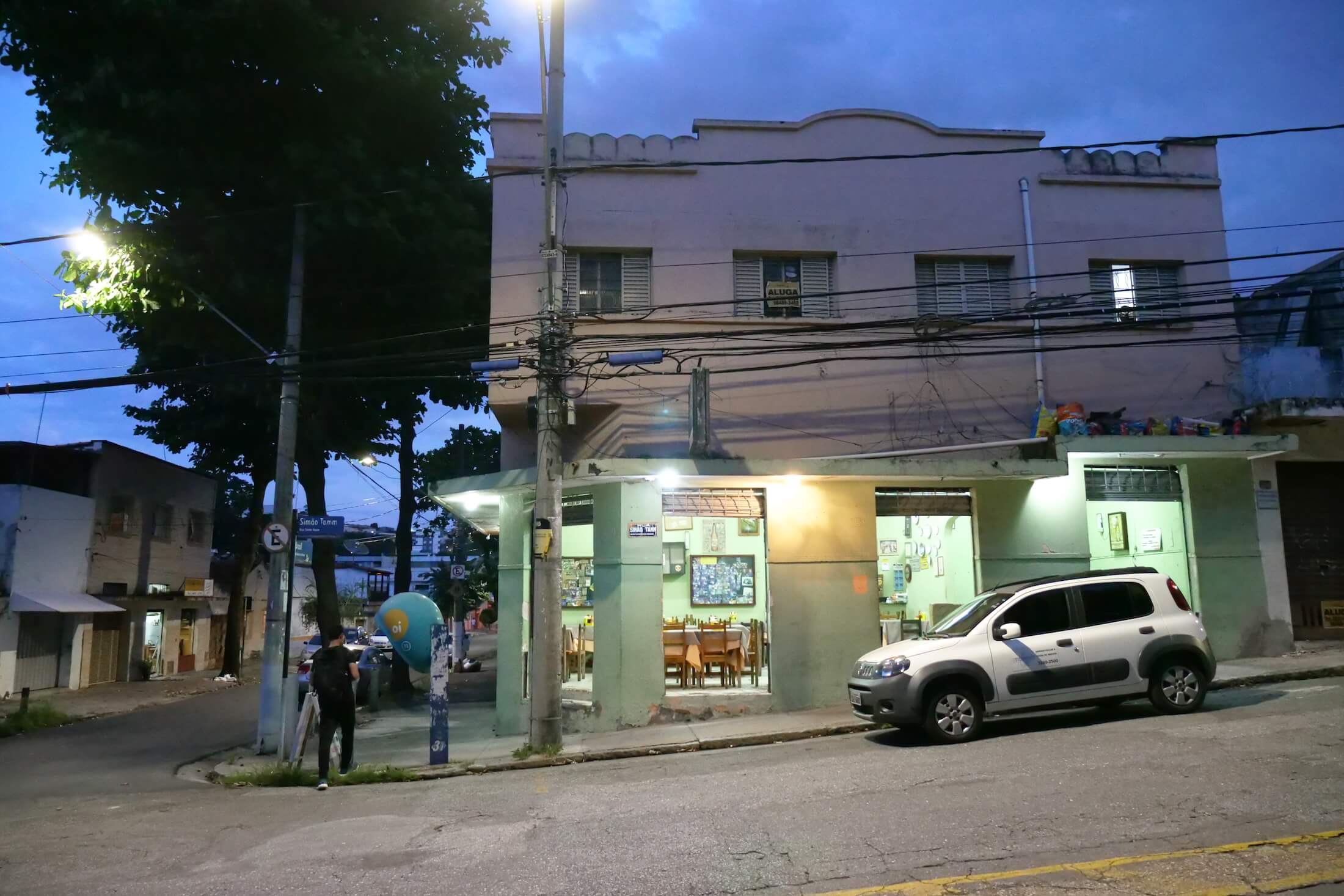
The gastronomic landscape of Brazil is frequently defined by coastal seafood traditions and the grand, festive scope of churrascaria culture. However, traveling inland to the state of Minas Gerais reveals a deeply rooted culinary identity characterized by rustic comfort foods, slow-simmered broths, and centuries-old preservation techniques. At the heart of this culinary tradition is Belo Horizonte, a metropolis widely celebrated by local epicures as an authentic crucible of Brazilian home cooking. Within this quiet, unassuming neighborhood lies Bar Do Careca, an institution that has spent decades defining the gold standard for traditional Minaneiro cuisine.

The Legacy of Bar Do Careca
Established six decades ago, Bar Do Careca represents a disappearing breed of neighborhood eateries where culinary mastery is measured by consistency, heritage, and the meticulous preparation of foundational ingredients. The establishment is anchored by Mr. Orcino, a veteran restaurateur with a 60-year career in the hospitality industry, alongside his wife and a dedicated kitchen staff. Notably, the core team features culinary artisans who have spent 30 years refining their craft within these walls.
Operating out of a modest storefront in a residential district of Belo Horizonte, the restaurant defies expectations. While the exterior suggests a simple neighborhood watering hole, the sensory experience upon entry is profound. The air is consistently heavy with the aromatic symphony of frying onions, garlic, peppers, and high-grade olive oil. The restaurant’s enduring reputation has even attracted global culinary icons, including a documented visit by the late Anthony Bourdain, cementing its status as a pilgrimage site for serious food travelers.
Anatomy of Minaneiro Staples: Jiló and Bife de Panela
The menu at Bar Do Careca functions as a masterclass in regional Brazilian gastronomy, relying heavily on the triumvirate of local cooking: complex beans, deeply savory cuts of meat, and robust starches such as manioc (cassava) and potatoes.
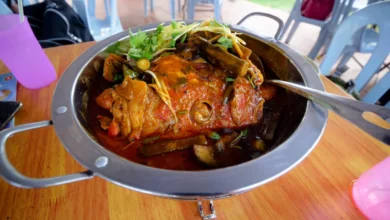
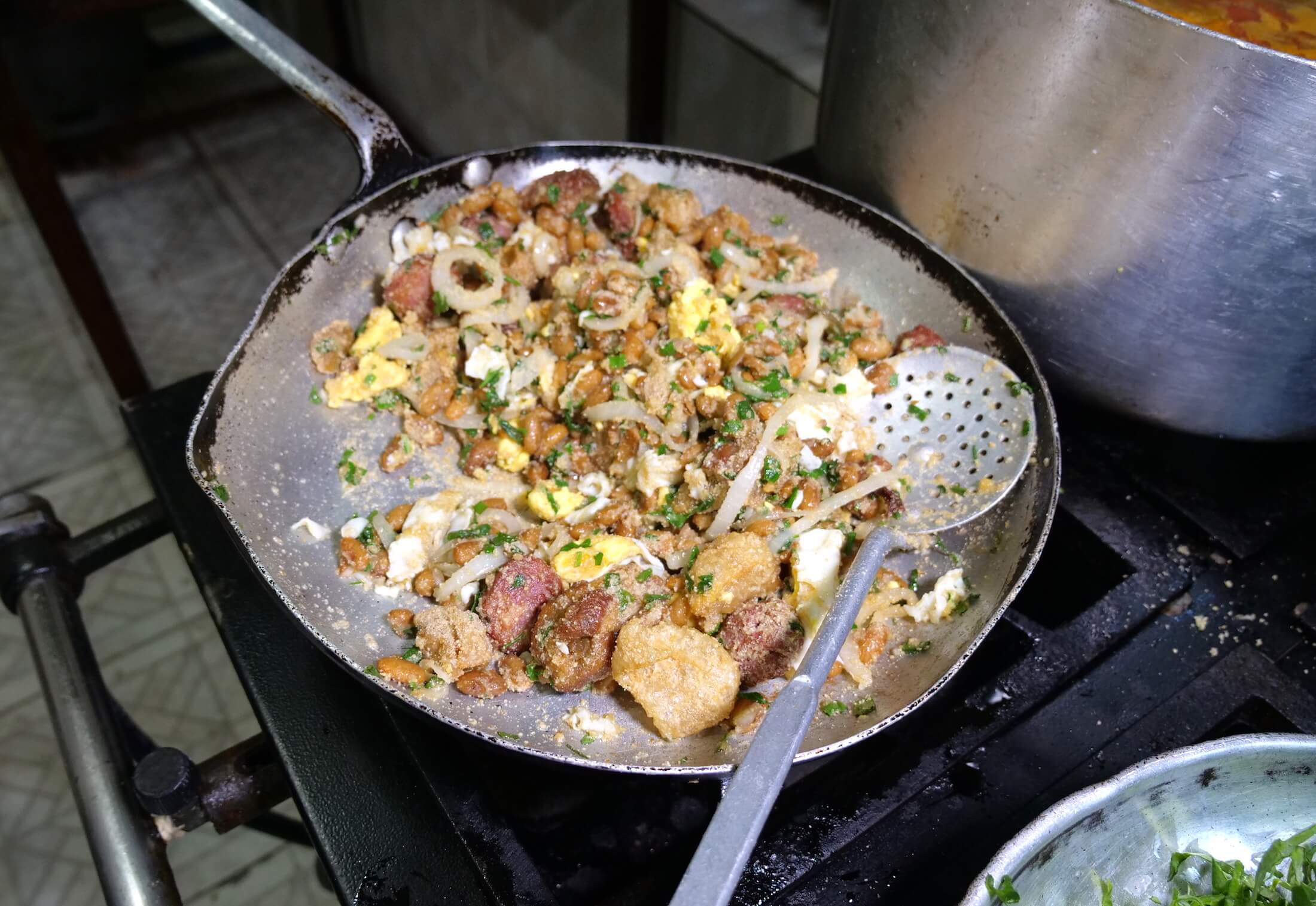
Among the standout vegetable preparations is the Jiló, known internationally as the scarlet eggplant. Unlike the often-mushy texture associated with standard globe eggplants, the scarlet eggplant at Bar Do Careca is fried to a firm consistency in olive oil, garlic, and onions, occasionally paired with beef liver. The vegetable yields a distinct, complex bitterness that acts as a sophisticated counterpoint to the heavy, meat-forward dishes on the table. In broader regional contexts, Jiló is integrated into various morning dishes throughout Belo Horizonte’s central market, often accompanied by strong cane alcohol, chili oil, and thick cuts of pork crackling.
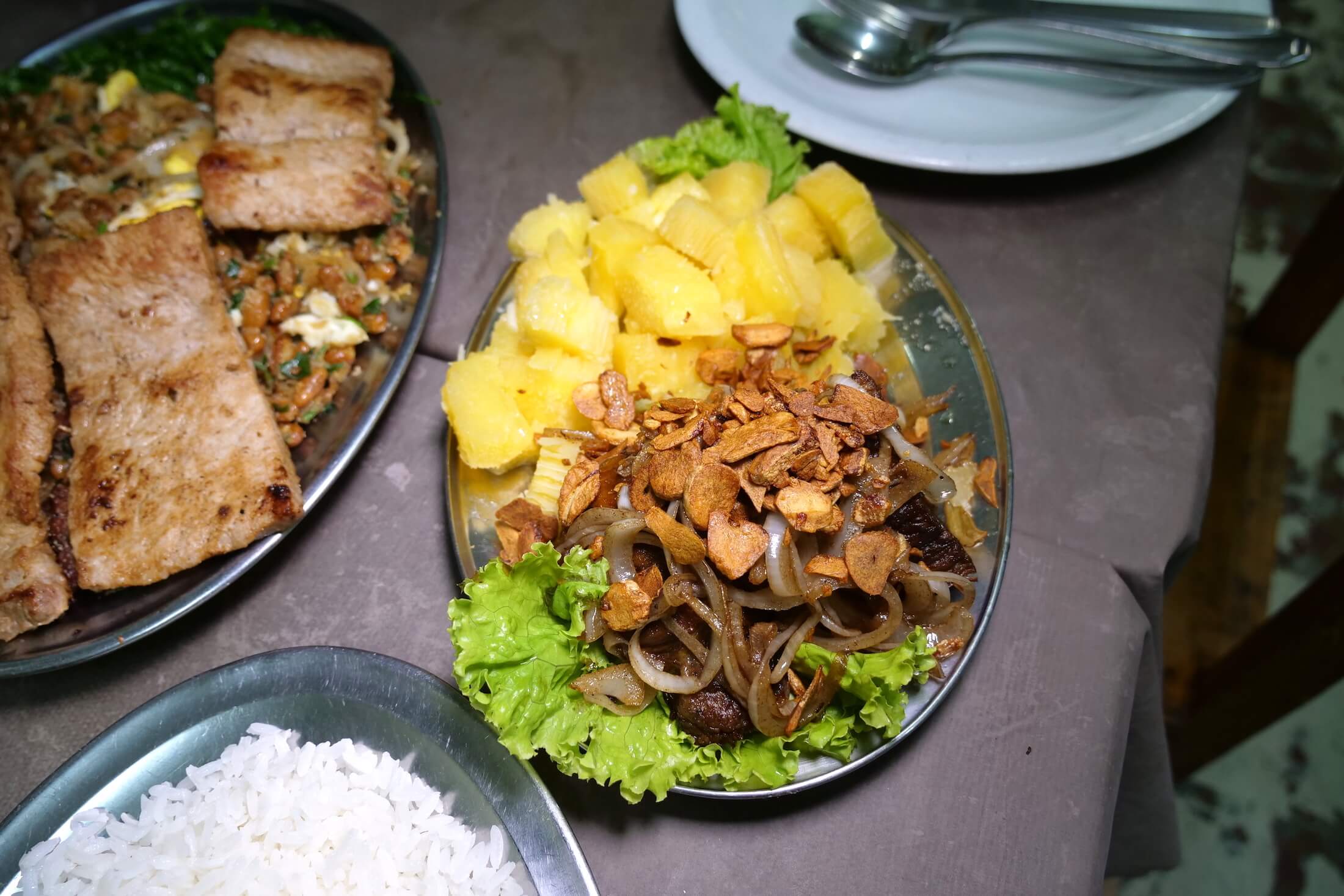
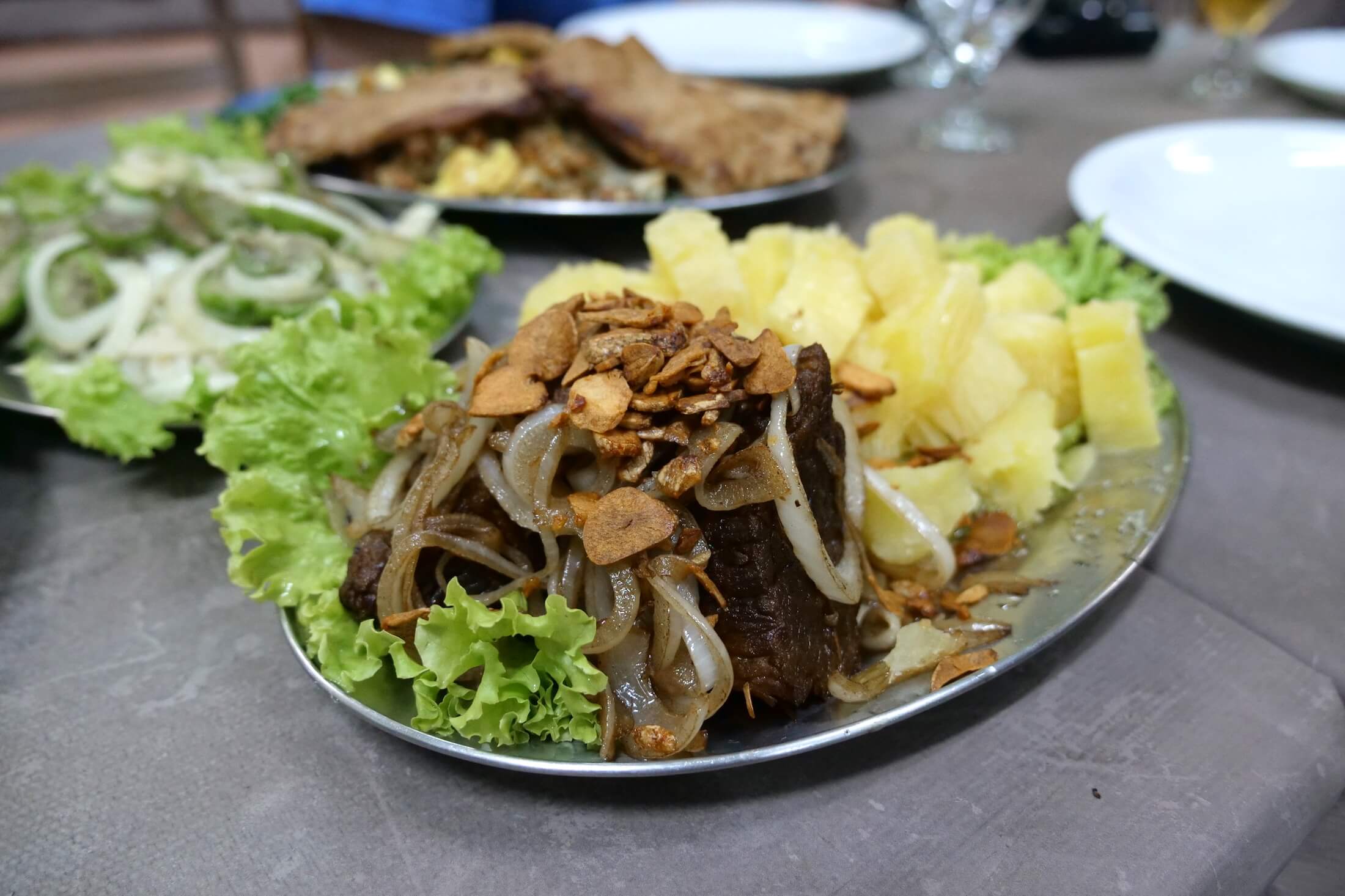
Complementing the vegetable offerings is the Bife de Panela (pan-cooked beef). This slow-cooked roast beef is heavily layered with crushed garlic and onions, then finished with a secondary round of deep-fried garlic cloves. Served alongside steaming mounds of cassava or potatoes, the dish exemplifies the Minaneiro philosophy of utilizing simple, carbohydrate-rich staples to balance an otherwise intense concentration of aromatics and rendered fats.
Feijao Tropeiro: The Culinary Masterpiece
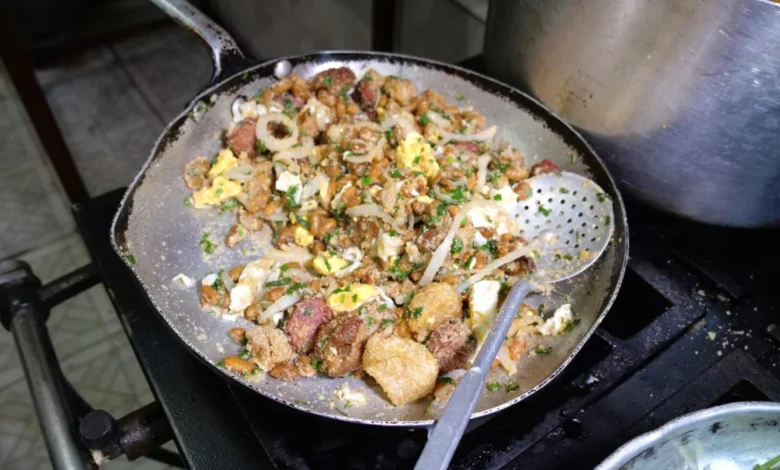
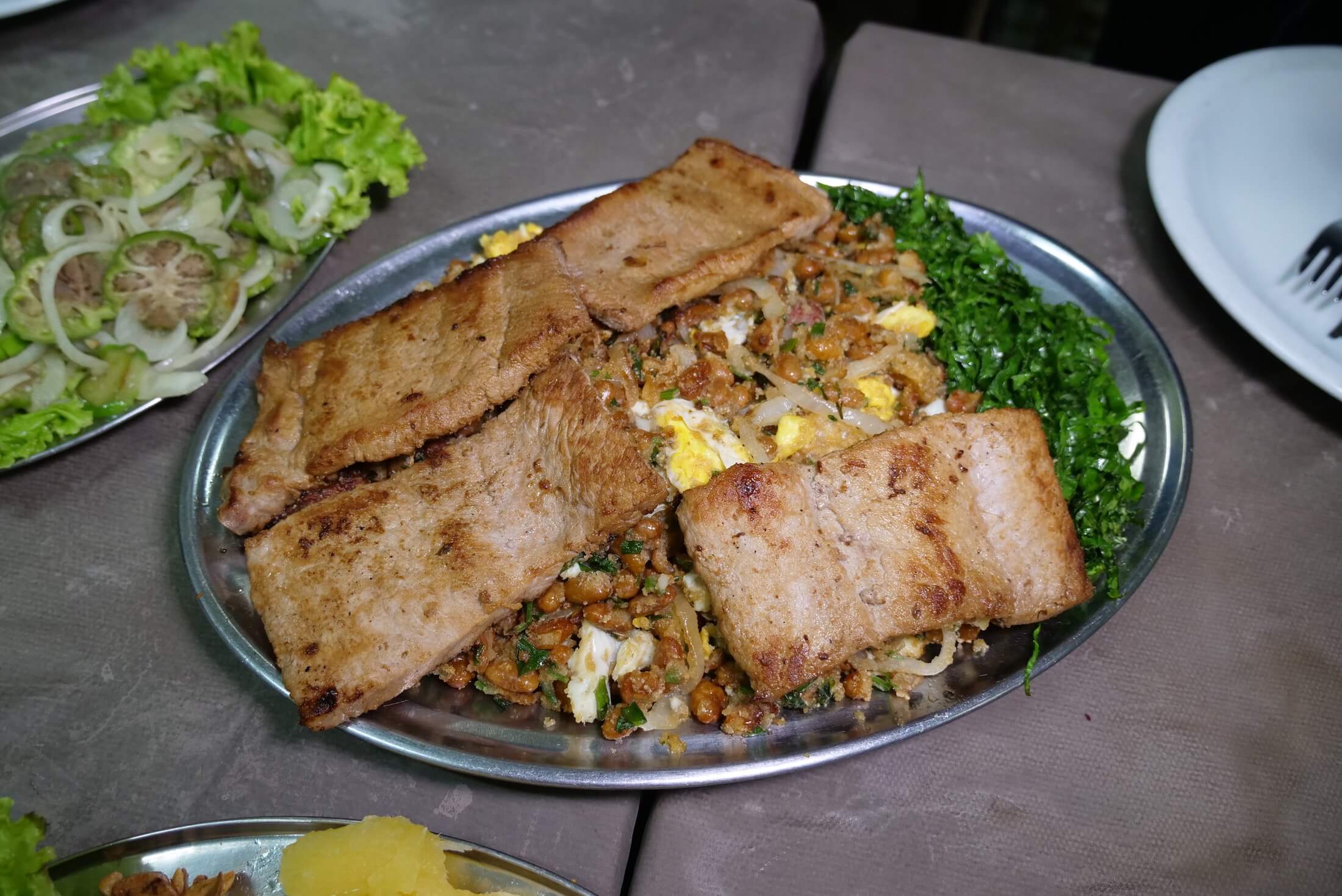
The undisputed crown jewel of Bar Do Careca is the Feijao Tropeiro, a dish that transcends mere comfort food to become a historical artifact on a platter. Served on a large, oblong silver tray designed for communal dining, this formidable creation combines multiple layers of proteins, legumes, and starches into a cohesive, intensely flavorful experience.
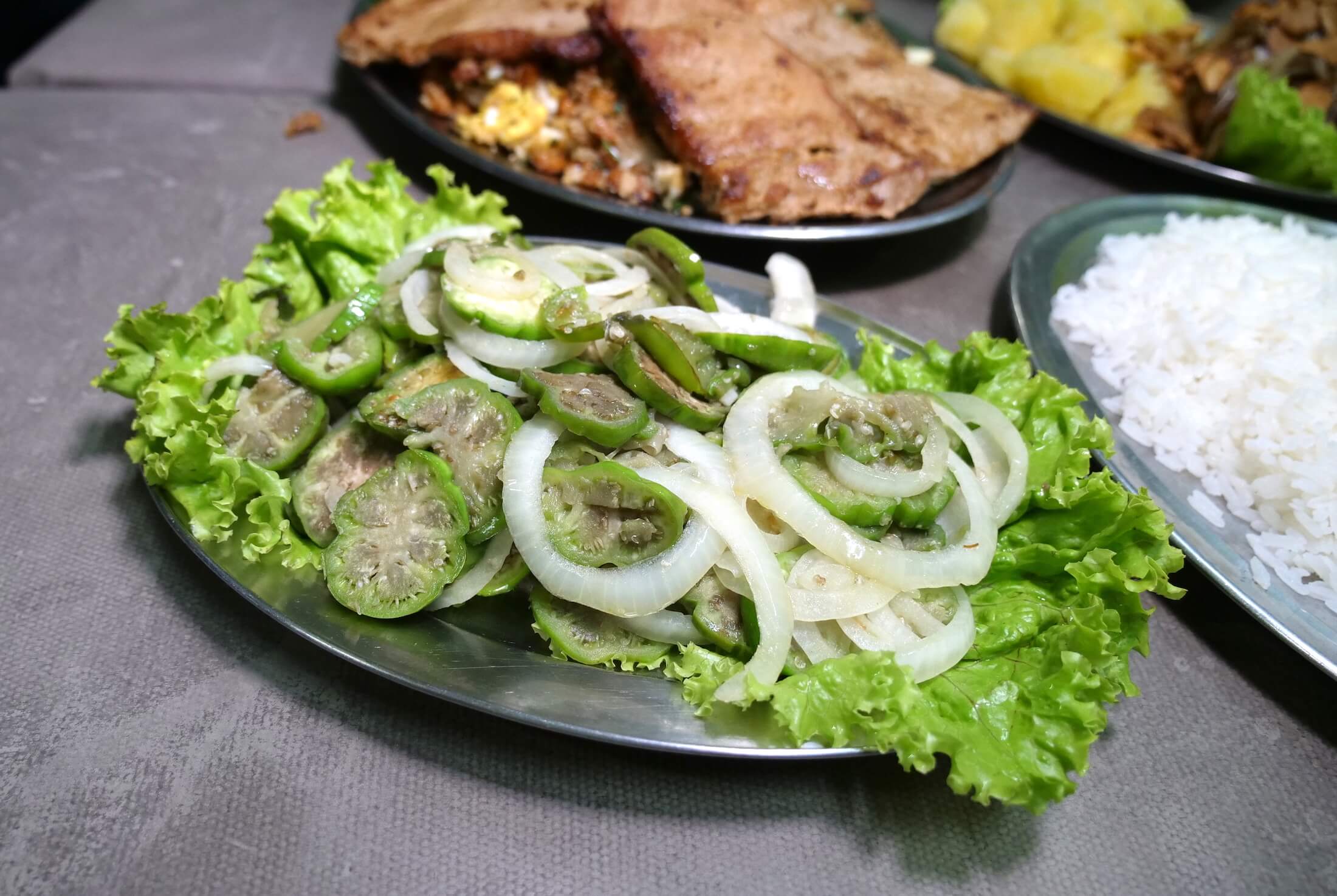
The creation of Feijao Tropeiro is a multi-stage culinary performance executed by the veteran kitchen staff. The process begins in the primary pan, where brown beans and large quantities of sliced onions are sautéed. Simultaneously, a secondary pan renders additional garlic and onions in olive oil to be folded in near the end of the cooking process.
The protein component is exceptionally dense, incorporating chopped pork sausage and substantial pork cracklings. Unlike standard airy cracklings, these are derived from thick cuts of pork—essentially double-deep-fried pork chops broken down into the base. This is followed by the integration of four deep-fried eggs, fresh cilantro, green onions, and farinha (coarse-ground dry cassava flour).
To prevent the dish from drying out during intense high-heat cooking, the chefs utilize a mother pot of vegetable broth—a daily-prepared stock simmering with red beans, tomatoes, garlic, onions, and peppers. Finally, a fourth pan sears fine strips of kale just long enough to retain their structural integrity and vibrant green hue. The dish is crowned not merely as a garnish, but with expansive, long strips of freshly seared pork chops laid flat across the summit of the bean mixture.
Historical Origins of Tropeiro Cuisine
The nomenclature of Feijao Tropeiro carries significant historical weight, referencing the Tropeiros—the iconic muleteers and cattle drovers of Brazil’s colonial era. During the 17th and 18th centuries, these traders undertook grueling journeys across the vast interior of Brazil, driving livestock and transporting supplies over immense distances.
Out of necessity, the Tropeiros developed a durable, calorie-dense cuisine that required minimal cooking equipment and relied heavily on non-perishable staples. Dried meats, nuts, and rehydratable flour or manioc powder formed the foundation of their diet. By cooking everything together in a single vessel, they created a hearty, filling mixture that was neither soup nor stir-fry, designed to sustain travelers through weeks of physical hardship. Over generations, this trail food was refined within the home kitchens of Minas Gerais into the sophisticated yet rustic delicacy served in modern establishments today.
Economic and Cultural Implications
Dining at Bar Do Careca offers broader insights into the socio-economic dynamics of regional tourism and cultural preservation in Brazil. While coastal tourism heavily promotes churrascarias and international fusion concepts, establishments in Minas Gerais preserve a vital link to the nation’s agrarian and colonial roots.
The affordability of such dining experiences further underscores their cultural accessibility. A comprehensive meal for four individuals, including generous portions of specialized proteins, starches, and beverages, typically totals around R$156 (approximately $40 USD). This pricing model ensures that high-calorie, culturally significant heritage foods remain accessible to the domestic working class while offering international visitors exceptional value.
Operational Logistics and Visitor Information
For travelers planning a visit to Bar Do Careca, located in Belo Horizonte, operational hours are structured to accommodate evening dining during the workweek and extended service over the weekend. The restaurant is open Tuesday through Friday from 6:00 PM to midnight, Saturdays from 11:00 AM to midnight, and Sundays from 11:00 AM to 6:00 PM, remaining closed on Mondays. Due to the limited seating and high demand for signature dishes like Feijao Tropeiro, early arrival is strongly advised to fully experience the hospitality and culinary heritage stewarded by Mr. Orcino and his team.