Conquering Wat Phu Tok: Thailand’s Most Daring Cliffside Temple Rises in Remote Bueng Kan

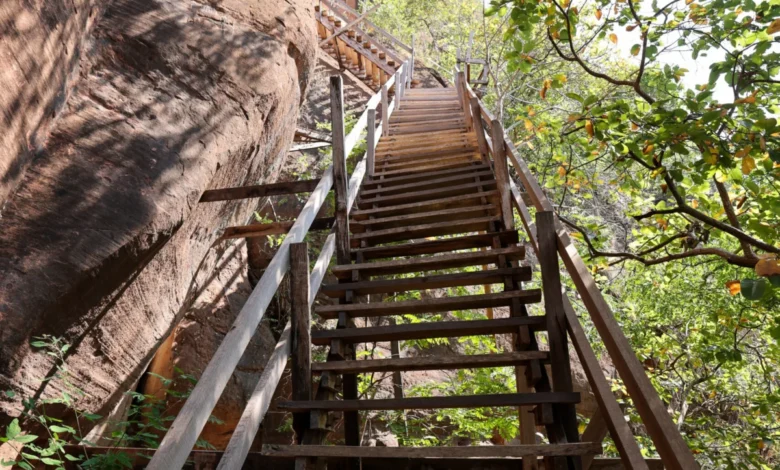
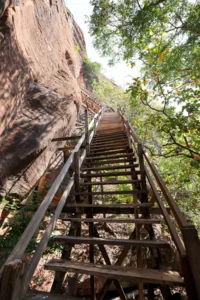
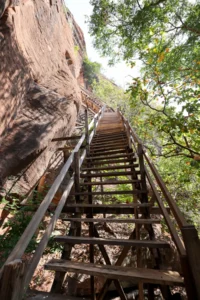
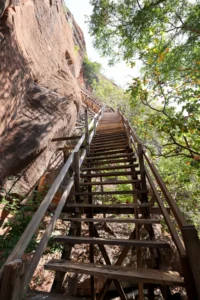
Nestled deep within Thailand’s northeastern Isan region, the remote province of Bueng Kan remains one of the country’s best-kept secrets for travelers seeking solitude, untouched nature, and off-the-beaten-path destinations. Rising dramatically from the flat, sprawling landscape is one of the most architectural and spiritual marvels in Southeast Asia: Wat Jetiyakhiri, more commonly known as Wat Phu Tok. Translating locally from the Isan dialect as the "Lonely Mountain," this 359-meter-high isolated sandstone formation bears a striking visual resemblance to Sri Lanka’s famed Sigiriya rock fortress. However, Wat Phu Tok distinguishes itself through a sprawling labyrinth of precarious wooden stairs, cliff-anchored walkways, and sacred meditation chambers designed to test the physical endurance and mental fortitude of monks and visitors alike.

Architectural Origins and Spiritual Chronology
The history of Wat Phu Tok is deeply intertwined with Buddhist asceticism and the pursuit of spiritual enlightenment in extreme isolation. Historically, the rugged terrain and dense forests surrounding the solitary sandstone mountain served as a natural habitat for diverse and often dangerous wildlife, particularly venomous snakes. This perilous environment, while formidable to the average traveler, made the site an ideal sanctuary for monks seeking deep, uninterrupted meditation.

The transformation of the isolated peak began under the guidance of the revered meditation master Phra Ajarn Juan Kulachettho (Monk Luang Pu Juan). Recognizing the spiritual potential of the landscape, Luang Pu Juan spearheaded the monumental engineering feat of constructing a series of wooden staircases, ladders, and suspension paths up the sheer rock faces. These pathways were deliberately engineered to connect a network of remote shrines and monastic cells.

Architecturally, the structure was built to embody Buddhist cosmology, specifically divided into seven distinct vertical levels that correspond directly to the seven stages of spiritual awakening and meditation in Buddhist philosophy. While Luang Pu Juan tragically lost his life in a high-profile aviation accident—an event that deeply shook the local monastic community—his legacy endures. The temple grounds continue to be meticulously maintained by succeeding generations of monks, preserving the site as both an active place of worship and a monumental feat of vernacular architecture.

Navigating the Seven Levels: A Structural Breakdown
Situated approximately a 30-minute drive from Bueng Kan city center, the temple complex welcomes visitors with a sprawling park area, a tranquil lake, and a large ground-level monastic complex. From there, the ascent begins.

The initial levels of the mountain feature relatively gentle forest trails that gradually transition into steeper wooden staircases. While the timber construction occasionally yields an unsettling creak or a slight downward bow underfoot, structural assessments and regular maintenance ensure a high degree of safety, despite the psychological challenge posed by the vertical height.

- Levels 1 through 4: These lower tiers serve primarily as transitional zones. Featuring modest shrines and dense vegetation, these levels prepare the pilgrim for the steeper ascents ahead, offering occasional glimpses of the surrounding forest canopy.
- Level 5: Serving as the central hub of the complex, the fifth level transitions away from narrow cliff paths onto broader ground. Here, visitors encounter the primary ordination hall, alongside numerous auxiliary shrines and meditation pavilions. A notable detour from this level leads adventurous travelers across an elevated rock walkway and a suspension bridge to an isolated rock temple nestled against the secondary flanks of the mountain.
- Level 6: Widely regarded as the psychological and aesthetic climax of the temple experience, the sixth level consists of a continuous path where roughly half of the circumference is composed of wooden planks bolted directly into the sheer vertical rock face. Walking this pathway offers sweeping panoramic vistas of the Mekong River basin and the unbroken canopy of the Isan countryside. While the cool mountain breezes and expansive horizons provide a profound sense of tranquility, the sheer drop-offs require absolute concentration, as a misstep on the narrow planks presents severe hazards.
- Level 7: The summit of Wat Phu Tok represents the final tier of the architectural layout. Devoid of the intricate wooden walkways found on the lower levels, the seventh tier is a densely forested plateau. Due to the historical proliferation of venomous snakes and the absence of established tourist infrastructure at the peak, access to the seventh level is officially designated as a high-risk area for visitors. Beyond the physical climb, the upper tier offers limited practical vantage points compared to the unobstructed views available on the sixth level.
Regional Impact and Tourism Implications
As Thailand seeks to diversify its tourism economy by promoting secondary provinces and reducing congestion in traditional hotspots like Bangkok, Chiang Mai, and Phuket, destinations like Bueng Kan are gaining strategic importance. Established as a separate province only in 2011 after being split from Nong Khai, Bueng Kan relies heavily on eco-tourism and cultural heritage sites to stimulate its regional economy.

Wat Phu Tok acts as a primary economic and cultural anchor for the province, drawing domestic pilgrims, architecture enthusiasts, and international adventure travelers. Tourism authorities note that while the site’s rugged infrastructure requires a moderate level of physical fitness and limits mass-market tourism, this exact constraint preserves the serene, meditative atmosphere that defines the temple’s core purpose.

For travelers planning an excursion to Bueng Kan, local tourism operators recommend visiting during the cooler dry season between November and February, wearing appropriate footwear with reliable traction, and exercising cautious adherence to safety protocols when navigating the cliffside paths. Ultimately, Wat Phu Tok endures not merely as a dramatic tourist attraction, but as a living monument where faith, architecture, and the raw power of the Isan wilderness intersect.