Unearthing Culinary Heritage: How Tugu View Cafe’s Iconic Fish Head Curry Defines Kuala Lumpur’s Gastronomic Identity


Kuala Lumpur’s dynamic culinary landscape is widely celebrated as one of the most culturally diverse food ecosystems in Southeast Asia, a distinction forged through centuries of historical trade, migration, and botanical abundance. At the heart of this vibrant food culture is the traditional Malaysian practice of nasi campur—a buffet-style dining format featuring steamed white rice piled high with an assortment of curries, meats, and fresh or cooked vegetables. Within this expansive culinary framework, specific regional specialties have emerged as cultural touchstones. Among these, the Malay-style Fish Head Curry, particularly as served at the Tugu View Cafe in Kuala Lumpur, stands out as a prime representation of Malaysia’s complex flavor profiles, marrying deep-rooted culinary traditions with native ingredients.
Historical Context and the Evolution of Malaysian Nasi Campur
The roots of Malaysia’s diverse food culture stretch back centuries, influenced heavily by waves of migration from India, China, the Middle East, and the broader Malay Archipelago. These historical trading routes introduced a rich tapestry of spices, cooking techniques, and ingredients that seamlessly integrated with local Southeast Asian produce. The result is a uniquely Malaysian gastronomy characterized by bold uses of lemongrass, galangal, chili, coconut milk, and tamarind.
Nasi campur, translating literally to "mixed rice," evolved as an egalitarian and highly efficient method of dining suited to the tropical climate and bustling rhythm of local life. Diners curate their own plates from dozens of warming trays containing proteins, vegetables, and gravies. According to culinary historians, the dish reflects the communal and multi-ethnic reality of Malaysia, where regional variations depend heavily on the demographic makeup of different states, ranging from the Thai-influenced profiles of Kelantan to the Chinese-inflected profiles of Penang. In Kuala Lumpur, the capital city, these regional styles converge, creating a competitive market for the country’s finest everyday meals.
Anatomy of a Culinary Landmark: Tugu View Cafe
Situated near the historic Tugu Negara (National Monument) and the sprawling Perdana Botanical Garden (formerly Lake Gardens), the Tugu View Cafe occupies a strategic geographic and cultural niche in Kuala Lumpur. Operating daily from 7:00 AM to 6:00 PM (excluding Sundays), the establishment has gained renown not merely for its standard nasi campur offerings, but specifically for its signature Fish Head Curry.
Named after the nearby Tugu Monument—a landmark built to commemorate the soldiers who fought for Malaysia’s independence—the cafe attracts a steady stream of locals, civil servants, and culinary tourists. The surrounding area holds significant historical weight, serving as a tribute to the nation’s sovereignty. The cafe’s proximity to these national monuments embeds it within a landscape of heritage tourism, making it a frequent stop for those exploring the capital’s green spaces and historical sites.

The Culinary Mechanics of Malaysian Fish Head Curry
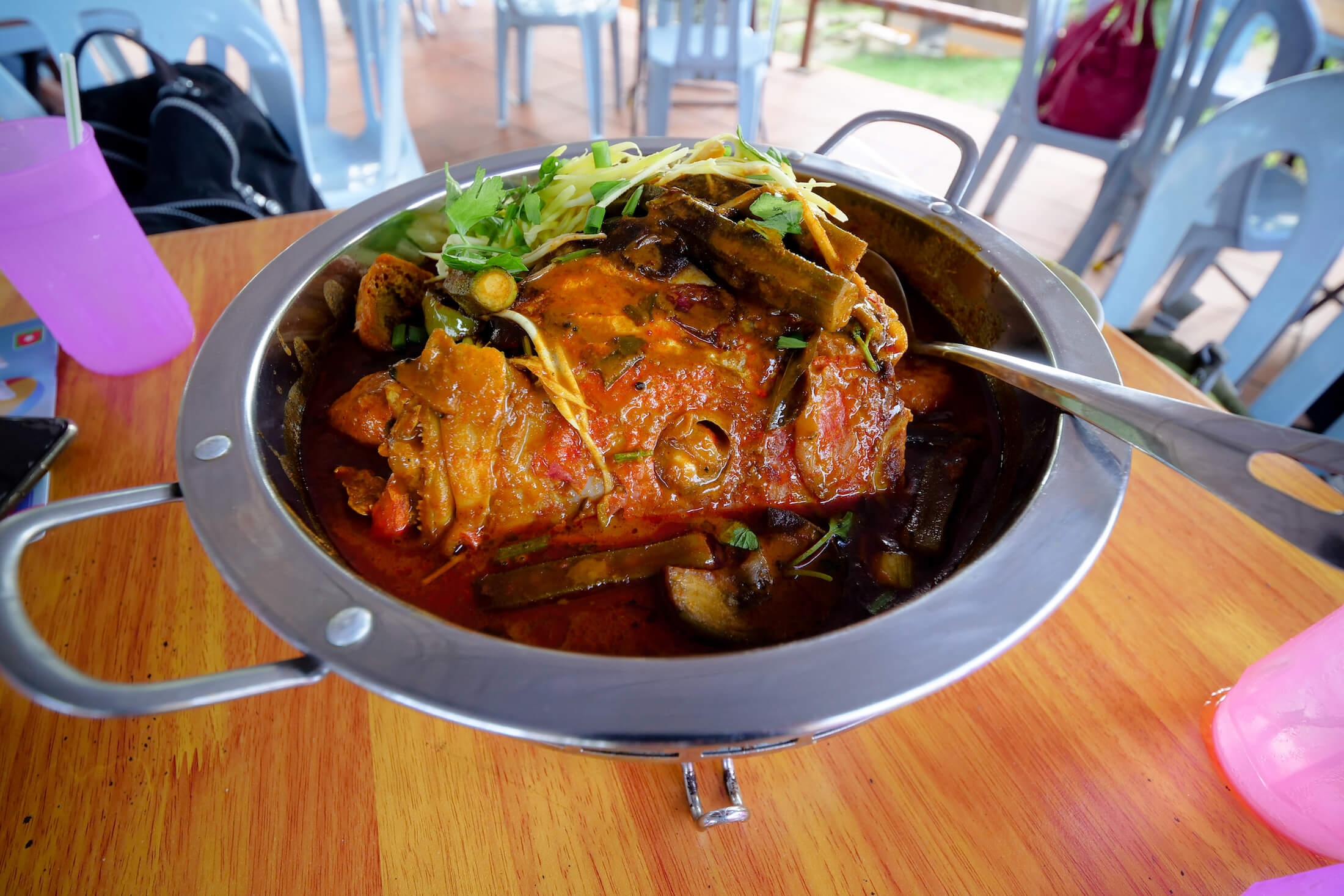
The hallmark of the Tugu View Cafe’s menu is its Red Snapper (Ikan Merah) Fish Head Curry. Red snapper is selected for its firm texture and the substantial amount of edible meat housed within the skull, cheeks, and eye sockets. Culinary experts note that fish heads, while often overlooked in Western gastronomy, yield the most flavorful and succulent meat due to the collagen and fat surrounding the bone structures.
The preparation of the dish involves simmering the fish head in a dense, aromatic broth powered by a complex spice paste—typically comprising turmeric, coriander, cumin, dried chilies, and garlic—tempered with coconut milk and sharpened with tamarind. Additions of okra (lady’s finger) and firm tofu squares absorb the rich gravy, balancing the dish’s intense heat and acidity.
From a nutritional and gastronomic standpoint, this preparation exemplifies the Malaysian technique of balancing opposing flavor elements: the natural sweetness of the fresh ocean fish against fiery spice, creamy coconut lipids, and sharp citrus notes. Local dining etiquette often involves drenching the foundational bed of white rice in an extra ladle of curry sauce, a practice that maximizes the absorption of spice across the starch.

Economic and Tourism Implications of Local Gastronomy
The cultural prominence of establishments like Tugu View Cafe underscores the significant role that food tourism plays in Malaysia’s broader economic strategy. Culinary tourism is a primary driver of visitor engagement, encouraging travelers to venture beyond standard urban commercial centers and into neighborhood eateries and park-adjacent cafes.
Industry analysts observe that food-related expenditures constitute a major portion of tourist budgets in Southeast Asia. In Kuala Lumpur, traditional dining spots contribute substantially to the micro-economy, supporting local fishermen, spice merchants, and agricultural producers. The pricing model of these establishments remains accessible; a comprehensive meal featuring a large fish head curry, side dishes, and rice typically ranges around 144 Malaysian Ringgit (approximately $35 USD), an accessible price point that can comfortably feed multiple diners. This economic accessibility ensures that traditional cuisine remains a shared cultural experience across socio-economic strata rather than an exclusive luxury.
Navigating the Venue: Logistics and Accessibility

Despite its popularity, accessing the Tugu View Cafe presents unique logistical considerations for first-time visitors. Located on a verdant hill overlooking the historic gardens, the primary entrance is not immediately obvious to pedestrians arriving from the park trails. Visitors must ascend several flights of stairs, occasionally navigating past small adjacent vendors offering regional snacks and frozen durian to passing tour groups.
The cafe operates in a straightforward, unpretentious manner common to traditional Malaysian coffee shops and canteens. While management maintains a discreet policy regarding extensive commercial photography or video production inside the premises, the service remains efficient and welcoming to the diverse clientele that navigates the hilly terrain to reach the dining room.
Broader Cultural Impact and the Future of Heritage Cuisine
The enduring appeal of dishes like the Fish Head Curry at Tugu View Cafe highlights a broader trend in Southeast Asian urban centers: the preservation of traditional recipes amidst rapid modernization. As Kuala Lumpur continues to develop as a global financial and technological hub, traditional eateries act as anchors of cultural continuity.

Sociologists and food policy experts emphasize that the preservation of complex, labor-intensive dishes like Malay-style curries relies on the sustained patronage of local institutions. These culinary practices require specialized knowledge of spice blending, ingredient sourcing, and preparation techniques that have been passed down through generations. By maintaining high standards of preparation and affordable pricing, neighborhood cafes ensure that the culinary heritage of Malaysia’s multicultural society remains accessible to both citizens and international visitors.
Ultimately, the convergence of history, geography, and culinary artistry at venues such as the Tugu View Cafe demonstrates the multifaceted nature of Malaysian cuisine. It is a system built not merely on sustenance, but on a deep-rooted philosophy of community, cultural synthesis, and sensory appreciation that continues to define Kuala Lumpur’s identity on the global stage.