Nasi Lemak Tanglin: Preserving the Heritage of Malaysia’s National Dish Through Decades of Culinary Excellence in Kuala Lumpur

Nasi lemak, a dish characterized by its fragrant rice cooked in coconut milk and pandan leaf, is widely recognized as the national food of Malaysia. Its cultural footprint extends across the Malay Peninsula, from the southern provinces of Thailand through the heart of Malaysia and into Singapore. While the dish is ubiquitous, found in upscale hotels and humble roadside stalls alike, few establishments carry the historical weight and culinary reputation of Nasi Lemak Tanglin. Located within the Kompleks Makan Tanglin in Kuala Lumpur, this establishment has transitioned from a modest stall founded in 1948 into a premier destination for both local residents and international gastronomes.
The Historical Trajectory of Nasi Lemak Tanglin
The story of Nasi Lemak Tanglin is inextricably linked to the post-World War II era of British Malaya. Founded in 1948 by the late Suryati Jawirunah, the stall began its operations during a period of significant social and political transition for the nation. Originally situated under a cherry tree near the Tanglin Hospital—from which it derived its name—the business was built on a foundation of traditional Javanese-influenced recipes.
Over the course of seven decades, the establishment has survived the modernization of Kuala Lumpur, eventually moving to its current location in the Kompleks Makan Tanglin. This government-managed food court serves as a hub for traditional Malay breakfast and lunch fare. Despite the change in venue, the stall has maintained its reputation for consistency, a feat attributed to the family-run nature of the business, which is now managed by the second and third generations of the founder’s descendants.
The longevity of Nasi Lemak Tanglin is reflective of a broader trend in the Malaysian food industry, where "heritage brands" maintain market dominance through a combination of brand loyalty and the preservation of labor-intensive cooking methods that modern commercial chains often bypass.
Culinary Composition: The Anatomy of a National Staple
The appeal of Nasi Lemak Tanglin lies in its adherence to the fundamental components of the dish while offering a variety of side dishes that elevate the experience. In the Malay language, "Nasi Lemak" literally translates to "fat rice," a reference to the rich, creamy texture provided by the coconut milk (santan) used during the steaming process.

The Fragrant Rice Base
The rice at Tanglin is noted for its distinct aroma, achieved through the infusion of fresh pandan leaves and a precise ratio of coconut milk to water. Unlike many contemporary versions that may use artificial flavorings to cut costs, the traditional method involves slow-steaming the rice to ensure each grain is coated in fat without becoming mushy. This creates a "tiny sponge" effect, allowing the rice to effectively absorb the accompanying curry gravies.
The Sambal: A Labor-Intensive Core
The soul of any nasi lemak is its sambal—a chili-based sauce that balances heat, acidity, and sweetness. At Nasi Lemak Tanglin, the sambal is prepared through a lengthy "tumis" process, where the chili paste is fried until the oil separates (pecah minyak), indicating a deep caramelization of the onions and spices. The resulting sauce is savory and mildly spicy, designed to tie the various components of the plate together rather than overwhelm them with heat.
Essential Accompaniments
A standard plate at Tanglin includes the "mandatory" four: sliced cucumbers for freshness, fried peanuts and anchovies (ikan bilis) for texture and salinity, and a hard-boiled or fried egg for protein. The juxtaposition of the crunchy anchovies against the soft, creamy rice is a hallmark of the dish’s sensory profile.

Operational Dynamics and the Morning Rush
Nasi Lemak Tanglin operates within a high-demand environment that necessitates an early arrival for prospective diners. The stall opens at 7:00 AM daily and frequently exhausts its supply of rice and side dishes by 11:30 AM. This daily sell-out reflects a logistical strategy common among traditional Malaysian vendors: preparing a fixed quantity of high-quality food to ensure freshness and minimize waste.
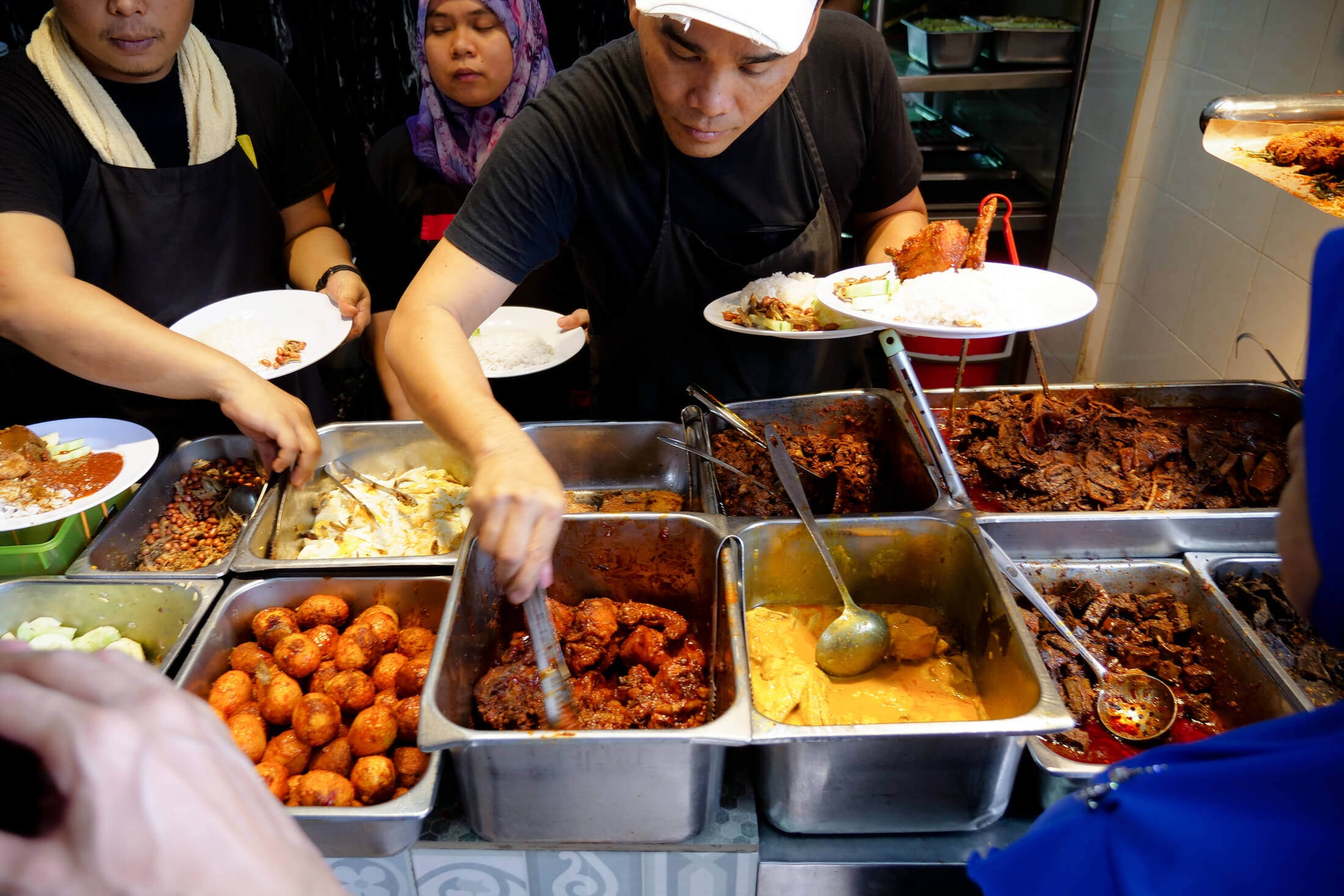
The atmosphere at Kompleks Makan Tanglin during peak hours (typically between 9:00 AM and 10:30 AM) is one of organized chaos. The parking facilities are often at capacity, requiring patrons to navigate multiple laps of the lot. However, the wait is mitigated by the presence of live musical performances. It is common for local bands to perform "Pop Yeh Yeh," a genre of Malay pop music influenced by 1960s British rock and roll. This cultural integration transforms a simple meal into a communal experience, bridging the gap between the historical past and the contemporary present.
Menu Diversity: From Beef Spleen to Rendang
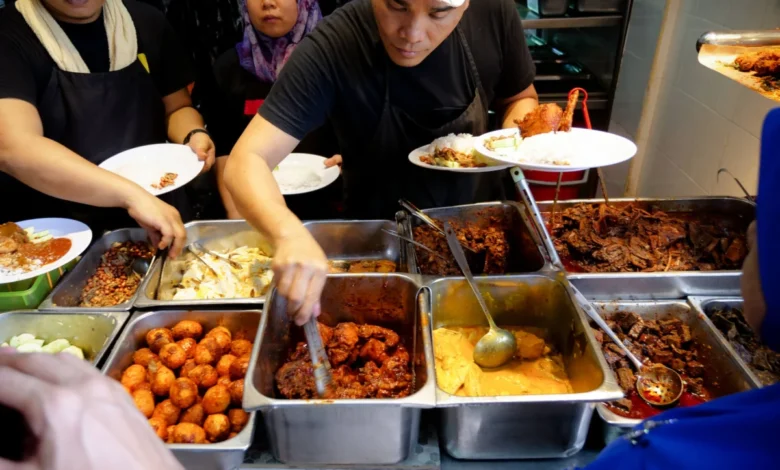
While the base of nasi lemak is standardized, the variety of "lauk" (side dishes) at Tanglin distinguishes it from its competitors. Patrons are encouraged to customize their plates from a selection of curries and meats displayed at the counter.

One of the most highly recommended items is the paru (fried beef lungs) or the limpa (beef spleen and intestines). The spleen, cooked in a thick, dark brown curry, is prized for its rich, velvety texture. Another staple is the Beef Rendang—a dry curry where the meat is slow-cooked in coconut milk and spices until tender. Regulars often request a "bonus ladle" of rendang gravy to be poured over the rice, a practice that maximizes the flavor profile of the meal.
For those seeking seafood, the sambal kerang (cockles in chili sauce) is a popular addition. The ability to "pile on" these various proteins allows for a personalized dining experience, though it often results in plates that are physically overloaded.
Sustainability and Environmental Considerations
In recent years, Nasi Lemak Tanglin has adapted its service model to align with broader environmental initiatives in Malaysia. Historically, nasi lemak was served wrapped in a "bungkus" style using banana leaves and newspaper. While the banana leaf imparts a subtle fragrance to the rice, the high volume of customers at Tanglin has necessitated a shift toward reusable ceramic or plastic plates.

This transition serves two primary purposes. First, it aligns with Malaysia’s "Roadmap Towards Zero Single-Use Plastics 2018–2030," reducing the waste associated with disposable packaging. Second, it addresses the ecological impact of large-scale banana leaf harvesting. By utilizing reusable dinnerware, the establishment contributes to a more sustainable model of high-volume food service while maintaining the speed required to serve hundreds of customers per hour.
Economic Analysis: Affordability in an Urban Center
Despite its fame and the rising cost of ingredients in Kuala Lumpur, Nasi Lemak Tanglin remains remarkably accessible. A basic plate of nasi lemak is priced at approximately RM 2.00 (roughly USD 0.45). Additional protein items typically range from RM 1.00 to RM 5.00. For a group of four diners, a full meal including multiple sides and drinks can cost as little as RM 35.00 (approximately USD 8.50).
This pricing strategy is significant within the context of Malaysia’s "warung" culture. It ensures that the national dish remains a staple for the working class while also attracting affluent food tourists. The low price point acts as a form of social glue, bringing together a diverse cross-section of Malaysian society—from office workers in business suits to laborers and tourists—all sharing the same communal seating area.

Broader Implications for Food Tourism and Cultural Identity
The success of Nasi Lemak Tanglin is a testament to the power of culinary tourism in Malaysia. As Kuala Lumpur continues to develop as a global metropolis, establishments like Tanglin serve as vital anchors of cultural identity. They provide a tangible link to the country’s heritage, offering an "authentic" experience that contrasts with the standardized offerings of international fast-food chains.
The "Malay-style" of eating—often involving the use of one’s fingers to mix the curry and rice—is still practiced by many at the complex. This method is said to enhance the tactile connection to the food and allow for a more thorough distribution of flavors. For international visitors, witnessing and participating in these traditions provides a deeper understanding of Malaysian social norms and the importance of communal dining.
Conclusion: A Landmark of Consistency
Nasi Lemak Tanglin represents more than just a successful food stall; it is a custodian of Malaysian culinary tradition. By maintaining the quality of its 1948 recipe while navigating the demands of a modern, environmentally-conscious city, the establishment has secured its place in the annals of Kuala Lumpur’s history. For anyone seeking to understand the heart of Malaysian cuisine, a visit to the crowded tables of Kompleks Makan Tanglin offers a masterclass in the simplicity, complexity, and enduring appeal of Nasi Lemak. Through the lens of this single restaurant, one can observe the intersection of history, economy, and culture that defines the modern Malaysian experience.