Wat Phu Tok The Architectural Marvel and Spiritual Ascent of Thailands Lonely Mountain

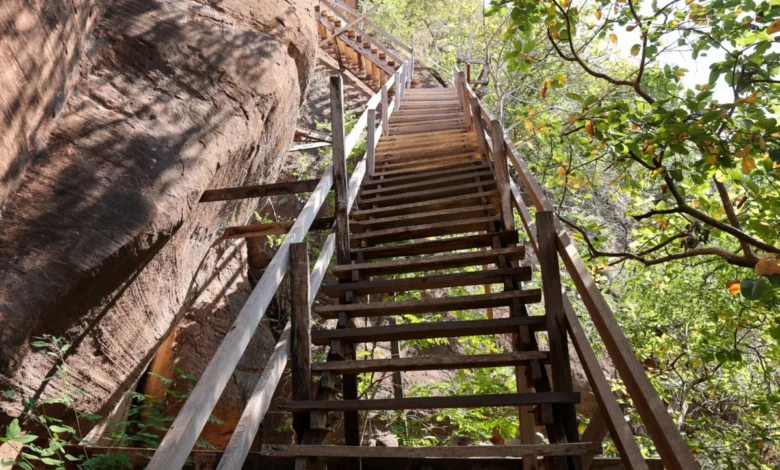
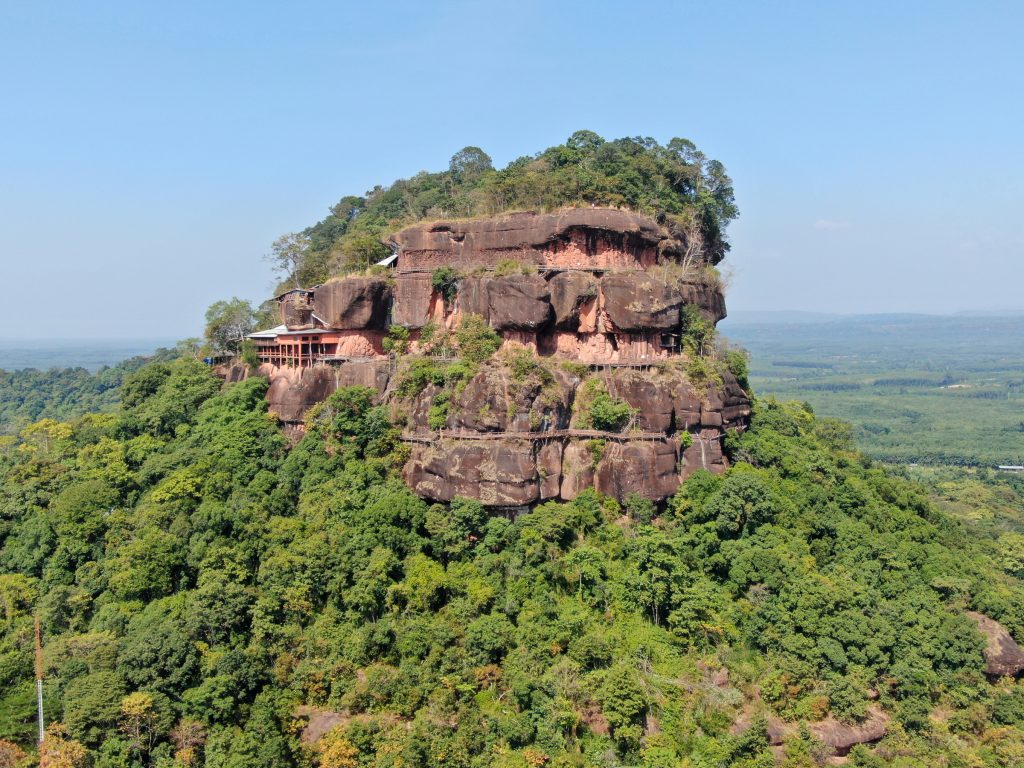
Located in the remote reaches of Bueng Kan, Thailands 77th and newest province, Wat Phu Tok stands as a testament to the intersection of profound religious devotion and daring architectural ingenuity. Formally known as Wat Jetiyakhiri, the temple is situated on a massive sandstone outcrop that rises abruptly from the flat plains of the northeastern Isan region. This "lonely mountain," as the name Phu Tok translates from the local Isan dialect, has evolved from a secluded meditation retreat into one of the most significant, albeit challenging, cultural landmarks in Southeast Asia. The site is defined by a series of precarious wooden staircases and walkways that circumnavigate the mountain’s sheer cliffs, representing a physical and spiritual journey through the seven stages of Buddhist enlightenment.
Historical Context and the Vision of Luang Pu Juan
The transformation of Phu Tok from a wild, inaccessible rock formation into a site of national spiritual importance began in the mid-20th century. The temple was founded by Luang Pu Juan Kulachettho, a highly revered monk of the Thai Forest Tradition. Luang Pu Juan arrived at the mountain in the 1960s, seeking a location that offered the isolation necessary for intensive Vipassana (insight) meditation. At the time, the mountain was inhabited only by wildlife and was notorious for its population of venomous snakes, a factor that reinforced its status as a place where one must confront and overcome primal fears.
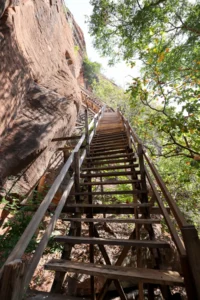
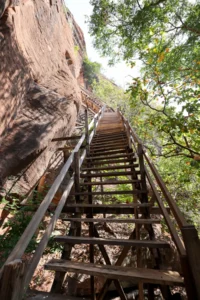
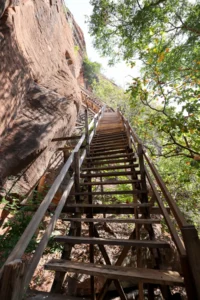
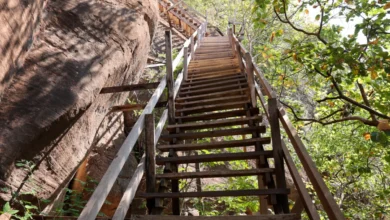
Construction of the intricate wooden infrastructure began in 1969. Over the course of five years, Luang Pu Juan led a team of monks, novices, and local volunteers in a project that defied conventional engineering logic of the era. Without the aid of modern machinery or heavy industrial cranes, the team manually anchored wooden supports into the sandstone face of the cliff. The staircases and planks were fashioned from local timber, designed to provide access to caves and ledges that served as meditation cells. This period of construction, lasting until 1974, was viewed by the participants not merely as a labor of infrastructure, but as a form of "karma yoga"—devotional service that builds spiritual merit.

The legacy of the site was marked by tragedy in 1980 when Luang Pu Juan perished in a commercial airplane crash near Bangkok. Despite the loss of its founder, the local community and the monastic order have continued to maintain the structures, ensuring that the "stairway to heaven" remains accessible to both pilgrims and travelers.
A Chronology of Development
The development of Wat Phu Tok can be categorized into four distinct eras:

- The Ascetic Period (Pre-1960s): Phu Tok existed as a landmark of the Isan wilderness, utilized occasionally by wandering monks (Tudong) but lacking any permanent structures.
- The Construction Era (1969–1974): The primary infrastructure, including the seven levels of walkways, was established under the direct supervision of Luang Pu Juan.
- Institutional Recognition (1980–2011): Following the death of Luang Pu Juan, the site gained fame as a pilgrimage destination. It remained part of Nong Khai province during this time, serving as a quiet spiritual center.
- The Tourism Expansion (2011–Present): With the creation of Bueng Kan as a separate province in 2011, Wat Phu Tok became a cornerstone of regional tourism. Infrastructure in the surrounding area was improved to accommodate an increasing number of domestic and international visitors.
Structural Analysis: The Seven Levels of Enlightenment
The architectural layout of Wat Phu Tok is intentionally symbolic, with each of the seven levels corresponding to the Satta Bojjhanga, or the Seven Factors of Enlightenment in Buddhist philosophy.
Levels 1 and 2: These levels constitute the base of the mountain. They are characterized by lush vegetation and traditional forest temple structures. Level 2 contains several small shrines and is easily accessible to those with limited mobility.

Levels 3 and 4: As the ascent begins in earnest, the terrain transitions from soil paths to wooden stairs. These levels represent the initial stages of spiritual practice, where the practitioner begins to rise above worldly distractions. Small caves and rocky alcoves here are still used by resident monks for meditation.
Level 5: This level is often considered the heart of the temple complex. It features a large, flat area that houses several "Phra Wihan" (hall) structures and a marble Buddha image. One of the most striking features of Level 5 is a detached rock formation connected by a small bridge, which serves as a symbolic "ship" carrying the faithful across the sea of suffering.

Level 6: The most famous and visually dramatic portion of the site, Level 6 consists of a wooden boardwalk that clings to the side of the cliff for approximately 400 meters. The walkway is narrow, with only a basic wooden railing separating the visitor from a vertical drop. From this vantage point, one can view the vast Mekong River basin and the distant mountains of Laos. This level represents the "Path of Wisdom," where the practitioner gains a clear perspective on the nature of existence.
Level 7: The final ascent involves a steep climb via a ladder-like staircase to the summit. Unlike the lower levels, the top of the mountain is largely undeveloped and overgrown with forest. It symbolizes the attainment of Nirvana—a state that is beyond form and structure. Visitors are often warned of snakes on this level, a reminder that even at the highest stages of spiritual growth, mindfulness remains essential.

Regional Significance and Socio-Economic Impact
The emergence of Wat Phu Tok as a major attraction has had a profound impact on Bueng Kan province. Traditionally one of the poorest regions in Thailand, the Isan northeast has long relied on agriculture, particularly rubber and rice. The influx of "adventure pilgrims" to Wat Phu Tok has stimulated a nascent service economy.
According to data from the Tourism Authority of Thailand (TAT), the "secondary cities" initiative has seen a 15% increase in domestic tourism to Bueng Kan over the last five years. Wat Phu Tok, along with the nearby "Three Whales Rock" (Hin Sam Wan), forms a circuit that attracts a demographic of travelers interested in nature and "slow travel." This shift has prompted local government investment in road infrastructure and hospitality training for residents, providing an alternative to the urban migration that often drains the region of its youth.

Safety, Maintenance, and Ethical Tourism
From a contemporary safety perspective, Wat Phu Tok presents a unique challenge. The wooden walkways are exposed to the elements, including the intense heat of the Thai sun and the heavy rains of the monsoon season. Maintenance is a continuous, manual process. Monks and local volunteers regularly inspect the planks and supports, replacing weathered timber as needed.
While the lack of modern steel reinforcements and high-tech safety netting may be alarming to some international visitors, the monastic community maintains that the "danger" is an integral part of the experience. The height and the precarious nature of the path are intended to force the walker into a state of total presence and mindfulness. However, the site is closed annually during the Songkran festival (mid-April) to allow for major repairs and to manage the risks associated with the massive crowds that would otherwise descend upon the fragile wooden structures.

Broader Implications and Spiritual Analysis
Wat Phu Tok serves as a physical manifestation of the "Forest Tradition" of Thai Buddhism, which emphasizes asceticism, meditation, and a deep connection to the natural world. In an era where many urban temples have become centers of commercial activity, Phu Tok remains a bastion of the traditional "Dhamma" (teachings).
The site also highlights the tension between cultural preservation and tourism. As social media platforms amplify the visual splendor of the Level 6 cliff walk, the temple faces the challenge of maintaining its sanctity. Official guidelines now strictly enforce dress codes (shoulders and knees covered) and prohibit loud behavior, ensuring that the mountain remains a place of quiet contemplation rather than a mere backdrop for photography.

In a broader sense, Wat Phu Tok represents the resilience of the human spirit. The fact that a small group of devotees could hand-build a staircase up a 359-meter rock face is a powerful testament to the motivational force of faith. It stands as a landmark of Isan identity—rugged, unyielding, and deeply spiritual. For the visitor, the journey to the top is more than a hike; it is a confrontation with one’s own limitations and a breathtaking view into the heart of Thailand’s spiritual landscape.