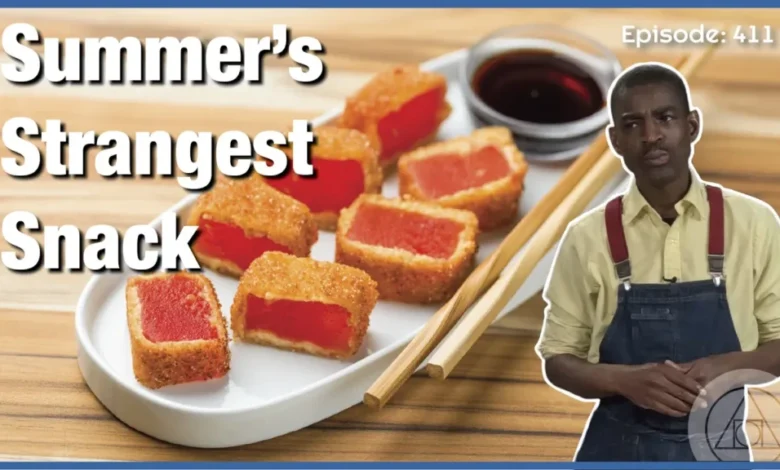
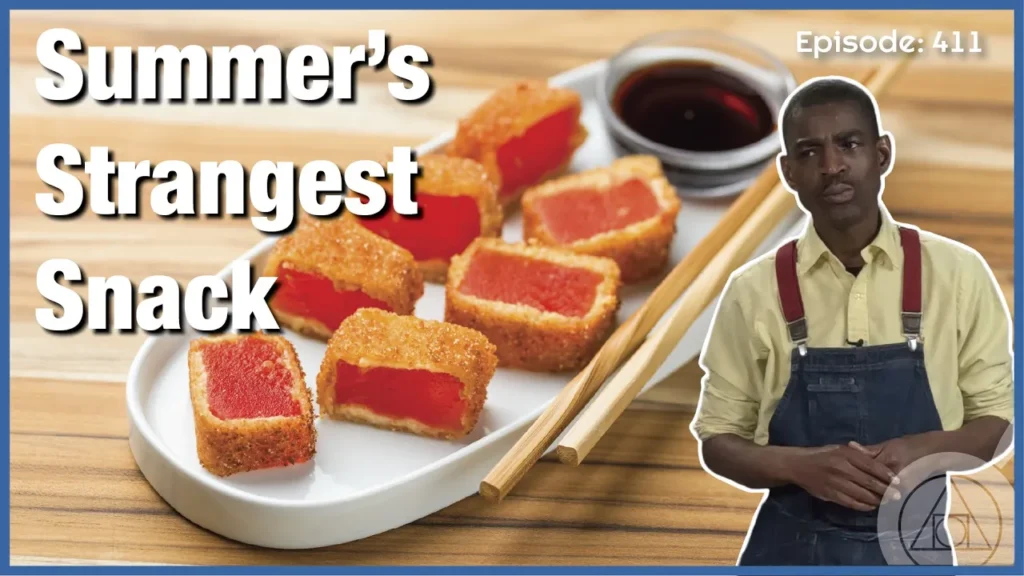
The intersection of modernist culinary techniques and traditional agricultural staples has long been a subject of fascination for chefs and food scientists alike. In the latest installment of the "We Transform Food" series, producers explored the unconventional application of high-heat deep frying to common melons, including watermelon, cantaloupe, and honeydew. While deep frying is typically reserved for starches, proteins, or dough-based confections, this experiment sought to determine whether the high water content of melons could be successfully reconciled with the physics of a fryer, resulting in a palatable and structurally sound final product.
The Science of Moisture and Thermal Processing
Deep frying is a complex process involving heat transfer through a liquid medium—usually oil—at temperatures typically ranging between 350°F and 375°F (175°C to 190°C). When food is submerged in hot oil, the water on the surface rapidly evaporates, creating a barrier that prevents oil from permeating the item while simultaneously cooking the interior through conduction. For high-moisture foods like melon, which consists of approximately 90% to 92% water, the challenge is twofold: preventing the item from disintegrating into a soggy mess and ensuring that the batter coating achieves the necessary crispness before the internal structure collapses.
In the case of the experiments conducted by Modernist Pantry, the application of a specific batter acts as a protective vessel. As the batter solidifies, it traps the steam generated by the melon’s internal moisture. This pressurized environment effectively "poaches" the fruit from within, altering its cellular structure. The heat breaks down the pectin and fiber networks, transforming the typically firm or crunchy raw fruit into a tender, custard-like consistency. This process is similar in principle to the way vegetables like zucchini or eggplant are prepared in Mediterranean tempura, where the objective is to concentrate sugars and soften fibrous tissues.
Chronology of the Culinary Experiment
The "We Transform Food" series, which maintains a weekly production schedule, approached this experiment with a focus on ingredient manipulation. The process began with the selection of three primary varieties: the high-glucose profile of watermelon, the aromatic density of cantaloupe, and the subtle, mild flavor of honeydew.
- Preparation Phase: Each melon was processed into uniform cubes, approximately one inch in size. The crucial step involved surface dehydration. By blotting the exterior of the melon slices, the chefs ensured better adhesion of the batter, a standard practice in professional kitchens to avoid "blowouts" where steam escaping too rapidly causes the coating to detach.
- Coating Application: A precise flour-and-leavening mixture was applied to create a "jacket." This coating is engineered to withstand the thermal shock of the oil bath.
- The Fry Cycle: The cubes were introduced to the oil at a stabilized temperature of 365°F. The duration of the fry was kept brief—between 60 and 90 seconds—to prevent the internal temperature of the melon from reaching a point of total structural failure.
- Post-Fry Analysis: Upon extraction, the melons were allowed to drain on wire racks. This cooling period is essential for the batter to "set" through residual heat, ensuring that the final bite retains the contrast between a crisp exterior and a molten, sweet interior.
Supporting Data and Ingredient Characteristics
To understand why this experiment yielded positive results, one must look at the sugar content and structural composition of the fruits involved. Watermelon, for instance, contains significant amounts of L-citrulline and lycopene. While heat can degrade certain vitamins, the sugar content (fructose and glucose) undergoes a mild Maillard-like reaction if the batter contains a protein component, adding a depth of flavor that is not present in raw consumption.
According to agricultural data regarding the water activity (aw) of melons, they are classified as high-moisture foods, which usually makes them poor candidates for frying. However, by selecting denser portions of the fruit—specifically the flesh closest to the rind, which contains more fiber—the experimenters mitigated the risk of the fruit turning to liquid during the cooking process. The honeydew and cantaloupe, being structurally denser than watermelon, displayed a higher degree of stability post-fry, maintaining their shape while the internal texture transitioned into a dessert-like, warm puree.
Culinary Implications and Professional Reception
The reaction within the culinary community to fruit-frying experiments is often divided between those who prioritize raw freshness and those who embrace "molecular gastronomy" or modernist techniques. Historically, the deep frying of fruit is not entirely unprecedented; fried bananas and pineapple fritters are staples in various Asian and Latin American cuisines. However, the application of this method to high-water-content melons represents a shift toward expanding the boundaries of what constitutes a "cooked" ingredient.
From a culinary standpoint, the implications are significant for dessert menus. By utilizing melons as a warm, fried element, chefs can incorporate seasonal produce into winter or autumn menus where raw melon would typically be out of season or unappealing. The "custard-like" transformation allows these fruits to be paired with contrasting elements such as salted caramel, balsamic reductions, or acidic fruit compotes, providing a sophisticated balance of flavors that raw melon often lacks.
The Broader Context of Modernist Pantry
Modernist Pantry, the organization behind the "We Transform Food" series, serves as an educational bridge between scientific innovation and the home kitchen. By documenting experiments like the deep-fried melon, the group aims to demystify complex chemical reactions and equipment usage. Their approach is consistent with the broader trend of "Kitchen Science," which has gained traction since the early 2000s, popularized by figures such as Ferran Adrià and Nathan Myhrvold.
The educational value of these episodes lies in their ability to translate trial-and-error methodology into actionable advice. For the home cook, the takeaway is not merely a recipe for fried melon, but a fundamental understanding of how to handle high-moisture ingredients. The success of the experiment suggests that with the right preparation—specifically the combination of surface drying and the use of a protective, non-porous batter—almost any high-moisture fruit can be subjected to high-heat thermal processing.
Future Research and Limitations
While the experiment successfully produced a novel culinary item, limitations remain. The shelf life of a deep-fried melon is extremely short; the high water content of the fruit will inevitably migrate outward, softening the crispy coating within minutes. This makes the dish unsuitable for large-scale production or delivery-based models. Furthermore, the selection of the melon is critical; overly ripe or "mealy" fruit lacks the structural integrity required to survive the heat, resulting in a product that may be mushy or unpalatable.
Future explorations in this area may look at the use of hydrocolloids, such as calcium lactate or sodium alginate, to further stabilize the interior of the fruit before frying. By "spherifying" or firming the outer layer of the melon cubes through calcium treatment, chefs could theoretically create a more durable product that holds its crispness for a longer duration.
Conclusion
The attempt to deep fry melon serves as a case study in the malleability of food. By treating the fruit as a vessel for heat rather than a finished product, the experimenters demonstrated that conventional cooking methods could be applied to unconventional substrates with successful results. Whether this technique will move from experimental YouTube content to mainstream restaurant menus remains to be seen, but it underscores a growing trend in the culinary arts: the willingness to ignore traditional boundaries in pursuit of new textures and flavor profiles.
As the series continues, it is expected that the "We Transform Food" team will explore other water-heavy ingredients, continuing to push the limits of what a kitchen fryer can achieve. For now, the deep-fried melon stands as a testament to the fact that with the right technique, even the most unlikely ingredients can be transformed into something entirely new.