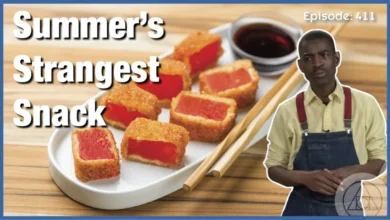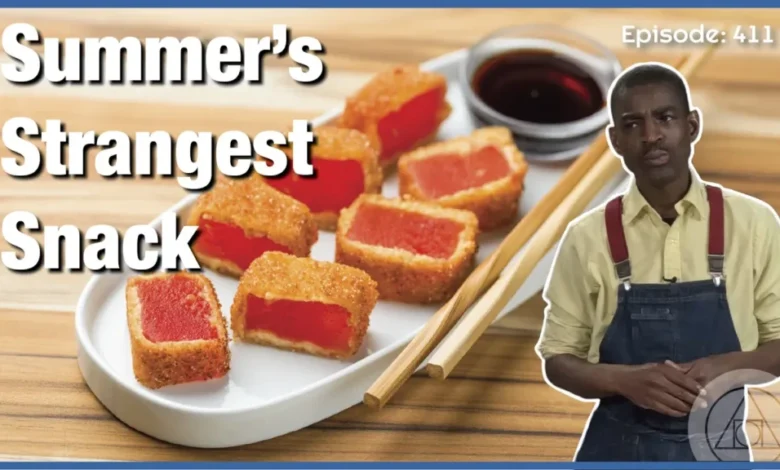
The intersection of modernist culinary technique and traditional produce often yields unexpected results, but few experiments have garnered as much curiosity as the deep-frying of high-water-content fruits. Recent investigations by the culinary series "We Transform Food" have brought this unconventional preparation method into the spotlight, challenging the long-standing assumption that the moisture content of melons renders them unsuitable for high-heat frying. By utilizing controlled battering and flash-frying techniques, the experiment suggests that heat can alter the cellular structure of watermelon, cantaloupe, and honeydew, shifting their texture from fibrous to custard-like.
The Physics of Frying High-Water Fruits
Deep frying is fundamentally a process of dehydration and heat transfer. When a food item is submerged in oil heated to temperatures typically between 350°F and 375°F (175°C to 190°C), the surface moisture rapidly turns to steam. This steam creates a barrier that prevents the oil from penetrating the food, provided the item is protected by a suitable batter or crust. In the case of melons, which are composed of approximately 90% to 92% water, the challenge is twofold: the risk of the fruit disintegrating due to internal pressure and the potential for a dangerous reaction between hot oil and water.
Culinary scientists have long understood that moisture management is the key to successful frying. To achieve the results observed in the "We Transform Food" episode, the melon must be treated with a stabilizing agent or a thick, adhesive batter that seals the surface. When this barrier is applied effectively, the internal temperature of the fruit rises slowly, allowing the pectin—the structural glue of plant cells—to soften. This transformation creates a sensation often described as "fruit custard," where the internal structure loses its crisp, raw bite and adopts a smooth, creamy consistency that contrasts with the exterior crunch.
Chronology of Experimental Culinary Techniques
The history of modifying fruit through high-heat cooking is relatively recent in the context of mainstream gastronomy. While fruit has been sautéed or baked for centuries, the application of deep-frying to fruits that are not typically considered "starchy" (such as bananas or plantains) is a development that gained traction alongside the modernist cooking movement in the early 21st century.
- 2005–2010: The rise of molecular gastronomy, championed by figures like Ferran Adrià and Heston Blumenthal, introduced the concept of "deconstruction." Chefs began looking at produce not just for their flavor profiles, but for their structural response to extreme temperatures.
- 2015: Increased experimentation with tempura-style batters allowed chefs to isolate the moisture of delicate fruits, leading to the successful frying of items like strawberries and grapes.
- 2020–2023: The "We Transform Food" series began documenting these fringe techniques, focusing on the accessibility of such experiments for the home cook. Episode 411, specifically, sought to address the "melon barrier," using specialized equipment to stabilize the fruit before submersion.
- 2024: The public response to these techniques indicates a shift in how home consumers perceive the versatility of seasonal produce, moving away from strictly raw consumption toward more complex thermal treatments.
Supporting Data and Nutritional Implications
From a nutritional standpoint, the act of frying does introduce fats, yet the thermal processing of watermelon specifically has documented benefits. Watermelon is a rich source of lycopene, a powerful antioxidant. Scientific studies, including those published in the Journal of Agricultural and Food Chemistry, have shown that heat treatment can increase the bioavailability of certain carotenoids in produce.
While the addition of a batter adds caloric density, the short duration of the flash-fry process limits the oil absorption if the oil temperature is maintained correctly. The "We Transform Food" team noted that the key to success lies in the viscosity of the batter. A thin batter fails to protect the fruit, leading to a soggy, greasy product, whereas a thicker, protein-heavy batter—often involving egg whites or modified starches—creates an impermeable seal. This empirical observation aligns with thermodynamic principles: the faster the steam pressure builds against the batter, the less time the batter remains in contact with the hot oil, thereby reducing oil uptake.
Perspectives from the Culinary Community
Professional chefs and culinary educators have weighed in on the trend of frying unconventional fruits. Some traditionalists argue that high-water fruits are best enjoyed in their natural, raw state to appreciate their fresh, crisp profile. However, proponents of the technique, including the creators of the "We Transform Food" project, argue that the goal is not to replace the raw fruit, but to expand the culinary lexicon of the kitchen.
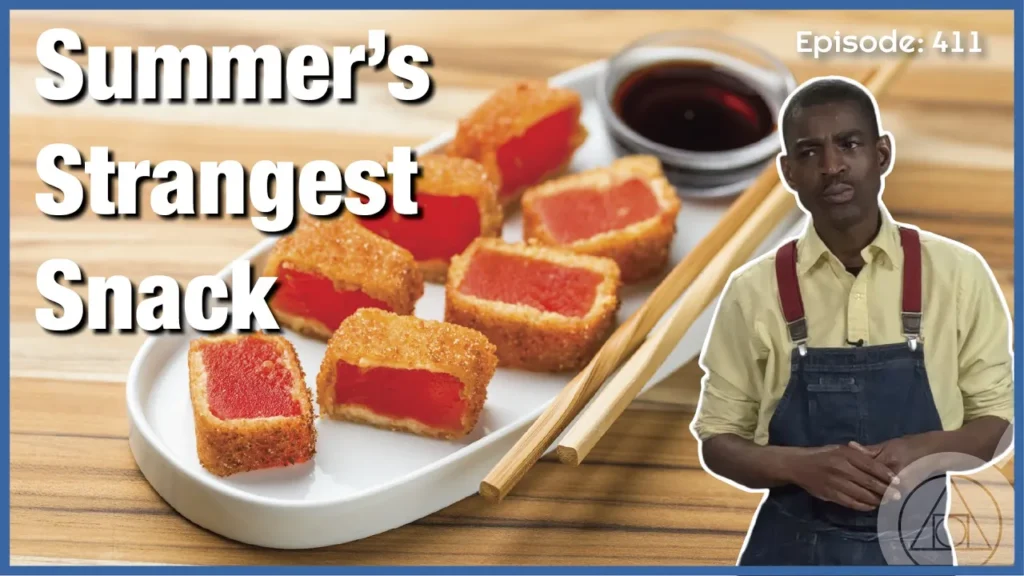
"The objective is to change the perception of what a fruit is capable of," a representative from the project noted. By manipulating texture, the chef can present a familiar ingredient—a slice of honeydew or watermelon—in a format that provides a sensory surprise. This is not merely about novelty; it is about understanding how temperature changes the chemical composition of food. When a melon is fried, the natural sugars caramelize, adding a layer of depth that raw fruit does not possess, effectively bridging the gap between a snack and a dessert.
Broader Impacts and Market Implications
The exploration of these techniques has a ripple effect on the culinary industry, particularly in the realm of food technology and home cooking gadgets. As consumers become more interested in "modernist" techniques, there is a growing demand for precise tools—such as induction burners, digital thermometers, and specialized hydrocolloids—that allow for this level of culinary precision at home.
Furthermore, this experimental approach has implications for food waste reduction. Often, produce that is slightly past its prime—lacking the crisp, structural integrity desired for a fresh salad—is discarded. The frying process effectively repurposes these items. Because the heat masks the structural decline of the fruit, produce that might otherwise be binned can be "transformed" into a high-value dish. This aligns with broader industry goals to increase the utilization of produce, thereby improving the sustainability of the kitchen.
Fact-Based Analysis of the "WTF" Method
The methodology used in "We Transform Food" is grounded in the principles of modernist pantry management. By focusing on specific ingredients and gadgets, the series provides a framework for testing and documentation. This methodical approach serves as a bridge between the sterile laboratory environment of food science and the practical application of a domestic kitchen.
The successful deep-frying of a watermelon, for instance, requires a precise sequence:
- Preparation: Selecting fruit with high sugar content, as these caramelize more effectively.
- Stabilization: Removing excess surface moisture and applying a light dusting of starch to ensure adhesion.
- Encapsulation: Applying the batter, which acts as a pressure vessel during the flash-fry.
- Execution: Maintaining oil temperature within a narrow margin to ensure the fruit is heated through without the crust burning.
This process is emblematic of a larger movement in culinary arts where the "how" is just as important as the "what." It challenges the cook to consider the chemical properties of ingredients rather than relying solely on traditional recipes.
Conclusion: The Future of Experimental Cooking
The experiment documented in episode 411 of "We Transform Food" serves as a reminder that the culinary landscape is constantly evolving. While deep-fried melon may not become a staple of the global diet, the underlying science—understanding how water-heavy ingredients react to heat and how to manipulate those reactions—is vital for any contemporary cook.
As technology continues to provide greater control over heat and chemistry, the boundaries of what is considered "fryable" will continue to expand. Whether this leads to new commercial food products or simply more adventurous home cooking, the fundamental takeaway remains the same: with the right application of technique, almost any ingredient can be re-imagined. The transformation of a simple, refreshing summer melon into a warm, creamy delicacy is a testament to the power of culinary curiosity and the enduring influence of modernist food science on the modern kitchen.