
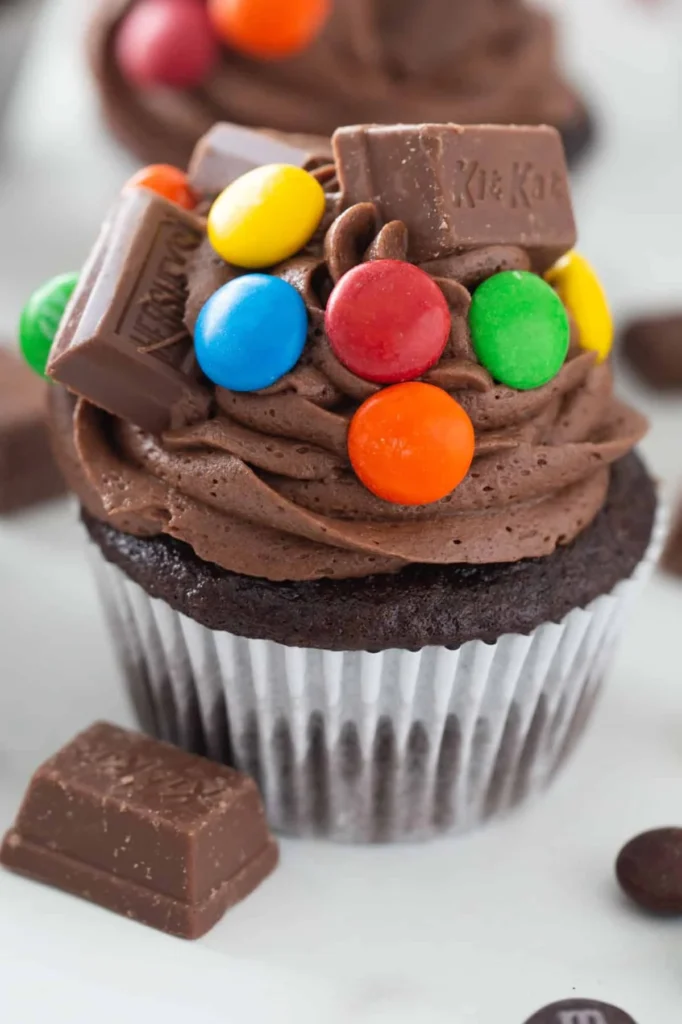
The culinary landscape has seen a significant shift toward "maximalist" desserts, a trend exemplified by the surge in popularity of decadent, candy-topped confections. Among these, the Chocolate Chocolate Cupcake has emerged as a staple in both home baking and professional pastry settings. This specific iteration, which combines a moisture-rich cocoa base with a dense buttercream frosting and a diverse array of confectionery toppings, represents a departure from traditional, understated dessert profiles. By integrating high-quality cocoa powder with the acidity of brewed coffee—a common professional technique used to intensify the flavor profile of chocolate—bakers are able to achieve a depth of flavor that appeals to a sophisticated palate while maintaining the playfulness of a traditional treat.

The Evolution of the Modern Cupcake
The cupcake, once a staple of Victorian-era tea parties, has undergone a metamorphosis over the last two decades. The "cupcake boom" of the early 2000s transformed these small-format cakes into canvases for artistic expression. Today, the focus has shifted from mere aesthetic presentation to the "overload" concept, where texture and variety are prioritized. By incorporating components such as mini Kit Kats, Hershey’s bars, and M&Ms, the modern cupcake functions as a multi-sensory experience. This approach acknowledges the consumer demand for varied textures—the crunch of a wafer, the snap of a chocolate shell, and the velvety consistency of a traditional buttercream.
Scientific Foundations of the Recipe
The chemistry behind this particular recipe is rooted in the interplay between fat, acidity, and cocoa solids. Using hot brewed coffee in the batter is not merely a flavor enhancement; it is a functional necessity. The heat of the liquid blooms the cocoa powder, releasing flavor compounds that are otherwise trapped in the solid particles. Furthermore, the acidity in the coffee reacts with the baking soda, resulting in a more pronounced rise and a finer crumb structure.
Chocolate Chip Strawberry Shortcake

Data from the American Bakers Association suggests that consumer interest in "scratch-made" dessert recipes has increased by approximately 22% since 2020. This shift is attributed to a broader cultural movement toward home-based culinary activities and a desire for transparency in ingredients. By utilizing high-quality heavy whipping cream in the frosting, bakers can achieve a stabilized structure that holds up under the weight of heavy candy toppings, a common failure point in inferior, oil-based frostings.
Procedural Chronology and Best Practices
The preparation of these cupcakes typically follows a precise 35-minute timeline, broken down into preparation, baking, and assembly.

- Preparation (0–15 minutes): This stage involves preheating the oven to 325°F. Professional bakers recommend this lower temperature for cupcakes to ensure a uniform rise, preventing the "domed" effect that often leads to cracked tops. Lining the muffin tins at this stage is critical to ensuring the structural integrity of the cake upon removal.
- Mixing (15–20 minutes): The dry ingredients (flour, sugar, cocoa, leavening agents, and salt) must be aerated through whisking. The addition of wet ingredients, followed by the coffee, creates a batter that appears thin to the novice baker. However, this is a calculated consistency that ensures moisture retention throughout the baking process.
- Baking (20–40 minutes): A 20-minute bake time at 325°F is the standard for a 12-count batch. The "toothpick test" remains the industry gold standard for determining doneness; the goal is to have a few moist crumbs clinging to the tester, indicating that the proteins have set without the starches drying out.
- Assembly (Post-Cooling): Frosting must only be applied once the cakes have reached room temperature. Applying buttercream to a warm cupcake will cause the fat in the butter to liquefy, resulting in a loss of volume and a messy presentation.
Market Context and Consumer Demographics
Market analysts observe that the target demographic for such indulgent desserts is remarkably broad, spanning from children at school celebrations to adults at corporate events. The versatility of the recipe is a significant factor in its sustained popularity. Because the recipe makes a manageable batch of 12, it caters to small-scale social gatherings, avoiding the waste associated with mass-produced or bulk commercial batches.
From an economic perspective, the "candy-topped" cupcake trend is a cost-effective way for home bakers to elevate a standard dessert. The use of widely available commercial chocolate brands (Kit Kat, M&Ms, Hershey’s) allows for customization without the need for expensive, artisanal ingredients. This accessibility has contributed to the proliferation of the recipe across social media platforms, where visual impact is a key driver of engagement.

Nutritional Analysis and Considerations
While these cupcakes are designed for indulgence, understanding their nutritional profile is essential for modern consumers. A standard cupcake, as described, averages approximately 464 kilocalories. The fat content, derived primarily from the butter in the frosting and the oil in the batter, accounts for roughly 24 grams. The inclusion of heavy whipping cream and cocoa powder provides essential minerals such as iron and calcium, though the high sugar content—averaging 52 grams—places this firmly in the category of occasional, celebratory consumption.
Professional nutritionists often advise that while the indulgence factor is high, the "scratch-made" nature of the recipe allows for modifications. For instance, the sugar content can be adjusted by substituting the candy toppings with dark chocolate shards (70% cocoa or higher), which reduces the glycemic index of the final product while increasing the antioxidant profile.

Storage and Logistics
The logistical management of these cupcakes is a common point of inquiry in culinary circles. Due to the high dairy content in the buttercream, refrigeration is necessary if the cupcakes are to be kept for more than 24 hours. However, the refrigerator is also the enemy of cake texture, as the cold environment can cause the starch molecules to recrystallize, leading to a "stale" sensation.
To mitigate this, the following storage protocol is recommended:

- Short-term (1–2 days): Keep in an airtight container at a cool room temperature.
- Long-term (3–4 days): Refrigerate in a sealed container, but remove from the refrigerator at least 30 minutes before service to allow the butter in the frosting to return to its optimal, creamy state.
- Freezing: The base cakes can be frozen for up to three months. It is strongly advised to freeze them unfrosted, as the moisture from the buttercream can lead to ice crystal formation on the candy toppings, compromising their texture.
Broader Impact on the Baking Industry
The success of the "Chocolate Overload" phenomenon highlights a broader trend in the food industry: the premiumization of classic comfort foods. By elevating a standard chocolate cupcake through the addition of textural elements and professional technique (such as the use of hot coffee), home bakers are effectively replicating the experience of high-end patisseries.
This trend has implications for ingredient manufacturers as well. There is an increased demand for high-quality cocoa powders and specialty baking chocolates. The "DIY" nature of this movement has also fostered a community of amateur pastry chefs who share tips, tricks, and modifications, further driving the longevity of the recipe. As social gatherings continue to return to the forefront of cultural life, the role of the "statement dessert"—a centerpiece that is as visually striking as it is palatable—remains secure. The Chocolate Chocolate Cupcake, with its synthesis of rich, deep flavor and playful, crunchy adornments, serves as a quintessential example of this enduring culinary intersection. Whether serving at a child’s birthday or a sophisticated dinner party, the flexibility of the toppings and the reliability of the base recipe ensure that it remains a permanent fixture in the repertoire of the modern baker.





0 Komentar
Sampaikan opini dan diskusi yang membangun dengan bahasa yang santun.
Belum Ada Komentar
Jadilah yang pertama memberikan tanggapan mengenai berita ini.