Culinary Science Renaissance: Seven Defining Food and Cooking Books Published in 2020 Shape the Modern Kitchen

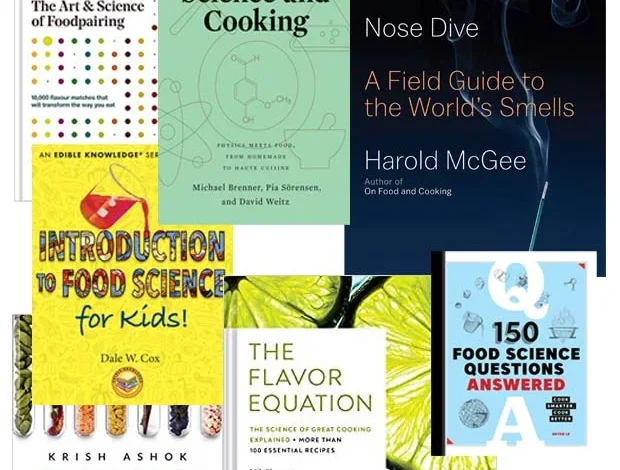
The intersection of gastronomy and empirical science has experienced a profound renaissance, driven by a growing appetite among home cooks and professionals alike to understand the chemical and physical transformations that occur behind the stove. Following a lengthy hiatus in book recommendations that stretched back to 2013, the influential culinary science platform Khymos has broken its silence to spotlight a curated selection of seminal texts released in 2020. These seven publications span complex flavor theory, sensory perception, academic research, regional Indian cooking, and early-childhood education, collectively redefining how modern kitchens approach the science of food.
Background Context and the Evolution of Culinary Science
For decades, cooking was passed down primarily through oral traditions, intuition, and trial and error. However, the late 20th and early 21st centuries marked a paradigm shift. Pioneers like Harold McGee bridged the gap between academic laboratories and home kitchens, proving that culinary execution is fundamentally an exercise in applied chemistry and physics. Over time, universities began formalizing these concepts, most notably through Harvard University’s Science and Cooking general education course, launched a decade ago.
The publications of 2020 arrived at a unique cultural juncture. Amid global shifts that forced millions indoors, interest in home cooking skyrocketed, accompanied by a parallel demand for intellectual engagement with food. Authors, scientists, and chefs responded by translating peer-reviewed research and advanced gastronomic theory into accessible formats, ranging from recipe-integrated sidebars to comprehensive field guides.
Comprehensive Review of the 2020 Publications
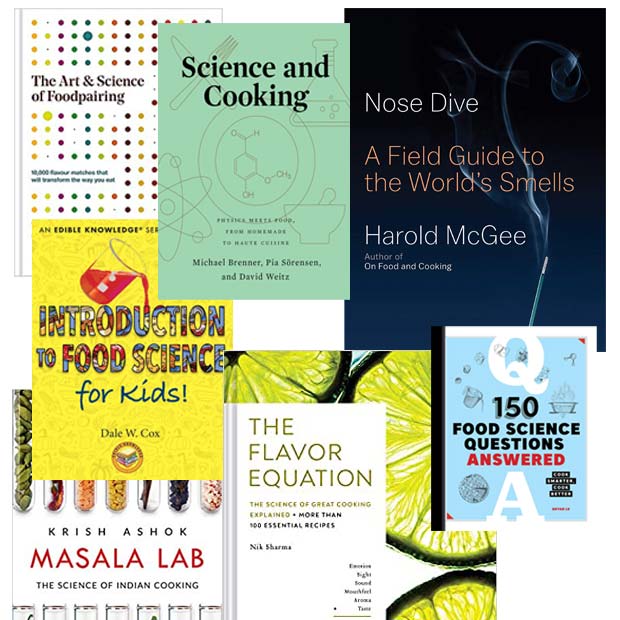
The curated list released by Khymos highlights seven distinct volumes that approach culinary science from vastly different methodological angles.
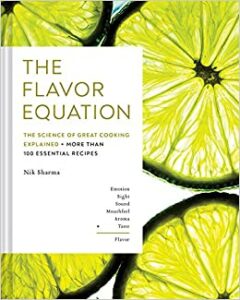
The Flavor Equation by Nik Sharma
Spanning 352 pages, Nik Sharma’s 2020 release integrates rigorous scientific principles directly into approximately 100 approachable recipes. Sharma utilizes small instructional hints under the recurring heading "The Flavor Approach" to explain why specific ingredients interact harmoniously on a molecular level. Approximately one third of the publication explores flavor from psychological, physiological, and chemical perspectives, ensuring the science remains highly accessible to culinary enthusiasts. A notable practical advantage for international readers is the inclusion of metric units throughout the text.
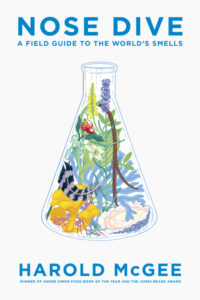
Nose Dive: A Field Guide to the World’s Smells by Harold McGee
Harold McGee, whose foundational text On Food and Cooking: The Science and Lore of the Kitchen initially inspired a generation of food scientists, returned in 2020 with a massive 688-page volume entirely dedicated to olfaction. Unlike traditional cookbooks, Nose Dive examines volatile molecules across natural and artificial environments, far beyond the confines of the plate. While the book explicitly names complex chemical compounds, McGee’s accessible prose ensures that readers are not intimidated by the underlying organic chemistry. The publication has seen distinct cover variations between its UK and US editions, reflecting its broad international anticipation.
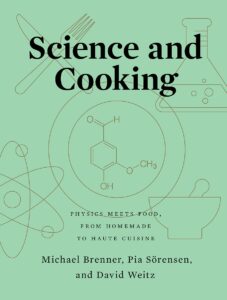
Science and Cooking: Physics Meets Food, From Homemade to Haute Cuisine by Michael Brenner, Pia Sørensen, and David Weitz
Authored by three prominent Harvard faculty members whose backgrounds span applied mathematics, chemistry, and physics, this 320-page book codifies a decade of the university’s famous undergraduate curriculum. The authors are well-known for their public YouTube lecture series, which regularly features world-renowned chefs, scientists, and authors exploring the physics of everyday cooking versus high-end gastronomy. The volume successfully pairs theoretical physics with practical recipes, bolstered by the inclusion of standardized metric measurements.
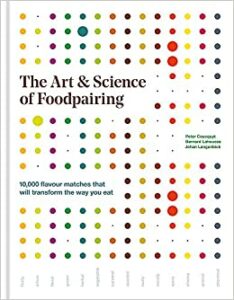
The Art and Science of Foodpairing by Peter Coucquyt, Bernard Lahousse, and Johan Langenbick
Building on pioneering database research and conceptual frameworks discussed extensively at European culinary congresses like The Flemish Primitives, this 388-page text explores the methodology of pairing ingredients based on shared aromatic compounds. While flavor pairing has occasionally drawn skepticism and debate within traditional culinary circles, the empirical data compiled by the foodpairing enterprise offers a systematic approach to recipe development. The authors demonstrate how scientific data can ultimately serve as a springboard for artistic culinary inspiration.
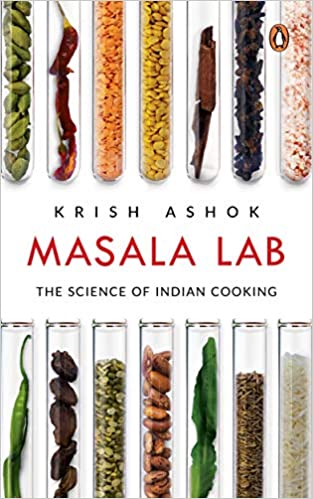
Masala Lab by Krish Ashok
Representing a vital expansion of food science into regional non-Western cuisines, Krish Ashok’s 280-page book applies empirical skepticism to traditional Indian cooking methods. Ashok, an electronic and software engineer by trade, investigates the underlying thermodynamics and chemistry of traditional spice handling, tempering, and curry preparation. Initially distributed primarily through Amazon in India, the book has been widely praised for demystifying deeply ingrained cultural cooking heuristics through modern scientific inquiry.
150 Food Science Questions Answered: Cook Smarter, Cook Better by Bryan Le
Structured around an intuitive Question-and-Answer format across 198 pages, Bryan Le’s work is divided into chapters covering cooking fundamentals, flavor mechanics, core ingredient groups, and food safety and storage. Designed as a practical reference manual rather than a sequential narrative, the book is specifically targeted at individuals looking to introduce a rigorous scientific mindset into their domestic cooking routines without getting overwhelmed by dense academic jargon.
Introduction to Food Science for Kids!: A Kitchen-Based Workbook by Dale W Cox
Recognizing that the domestic kitchen serves as an ideal interactive laboratory, Dale Cox’s 112-page workbook is tailored specifically for younger audiences. By utilizing everyday household ingredients, the publication introduces foundational chemical and physical concepts to children, fostering early scientific literacy through edible experimentation.
Chronology and Publishing Timeline of Modern Food Science
The trajectory of culinary science literature can be mapped across distinct generational milestones:
- Pre-2000s: Dominated by empirical lore, technical chef memoirs, and foundational works like Harold McGee’s original 1984 publication.
- 2000–2010: The rise of molecular gastronomy, popularized by international chefs, scientific congresses, and early digital platforms like Khymos.
- 2010–2019: Academic institutionalization, highlighted by the launch of Harvard’s Science and Cooking course and the emergence of digital flavor-pairing databases.
- 2020 and Beyond: The democratization and regional diversification of food science, where complex physical and chemical principles are integrated directly into home-cooking media, diverse cultural cuisines, and children’s education.
Industry Implications and Broader Impact
The collective release of these seven titles in 2020 signals a mature phase in the culinary science movement. No longer confined to avant-garde laboratories or elite university lecture halls, empirical food science has firmly embedded itself in domestic kitchens globally.
By translating complex molecular interactions, thermal dynamics, and sensory psychology into readable formats, authors like Sharma, McGee, Brenner, and Ashok are empowering a new wave of home cooks to troubleshoot recipes intuitively. Furthermore, the inclusion of regional cuisines—such as Ashok’s work on Indian cooking—corrects a historical Western-centric bias in food science literature, paving the way for a more globally inclusive understanding of culinary chemistry. As publishers continue to bridge the gap between rigorous academic research and practical domestic application, the boundary between the chemistry laboratory and the home kitchen will continue to dissolve, permanently altering how humanity approaches the preparation and appreciation of food.