
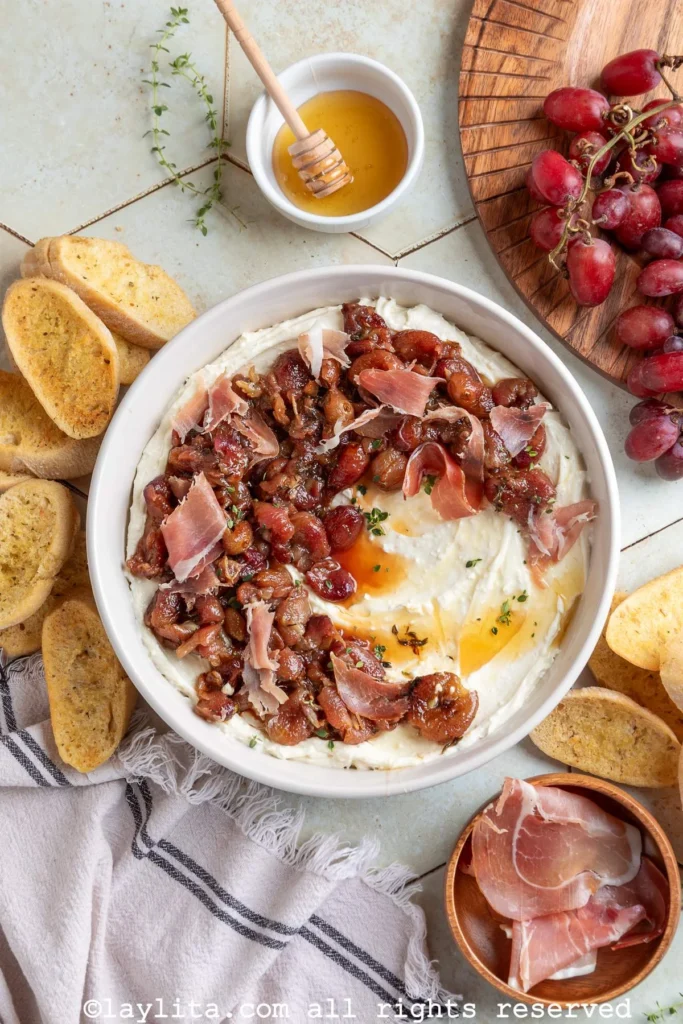
Culinary trends frequently witness the intersection of sweet and savory flavor profiles, capturing the attention of both home cooks and professional chefs alike. The contemporary appetite for aesthetically pleasing and texturally complex appetizers has given rise to a new crowd-pleasing favorite: honey whipped feta dip topped with roasted red grapes, fresh thyme, and savory bits of prosciutto. As entertaining season expands from autumn holidays into year-round dinner parties and casual gatherings, this dish has established itself as a versatile centerpiece that balances culinary sophistication with approachable preparation methods.
The Origins and Evolution of Whipped Feta in Modern Gastronomy
The foundation of this dish relies on feta, a brined curd cheese with a history stretching back thousands of years in the Mediterranean, particularly Greece. Traditionally used as a crumbled topping for salads or served simply with olive oil and oregano, feta underwent a modern culinary transformation with the advent of whipped cheese recipes popularized on digital media platforms and upscale restaurant menus. By introducing a food processor, culinary creators discovered that blending a solid block of feta with cream cheese or Greek yogurt yields an ultra-smooth, velvety base.
The addition of honey introduces a nuanced sweetness that cuts through the sharp, salty nature of aged sheep’s or goat’s milk feta. This evolution reflects a broader global shift toward contrast in modern appetizers, moving away from heavy, one-dimensional cheese boards toward dynamic, multi-layered dips that incorporate warm elements, fresh herbs, and cured meats.
Anatomy of the Dish: Ingredients and Flavor Balancing
Achieving the ideal balance in a honey whipped feta dip requires careful selection of components. Culinary experts emphasize the necessity of starting with a whole block of authentic feta cheese rather than pre-packaged crumbles, which often contain anti-caking agents and lack the moisture required for a smooth emulsion.
The ingredient profile typically includes:
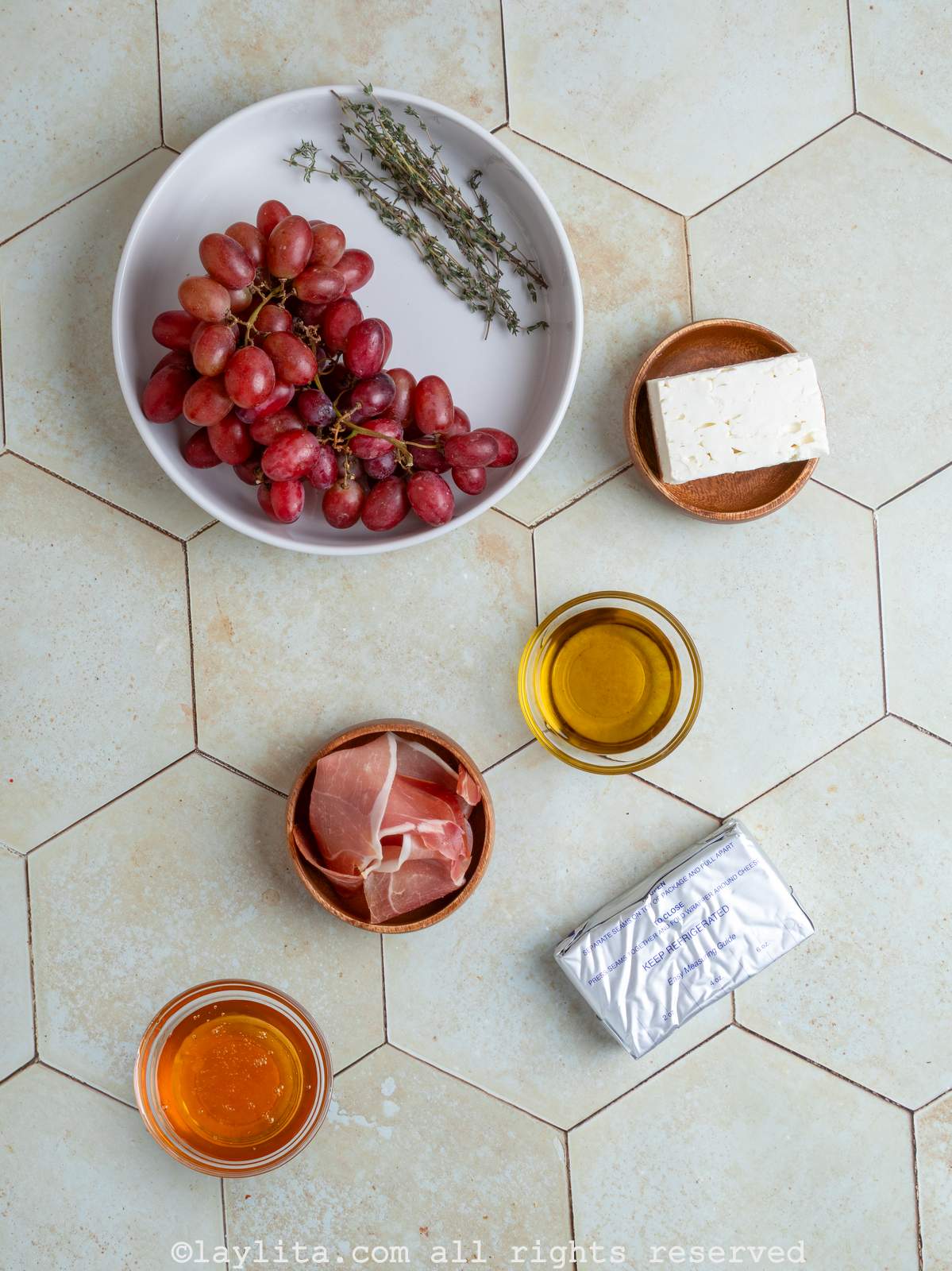
- A quality block of feta cheese, drained of excess brine
- Cream cheese to stabilize and enrich the whipped texture
- High-quality honey, incorporated into the base and utilized for finishing touches
- Extra virgin olive oil to adjust consistency and add a fruity, peppery note
- Fresh red grapes, roasted until they burst and release their natural sugars
- Fresh thyme leaves to provide an earthy, herbal contrast
- Torn prosciutto or prosciutto jam for a savory, umami-rich crunch
- Toasted baguette slices, crostini, or artisan crackers for serving
Technique and Preparation Chronology
Preparation of the dish follows a specific chronological sequence to ensure optimal texture, temperature, and visual appeal.
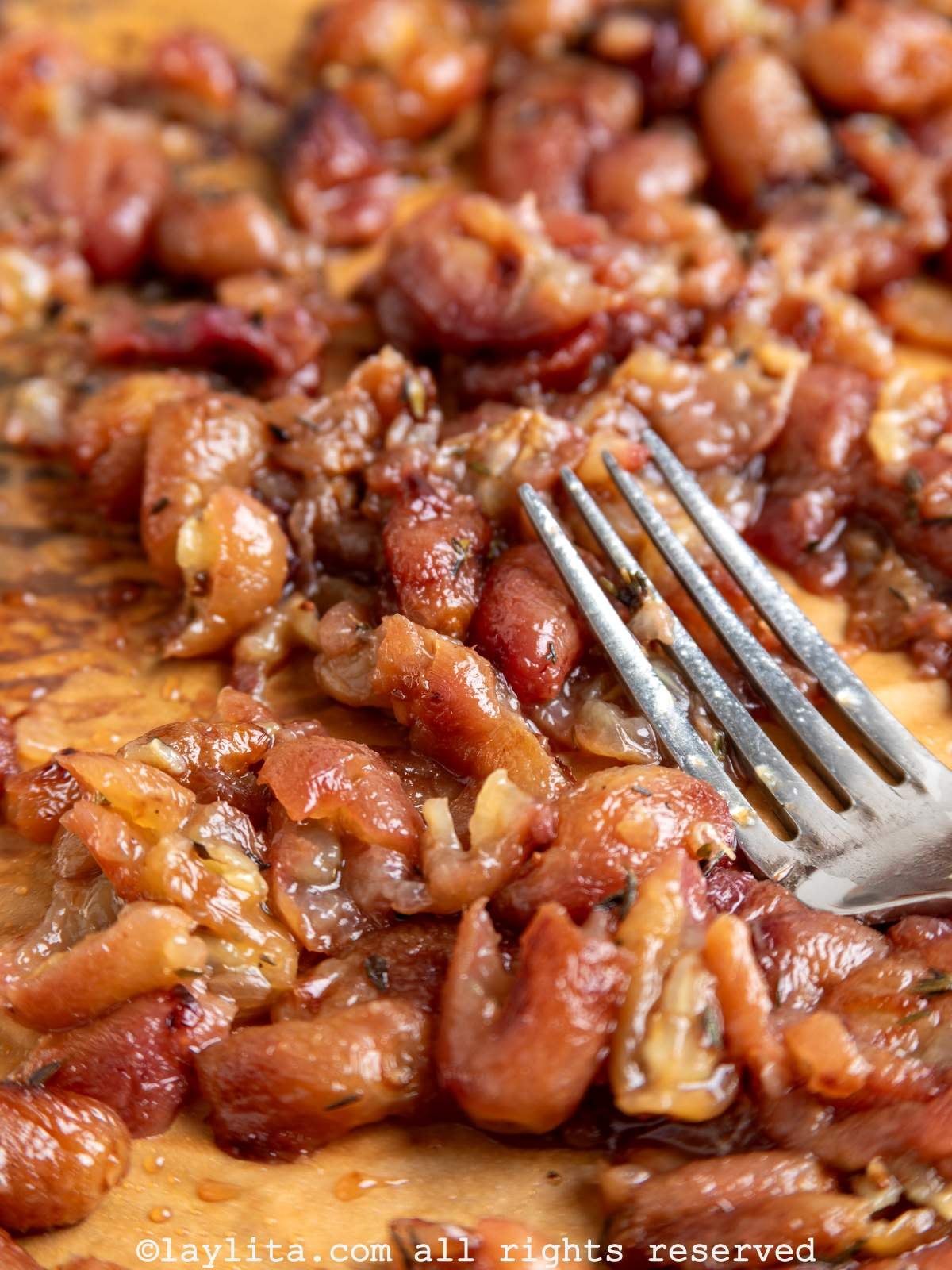
Phase 1: Roasting the Grapes
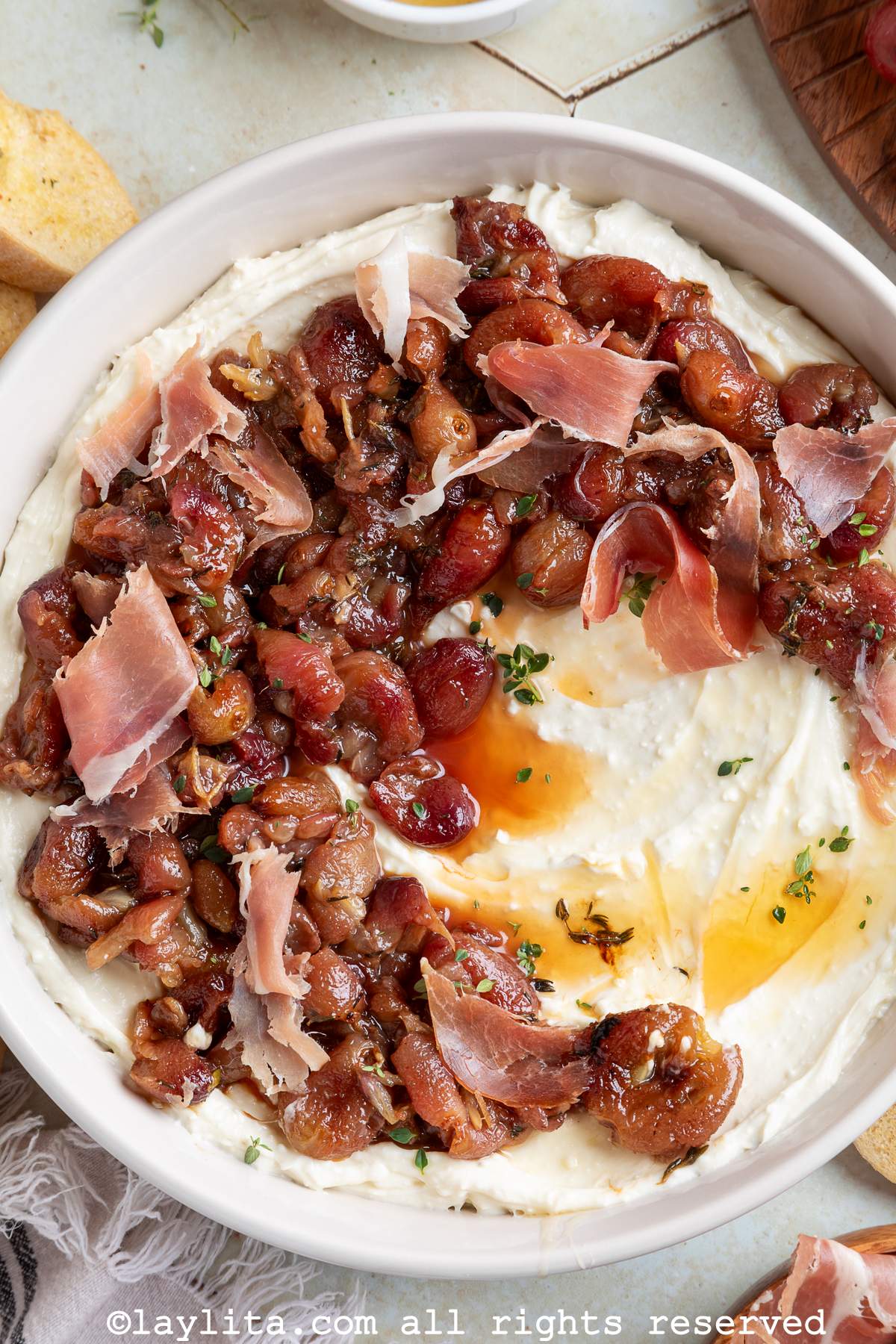
The process begins with the preparation of the red grapes. Washed and dried red grapes are tossed in a minimal amount of olive oil and a pinch of salt, then roasted at high heat until their skins blister and their juices concentrate. This heat application breaks down the cellular structure of the fruit, converting the tart acidity into a rich, jammy sweetness. Once removed from the oven, the grapes must be allowed to cool to room temperature before assembly. Culinary professionals note that adding hot grapes directly to the dairy base can compromise the structural integrity of the whipped feta, causing it to liquefy.
Phase 2: Whipping the Cheese Base
While the grapes cool, the cheese components are prepared. The drained block of feta is combined with cream cheese in a food processor. Processing begins with pulses to break down the cheese, followed by continuous blending while a steady stream of extra virgin olive oil and honey is incorporated. Scraping down the bowl periodically ensures a uniform, lump-free consistency that mimics the texture of silky frosting.
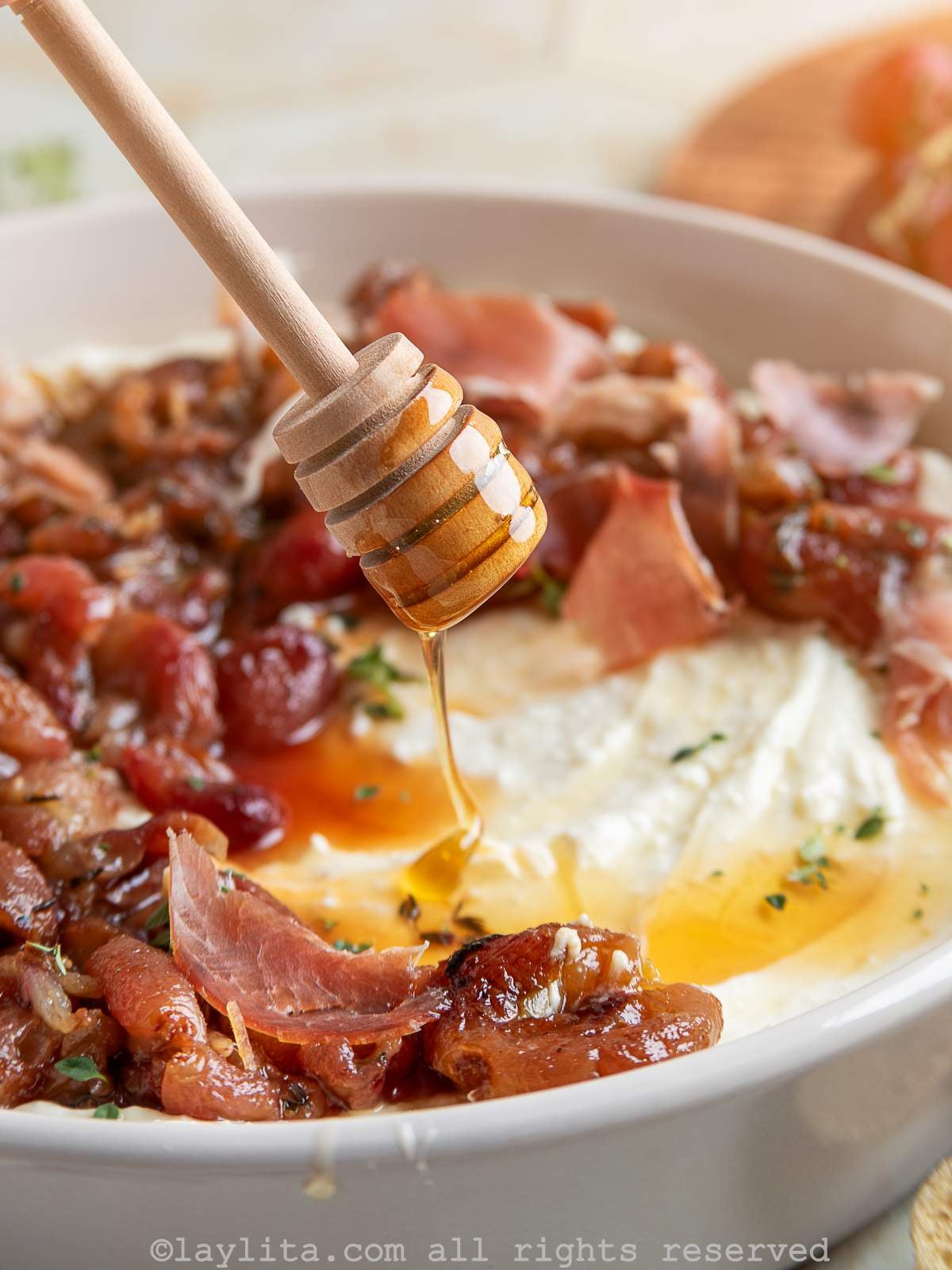
Phase 3: Assembly and Presentation
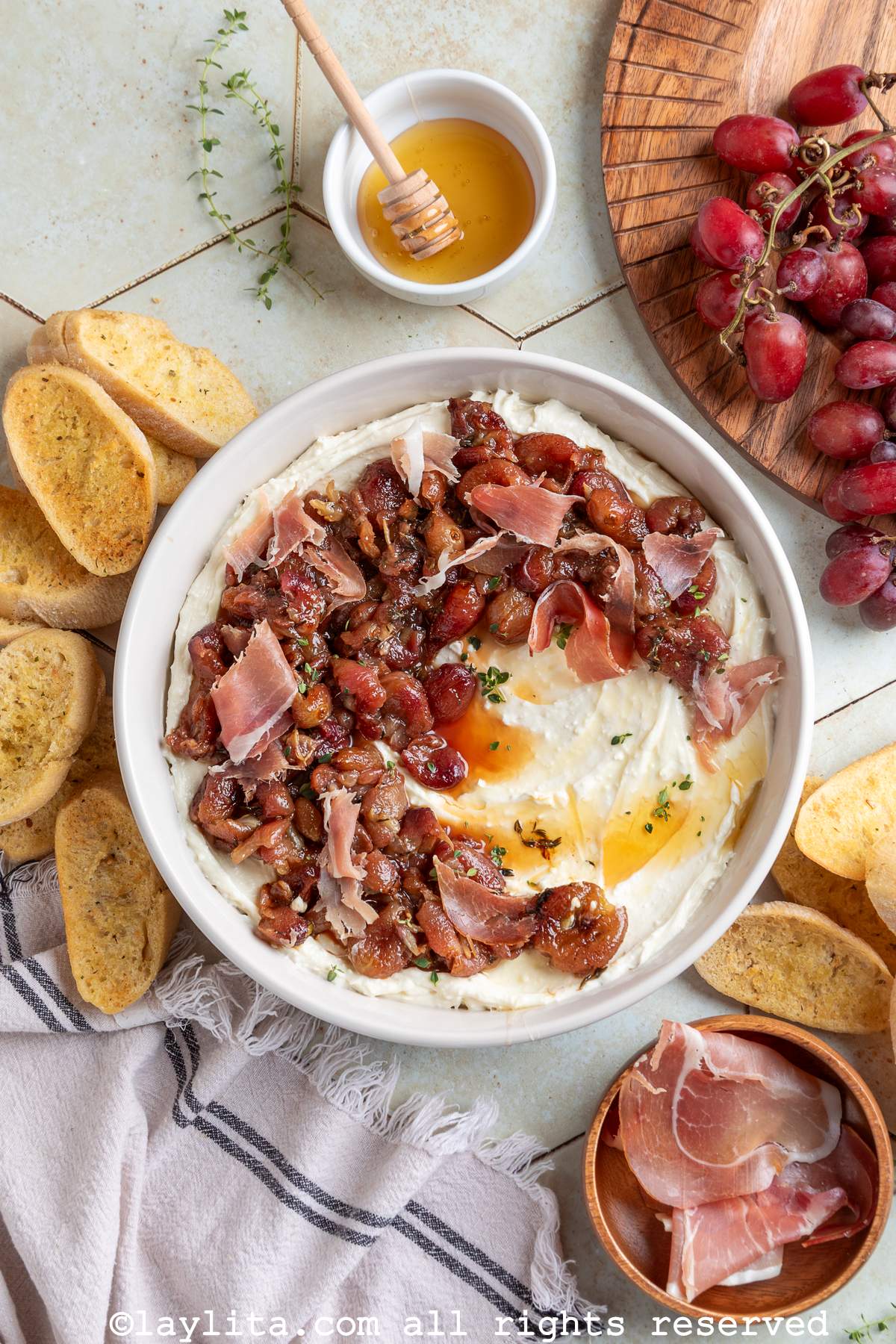
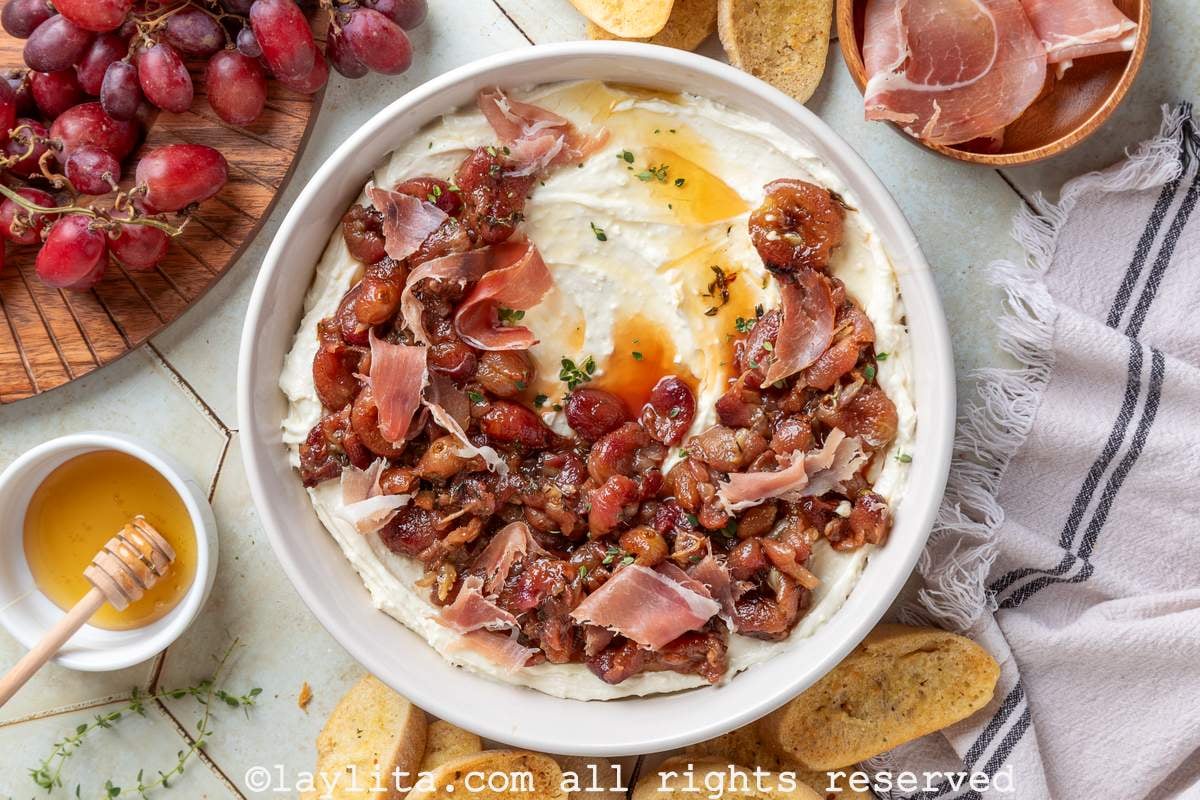
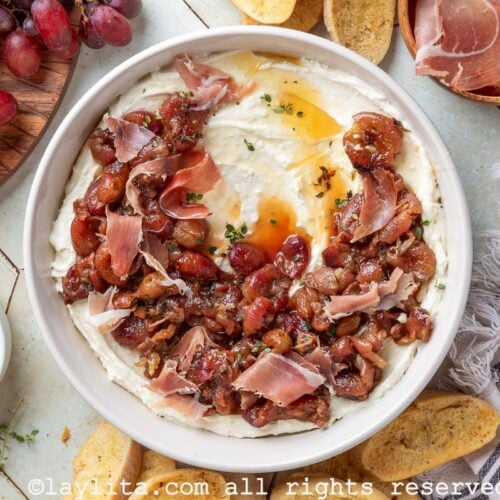
The final stage involves spreading the whipped feta into a shallow serving bowl or platter, creating a well in the center using the back of a spoon. The cooled, roasted grapes are gently spooned into the depression, accompanied by their concentrated roasting juices. The dish is then garnished with torn pieces of prosciutto, fresh thyme leaves, and an optional final drizzle of honey to enhance gloss and flavor depth.
Nutritional and Dietary Considerations
From a nutritional perspective, this appetizer occupies a space typical of gourmet cheese-based dishes, offering significant protein and calcium from the dairy components, balanced by the antioxidants found in fresh grapes and olive oil. Because feta is naturally high in sodium, the addition of honey and the absence of added salt in the cheese base serve to moderate the overall flavor perception. For hosts catering to diverse dietary needs, the dish can easily be adapted; omitting the prosciutto creates a vegetarian-friendly option, while utilizing gluten-free crackers ensures accessibility for guests with celiac disease or gluten sensitivities.
Storage, Make-Ahead Strategies, and Troubleshooting
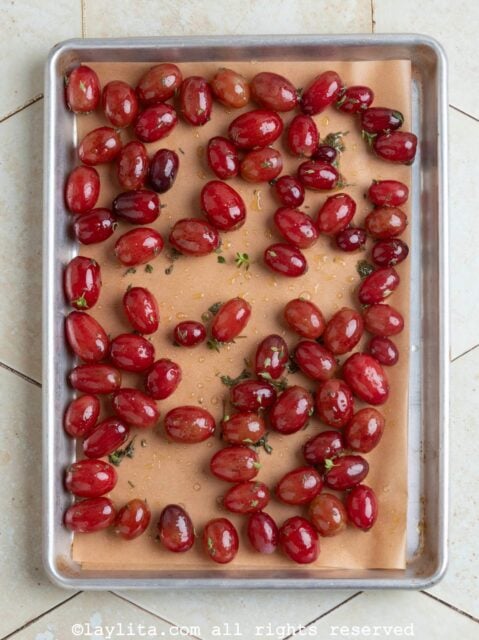
Practical execution for large-scale events or holiday parties requires efficient advance preparation. Culinary authorities recommend preparing both the whipped feta dip and the roasted grapes up to two days in advance, storing them in separate airtight containers in the refrigerator.
When preparing to serve, several troubleshooting guidelines ensure optimal results:
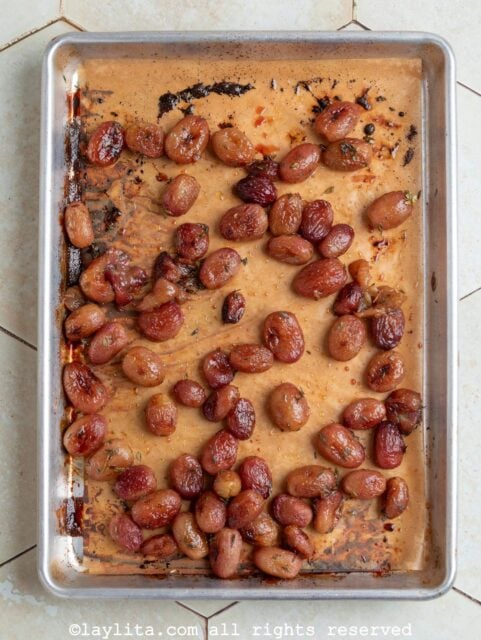
- Temperature Control: Both components should be brought to room temperature before assembly. Cold feta can taste overly dense and mute its complex flavors.
- Consistency Adjustments: If the whipped feta appears too thick after refrigeration, a tablespoon of warm water or olive oil whipped vigorously back into the base will restore its creaminess.
- Moisture Management: When adding the roasted grapes to the dip, excess liquid from the baking sheet should be added sparingly to prevent pooling around the base of the cheese.
Broader Culinary Implications and Market Trends
The enduring popularity of sweet-and-savory cheese pairings highlights shifting consumer preferences toward interactive, visually striking food experiences. Whether categorized as an upscale holiday starter, an elegant dinner party focal point, or an indulgent weekend meal, the honey whipped feta dip with roasted grapes demonstrates how traditional ingredients can be reimagined through modern culinary techniques. As home cooks continue to seek recipes that deliver maximum aesthetic and gustatory impact with minimal active cooking time, preparations of this nature are expected to remain staples of contemporary entertaining well into the future.







0 Komentar
Sampaikan opini dan diskusi yang membangun dengan bahasa yang santun.
No Comments Yet
Be the first to share your thoughts on this story.