From Colonial Skepticism to Global Innovation: The Legacy of Prof. Ir. Sedyatmo and the Birth of the Cakar Ayam Foundation

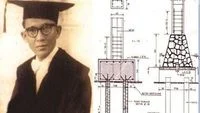
Today marks the 117th anniversary of the birth of Prof. Ir. Sedyatmo, one of Indonesia’s most visionary and accomplished civil engineers. Internationally renowned as the brilliant mind behind the revolutionary "cakar ayam" (chicken claw) foundation system—a structural engineering marvel designed for unstable and swampy soils—Sedyatmo’s journey to global recognition was fraught with skepticism, professional hurdles, and the heavy socio-political constraints of the late Dutch colonial era in the Dutch East Indies. Long before his name became synonymous with structural resilience and patents spanning over a dozen countries, a young Sedyatmo had to combat systemic colonial prejudices, architectural dogmatism, and deeply ingrained administrative barriers that sought to marginalize native ingenuity.
The Historical and Colonial Context of 1930s Engineering
To truly understand the magnitude of Sedyatmo’s early career achievements, one must examine the landscape of civil engineering in the Dutch East Indies during the 1930s. At the time, the colonial infrastructure apparatus was strictly dominated by European engineers, predominantly Dutch nationals who graduated from prestigious metropolitan institutions such as the Technische Hoogeschool te Delft (Delft University of Technology). These engineers operated under rigid European standards, relying heavily on textbook methodologies, classical formulas, and conservative safety margins that frequently failed to account for the unique, highly localized geotechnical conditions found across the Indonesian archipelago.
Native Indonesian engineers, often graduates of the newly established Technische Hoogeschool te Bandoeng (now the Institut Teknologi Bandung or ITB founded in 1920), faced an uphill battle for professional validation. They were frequently viewed by their European superiors through a paternalistic lens—deemed competent enough for routine maintenance or subordinate tasks, but rarely trusted with groundbreaking design or autonomous leadership on complex infrastructural projects. Sedyatmo, having earned his engineering degree in 1934 amidst a global economic depression, entered this intensely stratified professional ecosystem determined to prove that native intellect could match, and often surpass, Eurocentric academic doctrines.
The Wiroko Water Bridge Project: The Crucible of 1936
The turning point in Sedyatmo’s early professional trajectory occurred in 1936, a mere two years after completing his formal higher education. Commissioned directly by K.G.P.A.A. Mangkunegoro VII, the influential ruler of the Mangkunegaran Principality in Surakarta, Sedyatmo was entrusted with a critical regional infrastructure undertaking: the construction of a water distribution bridge in Wiroko Village, located in the rugged and remote Wonogiri regency of Central Java.
The primary objective of the Wiroko project was to channel vital irrigation water from the Wiroko River to parched agricultural lands, thereby boosting local food security and empowering farmers who had long suffered from unpredictable dry seasons. However, the physical realities of the site presented monumental obstacles. The proposed location was deeply isolated, lacking basic logistical access routes, and plagued by severe environmental hazards, including a heavy population of venomous snakes and unstable terrain.
Operating under severe budgetary constraints and tight logistical deadlines, Sedyatmo approached the project not merely as a mechanical execution of orders, but as an exercise in creative resource optimization. He deliberately prioritized maximum structural efficiency—balancing materials, financial costs, and construction timelines—without compromising the overall integrity and load-bearing capacity of the bridge.
Clashing Paradigms: Sedyatmo Versus the Dutch Establishment
It was during the architectural drafting and execution phases of the Wiroko project that Sedyatmo came into direct conflict with the entrenched Dutch engineering establishment. Reviewing his blueprints, colonial engineers raised immediate objections, arguing vehemently that Sedyatmo’s design violated established European technical norms. Specifically, the young Indonesian engineer specified concrete thicknesses that were significantly thinner than what standard Western manuals and safety formulas dictated for such water-bearing structures.
The Dutch engineers characterized his specifications as reckless, unorthodox, and dangerously non-compliant with standard safety coefficients. In their view, deviating from European empirical formulas was tantamount to inviting structural failure.
Sedyatmo, however, remained resolute. Drawing on a combination of rigorous mathematical observation, practical field intuition, and a profound understanding of local material behaviors, he dismissed the colonial engineers as blindly dogmatic and overly reliant on theoretical abstractions that failed to reflect physical realities on the ground. As he later reflected in his biography, Prof. Dr. Ir. Sedyatmo: Intuisi Mencetus Daya Cipta (2019), he firmly maintained that "the strength of the bridge is not inferior to bridges utilizing conventional formulas."
Cultural Diplomacy and Local Integration on the Job Site
Beyond the technical and structural battles, Sedyatmo demonstrated exceptional emotional intelligence and cultural sensitivity in managing his workforce—a critical skill often lacking among colonial administrators. In accordance with regional Javanese customs of the era, the local laborers requested the performance of traditional rituals to appease unseen spiritual forces and ensure safety during excavation and construction. This involved the ritual slaughter of a water buffalo and the burial of its head near the project site.
Sedyatmo complied with the request, but his approach was rooted entirely in pragmatic social harmony rather than personal superstition. Recognizing that the psychological well-being, morale, and cooperation of the local workforce were paramount to the project’s success, he facilitated the ritual to alleviate their anxieties and foster a sense of mutual respect.
As documented in his historical accounts, Sedyatmo did not harbor mystical beliefs regarding the sacrifice; rather, he viewed it as an essential tool for community integration. Once the ritual was completed, the remaining meat of the buffalo was cooked and shared communally among the villagers and laborers in an egalitarian feast of solidarity, while the head was buried due to its heavy bone structure. This empathetic leadership style earned Sedyatmo the profound loyalty and trust of the local population, ensuring steady, uninterrupted progress on-site.
Vindication and the Historic Appointment to the Public Works Department
By 1937, the Wiroko Water Bridge was successfully completed. Standing firm and fully operational, the bridge served as an empirical validation of Sedyatmo’s structural calculations and design methodology. The structure successfully managed water distribution without any of the catastrophic structural failures predicted by his European critics.
The completion of the Wiroko project marked a watershed moment in Sedyatmo’s career, immediately altering the professional calculus within the colonial administration. His undeniable success caught the attention of Prof. Ir. Bijlaard, a high-ranking official within the colonial Department of Public Works (Burgerlijke Openbare Werken or BOW) and a prominent voice in regional civil engineering. Impressed by Sedyatmo’s ingenuity and practical mastery, Bijlaard extended an official invitation for him to join the department.
This invitation shattered a formidable glass ceiling. With his induction, Sedyatmo made history as the very first indigenous Javanese engineer to be appointed to the elite ranks of the colonial Public Works Department, paving the way for future generations of Indonesian technical professionals to break into institutional spaces previously reserved exclusively for Europeans.
Post-Independence Ascent: Academia and the Cakar Ayam Breakthrough
Following Indonesia’s hard-won independence, Sedyatmo continued to scale the heights of academic and professional excellence. His contributions to the nation’s reconstruction and technical education were officially recognized on August 11, 1953, when the prominent newspaper De locomotief reported his appointment as a full Professor (Guru Besar) in Hydraulic Power at the newly structured Institut Teknologi Bandung (ITB), cementing his status as an academic titan.
However, Sedyatmo’s ultimate contribution to global civil engineering occurred in 1961, amidst the logistical demands of constructing the Jakarta-Bogor highway and the massive foundations required for the construction of the Istiqlal Mosque and the Jakarta (now Soekarno-Hatta) International Airport infrastructure planning. Tasked with erecting massive electrical transmission towers over deep, unstable, and swampy alluvial soils in the Jakarta region—terrain traditionally deemed incapable of supporting heavy loads without sinking—Sedyatmo conceptualized a radically innovative foundation system.
Drawing on years of empirical observation of natural structures, particularly the root systems of resilient trees growing in muddy wetlands, Sedyatmo developed the "cakar ayam" (chicken claw) foundation. As detailed in historical archives such as the newspaper Berita Yudha (February 7, 1985), the cakar ayam system consists of a reinforced concrete flat slab supported by a monolithic network of short, thick cylindrical concrete pipes (the "claws") beneath it. This grid-like configuration grips the unstable soil dynamically, distributing heavy structural loads evenly across soft ground without the need for deep, expensive piles driven into bedrock.
Global Legacy and Broader Implications for Modern Infrastructure
The impact of Sedyatmo’s invention extended far beyond Indonesia’s borders. The cakar ayam foundation eventually secured international patents across more than a dozen countries, revolutionizing construction practices in marshy, deltaic, and soft-soil regions worldwide. Airports, highways, and heavy industrial facilities built on problematic soils globally have since benefited from the mechanical principles he pioneered.
Reflecting on Sedyatmo’s legacy today provides essential context for modern infrastructure development in developing nations. His career serves as a powerful reminder that local environmental challenges require context-specific technical solutions rather than blind adherence to imported, standardized dogma. By challenging colonial-era skepticism with rigorous practical intuition, Prof. Ir. Sedyatmo not only transformed Indonesian civil engineering but also left an indelible mark on the global science of structural mechanics.