
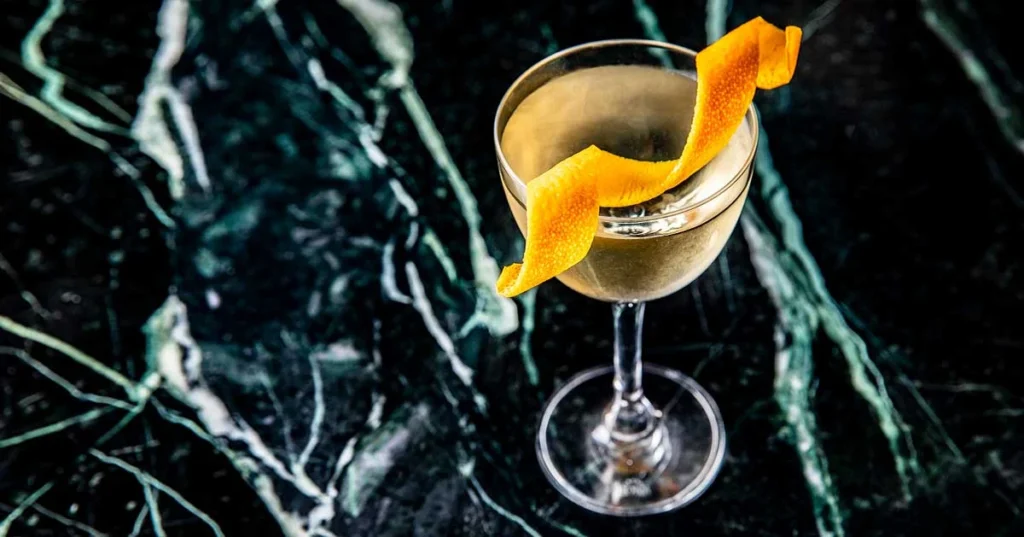
The Martini stands as the undisputed sovereign of the cocktail world, a deceptively simple construction of spirit and aromatized wine that has sustained more than a century of rigorous intellectual debate. While its most austere iteration requires only two ingredients, the cocktail’s cultural footprint is vast, influencing everything from the architecture of modern bar programs to the evolution of global spirits production. As the industry continues to refine and deconstruct this pillar of mixology, the Martini has evolved from a static recipe into a dynamic template, shifting fluidly between historical reverence and radical innovation.

The Anatomy of a Debate
At its core, the Martini remains a lightning rod for preference. The fundamental questions—gin or vodka, wet or dry, shaken or stirred, olive or twist—are more than mere stylistic choices; they are expressions of historical context and sensory engineering. The classic dry Martini, traditionally composed of London Dry gin and dry vermouth, emphasizes botanical complexity and crisp acidity. In contrast, the mid-20th-century shift toward vodka introduced a neutral, viscous alternative that prioritized texture and temperature over the aromatic nuance of juniper.
This tension has fostered a deep library of variations. Proponents of the "wet" Martini, which utilizes a higher ratio of vermouth, champion the drink’s low-ABV accessibility and its ability to highlight the delicate floral and herbal notes of quality vermouth. Conversely, the "dry" movement has pushed bartenders to explore high-proof spirits and sub-zero service temperatures, treating the glass itself as a vehicle for thermal preservation.

A Chronology of Evolution
The lineage of the Martini is often traced back to the Martinez, a nineteenth-century precursor that utilized Old Tom gin and sweet vermouth. This sweeter, more viscous profile bears little resemblance to the bone-dry iterations common in the 1950s and 60s, yet it provides the essential DNA for the cocktail’s structural development.
As the twentieth century progressed, the cocktail became an emblem of industrial efficiency and cosmopolitan sophistication. During the Prohibition era, the scarcity of quality spirits necessitated the use of heavy aromatics to mask off-flavors, but the post-war boom ushered in a preference for clarity and potency. By the 1990s, the "Martini" moniker had been co-opted by the flavored-vodka craze, nearly diluting the term’s meaning. However, the last decade has seen a dramatic correction, with a "back-to-basics" movement that emphasizes the technical precision of the build, the quality of the ice, and the provenance of the ingredients.

The "Ultimates" and the Quest for Perfection
In recent years, industry experts have moved away from subjective debate toward empirical testing. The "Ultimates" series, an initiative gathering top-tier bartenders to blind-taste and score iterations of the cocktail, has codified a new standard for excellence. These efforts have highlighted that the "perfect" Martini is often one that balances the volatility of the spirit with the oxidative beauty of a well-stored vermouth.
One standout from this evolution is the Sakura Vesper, a nuanced take on Ian Fleming’s original literary invention. By replacing the classic base with a marriage of Japanese gin and vodka, the drink introduces floral, ethereal notes that contrast with the bracing, high-proof structure of the traditional recipe. It represents a shift toward terroir-driven mixology, where the spirit is no longer a blank slate but a reflection of its botanical and regional origins.

Rediscovering the Lesser-Known Classics
While the contemporary focus is often on the new, there is a parallel trend of "archaeological" bartending, which seeks to revive long-forgotten siblings of the Martini. Drinks like the Alberto and the Tuxedo provide a window into a time when the Martini was a fluid category rather than a singular recipe.
The Tuxedo, for instance, utilizes fino sherry as a stand-in for vermouth, creating a profile that is nutty, saline, and incredibly dry—a sophisticated pivot for drinkers tired of the standard profile. Similarly, the Allies cocktail introduces the savory, caraway-forward spice of kümmel, demonstrating that the Martini template is robust enough to support complex, idiosyncratic ingredients without losing its identity. The Obituary, a New Orleans staple, pushes the boundaries of the dry style by incorporating a splash of absinthe, proving that even minor modifications can fundamentally alter the drinker’s experience.

The Rise of the "Dirty" Martini
Perhaps no variation of the drink has seen a more dramatic resurgence than the "Dirty" Martini. Long dismissed by purists as a mask for low-quality spirits, the contemporary Dirty Martini has been rehabilitated through the use of high-end, house-made brines, bespoke olive infusions, and unconventional additions.
The "Trash-Tini"—a kitchen-sink approach featuring gin, vodka, onions, and olives—represents the democratic, playful side of this movement. Meanwhile, the Au Poivre and the Stiltontini demonstrate the culinary potential of the style. By infusing spirits with pickled green peppercorns or blue cheese, bartenders are treating the cocktail as a savory course. This is not merely about adding salt; it is about creating a complex, umami-forward profile that pairs exceptionally well with food, bridging the gap between the bar and the kitchen.

The Modern Mood: A Shift in Philosophy
The current landscape of the Martini is characterized by a departure from strict rules. Today’s bartenders view the drink as a "mood" or a "canvas." The Hinoki Martini, which incorporates a woodsy, cypress-infused tincture, offers a cooling, forest-like aromatic profile that elevates the cocktail beyond a mere delivery system for alcohol.
The House Martini, particularly at establishments like Humm in New York, emphasizes the importance of the garnish as a functional element. Whether it is a proprietary pickled onion or a salted cherry blossom, these additions are designed to evolve the drink as it sits in the glass, providing a sensory narrative that changes from the first sip to the last. Rice-washed spirits, another modern innovation, provide a silky, rounded mouthfeel that modernizes the classic without sacrificing its integrity.

Data and Implications for the Industry
Market analysis indicates that the premiumization of the Martini has had a measurable impact on spirits sales. Consumers are increasingly seeking out high-ABV, craft-distilled gins and premium vodkas that offer distinct flavor profiles, moving away from the mass-market options that dominated the late 20th century. Furthermore, the growth of the low-ABV and fortified wine sector, fueled by the demand for "wet" or sherry-forward Martinis, has provided a significant boost to traditional European wine houses.
From an industry perspective, the Martini serves as a diagnostic tool. A bar that can execute a perfect, balanced, and appropriately chilled Martini is widely considered to have achieved a level of technical mastery that dictates the quality of their entire program. The focus on temperature, dilution, and glassware has forced a higher standard of service across the board.

The Future of the Template
As we look toward the future, the Martini is likely to remain in a state of constant, gentle flux. The push toward sustainability and the reduction of waste in bars will likely see more "closed-loop" cocktails, where citrus peels are transformed into cordials and olive brine is clarified and stabilized to ensure consistency.
The Martini’s endurance is rooted in its simplicity. It is a drink that does not hide, and because it does not hide, it demands the best of its ingredients and its maker. Whether served in a classic coupe, a chilled crystal glass, or a modern, minimalist vessel, the Martini continues to be the ultimate benchmark of the cocktail craft. It is a drink that has survived fashion, politics, and the shifting tides of the hospitality industry, not because it is rigid, but because it is resilient—a timeless template that, even after all these years, still has room to surprise us.






0 Komentar
Sampaikan opini dan diskusi yang membangun dengan bahasa yang santun.
Belum Ada Komentar
Jadilah yang pertama memberikan tanggapan mengenai berita ini.