The Hidden Hazard on Pacific Northwest Highways: How a Common Tire Chemical is Killing Coho Salmon

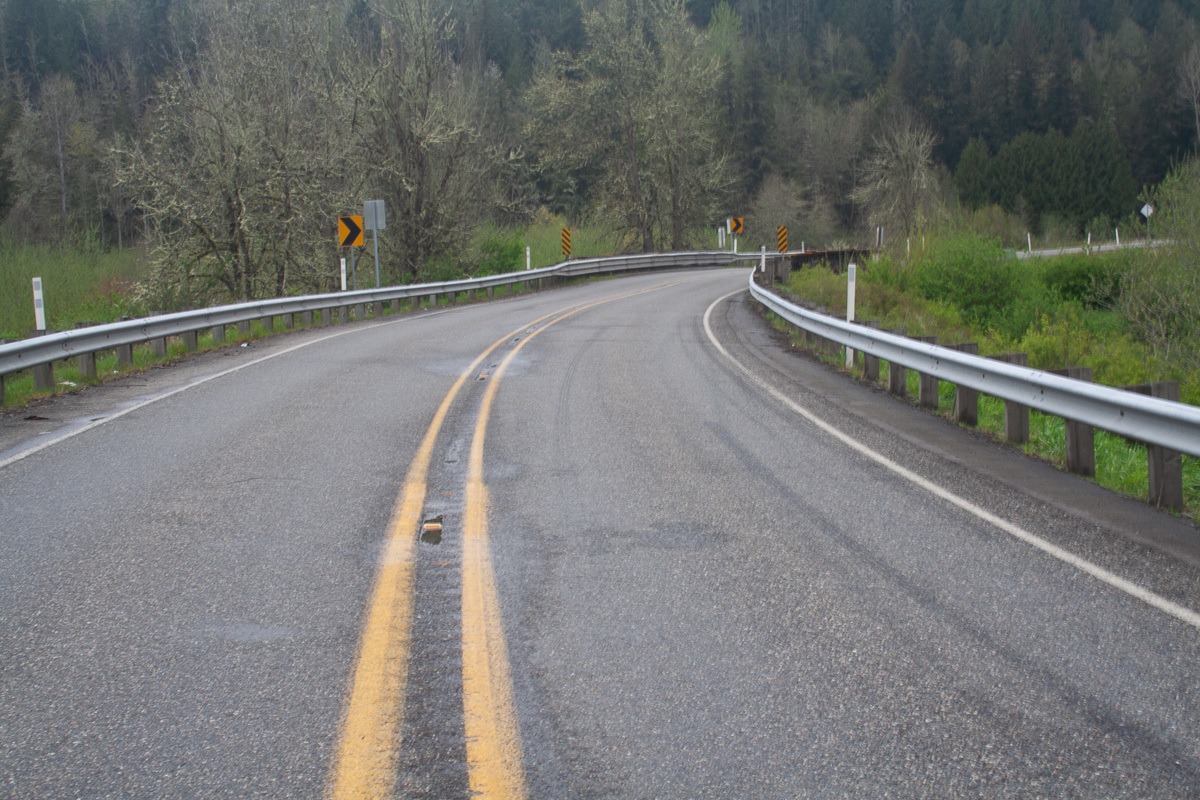
As late-winter rains sweep across the rugged landscapes of western Washington, a silent and insidious process unfolds along the region’s bustling roadways. Torrents of water wash over the asphalt of Highway 7, collecting an invisible cocktail of heavy metals, petroleum residues, and lawn fertilizers. Among this chemical stew is a ubiquitous compound designed for modern automotive durability: 6PPD-quinone. For the coho salmon navigating the nearby Ohop Creek to spawn, this runoff acts as a swift, lethal neurotoxin.
For decades, conservationists, state agencies, and Indigenous tribes have grappled with the decline of Pacific Northwest salmon populations. Habitat destruction, overfishing, and climate change have long been recognized as primary threats to these iconic migratory fish. However, the recent identification of 6PPD-quinone as an acute aquatic hazard has introduced a new, pervasive enemy into the ecosystem—one originating not from industrial smokestacks or agricultural spills, but from the everyday friction between millions of rubber tires and asphalt roads.
The crisis has mobilized a coalition of researchers, municipal leaders, and the Nisqually Tribe, who are racing to engineer interceptor technologies and lobby for regulatory overhauls before this chemical bottleneck wipes out generations of freshwater fish.
Unmasking the Culprit: A Scientific Breakthrough
For years, marine biologists and local residents near urbanized watersheds in Seattle and Tacoma observed a disturbing phenomenon known as urban runoff mortality syndrome. Adult coho salmon, having completed their epic journeys from the open ocean into freshwater streams to deposit their eggs, would suddenly exhibit erratic behavior. Observers noted fish swimming in spiraling patterns, gasping for air near the water’s surface, and dying within hours of encountering urban stormwater.
The breakthrough in solving this ecological mystery came in December 2020, when a team of researchers led by environmental chemist Zhenyu Tian published a landmark study in the journal Science. Utilizing cutting-edge high-resolution mass spectrometry—a technique that identifies chemicals in water samples based on molecular weight—Tian and his colleagues pinpointed 6PPD-quinone.
The compound is formed when 6PPD, an antioxidant added to automobile tires to prevent degradation and cracking when exposed to atmospheric ozone, reacts with ozone molecules on the road. When rain falls, the resulting byproduct, 6PPD-quinone, is washed off impervious surfaces like highways and parking lots directly into adjacent urban watersheds.
For the Nisqually Tribe, whose 5,000-acre reservation sits near the ancestral spawning grounds along Ohop Creek, the discovery provided both clarity and alarm. David Troutt, the natural resources director for the Nisqually Tribe, recalls the mixture of dread and relief upon learning the news at a late 2020 Puget Sound Salmon Recovery Council meeting.
"It was terrifying, because we’re all driving cars with tires," Troutt noted. "But it was exciting, in that we finally had a smoking gun that we could deal with."
Cultural and Economic Stakes for the Pacific Northwest
The stakes of this contamination extend far beyond local ecology. Coho salmon (Oncorhynchus kisutch) are culturally, spiritually, and economically vital to the Pacific Northwest. For the Nisqually people, whose history is intrinsically linked to fishing, the depletion of salmon threatens an ancient way of life and traditional dietary staples.
Commercially and recreationally, the species is also of massive importance. In 2019 alone, commercial harvests of coho salmon in the United States yielded approximately 27 million pounds for consumption. As pre-spawn mortality rates soar in urbanized watersheds, entire generations of fish are wiped out before they can reproduce, placing severe pressure on a species already heavily managed under conservation guidelines.
The intersection of modern infrastructure and natural waterways creates a lethal geographic trap. The Pacific Northwest’s damp, rainy climate ensures frequent runoff events, while the vast expanse of impermeable pavement across the region guarantees that toxins have an uninterrupted pathway from the highway to the stream.
Engineering Defense: The Nisqually Pilot Biofiltration System
Armed with the knowledge of what was killing their salmon, the Nisqually Tribe, in partnership with the Seattle-based nonprofit Long Live the Kings, took immediate action. Rather than waiting for manufacturers to redesign tires—a process experts warn could take years or decades—the coalition looked for localized, deployable engineering interventions to treat stormwater at the source.
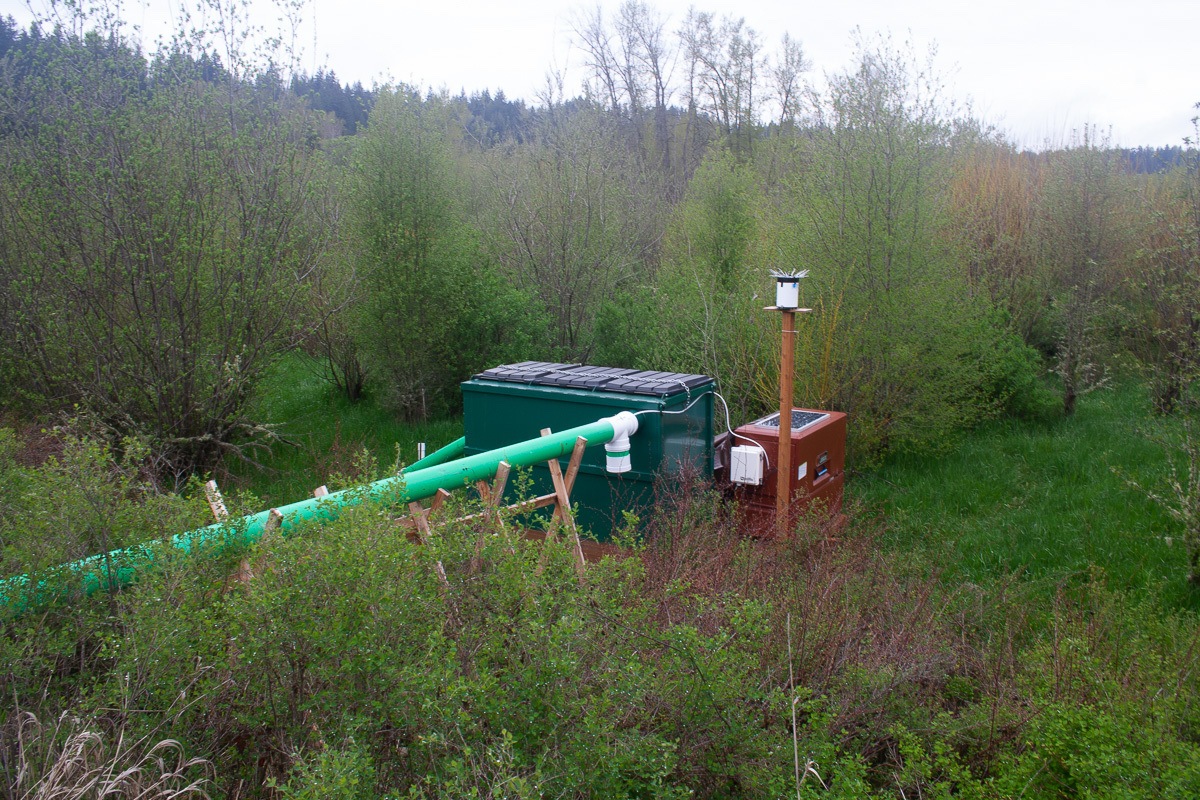
Along Highway 7 at Ohop Creek, the Tribe installed an innovative pilot biofiltration system. The setup is designed to capture stormwater runoff directly from the roadway, channeling it into a dumpster-sized containment box. Inside this unit, the water is filtered through a proprietary blend of sand and organic matter engineered to strip out toxic compounds before the treated water is safely released back into the watershed.
The system relies on research spearheaded by Jenifer McIntyre, an assistant professor at Washington State University and a leading voice in urban stormwater toxicity studies. McIntyre previously collaborated with Cedar Grove Composting and the city of Bellevue, Washington, to test Bioretention Urban Retrofits (BURitos) in stormwater retention ponds. Those tests demonstrated that organic-rich filter media could successfully remove a high percentage of heavy metals and petroleum-related contaminants, significantly reducing overall water toxicity.
The Highway 7 installation represents a mobile, adaptable evolution of those stationary retention ponds. Designed to integrate seamlessly with existing drainage infrastructure, the biofiltration box offers a template that can be scaled across vulnerable intersections throughout the state.
Regulatory Landscape and the Road Ahead
While localized filtration systems offer a vital defensive shield, experts emphasize that they are merely a stopgap measure. True remediation requires tackling the issue at its manufacturing source.
In July 2021, Dr. Jenifer McIntyre testified before the U.S. House of Representatives regarding the pervasive threat of 6PPD-quinone to aquatic ecosystems. Her testimony amplified pressure on regulatory bodies, prompting coordination between researchers, the Washington State Department of Ecology, and the U.S. Tire Manufacturers Association to explore safer chemical alternatives.
Under the federal Clean Water Act, the Washington State Department of Ecology has begun collaborating with municipal and industrial facilities holding National Pollutant Discharge Elimination System (NPDES) permits. These discussions aim to shape future regulatory frameworks governing stormwater discharges and explore mandates for industrial stormwater management.
However, environmental scientists caution that even if manufacturers discovered an ideal, salmon-safe alternative to 6PPD tomorrow, the legacy of existing tires on vehicles and in landfills means the chemical will persist in the environment for the next 15 to 20 years. Consequently, infrastructure improvements like biofiltration will remain necessary for the foreseeable future.
Broader Implications and Unanswered Questions
Despite significant strides in identifying and mitigating 6PPD-quinone, researchers acknowledge that major gaps remain in our understanding of the chemical’s broader impacts. Key physiological questions—such as the exact neurological or circulatory mechanisms by which 6PPD-quinone induces mortality in coho salmon—are still being investigated.
Furthermore, scientists are racing to determine whether other aquatic species, freshwater ecosystems, or even terrestrial animals and humans are vulnerable to chronic exposure. While adult coho swimming upstream to spawn are typically not harvested for human consumption, the ubiquitous nature of tire wear particles raises valid concerns regarding broader environmental health.
For David Troutt and the Nisqually Department of Natural Resources, the immediate focus remains expansion. The pilot project at Ohop Creek is viewed not as a standalone fix, but as a proof-of-concept for regional adoption. As monitoring data from the Highway 7 installation trickles in, the Tribe is lobbying state lawmakers to fund similar biofiltration retrofits wherever high-volume roadways intersect with vital salmon spawning grounds.
As the rain continues to fall on the asphalt of western Washington, the race to protect the Pacific Northwest’s defining species enters a critical new phase—one where the outcome depends on bridging the gap between modern chemical engineering and indigenous stewardship.