Beyond Survival: How Independent Restaurants Are Reinventing the Business Model by Investing in Staff

The restaurant industry has long operated on a punishing economic model defined by razor-thin profit margins, grueling hours, low base wages, and a general lack of standard benefits. For decades, these systemic pressures were simply accepted as the unavoidable cost of doing business in the culinary world. However, the arrival of the COVID-19 pandemic in early 2020 pushed a fragile sector to the absolute brink. Mandatory dining shutdowns, evaporating foot traffic, and mounting debt forced thousands of independent operators to shutter their doors permanently, while others scrambled to pivot toward takeout and retail models just to keep the lights on.
As the industry slowly navigated the worst of the public health crisis, a profound labor reckoning took place. Fed up with precarious working conditions, health risks, and inadequate compensation, hundreds of thousands of hospitality workers permanently left the profession. According to data from the Bureau of Labor Statistics, the food service and hospitality sector remained down approximately 819,900 jobs by March 2022 compared to pre-pandemic benchmarks in February 2020. With federal relief packages drying up and consumer habits shifting unpredictably, forward-thinking restaurant owners across the United States realized that returning to the pre-pandemic status quo was neither viable nor desirable. Instead of cutting back on human capital, a vanguard of independent restaurateurs chose a radically counterintuitive path: they significantly increased investments in their employees, proving that sustainable business practices and long-term profitability can go hand in hand.
A Blueprint for Change in California
When state-mandated restrictions halted indoor dining in the spring of 2020, Greg and Daisy Ryan, co-owners of Bell’s—a French-inspired bistro in Los Alamos, California—faced the same existential dread as their peers nationwide. Rather than merely adopting a survivalist mindset of constant cutbacks, the Ryans utilized a two-month operational pause to completely overhaul their business philosophy. In June 2020, they instituted sweeping changes designed to elevate the quality of life for their team.

The couple hiked average staff wages to $27 an hour and introduced a comprehensive perks package, including fully paid health care coverage and 80 hours of paid time off. To finance these ambitious upgrades without sinking the business, the Ryans meticulously analyzed their break-even metrics down to the penny. Utilizing detailed spreadsheets tracking hard costs like real estate alongside flexible expenses like food and labor, and consulting with operational advisors from renowned culinary groups, they transitioned Bell’s into a pre-fixe dining model.
Initially launching a five-course menu for $65, accompanied by a mandatory 20 percent service fee in lieu of traditional tipping, the bistro managed to guarantee predictable revenue streams while removing customers from dictating staff compensation. By October 2021, mirroring inflationary pressures and rising food expenses, the menu price adjusted to $75 per person. The financial results were staggering. Before the pandemic in 2019, Bell’s cleared roughly $1 million in annual revenue. By 2021, despite ongoing operational hurdles, revenue surged to approximately $3 million, while total customer covers and staff size both more than tripled. Furthermore, employee retention soared above 95 percent, defying national trends of severe labor shortages.
Diversification and Innovation Across the Country
The operational philosophy pioneered at Bell’s has begun to manifest in various creative iterations across the American culinary landscape. In Oakland, California, the natural wine bar and restaurant Daytrip opened in October 2021 with a proactive approach to revenue diversification and labor sustainability. Recognizing that traditional sit-down dinner service represents one of the most labor-intensive models in the hospitality industry, co-owner Stella Dennig sought to build multiple streams of incoming revenue to buffer against labor costs.
Daytrip expanded its business model to include curated beverage clubs specializing in natural wines, beers, and aperitifs, alongside pop-up nighttime wine bars featuring easily prepared snacks. Dennig and her team also explored coffee and pastry service formats that do not necessitate a full back-of-house kitchen brigade. At Daytrip, non-salaried staff members receive a starting base wage between $16 and $18 an hour—exceeding Oakland’s $15.06 minimum wage—bolstered by a pooled 20 percent service fee divided evenly among hourly workers. Additionally, the establishment provides quarterly financial literacy workshops and a scaling health care stipend that reaches $300 a month for full-time employees working 40-hour weeks.
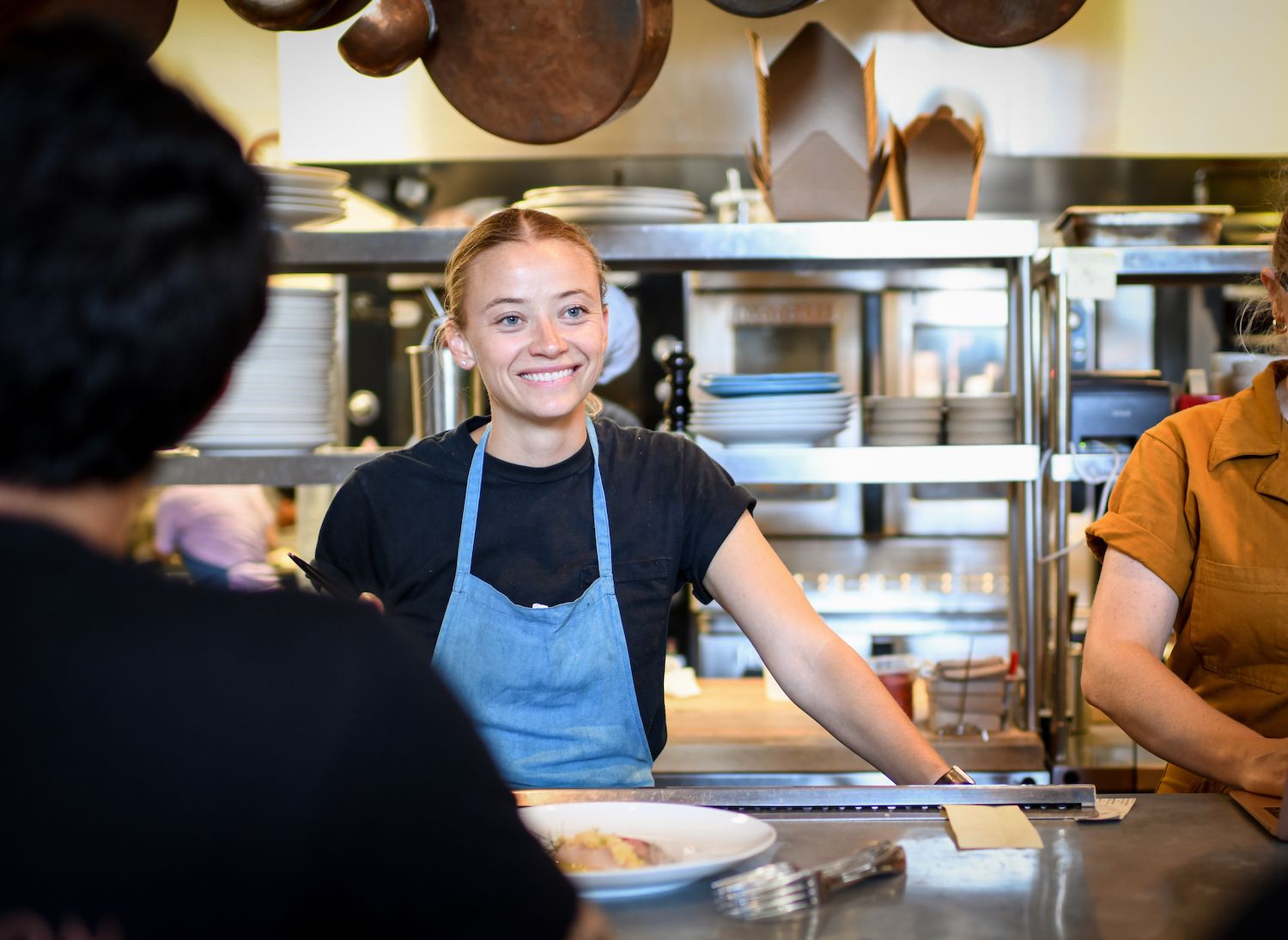
Dennig emphasizes that these progressive measures should not be viewed as radical charity, but rather as the baseline requirement for ethical business operations. "All I’m doing right now is what feels like the bare minimum to me, and it’s revolutionary only because the bar is so low in this industry, and that’s not OK," she notes.
Mitigating the Hidden Costs of High Turnover
Beyond ethical considerations, investing in comprehensive staff benefits yields measurable financial returns by mitigating the notoriously high costs associated with employee turnover. Replacing and training a departing worker drains significant financial and operational resources from independent restaurants.
Tim Taney, co-owner of Slidin’ Dirty, a burger restaurant in Troy, New York, estimated that training a single new employee cost his business at least $500 a month in lost productivity and administrative overhead. A year after restructuring his employee benefits package to include company-covered health insurance and gym memberships, Taney observed a dramatic stabilization of his workforce, with only a single employee departing over a twelve-month period. The substantial savings realized through near-zero turnover significantly offset the ongoing costs of the enhanced benefits program.
A similar strategic pivot occurred within large-scale independent dining groups. In Washington, D.C., Jason Berry, co-founder of Knead Hospitality + Design, launched a six-month operational experiment at his Mi Vida and Succotash National Harbor restaurants. The initiative transitioned managers and chefs from traditional schedules of five 11- to 12-hour shifts entirely on-site to compressed four-day, 12-hour work weeks, allowing administrative duties such as scheduling and menu planning to be completed remotely.

Although the restructuring required hiring additional management personnel, Berry projected that the resulting drop in turnover would directly eliminate steep recruitment commissions—which traditionally run up to 15 percent of a new hire’s annual salary—and preserve invaluable institutional knowledge within the kitchen. "They’re less exhausted, they’re more focused on their teammates, they’re training better," Berry stated regarding the benefits of improved work-life balance. "Does that translate into more revenue? I think it does."
The Human Impact on the Frontlines
The tangible benefits of these progressive workplace overhauls are perhaps best illustrated by the frontline workers themselves. For Micah Fendley, a career server with approximately two decades of experience in the restaurant industry, the operational changes at Bell’s provided a milestone achievement: access to employer-sponsored health insurance for the first time in his working life.
The psychological and physical transformation was profound. Beyond securing his personal health, Fendley noted how paid winter breaks and equitable compensation fundamentally altered his relationship with his labor. Following a well-rested winter hiatus spent traveling, maintaining his vehicle, and connecting with colleagues outside of a stressful work environment, Fendley returned to the bistro feeling revitalized. "I’m proud more than anything that I have a job that respects me enough that pays for my health insurance," Fendley remarked.
Navigating Path Forward Without Prohibitive Costs
While comprehensive wage hikes and fully funded health care plans require significant financial adjustments, industry experts emphasize that meaningful workplace improvements do not invariably demand massive capital investments. Anne McBride, vice president of programs at the James Beard Foundation, points to organizational research indicating that a primary driver of pandemic-era attrition was the absence of clear professional pathways for career advancement.
By simply establishing transparent frameworks for employees to progress toward higher hourly wages, acquire new culinary skills, and transition into leadership roles, independent operators can transform transient service jobs into enduring careers. "It’s something that restaurants should pay much closer attention to because, not that it’s free, but it’s something that you can do without having to change anything to the financial structure of your restaurants," McBride explained.
Broader Economic Implications and Future Outlook
The early successes observed at establishments like Bell’s, Daytrip, Slidin’ Dirty, and Knead Hospitality + Design suggest a promising evolution for the broader American food service sector. As independent operators continue to grapple with inflationary pressures, supply chain volatility, and shifting consumer expectations, the traditional restaurant playbook of underpaying labor to absorb economic shocks is increasingly proving to be a liability rather than a safeguard.
By treating staff as vital human investments rather than disposable commodities, pioneering restaurateurs are discovering that financial resilience and ethical labor practices are mutually reinforcing. Greg Ryan acknowledges that while a combination of personal capital, strategic location ownership, and industry recognition aided Bell’s transformation, the underlying philosophy of reinvesting in people remains universally applicable. As the industry looks toward a post-pandemic future, the growing movement toward sustainable compensation, structured career development, and comprehensive benefits may well define the standard for a healthier, more resilient culinary economy.