From Bitter Roots to Culinary Darling: How Radicchio Conquered the American Winter Table

Radicchio has quietly undergone a dramatic transformation in North American agriculture and gastronomy, evolving from an obscure, intensely bitter novelty into a celebrated winter staple. Long dismissed by children and casual diners alike for its sharp bite, this vibrant member of the chicory family is now driving regional agricultural economies, inspiring dedicated food festivals, and commanding the attention of top-tier chefs across the United States and Canada.
This renaissance is largely spearheaded by horticulturalists, agricultural researchers, and dedicated growers who have worked for over a decade to introduce resilient Italian varietals to cooler North American climates. At the forefront of this movement is Lane Selman, an assistant professor in the Department of Horticulture at Oregon State University and founder of the Culinary Breeding Network. Selman, alongside regional farmers like Jason Salvo of Washington’s Local Roots Farm, has championed the vegetable’s unique capacity to thrive during the bleakest months of the year, offering a sustainable alternative to out-of-season produce shipped thousands of miles.
The Rise of a Resilient Winter Crop
Unlike delicate lettuces that require resource-intensive greenhouse cultivation or long-distance transport from warmer climates during the winter months, radicchio flourishes in cool-weather conditions. Capable of enduring frost, it can be harvested from September through March in regions such as the Pacific Northwest and the Northeast. Furthermore, its impressive post-harvest shelf life allows it to withstand weeks in cold storage, making it exceptionally well-suited for small farm work schedules disrupted by winter storms and muddy fields.
This hardiness addresses a critical vulnerability in local food systems. Historically, farmers market attendance drops precipitously with the onset of autumn rain, driving consumers back to supermarkets reliant on imported greens. By providing a fresh, locally grown salad option in January, growers utilizing Italian chicory varieties help keep consumer dollars within regional economies, bolstering local food security and supporting small-scale agriculture.
A Chronology of Cultivation and Cultural Exchange
The modern popularity of radicchio in North America is the result of deliberate, multi-year cross-cultural collaboration, research, and supply-chain development:
- 1970s–1980s: Commercial cultivation of radicchio begins to take root in the United States, predominantly driven by operations like California’s J Marchini Farms. During this period, the vegetable is primarily known in the U.S. as the red, ball-shaped Chioggia variety used as a colorful addition to bagged salad mixes.
- 2014: Lane Selman attends the Terra Madre gathering in Italy as a delegate, initiating professional relationships with Italian seed producers, plant breeders, and agronomists.
- 2017–2019: Regional initiatives gain momentum. Salvo co-founds Chicory Week in Washington State, while distributors like the Organically Grown Company (OGC) register an initial surge in demand. Food writer Leah Koenig documents the shifting American palate toward bitter, funky, and complex flavor profiles.
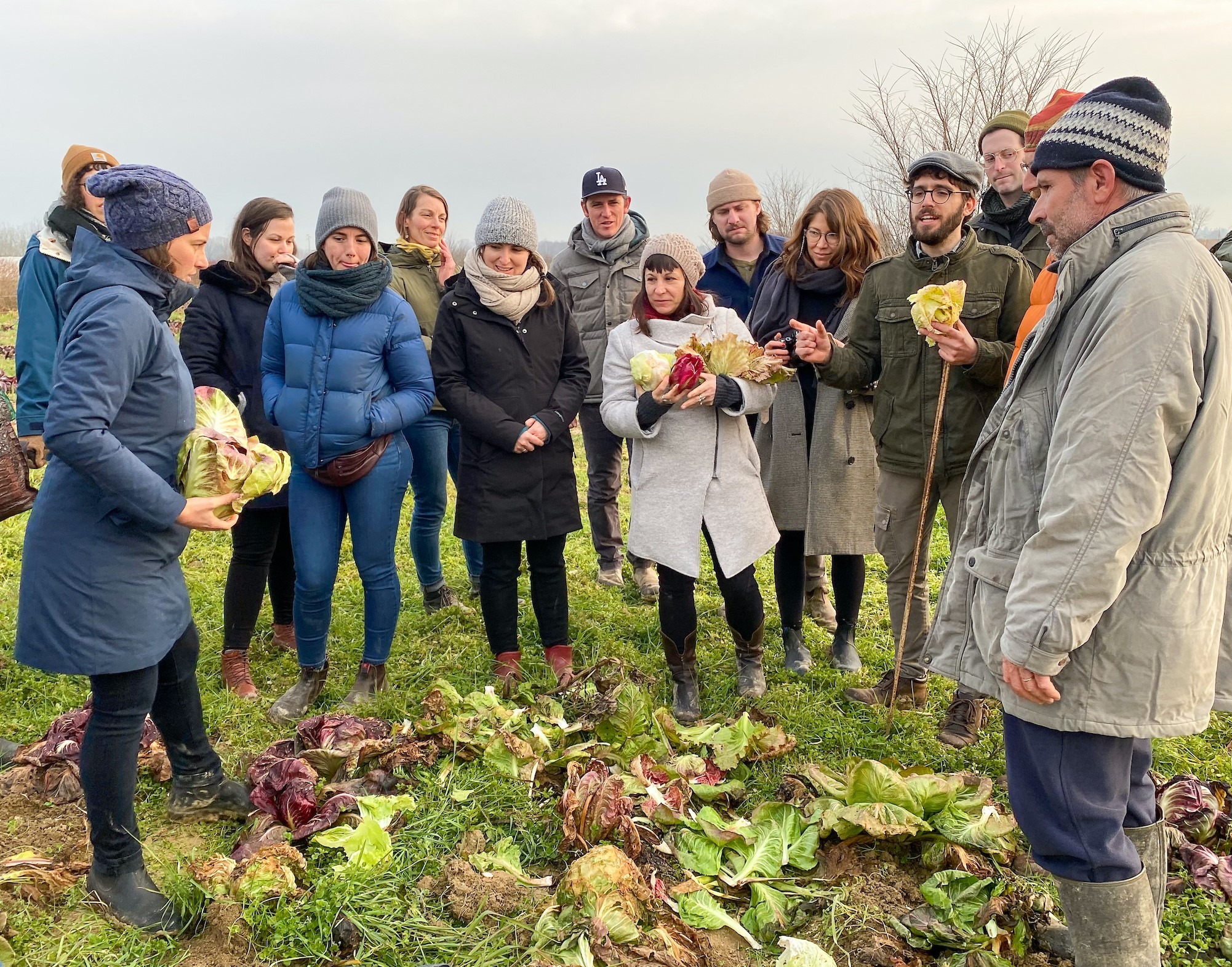
- January 2020: Selman leads a delegation of 22 American farmers, chefs, and journalists to Italy to study traditional radicchio cultivation, seed production, and regional culinary preparations.
- 2021: The Culinary Breeding Network partners with Washington’s Uprising Seeds and Italian breeder Smarties.bio to launch the Gusto Italiano Project. This initiative secures access to high-quality, organic Italian seeds—including rare chicories and specialty brassicas—for North American growers and home gardeners. Concurrently, national food media publications, including Bon Appétit and The Wall Street Journal, feature radicchio prominently, accelerating consumer awareness.
- 2022–2024: Regional festivals proliferate. Events like the Sagra del Radicchio in Portland, Oregon, and the Vancouver Radicchio Festival draw enthusiastic crowds. Selman continues organizing educational trips to Italy, culminating in extended research for her comprehensive publication, Radicchio: A Celebration of the Beloved Italian Vegetable.
- 2025–2027: Commercial volume continues its exponential ascent. OGC reports that its regional radicchio distribution volume doubles between 2024 and 2025, reaching five times its 2017 levels. Concurrently, industry forecasters at Whole Foods Market identify bitter greens such as radicchio, endive, and escarole as key culinary trends shaping menus and retail shelves.
Expanding Variety Beyond the Supermarket Standard
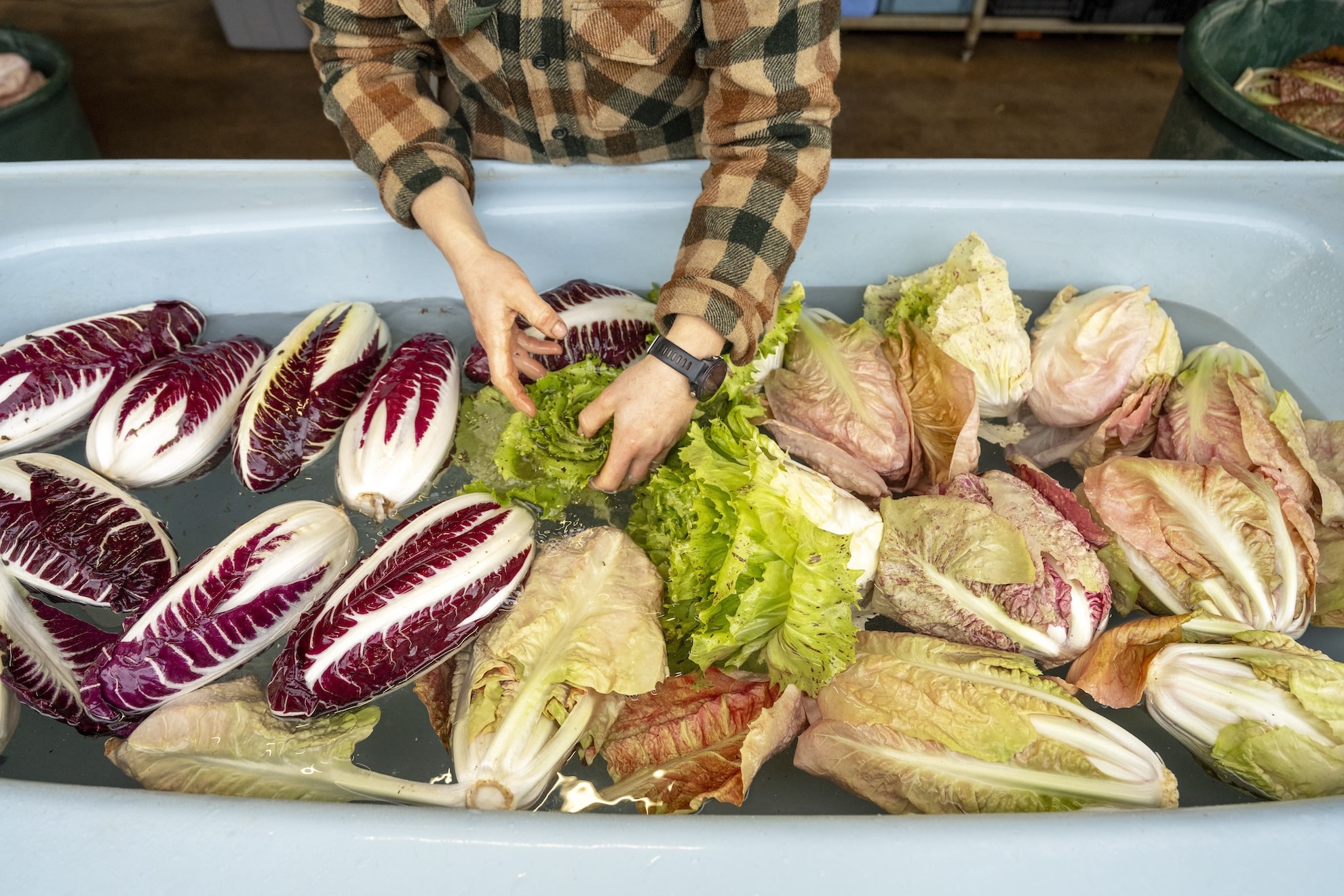
For decades, American consumers encountered only the Chioggia variety—a dense, red head frequently mistaken for a bitter red cabbage. However, agricultural advocates emphasize that the chicory family encompasses a diverse spectrum of heirloom varietals with varying degrees of bitterness and striking visual appeal.
Among these are the light pink Rosa del Veneto, the speckled green-and-purple Castelfranco, and the elongated, squid-like Treviso Tardivo. These heritage types, native to the Veneto region of Italy where they have been cultivated for centuries (as noted by Pliny the Elder in Naturalis Historia in AD 77), offer more nuanced flavor profiles and delicate textures. While historically difficult to source or grow in North America due to a lack of imported seeds and localized agricultural knowledge, the concerted efforts of university extension programs and independent seed companies have successfully bridged this information gap.
Economic Impact and Commercial Growth
The intentional marketing and agricultural support surrounding chicories have translated into measurable economic gains for regional producers. In the early phases of the movement, Local Roots Farm in Washington observed its radicchio sales double, eventually ranking second only to carrots and lettuce in total annual revenue per crop category.
Distributors have recorded similar trajectories. Organically Grown Company noted that total radicchio volume surged significantly between 2019 and 2024, followed by a doubling of volume between 2024 and 2025 alone. This sustained commercial growth indicates that radicchio has successfully transitioned from a hyper-niche restaurant ingredient into a viable, mainstream commercial crop for cold-climate farmers.
Culinary Techniques for Taming Bitterness
Despite growing enthusiasm, the inherent bitterness of chicories remains a barrier for palates accustomed to mild, sweet, and heavily processed foods. Food professionals stress that consumer education regarding preparation is essential to widespread adoption.
Chefs and cookbook authors recommend several culinary techniques to balance radicchio’s assertive flavor profile:
- Ice Water Soaking: Submerging raw, sliced radicchio leaves in ice water for 30 minutes to an hour crisps the cellular structure while leaching out a portion of the bitter compounds.
- Fat and Cream Pairing: Combining the greens with rich, high-fat ingredients—such as the emulsified egg and oil bases of Caesar salad dressings, crème fraîche, or aged cheeses like Parmigiano-Reggiano—creates a direct counterbalance to the vegetable’s astringency.
- Acid and Sweetness: Pairing raw or grilled radicchio with citrus segments, toasted nuts, and aged balsamic vinegar introduces complementary acidic and sweet notes.
- High-Heat Cooking: Grilling dense varieties like Treviso caramelizes the natural sugars within the leaves, subduing the sharp bite much like a grilled romaine heart.
Broader Implications for Regional Food Systems
The ascent of radicchio in North America serves as a case study in modern agricultural development, demonstrating how institutional research, chef-driven advocacy, and supply-chain innovation can successfully alter consumer behavior. By proving that winter agriculture can yield profitable, visually stunning, and culturally rich crops, the radicchio movement offers a blueprint for enhancing regional food sovereignty and adapting local economies to seasonal realities.
Related posts: