The Hidden Lease Restrictions and Real Estate Tactics Major Supermarket Chains Use to Create Food Deserts

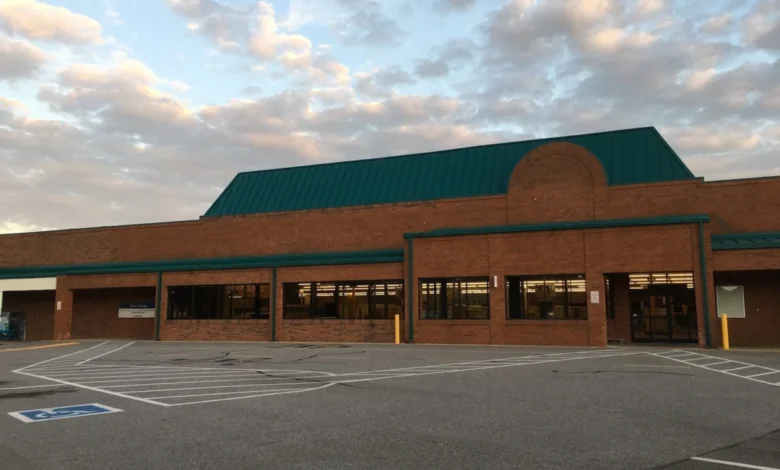
Across the United States, low-income urban neighborhoods and vulnerable rural towns frequently find themselves locked in a silent struggle for basic nourishment. While public health officials, urban planners, and community activists often point to inadequate transportation, systemic poverty, and geographic isolation as the primary drivers of food deserts, a less visible, highly strategic corporate mechanism is quietly exacerbating the crisis. Major supermarket chains, including retail giants like Walmart, Ahold Delhaize-owned Stop & Shop, and Albertsons, are deploying restrictive covenants and strategic real estate hoarding to block competitors, manipulate local markets, and permanently alter the commercial landscapes of American communities.
The mechanism behind these practices is as legal as it is insidious. By embedding specific clauses into property deeds and commercial lease agreements, dominant grocery chains can dictate how a piece of land or a physical building is used long after they have vacated the premises. These clauses are designed with a singular, unyielding objective: to ensure that no future tenant can ever operate a competing food retail business on the site. As a result, neighborhoods that lose a grocery store often find themselves barred from acquiring a replacement, transforming temporary commercial vacancies into permanent barriers to healthy, affordable food.
The Anatomy of a Food Desert and the Yale Investigation
The public awareness of these practices gained fresh momentum when Karissa Kang, a first-year law student at Yale University, arrived on campus in New Haven, Connecticut. Eager to cook her own meals despite not owning a car, Kang set out on foot to find a nearby supermarket. In her hometown of Atlanta, grocery options such as Publix and Kroger were ubiquitous. To her astonishment, the only full-service grocery store within walking distance of her New Haven neighborhood was a single Stop & Shop located roughly a half-mile from campus.
Kang quickly noticed a stark socioeconomic divide: her fellow law students with vehicles routinely bypassed the local Stop & Shop, choosing instead to drive to a Trader Joe’s in a neighboring town. Meanwhile, New Haven residents faced stark systemic inequities. The city—outside of the Yale bubble—endured a poverty rate approaching 26 percent, while its food insecurity rate soared to twice the national average. In the city’s lowest-income communities, one in three residents struggled with food insecurity, a burden that disproportionately impacted Black and Hispanic households, where poverty rates exceeded 27 percent.
Driven to understand why her neighborhood was underserved by national chains, Kang began researching the mechanics of the grocery industry. Her inquiry led her to a vast web of restrictive covenants, exclusive leasing agreements, and anti-competitive real estate maneuvers. She presented her findings at a Yale Law School conference dedicated to competition issues in America’s grocery sector, illuminating how corporate self-preservation directly harms vulnerable consumers.
The Historical Evolution and Mechanics of Restrictive Covenants
Restrictive covenants are legally binding provisions written into property deeds and commercial leases that govern how land or buildings may be utilized. Originally rooted in real estate law to manage property aesthetics or zoning compatibility, major grocery chains began weaponizing these clauses as early as the 1950s. Constructing a modern, full-service supermarket requires significant capital expenditure, often involving footprints that span upwards of 5,000 square feet and extensive parking infrastructure. To protect these massive investments from nimble competitors, chains began demanding exclusive territorial protections from developers and landlords.

A typical restrictive covenant operates through a multi-stage exclusionary process. When a dominant supermarket chain decides to close or relocate a profitable or underperforming store, it frequently retains control over the lease or the underlying real estate. If the company chooses to sublease the property, it can insert a clause expressly prohibiting the incoming tenant from selling groceries, operating a bodega, hosting a farm stand, or running any form of food-related enterprise.
Even when a chain relinquishes ownership entirely, it can attach permanent deed restrictions to the property sale. For example, in Eastham, Massachusetts, Stop & Shop purchased an 11-acre parcel for $1.3 million, ostensibly to block a competing supermarket from opening near its existing store. The company subsequently sold the land back to the town for $1.6 million, but embedded a stringent deed restriction into the sale contract. According to local reporting by The Provincetown Independent, the clause barred the community from using any portion of the property for "a food supermarket, a food superstore, a food warehouse store, a specialty food store… or for the sale of food or food products for off-premises consumption."
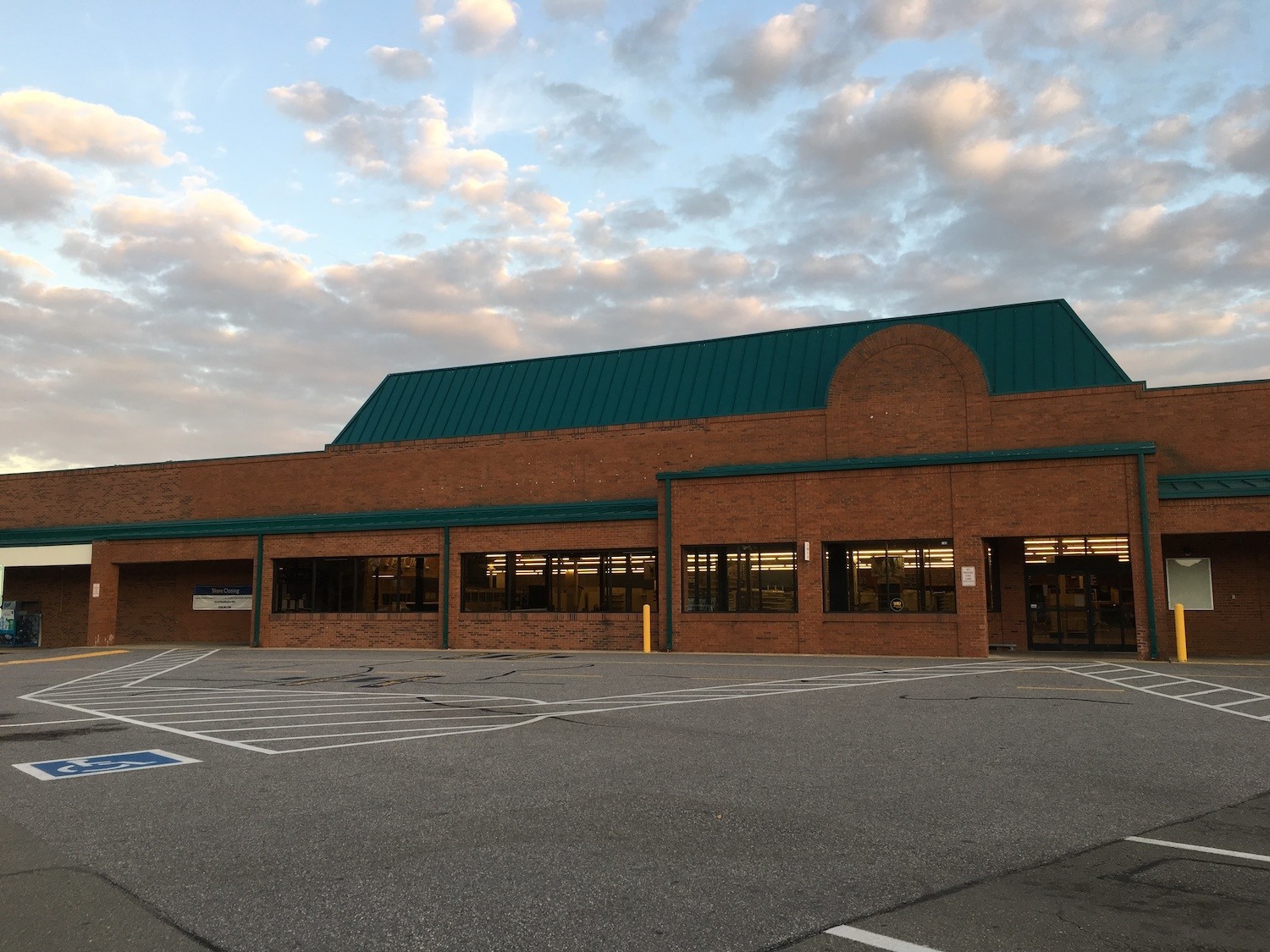
When chains choose not to sell or lease vacant properties at all, they resort to strategic vacancy. In Greenfield, Massachusetts, Stop & Shop paid a real estate entity for an entire decade simply to keep a commercial property undeveloped, effectively neutralizing the potential for a competing grocery store to enter the market.
The Broader Economic and Social Toll
The consequences of these real estate strategies extend far beyond diminished food access, triggering a cascade of negative economic indicators for host communities. Laurie Beyranevand, director of the Center for Agriculture and Food Systems at Vermont Law School, notes that prolonged commercial vacancies depress local property values and elevate the risk of urban blight and neighborhood crime. Furthermore, expansive asphalt parking lots associated with abandoned supermarkets represent wasted spatial resources that could otherwise be allocated to community housing, healthcare facilities, or recreational centers.
The ripple effects also target local labor markets and independent businesses. Large-scale corporate grocers frequently enter a market with aggressive, low-price strategies designed to undercut and bankrupt independent mom-and-pop grocers, specialty butchers, and green grocers. Once these local competitors are forced out of business, the probability of their return is virtually nonexistent.
The community is then locked into an asymmetrical economic relationship: residents rely on the corporate chain for low-wage employment while simultaneously depending on it for basic nutritional needs. If the corporate parent decides to shutter the location—or relocate it two miles down the road—both the food source and the local jobs vanish simultaneously. Combined with a restrictive covenant that prevents any future grocer from occupying the abandoned space, the community is left in a state of permanent economic impoverishment.
Legal Frameworks, Antitrust Scrutiny, and Legislative Resistance
For decades, consumer advocates and legal scholars have argued that restrictive covenants violate federal antitrust laws by purposefully suppressing market competition. However, corporate legal defense strategies have successfully defended the practice. In 2010, a Walmart corporate representative defended the model to the Sheboygan Press, stating, "We welcome competition in the marketplace, but what we can’t be doing is providing infrastructure for our competitors in the same market." To date, federal courts have largely accepted this reasoning, viewing lease stipulations as a legitimate exercise of private property rights.
Industry reports compiled by the Institute for Local Self-Reliance (ILSR) indicate that corporate consolidation in the grocery sector has reached unprecedented levels. Walmart alone captures approximately 25 percent of all grocery spending nationwide, a statistic ILSR authors cite as a glaring failure of modern corporate antitrust policy. While conglomerates such as Ahold Delhaize (Stop & Shop), Albertsons, Safeway, and Walmart continue to utilize restrictive real estate provisions, regulatory bodies like the Federal Trade Commission (FTC) have historically treated grocery consolidation as a low priority.
Legal experts suggest that if federal regulators were compelled to intervene, the FTC could potentially leverage the Robinson-Patman Act. Originally enacted in 1936 to protect small and independent businesses from discriminatory pricing by large-scale buyers, the statute aims to prevent corporate behemoths from leveraging immense purchasing power to drive smaller competitors out of the market. However, active enforcement of the statute against real estate covenants remains exceedingly rare.
Municipal Countermeasures and Zoning Interventions
In the absence of robust federal oversight, a handful of local and municipal governments have taken legislative matters into their own hands. In 2018, Washington, D.C., made national headlines by passing a municipal ordinance explicitly prohibiting restrictive covenants in commercial grocery leases.
Despite the progressive intent of such legislation, legal scholars point out significant structural limitations. Municipal bans are inherently piecemeal, operating on a city-by-city basis, and they cannot be applied retroactively to existing contracts. Consequently, local governments usually remain entirely unaware that a restrictive covenant exists until a supermarket packs up and leaves, and a replacement tenant is blocked from moving in.
To combat these systemic vulnerabilities, experts advocate for proactive zoning regulations. Vermont’s longstanding Act 250 serves as a prominent model, requiring large-scale commercial developments exceeding specific acreage thresholds to undergo rigorous state-level environmental and socioeconomic reviews before receiving building approval. Such statutory frameworks can prevent corporate entities from acquiring multiple land parcels solely to hoard real estate and suppress competition. Additional policy proposals include granting municipalities the legal authority to seize and demolish abandoned retail boxes, mandate adaptive reuse plans, or impose heavy vacancy fines on corporate landowners.
Looking Forward
As urban centers like New Haven continue to grapple with persistent food insecurity and economic stratification, the debate over corporate real estate practices intensifies. For residents living in designated food deserts, the arrival of a national supermarket chain is initially celebrated as a triumph over nutritional isolation. Yet, as Karissa Kang’s research underscores, the foundational fragility of these retail relationships leaves communities perpetually vulnerable. Without coordinated federal antitrust reform, proactive municipal zoning laws, and aggressive challenges to exclusionary lease covenants, major grocery chains will retain the legal power to dictate who eats, who works, and which neighborhoods thrive or wither away.
Related posts: