Navigating the 2026 Food Safety Crisis: A Comprehensive Analysis of Systemic Vulnerabilities, Regulatory Oversight, and Consumer Defense

The summer of 2026 will long be remembered by public health officials and consumers alike as an exceptionally volatile period for the United States food supply chain. Defined by a relentless wave of high-profile foodborne illness outbreaks—ranging from a record-shattering cyclosporiasis contamination spanning multiple states’ iceberg lettuce to severe listeria strains in commercial pork supplies and Escherichia coli detections in frozen blueberries—the season tested the limits of public trust. The daily cadence of contamination alerts fostered an environment of widespread anxiety, giving rise to cultural memes centered on gastrointestinal distress and a pervasive skepticism regarding the efficacy of federal food safety regulations.
While food recalls are fundamentally designed to serve as a crucial final safety net before compromised products reach the consumer market, the structural integrity of this system has faced mounting pressure. Amid ongoing regulatory rollbacks, funding shortages, and staffing deficits at federal oversight agencies, end-of-the-line recalls have increasingly become the primary mechanism for managing foodborne pathogens. This reality has ignited a fierce debate among epidemiologists, industry stakeholders, and policymakers over whether these frequent recalls reflect an actual spike in foodborne illnesses or merely the byproduct of more aggressive, technologically advanced surveillance protocols catching problems that previously went unnoticed.
Chronology of a Crisis: The 2026 Summer Outbreaks
The cascading events of the summer began to unfold in earnest during the early warm months, rapidly escalating into a national public health narrative by mid-summer.
In July 2026, the U.S. Food and Drug Administration (FDA) launched an intensive outbreak investigation tied to E. coli O145:H28 identified in commercial batches of frozen blueberries. The contamination forced immediate distribution halts and complex trace-back operations across multiple major retail chains.
Shortly thereafter, in August 2026, the public health apparatus confronted an unprecedented surge in cyclosporiasis cases. Epidemiological investigations quickly pointed toward iceberg lettuce as the vector. The ensuing probe drew intense scrutiny when health officials in Michigan encountered administrative roadblocks while attempting to secure supply chain documentation from restaurant major Taco Bell, highlighting critical delays in inter-agency data sharing.
Concurrently, the meat sector faced its own operational disruptions. In late summer, regulatory authorities announced a mandatory-style recall of more than 15,000 pounds of pork products due to confirmed listeria contamination, with tainted goods distributed extensively throughout Illinois and surrounding Midwestern states.
Adding to the regulatory friction, an April 2026 controversy involving Raw Farms set a contentious precedent for the summer. After unpasteurized cheeses produced by the firm were genetically linked by epidemiologists to a cluster of severe E. coli infections resulting in three hospitalizations, the company publicly rejected the FDA’s initial recall request. Raw Farms defended its position by citing internal testing that failed to isolate the outbreak strain. Although subsequent facility inspections revealed glaring sanitation deficiencies—prompting a second, ultimately successful recall request—critics pointed to the protracted standoff as a glaring symptom of institutional hesitation within the federal oversight framework.
The Architecture of Food Recalls: Jurisdiction and Mechanics
To understand how contaminated foodstuffs infiltrate the market and how they are subsequently excised, one must examine the bifurcated nature of American food safety regulation. Regulatory authority is primarily divided between two federal entities: the U.S. Department of Agriculture’s Food Safety Inspection Service (FSIS) and the FDA.
The FSIS holds jurisdiction over approximately 20 percent of the U.S. food supply, specifically encompassing meat, poultry, and processed egg products. Because these animal-derived commodities carry inherent risks of bacterial pathogen transmission originating from slaughter and processing environments, the FSIS maintains a rigorous oversight posture. Federal inspectors are stationed continuously inside slaughterhouses and meatpacking facilities, and the agency must explicitly approve product labels before commercial distribution.
Conversely, the FDA oversees the remaining 80 percent of the food supply, a vast mandate that includes fresh produce, seafood, dairy, packaged goods, and dietary supplements. Unlike the FSIS, the FDA inspects production and processing facilities on a periodic, less frequent basis and exercises significantly less pre-market authority over labeling and formulation approvals.
When a safety failure occurs, the discovery process typically follows one of three pathways:
- Internal Quality Assurance: Food manufacturers identify anomalies via routine microbial testing, broken plant machinery, or administrative audits.
- Regulatory Discovery: FSIS or FDA inspectors uncover contaminants during routine or for-cause facility audits.
- Epidemiological Detection: State and local public health departments, alongside the Centers for Disease Control and Prevention (CDC), aggregate illness data. Epidemiologists interview infected individuals to identify common dietary exposures, subsequently alerting federal regulators to initiate trace-back operations.
Once an issue is verified, regulatory bodies collaborate with corporate entities to determine the severity and distribution scope of the hazard. Recalls are classified into three distinct tiers:
- Class I: A situation in which there is a reasonable probability that the use of, or exposure to, a violative product will cause serious adverse health consequences or death.
- Class II: A situation in which the use of, or exposure to, a violative product may cause temporary or medically reversible adverse health consequences, or where the probability of serious adverse health consequences is remote.
- Class III: A situation in which the use of, or exposure to, a violative product is not likely to cause adverse health consequences.
In classifying these events, agencies evaluate the specific hazard alongside vulnerable demographic populations, such as infants, the elderly, or immunocompromised individuals. For items marketed toward children, classifications are often adjusted upward to reflect heightened risk profiles.
Policy, Deregulation, and the Surveillance Blind Spot
The challenges observed during the 2026 outbreaks were not merely operational; they were deeply intertwined with shifting federal policy and budgetary constraints. Critics and public health experts have pointed to recent policy decisions under the Trump administration that scaled back funding for key surveillance programs and rescinded targeted transparency mandates.
Among the most controversial policy shifts was the shelving of a proposed federal rule that would have legally compelled food corporations to submit requested supply chain and distribution data to health authorities within a strict 24-hour window. Industry lobbies had aggressively pushed back against the measure, arguing that compliance costs and recordkeeping burdens were excessively onerous. However, public health advocates argue that blocking this rule directly enabled corporate foot-dragging. During the summer cyclosporiasis outbreak, the multi-week delay between Michigan health officials’ initial data requests and Taco Bell’s compliance left thousands of consumers exposed to contaminated produce before tracing operations could isolate the source.
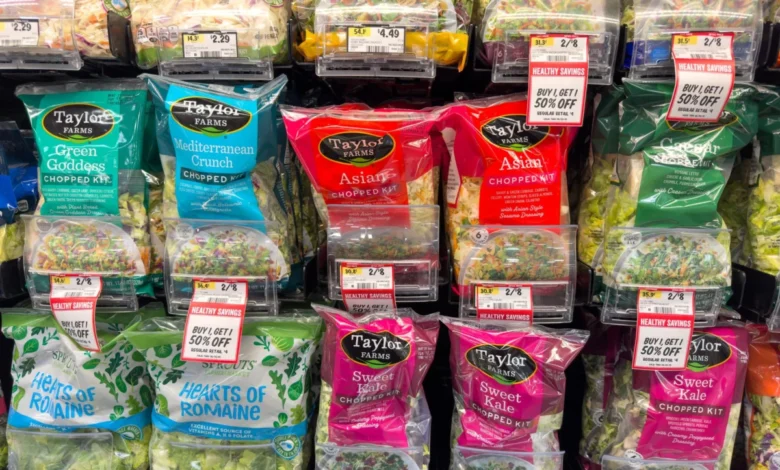
Furthermore, public communication missteps complicated containment efforts. Following the initial identification of Taylor Farms de Mexico as the likely source of the contaminated iceberg lettuce, subsequent mixed messaging regarding laboratory testing results—including an erroneously reported positive test that was later corrected as a false positive—unleashed consumer confusion. When the processing firm capitalized on the retraction to assert it had been cleared of wrongdoing, public trust plummeted. The resulting information vacuum led many consumers to abandon fresh produce categories wholesale, misinterpreting a localized supply chain failure as a systemic collapse of the entire agricultural sector.
Economic and Public Health Implications
The 2026 food safety events underscored profound vulnerabilities in the current economic model of food production, where speed and centralized distribution often outpace localized quality controls. When contamination strikes a massive agricultural distributor, the economic fallout is distributed unevenly across independent growers, corporate processors, and retail partners.
From a public health perspective, foodborne illnesses cost the United States billions of dollars annually in direct medical expenses, lost productivity, and long-term chronic health complications, such as hemolytic uremic syndrome stemming from severe E. coli infections. The reliance on voluntary compliance—where regulatory agencies must largely persuade, rather than unilaterally command, corporations to recall dangerous merchandise—remains a subject of intense legislative debate. While the FDA possesses the statutory authority to order mandatory recalls when voluntary compliance stalls, agencies historically treat this tool as a nuclear option, preferring cooperative negotiation to avoid protracted legal battles that could further delay product removal.
Proactive Consumer Strategies and Risk Mitigation
For the average consumer, navigating the constant stream of recall notices requires a balanced understanding of scope and scale. Media reports of nationwide recalls often generate panic, leading individuals to discard safe foods or completely eliminate broad nutritional categories from their diets.
To manage exposure risks effectively, consumers should implement the following strategies:
- Verify via Primary Sources: Rather than relying solely on social media summaries, cross-reference recall notices directly against the official databases maintained by the FDA Recalls, Market Withdrawals, and Safety Alerts portal or the USDA FSIS Recall Index.
- Understand Distribution Parameters: Recalls are designed to cast wide safety nets. A recall affecting a specific brand of poultry or packaged greens requires action only if the item’s lot number, UPC code, or brand name matches the official advisory.
- Distinguish Hazard Types: Recalls prompted by microbiological pathogens (such as Listeria, E. coli, or Salmonella) or physical foreign objects (metal, plastic, glass) necessitate immediate disposal or return for a full refund. Conversely, recalls issued exclusively for undeclared allergens pose no direct threat to consumers who do not suffer from the specific food allergy in question.
- Maintain Kitchen Hygiene: While regulatory oversight and corporate compliance form the primary bulwark against foodborne illness, rigorous domestic food handling remains an indispensable final layer of defense. Thoroughly washing produce under running water, cooking meats to recommended internal temperatures, and strictly sanitizing kitchen surfaces and utensils can significantly mitigate, though not entirely eliminate, the risk of foodborne infection.
As regulatory frameworks continue to evolve in the wake of the 2026 crises, the tension between industrial efficiency and public health protection remains one of the most critical challenges facing the modern agricultural economy.