Navigating the 2026 Food Safety Crisis: A Comprehensive Guide to Regulating, Recalling, and Protecting America’s Plate

The summer of 2026 will long be remembered by American consumers as an anxious ordeal of navigating a compromised food supply, punctuated by a relentless wave of severe foodborne illness outbreaks. From a record-breaking cyclosporiasis contamination tied to iceberg lettuce and listeria-tainted pork products to E. coli-infected frozen blueberries, headlines seemed to herald a new public health hazard almost daily. While internet memes about gastrointestinal distress and dark humor regarding the perceived safety of ultraprocessed foods offered comic relief, they underscored a profound, collective anxiety. Public confidence in the nation’s food supply and the federal regulatory apparatus tasked with protecting it has hit a turbulent new low.
Most of these major safety failures entered the public consciousness through product recalls—traditionally viewed as the ultimate safety net of the consumer protection framework. Recalls are designed to intercept hazardous goods before they reach the kitchen table. However, cumulative deregulation, eroded oversight, and persistent budget cuts have left federal food safety agencies severely understaffed and ill-equipped to continuously monitor the modern, highly globalized food supply chain. Consequently, these end-of-the-line recalls have increasingly shifted from a secondary defense mechanism to the primary method of managing active outbreaks.
Whether foodborne illness outbreaks are genuinely surging in frequency remains a subject of intense debate among public health analysts. On one side, industry and regulatory advocates argue that modern detection methods—including advanced genetic sequencing and improved epidemiological tracking protocols—are simply catching more problems that previously went unnoticed, albeit often too late to prevent widespread ingestion. Conversely, critics and consumer advocacy groups point to policy decisions by the Trump administration, which rolled back transparency mandates and trimmed funding for key surveillance programs, compounding existing blind spots within an already overburdened food safety infrastructure.
Anatomy of a Modern Food Recall: Triggers and Categorization
To understand how contaminated products end up on grocery store shelves, one must examine the diverse catalysts that initiate a recall. Food products are typically pulled from commerce due to biological pathogens, physical contaminants, undeclared allergens, or administrative noncompliance.
Biological pathogens—including bacteria such as Listeria monocytogenes and Escherichia coli, viruses like norovirus, and parasites such as Cyclospora cayetanensis—can infiltrate agricultural and processing environments at any point from farm to fork. While routine facility inspections aim to intercept these microorganisms early, low-frequency testing regimens often fail to capture localized contamination until finished goods are actively distributed to consumers.
Physical hazards represent another common vector for recalls. Inedible foreign objects frequently enter foods during processing and packaging due to mechanical wear and tear. Metal shavings and plastic fragments from deteriorating machinery, as well as shards of glass or brittle plastic from nearby packaging lines, pose severe internal injury risks if ingested. Even minute particulate matter can prompt the immediate withdrawal of entire production lots.
Allergenic mislabeling constitutes a third major category. Federal law mandates the clear disclosure of major food allergens, including milk, eggs, fish, crustacean shellfish, tree nuts, peanuts, wheat, and soybeans. Formulation errors, cross-contamination on shared processing lines, or improper translation of foreign labeling on imported items frequently lead to accidental inclusion of undeclared allergens, triggering mandatory or voluntary withdrawals.
Finally, administrative or procedural noncompliance—such as bypassed import inspections for foreign meat products or documentation errors—can result in recalls even when the underlying food item remains entirely safe for consumption. These actions serve as regulatory corrections rather than responses to verified contamination events.
Jurisdictional Divides: The FDA and FSIS Regulatory Framework
The architecture of the American food safety system is split primarily between two federal agencies: the Food and Drug Administration (FDA) and the Food Safety Inspection Service (FSIS) of the U.S. Department of Agriculture. Understanding how recalls are processed requires examining this jurisdictional division.
The FDA oversees approximately 80 percent of the domestic and imported food supply, encompassing produce, seafood, packaged goods, and dairy. However, meat, poultry, and processed egg products fall strictly under the jurisdiction of the FSIS. Due to the inherent biological risks associated with animal slaughter and processing, FSIS maintains a much more rigorous oversight model, placing continuous federal inspectors inside slaughterhouses and meatpacking plants and requiring pre-market approval for meat product labels. In contrast, the FDA relies on periodic, risk-based facility inspections and possesses far fewer pre-market authorization tools.
When a safety failure occurs, the discovery typically unfolds via one of three pathways:
- Internal Quality Control: Manufacturers identify deviations through routine testing, equipment failures, or packaging audits.
- Regulatory Inspection: Federal or state inspectors uncover sanitation breaches or positive pathogen tests during facility audits.
- Epidemiological Detective Work: State and local health departments, working in tandem with the Centers for Disease Control and Prevention (CDC), monitor cluster illnesses. Epidemiologists interview affected individuals to trace common consumption patterns, eventually isolating the offending vector and notifying the FDA or FSIS.
Once an agency is alerted, investigators collaborate with the corporate entity to ascertain the scope, distribution, and hazard severity of the affected lots. Recalls are officially classified into three distinct tiers based on health risk:
- Class I: A dangerous or defective situation where there is a reasonable probability that the use of, or exposure to, a violative product will cause serious adverse health consequences or death.
- Class II: A situation where the use of, or exposure to, a violative product may cause temporary or medically reversible adverse health consequences, or where the probability of serious adverse health consequences is remote.
- Class III: A situation where the use of, or exposure to, a violative product is not likely to cause adverse health consequences.
Agencies factor in vulnerable demographics—such as infants, the elderly, and immunocompromised populations—when assigning these classifications. For Class I and Class II events, regulatory bodies issue broad public alerts, utilizing local media channels and digital networks to warn consumers in affected distribution zones.
Chronology of a Crisis: The 2026 Outbreak Timeline
The compounding strains on the food safety apparatus became starkly evident during a chaotic sequence of events in the spring and summer of 2026.
In April 2026, the FDA requested that Raw Farms, a producer of unpasteurized dairy, voluntarily recall its raw cheddar cheese after epidemiological data linked consumption of the product to a multi-state E. coli outbreak resulting in three hospitalizations. The company initially rejected the request, publicly maintaining that its internal testing regimens had not detected the matching bacterial strain. Following an intensive facility inspection that exposed severe sanitation vulnerabilities, the FDA issued a secondary recall request. Raw Farms complied but accompanied its action with public statements disputing liability. Public health watchdogs sharply criticized the agency for lacking the agility to execute a swift, mandatory seizure, arguing that the delays left contaminated dairy products on shelves weeks longer than necessary.
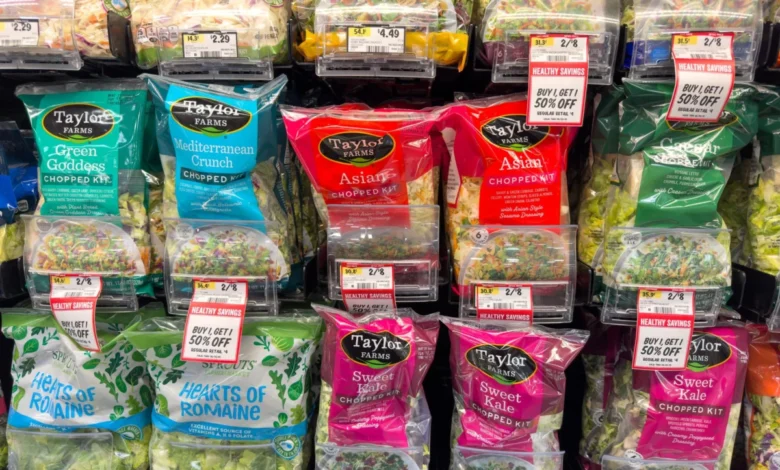
Months later, a massive, multi-state cyclosporiasis outbreak linked to iceberg lettuce disrupted summer supply chains. In mid-August 2026, state health investigators in Michigan faced significant corporate resistance when attempting to trace contaminated produce distributed through major commercial dining chains like Taco Bell. Investigators experienced a two-week lag between their initial requests for supply chain data and the receipt of records implicating Taylor Farms lettuce. Public health experts noted that this friction could have been entirely averted had the Trump administration not blocked a proposed rule requiring food corporations to submit requested traceability data within 24 hours—a mandate that food industry lobbyists successfully fought on grounds of undue administrative burden.
Compounding the public confusion, the FDA initially announced that iceberg lettuce samples from Taylor Farms de Mexico tested positive for Cyclospora, only to retract the finding days later as a false positive. Taylor Farms subsequently publicized what it characterized as an agency apology, creating a misleading narrative that completely cleared the company. Food and agriculture analysts observed that this public relations maneuver severely muddied the waters, sowing widespread public skepticism and causing consumers to broadly eschew fresh produce despite clear epidemiological evidence pointing specifically to the contaminated lettuce lots.
Systemic Vulnerabilities and the Limits of Voluntary Compliance
The 2026 safety crises illuminated two fundamental structural weaknesses in the American food safety paradigm: an overreliance on corporate voluntary compliance and a heavy burden placed on consumers to interpret complex recall notices.
While voluntary recalls generally function efficiently—as corporate entities strive to protect brand equity and mitigate liability—disputes over scientific data can cause dangerous standoffs. While the FSIS lacks the statutory authority to issue unilateral mandatory recalls for meat products (though it maintains the power of detention and seizure), the FDA possesses explicit statutory authority to mandate a recall for non-meat foods under Class I conditions if a company refuses a voluntary request. However, federal regulators view mandatory recalls as an extreme instrument of last resort, preferring negotiated compliance to avoid protracted legal battles that could further delay product removal.
Broader Implications for Public Health Policy
The events of 2026 have catalyzed renewed scrutiny from Capitol Hill and consumer advocacy groups regarding the efficacy of federal food oversight. Critics argue that persistent deregulation, combined with industry pushback against rapid data-sharing mandates, has systematically hollowed out the nation’s biological early-warning systems.
Without proactive regulatory frameworks that compel immediate transparency and faster traceability from farm to distribution, the American public remains vulnerable to preventable foodborne outbreaks. As long as the system depends heavily on end-of-the-line recalls and voluntary corporate cooperation, consumers will continue to bear an unfair share of the responsibility for mitigating public health risks in their own kitchens.
Actionable Guidance: How Consumers Can Navigate Recalls
Facing an environment of frequent food safety alerts requires a measured, informed approach. Industry analysts emphasize that individual recalls rarely indicate systemic failure across an entire food category; rather, outbreaks are typically traceable to specific facilities, brands, or distribution lots.
When a recall is announced, consumers should take the following steps:
- Verify Details: Consult official databases maintained by the FDA or the USDA FSIS to review specific lot numbers, Universal Product Codes (UPCs), and distribution regions.
- Assess Exposure: Check refrigerators and pantries against the precise brand names and packaging identifiers listed in the advisory. Broad recalls cast a wide net, but only products matching the exact criteria pose a verified hazard.
- Handle with Care: If a food is recalled due to biological pathogens or foreign physical objects, immediately dispose of it or return it to the point of purchase for a full refund. Products recalled solely for undeclared allergens may be safely consumed by individuals who do not possess the specific allergy.
- Maintain Kitchen Hygiene: In the absence of immediate recall data during active outbreak investigations, adhere strictly to public health guidance regarding produce preparation. Thoroughly washing fruits and vegetables, cooking meats to recommended internal temperatures, and rigorously sanitizing food contact surfaces remain indispensable lines of defense in minimizing foodborne illness risks.