Beyond the Rind: Neal’s Yard Dairy and the Sustainable Food Trust Redefine Farm-Level Sustainability Reporting

The traditional metrics of agricultural success—primarily yield and profit—are undergoing a fundamental shift as industry leaders seek to quantify the "hidden" value of artisan food production. In a landmark collaboration, the esteemed British cheesemonger Neal’s Yard Dairy (NYD) and the Sustainable Food Trust (SFT) have concluded an extensive, multi-year trial aimed at evaluating the sustainability of the farming systems underpinning their supply chain. Utilizing the SFT’s Global Farm Metric (GFM) framework, the project represents one of the most rigorous attempts to date to move beyond singular environmental markers, such as carbon footprinting, toward a holistic, multi-dimensional assessment of food production.
The Evolution of Farm Assessment: A Chronology of the GFM Project
The impetus for this partnership dates back to long-standing dialogues between NYD leadership and Patrick Holden, founder of the Sustainable Food Trust. During visits to Holden’s farm in Wales—a site renowned for the production of Hafod Cheddar—discussions frequently turned to the difficulty of communicating the complex realities of artisan farming to an increasingly inquisitive public.
By early 2025, these conversations matured into a formal, structured trial. NYD invited all farmhouse cheesemakers within their supply network—producers who manage their own livestock—to undergo the GFM assessment. Over the following months, twelve dedicated producers engaged in the rigorous process of data collection. This phase was not merely a passive survey; it required extensive collaboration with the GFM team and Sara Hall, a researcher at the University of Bristol whose expertise in dairy systems provided a critical academic lens. The trial concluded in late 2025, with findings processed and synthesized throughout the first half of 2026, leading to the public disclosure of the project’s outcomes in mid-2026.
The Global Farm Metric Framework: A Holistic Methodology
Unlike conventional sustainability certifications that often rely on isolated metrics, the Global Farm Metric is designed to capture the interplay between twelve distinct domains. These categories span environmental health (soil carbon, biodiversity, water management), social responsibility (community engagement, worker welfare), and economic resilience (business viability, local economic impact).
The fundamental philosophy behind the GFM is that agricultural sustainability is not a static state but an interconnected system. For instance, a farm’s soil health is inextricably linked to its livestock management practices, which in turn affect the economic stability of the business and its ability to provide public goods, such as flood mitigation or landscape maintenance. By forcing a comprehensive audit of these twelve areas, the framework discourages the "siloing" of data.
Comparative Data and Benchmarking Analysis
The benchmarking phase of the study provided significant insights into the performance of the twelve participating artisan farms when contrasted against broader industry data. The GFM team compared these cheesemakers against a cohort of 71 mixed-farming enterprises and 22 specialized dairy farms drawn from University of Bristol research data.
The results were statistically encouraging. The participating NYD suppliers consistently outperformed the wider comparison groups in categories such as Nature, Livestock, Community, and Governance. Specifically, the data indicated that the intensive focus on pasture-based, low-input systems common among NYD suppliers correlated with higher biodiversity scores and improved public goods delivery.
However, the analysis also surfaced a critical realization: the extreme variability of farming environments—from upland pastures with thin soils to fertile lowland plains—makes direct numerical ranking misleading. A "high" score in one context may reflect optimal management of a difficult landscape, while a "lower" score might reflect the inherent challenges of that specific geography. Consequently, the research team concluded that reducing such diverse, nuanced systems to a simple "league table" would strip away the very context that makes sustainable farming valuable.
The Challenge of Communicating Sustainability
For Neal’s Yard Dairy, the project served as an exercise in "honest communication." As consumer interest in food provenance grows, the demand for transparency has become a commercial imperative. However, the trial highlighted the inherent tension between the desire for simplified labels and the reality of complex, living systems.
Survey data collected during the project revealed that while customers prioritize flavor, they are increasingly seeking information on animal management, wildlife impact, and local economic contribution. The dilemma, as identified by NYD management, is that boiling down an entire farm’s lifecycle to a single grade or percentage often obscures more than it reveals. The project reinforced the necessity of "expert judgment" in sustainability reporting, suggesting that data should act as a conversation starter rather than a definitive, final verdict.
Implications for the Dairy Industry and Future Standards
The implications of this trial extend far beyond the niche of artisan cheese. As agricultural policy in the UK and internationally moves toward "public money for public goods" models, the need for robust, farm-level data is becoming acute. The NYD-SFT collaboration provides a scalable model for how supply chains can support their producers through the complex, resource-heavy process of sustainability reporting.
One of the most notable outcomes of the trial is the shift in how NYD intends to handle future data collection. Rather than imposing a burdensome, repetitive assessment schedule on their producers, the company is now exploring the use of a "core indicator" approach. By identifying the most meaningful, high-impact metrics, they aim to reduce the administrative load on farmers while maintaining the integrity of their sustainability reporting.
Industry Reactions and Expert Perspectives
The academic community, represented by researchers like Sara Hall, has noted that this trial marks a shift from descriptive to prescriptive data usage. By allowing the producers themselves to provide feedback on the assessment framework, the trial ensured that the GFM remained practical and relevant to the daily realities of farming.
From an industry perspective, the commitment shown by the twelve participating cheesemakers—who invested significant time and labor into the project—demonstrates a growing cultural shift among independent producers. They are no longer content with being "green" in name only; they are seeking the tools to prove their environmental and social value through transparent, verifiable data.
Next Steps: A New Consumer Experience
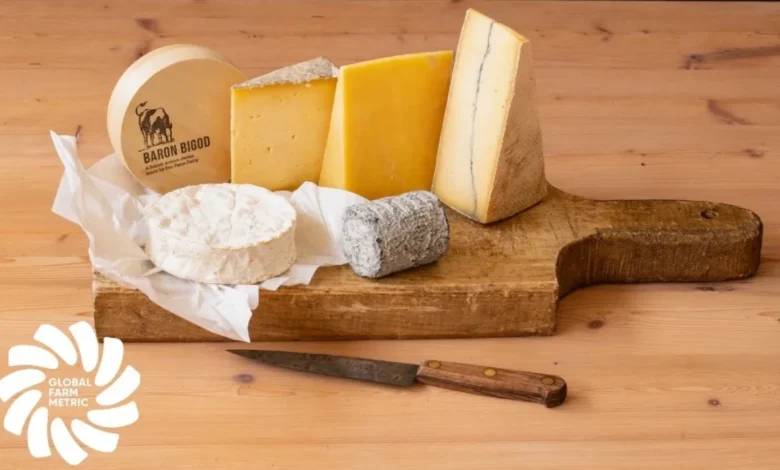
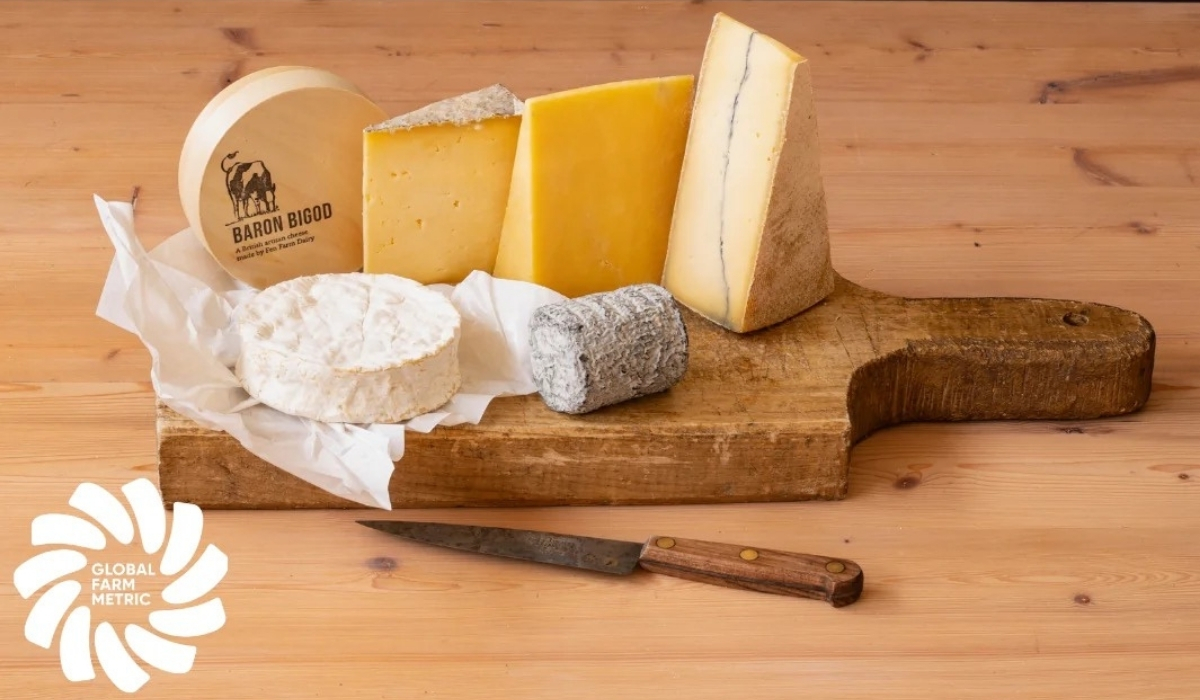
Starting in late 2026 and continuing through 2027, the impact of this trial will be visible at the point of sale. Neal’s Yard Dairy has begun integrating the GFM logo into its branding, specifically to highlight those producers who participated in the pilot. This includes a curated "Global Farm Metric" cheese selection and a dedicated filter on their e-commerce platform, allowing consumers to intentionally support farmers who have subjected their operations to this level of scrutiny.
Furthermore, the project has underscored that sustainability is a journey, not a destination. The "direction of travel"—the effort a farm makes to improve its biodiversity, water usage, or community involvement over time—is now viewed as being as critical as its current snapshot performance.
Conclusion: Toward a More Nuanced Agricultural Future
The Neal’s Yard Dairy and Sustainable Food Trust trial serves as a blueprint for the future of food systems. By refusing to oversimplify the inherent complexity of agriculture, the project has established a high bar for transparency. It acknowledges that while consumers desire simple answers, the reality of a sustainable farm is a nuanced, living, and breathing system that requires respect for its complexity.
As the industry continues to grapple with the pressures of climate change and shifting consumer expectations, this collaborative approach offers a way forward. It replaces the superficiality of "greenwashing" with the substance of audited, evidence-based storytelling. For the artisan cheesemakers of the UK, the trial has not only provided a clearer picture of their own operations but has also reinforced the vital connection between the land, the animal, and the final, flavorful product that arrives on the consumer’s table. The journey, while complex and at times challenging, has proven that there is a clear, quantifiable path to a more sustainable future for the dairy industry.