Bridging the Rural Divide How American Farmers Are Adapting to Climate Change Without Using the Name

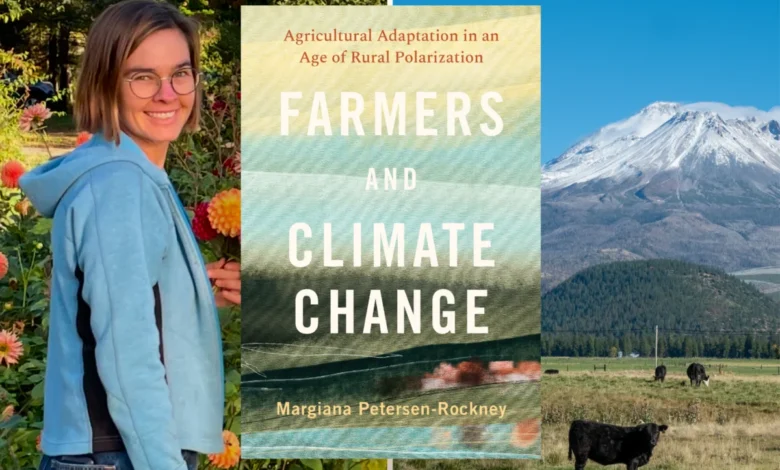
The paradox of modern American agriculture is nowhere more visible than in the dusty, drought-stricken fields of Siskiyou County, Northern California. For nearly a decade, Margiana Petersen-Rockney, a professor of political ecology at the University of Montana’s W.A. Franke College of Forestry and Conservation, embedded herself within this community to understand a burgeoning contradiction: farmers are aggressively adopting climate-resilient practices while simultaneously rejecting the terminology of climate change. Her findings, detailed in the recently released book Farmers and Climate Change, suggest that the path to environmental sustainability in the American West may lie not in winning ideological debates, but in navigating the complex sociological and economic realities of rural life.
The Paradox of Climate Reticence in Northern California
Since 2017, Petersen-Rockney has tracked the responses of farmers and ranchers in Siskiyou County to an era of "permanent" drought. The region, which sits at the headwaters of the Klamath River, has faced varying levels of water scarcity for the better part of the 21st century, largely due to a dwindling Sierra Nevada snowpack. Despite the physical evidence of a shifting climate, many producers remain hesitant to use the phrase "global warming."
This reticence is not necessarily born of ignorance. According to Petersen-Rockney’s research, farmers often acknowledge in private that weather patterns have become dangerously unpredictable. However, in public, they frequently attribute these changes to historical cycles or "acts of God." The book identifies this as a survival strategy. In tight-knit rural communities, social cohesion is a prerequisite for economic survival. To adopt the language of urban environmentalists is to risk ostracization, a heavy price for those who rely on their neighbors for labor, equipment sharing, and community support.
Furthermore, a deep-seated distrust of federal and state governments colors the rural perspective. Farmers often view climate-related legislation as a series of mandates—such as the protection of endangered species or strict water curtailments—that threaten their livelihoods without providing adequate financial or technical support. This perceived disconnect between urban policy-makers and rural food producers has created a landscape where the term "climate change" is viewed as a political weapon rather than a scientific reality.
A Chronology of Environmental and Political Shifts (2017–2025)
The timeline of Petersen-Rockney’s study mirrors a period of intense environmental and political volatility in the United States.
- 2017–2019: The Formative Years: Research began during a period of relative transition. While California emerged from a historic five-year drought in 2017, the reprieve was short-lived. Petersen-Rockney began documenting the "wait and see" approach of many farmers regarding new water management technologies.
- 2020–2022: The Crisis Point: A severe multi-year drought gripped the West. In Siskiyou County, water rights became a flashpoint as irrigation supplies were cut to protect salmon populations in the Klamath River. This period saw a spike in the adoption of "ecological practices" out of sheer necessity.
- 2023–2024: Policy Influx and Reaction: The Biden administration’s Inflation Reduction Act (IRA) funneled unprecedented billions into "climate-smart" agriculture. However, Petersen-Rockney notes that the implementation was uneven. When funds were "clawed back" or became mired in bureaucracy, it reinforced the narrative of government betrayal.
- 2025: The Cultural Pivot: By the time the research concluded, a cultural shift had begun. The "MAHA" (Make America Healthy Again) movement and other center-right initiatives began reframing regenerative agriculture not as a "green" initiative, but as a way to ensure soil health, national food security, and rural independence.
The Economic Stranglehold: Why Systems Resist Change
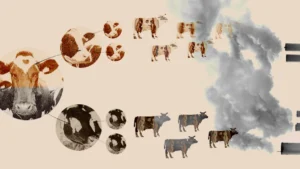
A significant portion of Petersen-Rockney’s analysis focuses on the systemic economic barriers that prevent farmers from transitioning to more sustainable methods. The American agricultural landscape is characterized by extreme market concentration. In the livestock sector, for instance, just four companies control over 80% of the U.S. beef processing market.
These "Big Four" agribusinesses often dictate the terms of production. Farmers are frequently locked into contracts that mandate specific chemical inputs, tilling schedules, and seed varieties. Operating on razor-thin profit margins, many small and medium-sized family farms cannot afford the risk of a "failed" experiment with new ecological methods.
"Farmers who have adopted chemically intensive practices or intensive tilling… do it because they’re locked into these cycles of production," Petersen-Rockney explains. The book highlights that when a farmer’s entire livelihood depends on meeting the specific standards of a corporate buyer, the "choice" to be environmentally friendly is often a luxury they do not possess.
Agroecology as a Practical Solution
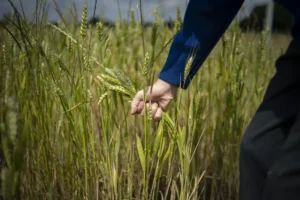
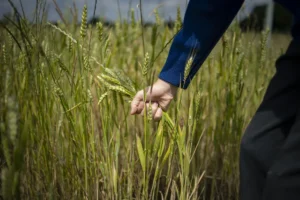
Despite these barriers, a quiet revolution is occurring in the fields. In Siskiyou, Petersen-Rockney observed farmers turning to agroecological practices that address the root causes of water scarcity. These include:
- Increasing Soil Organic Matter: By using compost and reducing tillage, farmers are turning their soil into a "sponge" that can hold significantly more water during dry spells.
- Cover Cropping: Planting non-commercial crops during the off-season keeps the soil cool, reduces evaporation, and prevents erosion.
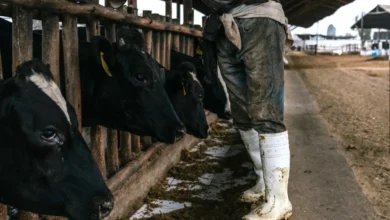
- Regenerative Grazing: Moving livestock frequently to prevent overgrazing allows pastures to recover and sequester more carbon.
- Crop Diversification: Moving away from water-intensive monocultures, such as alfalfa, toward drought-tolerant varieties.
Interestingly, these changes are often motivated by the bottom line rather than environmental altruism. A farmer who pumps less water saves on electricity; a rancher who improves soil health spends less on supplemental feed. By framing these actions as "efficiency" or "stewardship," farmers are able to implement climate-positive changes without triggering the political allergies associated with "climate action."
Supporting Data and Official Responses
The shift toward climate-smart agriculture is backed by significant federal investment, though the efficacy of this spending remains a point of contention. The USDA’s Natural Resources Conservation Service (NRCS) reported a surge in applications for the Environmental Quality Incentives Program (EQIP) following the passage of the Inflation Reduction Act.
However, data suggests a disparity in how these funds are distributed. Historically, the vast majority of USDA subsidies have favored large-scale commodity producers of corn, soy, and wheat. Small-scale, diversified, and minority-owned farms often lack the administrative capacity to navigate the complex application processes for conservation grants.
In response to these criticisms, the USDA has recently launched the "Partnerships for Climate-Smart Commodities" initiative, aiming to create new markets for producers who use climate-friendly practices. Yet, as Petersen-Rockney’s research indicates, if these programs are perceived as "urban impositions" or if the funding is inconsistent, they risk deepening the rural-urban divide.
Broader Impact and the Path Forward
The implications of Petersen-Rockney’s work extend far beyond the borders of Siskiyou County. As the United States faces increasing food system instability due to extreme weather, the ability of rural land managers to adapt is a matter of national security.
The book argues that the most effective way to foster resilience is to honor the "cultural cachet" of the farmer. By focusing on the prosperity of the next generation and the preservation of rural heritage, environmentalists and policy-makers can find common ground with conservative agricultural communities.
The research also highlights a generational shift. A younger cohort of farmers—including a growing number of women—is entering the industry with different educational backgrounds and a greater willingness to experiment with diversification. These "new guard" farmers are often the ones leading the charge on social media, sharing regenerative techniques through platforms like Instagram and YouTube, creating a horizontal peer-to-peer learning network that bypasses traditional, often stagnant, agricultural extension models.
Fact-Based Analysis of Implications
The findings in Farmers and Climate Change suggest a strategic pivot for environmental policy. If the goal is to sequester carbon and conserve water, the terminology used to achieve that goal may be secondary to the results.
The "Siskiyou Model" shows that when ecological practices are proven to be economically viable and socially acceptable, they spread rapidly through "over-the-fence" observation. The role of the government and environmental NGOs, therefore, should perhaps shift from "educating" farmers about climate change to "de-risking" the transition to agroecology.
Ultimately, Petersen-Rockney’s eight-year study serves as a reminder that the people most intimately connected to the land are often its most capable stewards—provided they are treated with the respect and economic fairness required to make sustainable choices. In the face of an uncertain climate future, the most valuable tool for adaptation may not be a new law or a new technology, but a renewed sense of curiosity and empathy across the American cultural divide.