Golden Arches and Taxpayer Dollars: How McDonald’s Franchisees Funneled PPP Funds into Corporate Rent

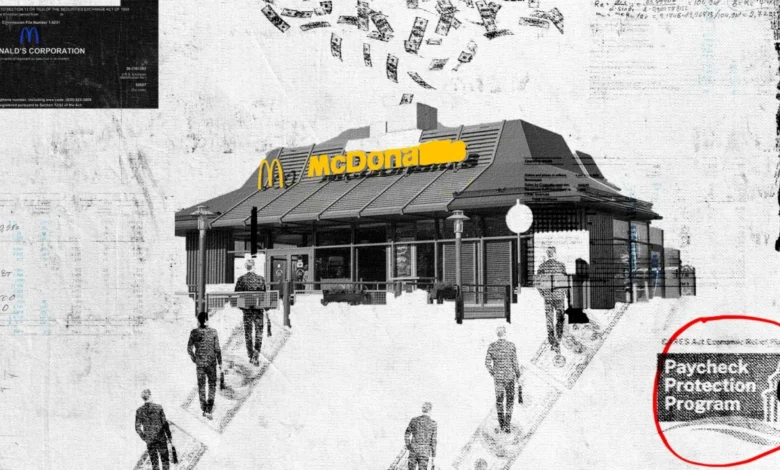
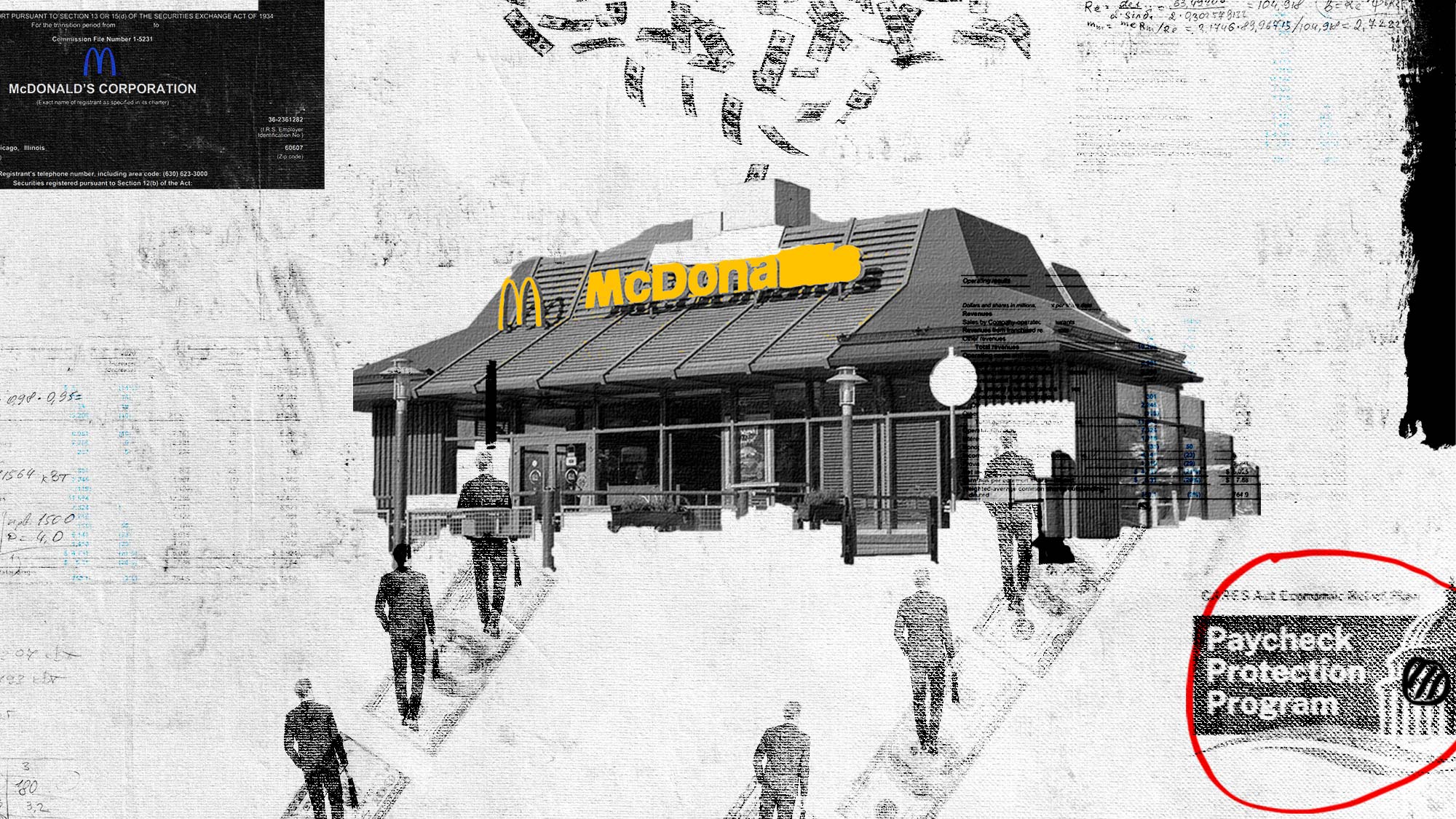
The Paycheck Protection Program (PPP) was established by the United States government as a critical lifeline during the height of the Covid-19 pandemic, intended primarily to keep workers on payrolls and prevent a total collapse of the small business sector. However, a joint investigation by The Counter and The Intercept has revealed a complex financial flow where federal relief funds, intended for employees, were ultimately diverted to one of the world’s wealthiest corporations. While the program was designed to mitigate the economic shock for independent operators, thousands of McDonald’s franchisees utilized a portion of their $1.3 billion in taxpayer-backed loans to cover rent payments to their landlord: the McDonald’s corporate office.
This revelation highlights a systemic tension within the franchise model, where the parent company acts not just as a brand licensor but as a dominant real estate mogul. As the pandemic shuttered dining rooms across the country in early 2020, McDonald’s Corporation famously refused to grant rent forgiveness to its struggling franchisees. Instead, those franchisees turned to the federal government, effectively using public funds to satisfy private rent obligations to a corporation that would go on to report record-breaking revenues.
The Real Estate Empire Behind the Burger
To understand how taxpayer dollars ended up in the coffers of McDonald’s corporate headquarters, one must first understand the unique business model of the "Golden Arches." Unlike many of its competitors, McDonald’s is fundamentally a real estate company. This strategy, pioneered by the company’s first president, Harry J. Sonneborn, involves the corporation owning or leasing the land and the buildings where its restaurants operate. Franchisees then pay the corporation a combination of royalties and rent—the latter often being a fixed base amount plus a percentage of gross sales.
By the end of 2020, McDonald’s Corporation held approximately $37.9 billion in real estate assets before depreciation. In a typical year, rental income is a massive driver of corporate profit. In 2019 alone, the company collected $7.5 billion in rent globally, a figure that represented more than a third of its total reported revenues. This model provides the corporation with an insulated layer of financial security; even if a specific restaurant struggles to sell Big Macs, the rent remains due to the parent company.
Marcia Chatelain, author of Franchise: The Golden Arches in Black America, notes that this real estate portfolio is the bedrock of the company’s stability. "McDonald’s is a real estate company," she explained. "It’s able to use the profits of the hamburger company to maintain an incredible portfolio of wealth in real estate."
Chronology of a Crisis: Spring 2020
The friction between corporate interests and small business survival reached a boiling point in March and April of 2020. As stay-at-home orders were implemented across the United States, restaurant traffic plummeted. Facing a liquidity crisis, the National Franchisee Leadership Alliance (NFLA), which represents the interests of owners, approached McDonald’s corporate leadership with a modest request: two weeks of rent forgiveness.
Despite its massive cash reserves and real estate equity, McDonald’s refused. The corporation offered to defer rent and royalty payments—meaning the owners would still owe the money later—but it would not cancel the debt. This decision sparked outrage among franchisees. A former McDonald’s executive familiar with the negotiations noted that owners were "furious" that the world’s largest restaurant chain refused to provide the kind of direct relief that much smaller, less capitalized chains were offering to their partners.
In response to the corporate refusal, franchise advocacy groups began preparing their members to pivot toward the federal government. Blake Casper, chair of the National Owners Association (NOA), another franchisee group, informed executives in an April 2020 letter that the association was helping owners get "first in line" for PPP loans. Casper noted that the government appeared "more solvent" and more willing to provide "desperately needed liquidity" than their own parent company.
Analyzing the PPP Inflow
The scale of the federal intervention in the McDonald’s ecosystem was vast. According to data released by the Small Business Administration (SBA) in early 2022, approximately 2,389 McDonald’s franchises collected a total of $1.3 billion in PPP funds. This made McDonald’s the second-largest franchise recipient of the program by dollar amount, trailing only General Motors, whose dealerships are also franchised.
While the primary goal of the PPP was payroll, the program allowed for a percentage of the funds to be used for "non-payroll expenses," including utilities and rent. The investigation by The Counter and The Intercept analyzed 421 loan applications from McDonald’s franchisees that included specific rent figures. These applications alone accounted for more than $31 million intended for rent.
Because the SBA data only reflects the intended use of the funds at the time of application, the actual total paid to McDonald’s corporate for rent is likely much higher. Sean Moulton, a senior policy analyst at the Project on Government Oversight (POGO), pointed out that early in the program, many borrowers claimed they would spend 100 percent on payroll to ensure loan forgiveness, even if they eventually used the allowed portion for rent.

"It strikes me as unusual that, even in the early days, almost everyone was claiming it was all going toward payroll," Moulton said. He suggested that once the rules were relaxed, the actual expenditure on rent likely increased.
The Legislative Shift and the "Black Hole" of Data
The ability of franchisees to funnel taxpayer money into corporate rent was bolstered by legislative changes mid-way through the pandemic. In June 2020, Congress passed the PPP Flexibility Act. This legislation, which was heavily lobbied for by groups like the International Franchise Association (IFA), changed the spending requirements for loan forgiveness. Originally, 75 percent of the loan had to be spent on payroll; the new law lowered that threshold to 60 percent, allowing 40 percent to be used for overhead costs like rent.
Matt Haller, a senior vice president at the IFA, argued at the time that the original limitations were "sinking" small businesses. However, the lack of granular data on how the money was eventually spent has created what Moulton calls a "black hole" of transparency.
The SBA has admitted that it does not collect specific category breakdowns from the final forgiveness applications. Instead, individual lenders—private banks and credit unions—process and maintain those records. When The Counter and The Intercept contacted 88 lenders involved in McDonald’s franchisee loans, none provided details on the final spending. This lack of oversight makes it impossible for the public to know exactly how much of the $789 billion PPP program ended up as rental income for major corporations rather than wages for workers.
Official Responses and Corporate Prosperity
In response to inquiries regarding the use of PPP funds for rent, McDonald’s Corporation has maintained a distance from the program. Joseph LaPaille, a global communications manager for the company, stated in March 2022 that the corporation "never asked for assistance from any government entity." While technically true, the statement ignores the fact that the corporation benefited indirectly from the $1.3 billion injected into its franchise system, which allowed franchisees to continue paying their corporate rent and royalties.
A company spokesperson later emphasized that franchisees are independent small business owners who used the loans to "support payroll for the continued employment of nearly 800,000 local restaurant employees." However, the corporation did not address the specific $31 million in rent figures identified in the loan applications.

While many small businesses struggled to survive the pandemic, McDonald’s Corporation emerged stronger than ever. By the end of 2020, the company had recouped more than 80 percent of the rent and royalty deferrals it had granted earlier in the year. In 2021, the company’s CEO described the year as a "banner year." The corporation reported $23.2 billion in total revenue—the highest figure it had seen since 2016.
Broader Implications and Policy Analysis
The use of PPP funds to pay rent to a multi-billion-dollar landlord raises significant questions about the design of federal relief programs. Critics argue that by allowing "small business" loans to flow to franchisees of massive corporations without requiring those corporations to provide their own relief, the government effectively subsidized the real estate portfolios of the wealthy.
Lisa Gilbert, executive vice president of Public Citizen, noted that while the PPP was essential for the country’s survival, its systemic flaws led to "troubling outcomes." The dilution of the program’s focus—moving from 100 percent payroll to a significant portion for rent—meant that taxpayer dollars were increasingly used to support landlords and utility companies rather than just protecting jobs.
The case of McDonald’s serves as a primary example of "corporate shielding" during a crisis. By maintaining a franchise structure, the parent company can claim it is not a direct recipient of government aid while simultaneously ensuring its revenue streams are protected by that very aid. As the public and policymakers look back at the nearly $800 billion spent on the PPP, the McDonald’s data suggests that a meaningful portion of the "Paycheck Protection" was, in practice, "Profit Protection" for the world’s largest fast-food real estate empire.