
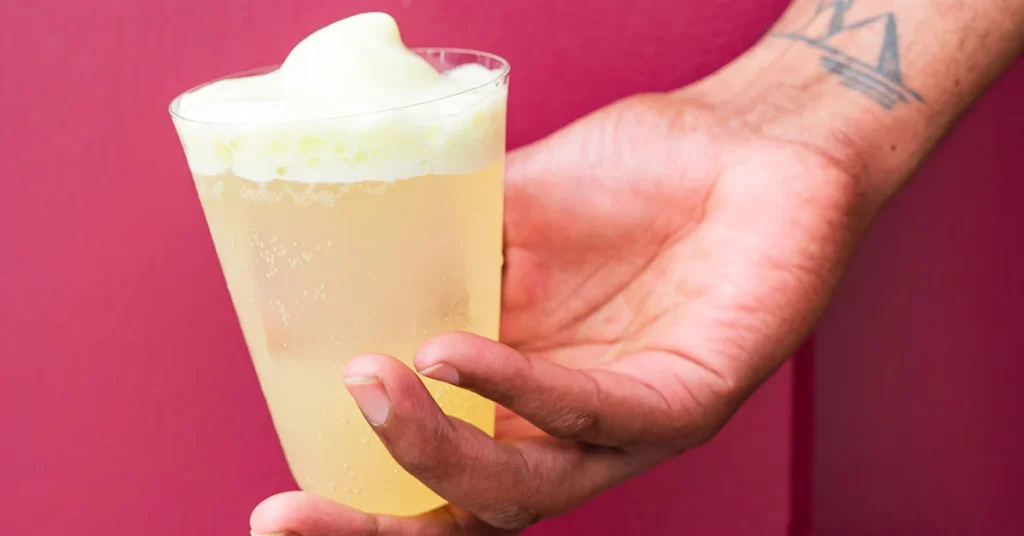
The resurgence of the "Wine Cup"—a category of historical cocktails defined by their layered complexity and reliance on fortified wines—has found an unlikely laboratory in Pittsburgh, Pennsylvania. At Titusz, a restaurant recently recognized among the best new dining destinations in America, beverage director Sean Rosenkrans is spearheading a technical revival of this 19th-century staple. By bridging the gap between Victorian-era mixology and contemporary carbonation and foam technology, Rosenkrans has transformed the long-forgotten Wine Cup into a centerpiece of modern craft bartending.
The Historical Foundation of the Wine Cup
To understand the ambition behind the drinks at Titusz, one must first look back to the mid-19th century. In 1869, William Terrington published Cooling Cups and Dainty Drinks, a definitive manual that captured the spirit of an era when the Sherry Cobbler and the Brandy Smash were the gold standards of the Anglo-American bar scene. These "Cups" were not merely cocktails in the modern sense; they were elaborate, multi-component affairs featuring intricate layering of liqueurs, syrups, fresh fruits, and aromatic herbs.
Historically, these drinks served a functional purpose as refreshing, low-ABV alternatives to the heavy punches of the time. While the Pimm’s Cup has survived as the most recognizable descendant of this lineage, the broader category largely withered as cocktail culture moved toward the spirit-forward compositions of the 20th century. For decades, the Wine Cup was relegated to the status of a diluted, uninspired beverage, often criticized for lacking the structural integrity and flavor depth demanded by modern palates.
The Technical Challenge: Reviving a Forgotten Format
Sean Rosenkrans’s interest in this category dates back two decades, driven by a desire to integrate wine more thoughtfully into the cocktail program. However, his early experiments mirrored the common pitfalls of the genre. "Most wine cocktails back then were not good," Rosenkrans reflects. "They were thin, you couldn’t get the right texture or depth of flavor. They just tasted like sangria, basically."
The fundamental challenge in crafting a successful Wine Cup lies in the chemistry of the base. Wine, with its delicate structure, is easily overwhelmed by high-proof spirits or cloying syrups. To resolve this, Rosenkrans turned to the specific regional influences that define the menu at Titusz. The restaurant itself is a tribute to the Hungarian heritage of his wife, Csilla Thackray, whose family immigrated to the United States in the 1950s. This cultural framework provided a perfect conduit for experimentation. By sourcing wines from Central Europe—specifically Hungary and Austria—Rosenkrans found varietals with the acidity and backbone necessary to anchor a modern cocktail.
The Evolution of the Disco Ricky
The culmination of this research is the "Disco Ricky," a cocktail that has become a defining signature of the Titusz bar program. The evolution of this drink serves as a case study in modernizing historical recipes. Initially, Rosenkrans utilized an Austrian Sauvignon Blanc as his base. However, as his understanding of the cocktail’s flavor profile matured, he pivoted to a Sárgamuskotály (Hungarian Muscat Blanc). This varietal offers a superior aromatic profile, characterized by high acidity and pronounced stone fruit notes that pair seamlessly with the drink’s auxiliary components.
The "Disco Ricky" draws stylistic inspiration from the "Rhenish Wine Cup No. 4" documented in Terrington’s 1869 text, which famously called for the inclusion of ginger or pineapple. Rosenkrans enhances this foundation with a fortified element: a high-quality apricot eau de vie, specifically the Blume Marillen from the Austrian producer Destillerie Purkhart. This addition provides a grounding earthiness and floral complexity that balances the sweetness of the pineapple liqueur and the spicy, zesty profile of fresh ginger syrup.
Modern Techniques: Carbonation and the "Mojito Effect"
The most significant departure from 19th-century tradition is found in the preparation and delivery of the drink. While historical recipes relied on crushed ice and manual stirring to create a cooling sensation, the Disco Ricky utilizes a sophisticated batching and carbonation process. By force-carbonating the base, the beverage achieves a consistent, robust effervescence that far surpasses the subtle bubbles produced by traditional soda-water topping.
Perhaps the most innovative aspect of the drink is its garnish—a structural, flavor-forward foam. Moving away from the conventional sprigs of mint or cucumber slices, Rosenkrans employs an iSi whipper to create a stable foam composed of cucumber juice, Midori, Chartreuse Élixir Végétal, lime oleo saccharum, and "Foam Magic."
This technique serves a dual purpose. First, it offers an immediate olfactory experience for the guest as the drink hits the table. Second, it acts as a time-released ingredient. As the foam slowly dissipates, it gradually integrates into the liquid, altering the drink’s profile over the course of the consumption. This, combined with the visual impact of the vibrant, textured head, creates what Rosenkrans calls the "mojito effect"—a psychological trigger that draws the attention of surrounding tables, driving curiosity and sales.
A Cultural and Culinary Synthesis
The naming of the cocktail, while modern and playful, holds deep personal significance for the restaurant’s proprietors. The "Disco Ricky" was a nickname for Csilla Thackray’s mother, who was known for her vibrant presence during the disco era of the 1970s and 80s. What began as a placeholder during the menu design phase evolved into a permanent fixture, bridging the gap between the restaurant’s Hungarian roots and the contemporary, high-energy environment of a Pittsburgh fine-dining establishment.
From an industry perspective, the success of the Disco Ricky underscores a growing trend in high-end gastronomy: the "re-engineering" of heritage drinks. By applying the principles of modern food science—such as oleo saccharum preparation and pressure-based aeration—to historically marginalized cocktail formats, bartenders are finding new ways to drive revenue and guest engagement without sacrificing historical fidelity.
Broader Implications for the Industry
The work being done at Titusz suggests that the future of the cocktail bar lies in a nuanced dialogue with the past. The industry is currently moving away from the "mixology for the sake of complexity" trend of the 2010s, favoring instead a model that prioritizes approachability, historical narrative, and technical refinement.
The revival of the Wine Cup is not merely an exercise in nostalgia; it is a demonstration of how classic frameworks can be adapted to accommodate modern consumer expectations for texture, presentation, and flavor consistency. As more establishments look to differentiate their wine and spirits programs, the methodology pioneered by Rosenkrans—using European terroir to inform the structural backbone of long-form, effervescent cocktails—is likely to become a template for other venues.
By grounding his menu in the specific history of Central European viticulture and enhancing it with the tools of the modern kitchen, Rosenkrans has not only revived a 19th-century format but has arguably perfected it for the 21st century. The Disco Ricky stands as a testament to the fact that when historical recipes are treated as blueprints rather than sacred texts, the result is a dynamic, evolving, and ultimately superior drinking experience.





0 Komentar
Sampaikan opini dan diskusi yang membangun dengan bahasa yang santun.
No Comments Yet
Be the first to share your thoughts on this story.