Uncorking Four Decades of History: What Happens When You Open a 1979 Vintage Napa Valley Cabernet Sauvignon

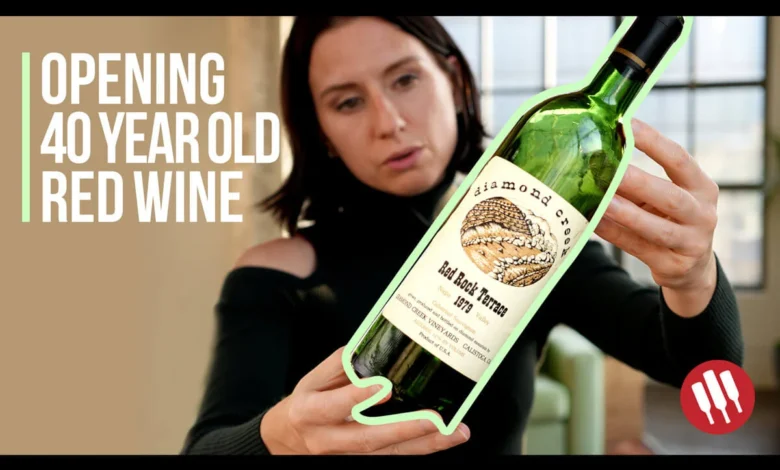
For the vast majority of wine enthusiasts, uncorking a vintage bottle with four decades of history is a once-in-a-lifetime milestone. Recently, a gathering of wine professionals, collectors, and producers convened to test the boundaries of cellar aging by opening a rare 1979 Diamond Creek Red Rock Terrace Napa Valley Cabernet Sauvignon. The exercise offered a rare, empirical look at the structural evolution of aged wine, challenging long-held assumptions about New World viticulture, the mechanics of bottle degradation, and the precise tools required to safely access ancient vintages.
The tasting brought together industry veterans, including Master Sommelier Jackson Rohrbaugh, alongside winemakers and auction analysts. While old-world regions like Bordeaux and Burgundy have centuries-old documentation regarding longevity, opening a 40-year-old California Cabernet provides critical modern data points on how Napa Valley structures evolve over extended periods. The results of the opening not only shattered expectations regarding the wine’s drinkability but also highlighted the technical precision required to evaluate, extract, and serve historic bottles.
The Mechanics of Extraction: Why Standard Openers Fail on Aged Corks
The logistical challenge of accessing a 40-year-old bottle begins long before the first pour. Standard double-hinged waitstaff corkscrews, while reliable for young or mid-aged bottles, are frequently inadequate—and potentially destructive—when applied to ancient corks. Over decades of storage, natural cork undergoes a continuous chemical transformation. Contact with liquid wine, combined with humidity fluctuations in the cellar, causes the material to soften, swell, and lose its structural integrity.
When a standard helix (worm) is driven into an aged cork, the brittle material often crumbles, dropping pieces of cork into the liquid and ruining the clarity of the wine. To mitigate this risk, wine professionals rely on specialized extraction tools. Among the most effective is the "Ah-So" wine opener, a blocking device featuring two parallel metal prongs that slide down the sides of the cork without piercing it. By gently rocking and pulling the device, the cork can be extracted whole, even when completely saturated and structurally compromised.
Alternatively, advanced preservation and extraction systems such as the Coravin can be utilized for tasting without removing the cork entirely, though historic bottles with severely degraded seals often demand traditional extraction. The lesson for collectors is clear: investing in a 40-year-old bottle necessitates investing in the correct opening hardware to prevent catastrophic failure at the moment of consumption.
Evaluating Liquid History: Understanding Fill Levels and "Shoulder Heights"
Before a historic bottle is even opened, its potential quality can be heavily assessed through visual inspection of the fill level, commonly referred to as "shoulder height." Over long periods, microscopic amounts of liquid and alcohol evaporate through the porous structure of natural cork. This process accelerates in dry storage environments or poorly sealed cellars.
Auction houses, insurance assessors, and serious collectors categorize older bottles based on where the wine line sits relative to the neck of the bottle:
- Neck / Base of Neck: This is the optimal condition for any aged wine. It indicates minimal evaporation, a tight cork seal, and ideal storage conditions, suggesting the wine has aged slowly and protected from excessive oxidation.
- High Shoulder: The wine level drops slightly to the point where the bottle begins to slope outward toward the main body. This is entirely normal for wines dating back several decades and generally represents a very well-preserved specimen with low risk of premature oxidation.
- Low Shoulder and Below: The wine level has dropped significantly down the body of the bottle. This indicates a compromised seal, allowing excessive oxygen ingress over the years. Wines at this level carry a high probability of being oxidized, flat, or vinegary, and are typically discounted heavily in secondary markets.
Understanding these parameters is essential for buyers navigating secondary auction platforms such as Winebid, K&L Wine Merchants, or specialized fine wine auctions. A low fill level on a 40-year-old bottle acts as an immediate red flag, signaling that the liquid inside has likely deteriorated long before reaching the glass.
Defying Expectations: The Longevity of Napa Valley Cabernet Sauvignon
Perhaps the most striking takeaway from the 1979 Diamond Creek tasting was the sheer vitality of the wine upon exposure to air. Master Sommelier Jackson Rohrbaugh, accustomed to evaluating bottles from across the global spectrum, was reportedly left momentarily speechless after his initial taste. The wine displayed none of the hollow, oxidized characteristics common in over-aged specimens; instead, it retained a complex matrix of tertiary aromas, integrated tannins, and persistent acidity.
This longevity challenges a long-standing historical critique from European critics regarding Napa Valley Cabernet Sauvignon. For decades, traditionalist Old World commentators argued that New World wines—driven by abundant sunshine and warmer growing seasons—yielded high-alcohol, fruit-forward profiles designed exclusively for early consumption. Critics maintained that Napa wines lacked the structural backbone, specifically the balancing acidity and tannic resolution, required to endure decades of bottle maturation.
The performance of the 1979 Diamond Creek Red Rock Terrace decisively counters this narrative. Diamond Creek Vineyards, established in the Diamond Mountain District AVA, benefits from unique microclimates, volcanic soils, and cooler mountain elevations that impart natural acidity and firm tannins to the Cabernet Sauvignon grape. These viticultural variables are the foundational pillars of age-worthiness.
Anatomy of an Age-Worthy Wine: What Makes a Bottle Last 40 Years?
Not all wines are created equal, and very few are engineered to survive four decades in a dark cellar. Winification science dictates that for a dry red wine to cross the 40-year threshold successfully, a specific combination of chemical and structural components must align:
- High Tannin Levels: Tannins act as natural antioxidants. Young Cabernet Sauvignon contains high concentrations of condensed tannins extracted from grape skins, seeds, and stems. Over decades, these harsh tannins polymerize, softening into a velvety texture while continuing to protect the wine’s chemical structure.
- Balanced Acidity: Acid is the preservation anchor of wine. Adequate tartaric and malic acidity maintains the freshness of the liquid, preventing it from tasting flabby or tired as the primary fruit notes evolve into secondary and tertiary characteristics.
- Moderate Alcohol Content: Historically, wines from the 1970s possessed significantly lower alcohol-by-volume (ABV) percentages compared to modern blockbusters. A lower alcohol level prevents the spirit from overwhelming the delicate secondary aromatics that develop during long-term bottle aging.
- Sulfur Dioxide Management: Proper use of sulfur dioxide during bottling protects the wine from bacterial spoilage and uncontrolled oxidation without stunting the slow, beneficial chemical reactions that occur in the cellar.
The Modern Dilemma: Will Today’s Vintages Stand the Test of Time?
As the tasting group analyzed the historic depths of the 1979 vintage, a contentious debate emerged regarding contemporary winemaking: Can a modern Napa Valley Cabernet Sauvignon from a recent vintage—such as 2018—achieve the same graceful longevity 40 years from now?
The room was sharply divided. Proponents of modern viticulture point to advanced vineyard management, precision agriculture, and meticulous sorting techniques as evidence that today’s wines are cleaner, more balanced, and better made than their 20th-century predecessors. Modern winemakers have unprecedented control over canopy management, irrigation, and harvest timing, allowing them to capture optimal phenolic ripeness.
Conversely, skeptics argue that modern consumer preferences and changing climate patterns introduce variables that may hinder long-term aging. Contemporary climate change has led to warmer growing seasons in certain regions, occasionally resulting in higher sugar accumulation, elevated alcohol levels, and lower natural acidity. Furthermore, modern stylistic trends often prioritize immediate accessibility, rich fruit extraction, and softer early-stage tannins—attributes that do not always translate into a 40-year cellaring trajectory.
Broader Economic and Collector Implications
The revelation that a 40-year-old Napa Valley Cabernet can not only survive but excel has direct implications for the fine wine investment market. Historic California vintages continue to gain traction among institutional investors and private collectors who historically concentrated their capital exclusively on First Growth Bordeaux or Grand Cru Burgundy.
As secondary market data demonstrates rising demand for aged American benchmarks, provenance and storage verification have become paramount. Collectors acquiring high-value historic bottles must ensure rigorous documentation of the wine’s chain of custody, verifying that temperature-controlled cellaring has protected the liquid from thermal shock.
Ultimately, the opening of the 1979 Diamond Creek serves as a bridge between historical skepticism and modern appreciation. It proves that with the right terroir, careful viticulture, and patient cellaring, the boundaries of New World wine longevity are far wider than previously understood. Whether contemporary bottles will replicate this feat in the year 2060 remains an open question—one that only time, and the next generation of wine collectors, will be able to answer.