The Historical Evolution of Kartoffelsalat
The origins of potato salad in Germany date back to the 17th and 18th centuries, following the introduction of the potato to Europe. Originally considered a medicinal or ornamental plant, the potato eventually became a cornerstone of the German diet due to its reliability as a crop and its ability to thrive in poor soil conditions. As the dish migrated across the various regions of the German-speaking world, distinct variations emerged.

In Southern Germany and Austria, the dish is characterized by a warm dressing, often featuring beef broth, vinegar, oil, and sometimes bacon. Conversely, Northern German traditions frequently leaned toward mayonnaise-based dressings. The modern vegan adaptation of this classic, as explored in recent culinary trends, leans heavily on the Southern tradition of serving the dish warm. By substituting animal-based fats with high-quality olive oil and utilizing smoky seasonings to mimic the depth of traditional bacon, chefs and home cooks have successfully preserved the flavor profile without the use of animal products.

Nutritional Profile and Dietary Implications
A standard serving of vegan German potato salad typically contains approximately 283 calories. The dish is notable for its complex carbohydrate content, which provides sustained energy, while the reliance on vinaigrette keeps the saturated fat content low—averaging around 2 grams per serving.

From a dietary standpoint, the shift toward plant-based versions of comfort foods has significant implications for public health. By removing mayonnaise—a high-fat, egg-based binder—the total cholesterol content of the dish is eliminated. Furthermore, the inclusion of fresh herbs like dill not only enhances the flavor profile through volatile oils but also adds a minor micronutrient boost, including Vitamin A and C. The use of potatoes as a base provides essential potassium and fiber, making this dish a nutritionally sound option for those seeking a balance between indulgence and health.

Preparation Methodology and Culinary Science
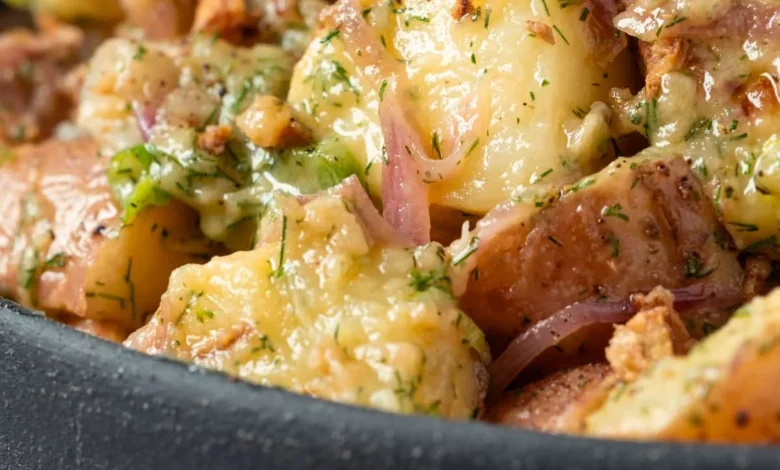
The preparation of an authentic-style vegan German potato salad relies on the starch content of the potato. Culinary experts recommend waxy potato varieties, such as Yukon Gold or fingerlings, which maintain their structural integrity during the boiling process. The key to the dish’s texture lies in the timing of the dressing application.

- Boiling: Potatoes are submerged in salted water and boiled until tender but firm. Overcooking leads to a mushy consistency that fails to absorb the dressing properly.
- The Emulsion: The vinaigrette, typically composed of apple cider or white wine vinegar, Dijon mustard, and maple syrup, is prepared separately. The acidity of the vinegar is crucial for balancing the earthiness of the potatoes.
- The Marriage of Flavors: By tossing the sliced potatoes in the dressing while they are still warm, the pores of the potato absorb the vinaigrette, allowing the flavor to permeate the core of the vegetable rather than sitting merely on the surface.
- Textural Elements: The addition of sautéed onions adds a caramelized sweetness, while fresh dill provides a necessary herbaceous contrast. Modern adaptations often incorporate smoked sea salt to provide the umami depth typically associated with traditional German lardons.
Industry Trends in Plant-Based Side Dishes
The rise of the vegan German potato salad is reflective of a broader shift in the global food industry. According to market analysts tracking consumer behavior, there has been a 15% year-over-year increase in the demand for plant-based side dishes in the hospitality sector. This is driven by an increase in "flexitarian" dining, where consumers are not strictly vegan but are actively seeking to reduce their intake of animal-based products.

Restaurants and catering services are increasingly adopting these recipes to simplify kitchen operations. Because the dish does not require eggs or dairy, it possesses a longer shelf life and a more stable safety profile at room temperature compared to traditional mayonnaise-based salads, which are susceptible to rapid bacterial growth.

Storage and Logistics for Large-Scale Preparation
For those preparing the dish for gatherings or as a staple meal-prep option, the longevity of the ingredients is a significant advantage. The dish can be refrigerated for 4 to 5 days. Unlike mayonnaise-based salads, which often suffer from "weeping" (the separation of oil and water) after a few days, the vinaigrette-based German potato salad tends to improve in flavor over time as the vinegar and aromatics continue to marinate the potatoes.

When reheating, professionals advise using a low-heat method to avoid breaking down the potatoes. A quick pulse in a microwave or gentle warming on the stovetop is sufficient to bring the salad back to its optimal serving temperature, ensuring the olive oil-based dressing remains silky and the herbs retain their vibrancy.

Cultural Significance and Social Impact
The endurance of the potato salad in German culture is a testament to the dish’s adaptability. It is a fixture at festivals, family gatherings, and holiday meals. By stripping away the animal-derived components, the dish has become more inclusive, allowing individuals with dietary restrictions—such as lactose intolerance or egg allergies—to participate in traditional culinary experiences.

The transition to a vegan model also addresses sustainability concerns. The environmental footprint of producing potatoes and plant-based vinegars is significantly lower than that of egg production and dairy farming. As food security and environmental impact become central themes in modern gastronomy, the promotion of such dishes serves as a quiet but effective push toward more sustainable consumption patterns.

Future Outlook
As the culinary landscape continues to modernize, the focus on "reimagined classics" is expected to grow. The vegan German potato salad is a prime example of how traditional recipes can be honored while being updated for the future. With the availability of diverse, high-quality plant-based ingredients—such as liquid smoke, varied vinegars, and artisanal oils—the possibilities for further innovation are vast.

Ultimately, the dish succeeds because it does not attempt to mimic a different food entirely, but rather improves upon an existing structure. It remains a hearty, satisfying, and flavor-forward component of the modern diet, proving that the best culinary innovations are often those that look backward to tradition while looking forward to a more sustainable, inclusive future. Whether served at a summer barbecue or as a comforting winter side, the vegan German potato salad remains a staple of modern home cooking, bridging the gap between historical heritage and contemporary nutritional values.