
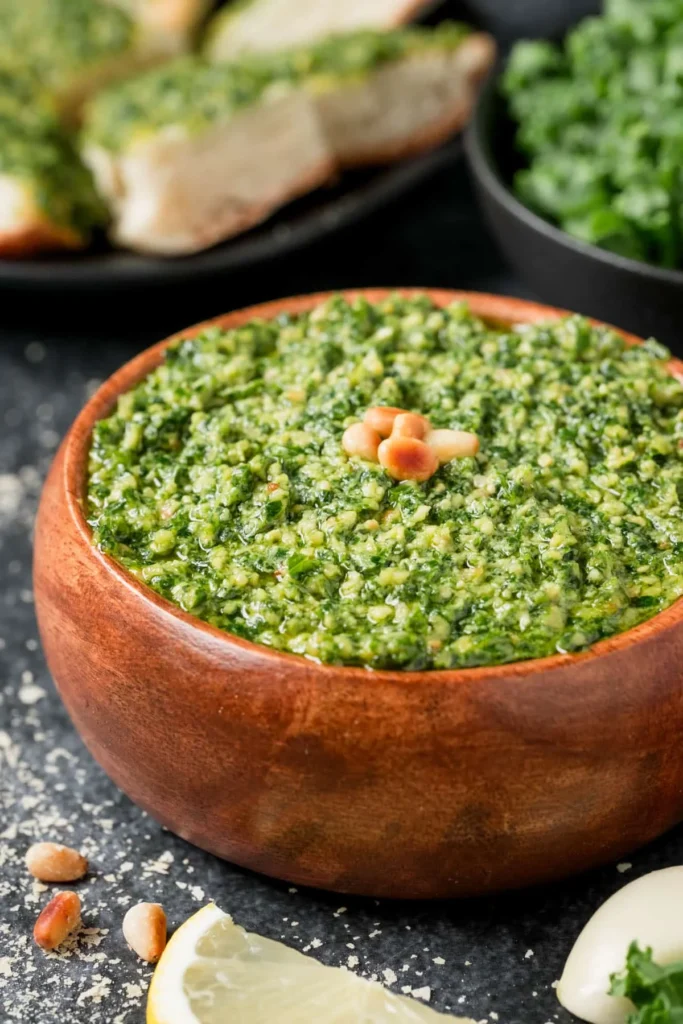
The Evolution of Pesto in Modern Cuisine
Traditional pesto, known as pesto alla genovese, originated in the Ligurian region of Italy and traditionally relies on a precise balance of basil, pine nuts, garlic, coarse salt, and hard cheeses such as Parmigiano-Reggiano and Pecorino Sardo. However, the rise of veganism and the push for nutrient-dense, "superfood" ingredients have led to a diversification of pesto recipes.

Kale, a dark leafy green rich in vitamins A, C, and K, has emerged as the primary substitute for basil. Unlike basil, which oxidizes rapidly and loses its bright green hue, kale provides a sturdier, earthier profile that holds up well in cold preparations or when emulsified with high-quality olive oil. This transition from delicate herbs to hearty greens reflects a broader trend in food technology: the optimization of common produce to create shelf-stable, high-protein, and fiber-rich condiments.

Nutritional Profile and Dietary Implications
From a nutritional standpoint, the substitution of kale for basil, paired with nutritional yeast as a cheese replacement, creates a significantly different macronutrient profile. Nutritional yeast, a deactivated form of Saccharomyces cerevisiae, is a staple in plant-based diets, providing a nutty, savory flavor profile often described as "cheesy." It is also a complete protein source and is frequently fortified with B-vitamins, particularly B12.

Data analysis of a standard serving of vegan kale pesto reveals a caloric density of approximately 183 kcal per serving. The composition is primarily driven by monounsaturated fats from the olive oil and polyunsaturated fats from the pine nuts, which contribute to the 17g of fat per serving. With 4g of protein and 2g of dietary fiber, the preparation offers a more substantial satiety profile than traditional herb-based sauces, which are often lower in fiber and protein. The inclusion of lemon juice not only adds a necessary acid to balance the bitterness of raw kale but also aids in the bioavailability of the non-heme iron found in the leafy greens.

Chronology of Preparation and Efficiency
In modern culinary environments, the demand for "fast-casual" or "quick-prep" cooking has driven the development of recipes like this, which can be executed in approximately 10 minutes. The workflow is standardized as follows:

- Activation and Maceration: The process begins by soaking minced garlic in lemon juice. This chemical reaction, known as maceration, mellows the harsh, pungent compounds in raw garlic, ensuring a smoother integration of flavor.
- Nut Toasting: Pine nuts are lightly toasted in a dry skillet. This process facilitates the Maillard reaction, developing deeper, toasted notes that provide the necessary base for the pesto’s texture.
- Emulsification: The integration of kale, nuts, nutritional yeast, and olive oil in a food processor is a critical stage. By slowly drizzling the olive oil into the mixture while the blades are rotating, the cook achieves a stable emulsion, creating the characteristic creamy, thick consistency.
- Final Refinement: The final texture is adjusted by scraping down the sides of the processor, ensuring that all kale fibers are uniformly broken down.
Broader Culinary and Economic Impact
The adoption of kale-based pestos has economic implications for the supply chain. Basil is notoriously difficult to store and transport due to its high moisture content and tendency to bruise. Kale, conversely, has a much higher tolerance for cold storage and a longer shelf life, making it a more resilient crop for year-round production. This durability makes kale an ideal candidate for large-scale condiment production and home-batch freezing.

Industry experts suggest that the "pesto revolution" is part of a larger movement toward functional foods. By incorporating dense leafy greens into sauces, consumers are integrating health-promoting compounds into their diets without sacrificing the comfort-food qualities associated with pasta and toasted bread.

Serving and Storage Standards
The culinary applications for this preparation extend beyond the traditional association with pasta. Because of its robust flavor, it is increasingly used as a spread for artisanal bread, a topping for plant-based pizzas, or even as a vibrant, nutrient-dense dressing for grain bowls.

Regarding food safety and preservation, the inclusion of lemon juice acts as a mild preservative, extending the shelf life of the pesto to approximately one week when stored in an airtight, refrigerated environment. For long-term storage, the preparation is notably freezer-stable for up to three months. This longevity is a significant improvement over fresh basil pesto, which typically loses its vibrant color and flavor profile within days.

Scientific Consensus on Plant-Based Alternatives
Nutritionists and dietitians have noted that the shift toward plant-based condiments is supported by the increasing availability of high-quality, vegan-friendly ingredients. The move away from dairy-based cheeses in favor of nutritional yeast or nut-based cheeses is not merely a restriction for vegans; it is a dietary adjustment that can lower the intake of saturated fats and cholesterol while increasing the intake of antioxidants.

The culinary community, including prominent chefs and health organizations, has emphasized that such recipes are essential for maintaining dietary diversity. As global food systems continue to focus on reducing reliance on resource-intensive animal products, the utilization of hardy greens like kale will likely become a standard practice in both domestic and professional kitchens.

In summary, the transition toward vegan kale pesto represents a synthesis of nutritional efficiency and culinary innovation. By leveraging simple, readily available ingredients, this recipe provides a blueprint for how traditional methods can be adapted to meet the demands of modern health-conscious consumers. The success of this preparation hinges on the balance of acidity, fat, and umami, proving that plant-based alternatives can compete with, and often improve upon, the nutritional profiles of their traditional counterparts. As this trend continues, the integration of such versatile, nutrient-dense staples will likely become a foundational element of sustainable, home-based meal preparation.







0 Komentar
Sampaikan opini dan diskusi yang membangun dengan bahasa yang santun.
No Comments Yet
Be the first to share your thoughts on this story.