The Curious Disconnect Between Industry Acclaim and Consumer Perception of Riesling and the Negroni


The wine industry often exhibits a distinct divergence between the preferences of trade professionals and the general consumer public, most notably regarding the Riesling grape variety. While sommeliers, Masters of Wine, and industry journalists consistently rank Riesling among the most versatile and intellectually stimulating varietals globally, consumer purchasing patterns in markets like the United Kingdom suggest a persistent hesitation. This phenomenon is not unique to viticulture; it bears a striking structural resemblance to the polarized reception of the Negroni, a classic cocktail that remains a staple of professional mixology while remaining a divisive choice for the casual imbiber.
The Professional Consensus: A Cult Favorite
Within the professional sphere, Riesling is frequently cited as the benchmark for "terroir expression." Unlike Chardonnay or Sauvignon Blanc, which can be heavily manipulated through malolactic fermentation or aggressive oak aging, Riesling is prized for its ability to act as a transparent medium for the soil, climate, and topography of the vineyard.
Data from the International Riesling Foundation (IRF) supports this professional devotion. The grape’s natural high acidity provides a structural backbone that allows for extraordinary aging potential—a trait rarely found in other white wines at comparable price points. Industry insiders argue that Riesling offers a "intellectual" drinking experience, characterized by primary fruit notes of lime, green apple, and stone fruit, which evolve into complex tertiary aromas of petrol, honey, and beeswax over time.
The Burden of History: A Legacy of Misconception
The primary hurdle for Riesling’s market penetration remains the legacy of the 1970s and 1980s. During this period, the international market was saturated with mass-produced, low-quality German wines—often cloyingly sweet and lacking the structural complexity inherent in the varietal. This era, characterized by the ubiquity of wines such as Liebfraumilch, created a long-lasting negative association in the minds of consumers.
For the demographic that came of age during this period, the word "Riesling" became synonymous with "cheap, sugary white wine." This reputation persists as a barrier to entry, even as modern German, Austrian, and Australian producers have successfully pivoted toward dry (Trocken) and high-quality off-dry styles. Market research indicates that "fear of sweetness" is a leading cause for consumers avoiding the Riesling section of a wine list, despite the fact that modern Rieslings are frequently bone-dry and impeccably balanced.
The Negroni Parallel: Complexity and the Bitter Threshold
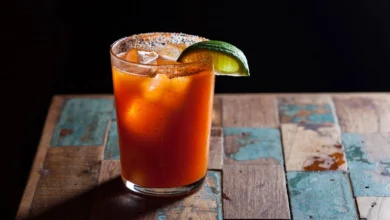
The comparison to the Negroni—a cocktail composed of equal parts gin, vermouth, and Campari—is analytically sound when examining the threshold of "challenging" flavors. Much like Riesling, the Negroni is a "no-place-to-hide" drink. Its composition relies entirely on the quality of its three components. If the vermouth is oxidized or the gin is of inferior distillation, the drink fails immediately.
The beverage industry has observed that the Negroni requires a "trained palate." The bitter profile of Campari, combined with the botanical complexity of gin, creates a sensory experience that is not immediately palatable to consumers accustomed to sweeter, fruit-forward cocktails. Similar to the way professional sommeliers value the bracing acidity of a Mosel Riesling, bartenders value the Negroni for its palate-cleansing properties and its precise balance of bitter, sweet, and botanical notes.
Supporting Data and Market Trends
Statistical analysis of global wine sales suggests that while Riesling remains a "sommelier’s secret," it has struggled to capture the same market share as more "approachable" varietals like Pinot Grigio or Chardonnay.
- Retail Velocity: According to recent UK wine retail data, Riesling accounts for less than 5% of total white wine sales in the off-trade sector.
- The Sweetness Spectrum: Consumer surveys indicate that 65% of casual wine drinkers prefer wines described as "smooth" or "easy-drinking," terms that are rarely associated with high-acid, high-intensity Rieslings.
- The Cocktail Renaissance: Conversely, the Negroni has seen a resurgence in the "on-trade" (bars and restaurants) since the mid-2010s, largely driven by the craft cocktail movement. However, this growth is localized within urban centers and high-end hospitality venues, mirroring the distribution patterns of high-end Rieslings.
Chronology of Perception
- 1960s-1980s: The peak of industrial German wine exports. Sweet, low-quality wines flood Western markets, establishing the negative "cheap and sugary" stigma.
- 1990s-2000s: The "ABC" (Anything But Chardonnay) movement creates a brief window for Riesling, but the stigma of the 1980s remains a significant obstacle.
- 2010s-Present: The rise of the "sommelier culture." Trade professionals begin a concerted effort to re-educate the public on the diversity of Riesling, focusing on dry styles and site-specific terroir. Simultaneously, the Negroni becomes the definitive "bartender’s handshake," signaling a shift toward bitter-forward flavor profiles in cocktails.
Institutional Perspectives and Expert Reactions
Industry organizations, such as the German Wine Institute (Deutsches Weininstitut), have spent the last decade attempting to modernize the image of German Riesling. Their messaging strategy focuses on the "dry" quality of modern vintages and the cooling effect of climate change on ripening, which has led to more structured, fruit-driven wines.
Critics within the wine trade argue that the industry itself is partially to blame for the disconnect. By consistently labeling Riesling as "challenging" or "complex," retailers may be inadvertently alienating the average consumer who views wine as a simple commodity for social consumption. As one Master of Wine noted, "We treat Riesling like a textbook that needs to be studied, when perhaps we should be treating it like a refreshing beverage that happens to be delicious."
Broader Implications for the Hospitality Sector
The divide between the professional preference for "challenging" flavors and the consumer desire for "approachable" flavors has significant implications for how hospitality businesses curate their menus.
- Staff Training: Restaurants that successfully sell Riesling do so by training waitstaff to offer samples or by pairing the wine with specific, high-fat foods (such as spicy Thai cuisine or pork belly) where the acidity acts as a functional tool rather than a standalone feature.
- Cocktail Curation: The success of the Negroni in high-end venues suggests that if a product is positioned as a "classic" or an "experience," consumers are more willing to overlook their initial aversion to bitterness. This suggests that Riesling could benefit from similar "classic" branding.
- Educational Barriers: The high barrier to entry for both products—needing to understand sweetness levels in wine or the nuances of vermouth quality in cocktails—suggests that as long as these products remain "gatekept" by industry experts, they will likely remain niche items for the general public.
Conclusion: The Future of Palate Evolution
The future of both Riesling and the Negroni depends on a narrowing of the gap between the professional and the amateur. While both drinks currently serve as markers of "good taste" within the trade, their long-term viability in the mainstream market depends on a shift in consumer confidence.
As the beverage industry continues to move toward more authentic, low-intervention products, the transparency of both Riesling and the Negroni may eventually become their greatest assets. Consumers are increasingly interested in the provenance of their ingredients—a trend that favors the "terroir-focused" nature of Riesling. If the trade can successfully decouple the grape from its 20th-century reputation, it may find that the modern consumer is far more open to high-acid, complex wines than previously assumed. Ultimately, the transition from a "sommelier’s favorite" to a "consumer staple" is a matter of marketing, education, and the consistent delivery of high-quality experiences that demonstrate the pleasure, rather than just the complexity, of these products.