
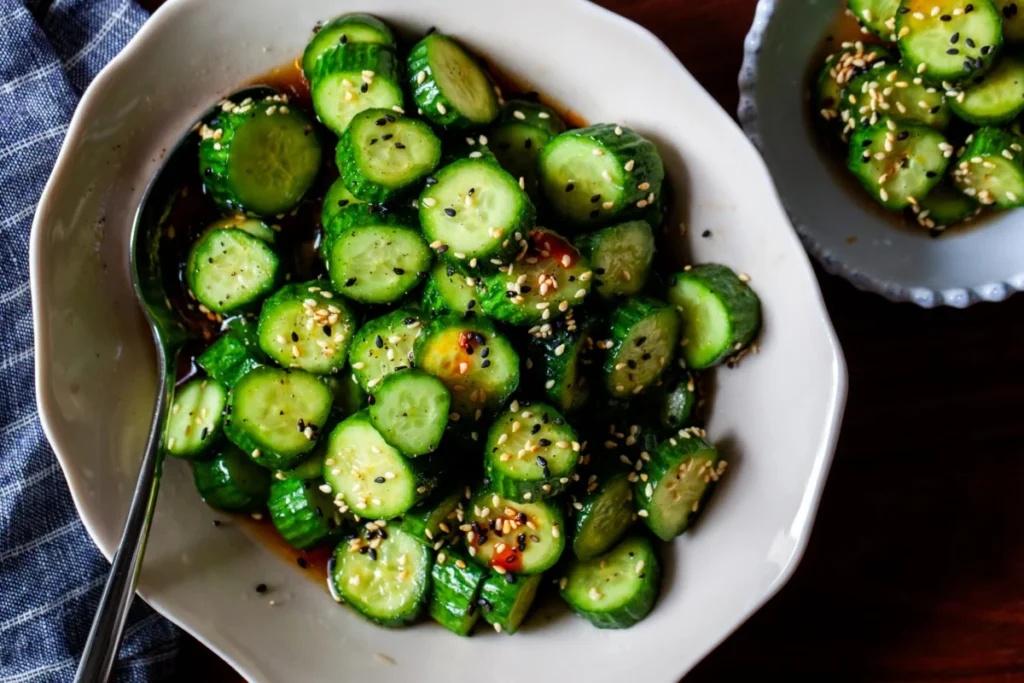
The culinary landscape has long overlooked the humble cucumber, a staple ingredient found in domestic kitchens across the globe, yet rarely elevated to the centerpiece of dedicated recipe archives. Despite being consumed on a regular basis—frequently appearing on dining tables multiple times a week during the warmer months—cucumbers have historically been relegated to secondary roles in formal recipe development. Culinary analysts and home cooks alike note that the vegetable’s inherent attributes—including high water content, refreshing crunch, affordability, and adaptability to diverse flavor profiles—make it an ideal candidate for minimalist yet impactful preparation. Recent culinary trends, however, are shifting this dynamic, bringing simple, refreshing vegetable dishes to the forefront of weeknight meal planning amidst persistent summer heat waves and changing nutritional preferences.
Origins and Evolution of Vinegared Cucumber Preparations
The foundation of modern sesame and rice vinegar cucumber salads traces its lineage back to traditional Japanese cuisine, specifically a style of dish known as sunomono, which translates literally to "vinegared things." Historically, sunomono encompasses a wide variety of raw vegetables and seafood that have been lightly cured or marinated in a balanced dressing composed primarily of rice vinegar, sugar, and salt. Over generations, this technique migrated beyond Japan’s borders, adapting to local pantry staples and contemporary dietary preferences.

In modern domestic adaptations, home cooks often modify traditional formulas to suit fast-paced schedules and contemporary palates. For instance, many contemporary recipes omit added sugars to emphasize the natural sweetness of the vegetable and the savory depth of accompanying condiments. Furthermore, contemporary culinary adaptations have streamlined the preparation process, replacing rigid, multi-hour pickling timelines with flexible, abbreviated salting methods. By applying coarse salt to structurally robust, chunkier cucumber cuts for as little as ten minutes, cooks can initiate an osmotic process that draws out excess moisture. This moisture deficit allows the vegetable to rapidly absorb subsequent dressings—typically a blend of rice vinegar, toasted sesame oil, soy sauce, and aromatics—without diluting the final flavor profile.
Nutritional and Economic Significance of Cucumbers in Household Diets
From a nutritional and economic perspective, the surge in popularity of cucumber-centric side dishes aligns closely with broader public health and consumer spending trends. Cucumbers (Cucumis sativus) are composed of approximately 95 percent water, making them an exceptionally hydrating food source that supports daily fluid intake during periods of elevated ambient temperatures. Additionally, they provide essential micronutrients, including vitamin K, potassium, and various antioxidants, while remaining remarkably low in calories.
Economically, cucumbers consistently rank among the most cost-effective fresh produce items available in global retail markets. Agricultural data indicates that cucumber production remains stable year-round due to a combination of open-field farming and controlled-environment greenhouse cultivation. This stability shields consumers from extreme price volatility often observed in more delicate leafy greens or seasonal fruits. Consequently, households seeking to maximize grocery budgets while maintaining access to fresh, nutrient-dense produce frequently turn to cucumbers as a reliable dietary staple. Their ability to pair seamlessly with a vast array of proteins—ranging from pan-fried pork dumplings and noodle dishes to complex stir-fries—further solidifies their utility in diverse cultural cuisines.

Community Initiatives and Educational Support Projects
In tandem with contemporary recipe sharing and culinary trends, digital food platforms have increasingly leveraged their reach to support philanthropic and community-based initiatives. A prominent example within the culinary blogging community is the annual Classroom Wishlist Project, an organized effort designed to connect educators with donors willing to purchase necessary school supplies.
The initiative, which has grown steadily in scope since its inception, addresses systemic funding shortages in public education institutions. Educators across various jurisdictions compile lists of essential classroom materials—ranging from foundational items like pencils, paper, and crayons to specialized reading books and organizational tools—which are then aggregated into publicly accessible databases. Participants in the culinary community and the broader public are encouraged to review these registries, selecting classrooms in their local communities, areas of personal significance, or regions facing acute resource deficits.
Educational experts and administrators have repeatedly emphasized the profound impact of community-driven supply drives on student engagement and classroom efficacy. Studies on classroom resources indicate that teachers frequently spend hundreds of dollars out of personal funds to bridge gaps in school district budgets. By facilitating direct-to-classroom contributions, digital grassroots campaigns alleviate financial burdens on educators while ensuring that students enter the academic year equipped with the tools necessary for success.

Methodology and Best Practices for Preparation and Storage
The culinary technique required for preparing a traditional sesame and rice vinegar cucumber salad emphasizes simplicity and chemical efficiency. Professional and home kitchens alike rely on specific procedural steps to optimize texture and flavor infusion:
- Preparation and Salting: Cucumbers are sliced into robust, uniform pieces to maintain textural crunch. Coarse salt is applied directly to the vegetables to draw out surplus intracellular moisture through osmosis, typically requiring a resting period ranging from 10 minutes to two hours, depending on scheduling constraints.
- Drainage and Conditioning: Excess liquid released during the salting phase is thoroughly drained from the mixing vessel. The salted cucumbers may then be chilled in refrigeration to enhance their refreshing qualities.
- Dressing Incorporation: A balanced emulsion of seasoned rice vinegar, toasted sesame oil, and soy sauce is folded into the prepared cucumbers. The lowered moisture content within the cucumber tissue facilitates immediate absorption of the savory and acidic components.
- Finishing and Garnishing: The dish is finalized with the addition of chili oil for subtle heat and freshly toasted sesame seeds to provide a nutty aroma and textural contrast.
From a food safety and preservation standpoint, prepared cucumber salads exhibit favorable shelf-life characteristics under proper refrigeration. Because the acid in the rice vinegar acts as a mild preservative, leftovers can typically be stored in airtight containers for two to three days. During this storage window, the vegetables undergo a gentle pickling process, altering the texture slightly while deepening the flavor profile without compromising food safety standards, provided standard cold-chain protocols are maintained.
Broader Implications for Home Cooking and Community Engagement

The intersection of everyday culinary practices and large-scale community support highlights a shifting paradigm in how digital content platforms interact with their audiences. Rather than focusing exclusively on technical gastronomy, modern food media frequently integrates civic engagement, education advocacy, and pragmatic weeknight solutions into a cohesive narrative.
As consumers continue to navigate economic pressures and seek efficient, healthy meal options, versatile ingredients like cucumbers offer a reliable foundation for home cooking. Simultaneously, the integration of charitable frameworks into digital platforms demonstrates the potential for online communities to mobilize resources effectively in support of public goods, such as education and classroom infrastructure. Through these combined efforts, simple culinary traditions serve not only a nutritional purpose but also act as a vehicle for broader social connectivity and community resilience.



0 Komentar
Sampaikan opini dan diskusi yang membangun dengan bahasa yang santun.
No Comments Yet
Be the first to share your thoughts on this story.