
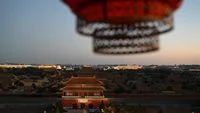
The allure of government employment remains one of the most powerful socioeconomic forces in the modern world, routinely paralyzing digital infrastructure and capturing public imagination as millions compete for a fraction of available bureaucratic posts. This high-stakes pursuit of state employment—mirrored in contemporary recruitment drives such as Indonesia’s heavily scrutinized Calon Pegawai Negeri Sipil (CPNS) selection—is far from a modern bureaucratic invention. More than a millennium ago, the imperial courts of China established a grueling, highly competitive meritocratic framework known as the Keju, laying the foundational blueprint for modern civil service examinations that continues to shape global administrative culture today.
Understanding the historical genesis of these examinations provides profound insight into contemporary societal obsessions with government jobs. Long before standardized testing became a cornerstone of modern public administration, the Keju transformed how empires were governed, shifting the locus of power from hereditary aristocracy to an intellectual meritocracy. This deep dive explores the historical evolution, staggering statistics, systemic flaws, and enduring modern legacy of the world’s first systematic civil service examination.
The Genesis of Meritocracy: Origins and Evolution of the Keju
Before the establishment of the imperial examination system during the Sui Dynasty in the late 6th century, the recruitment of government officials in China was largely defined by nepotism, aristocratic privilege, and patronage. Positions of power and administrative influence were monopolized by entrenched elite families through systems like the Nine-Rank System, where local arbiters assessed candidates based on their social pedigree rather than their administrative competence or intellectual capacity. This dynamic concentrated wealth and political leverage within a closed circle, stifling social mobility and frequently resulting in stagnant, inefficient governance.
Tragedy of Errors: Re-Examining the 1987 Bintaro Train Crash and the Burden of Systemic Failure
Recognizing the need for a more centralized and competent administrative apparatus, the Sui Dynasty (581–618 CE) initiated a structural pivot. By introducing standardized tests to evaluate candidates on their knowledge of classic texts, poetry, and administrative policy, the state created an alternative pathway to officialdom.
The system was subsequently refined and expanded during the Tang Dynasty (618–907 CE) and reached its institutional apex during the Song (960–1279 CE) and Ming (1368–1644 CE) dynasties. Over successive centuries, the Keju evolved from a rudimentary screening process into a massive, highly bureaucratized apparatus featuring multi-tiered examinations spanning local, provincial, and national jurisdictions. Success in these tests did not merely grant employment; it conferred immense prestige, tax exemptions, and elite social status upon the successful candidate and their extended lineage.
Staggering Statistics: The Brutal Mathematics of Imperial Selection
The scale and selectivity of the Keju during its peak operational centuries rival, and often surpass, the hyper-competitive civil service examinations observed in the 21st century. According to historical research highlighted in academic literature examining the Ming Dynasty period (1368–1644), between one and three million candidates routinely entered the preliminary qualification cycles.
However, the funnel was exceptionally narrow. Statistical analyses indicate that the average pass rate for the preliminary and intermediate stages hovered around a daunting 4 percent. Out of every 100 hopeful scholars who sat for the rigorous examinations, approximately 96 were systematically filtered out.
Those who cleared the early hurdles secured the coveted Juren degree, granting them eligibility for higher administrative tiers. Yet, the final hurdle—the metropolitan and palace examinations overseen directly by the emperor—culminated in an even starker reality. Out of millions of initial hopefuls, only a few hundred individuals ultimately achieved the highest academic designation, the Jinshi, securing guaranteed placement as high-ranking imperial officials.
This extreme attrition rate fostered a culture of lifelong studying. Candidates often spent decades preparing, repeatedly failing examinations well into their middle age, driven by the knowledge that a single successful examination could completely transform their family’s socioeconomic standing.
Social Implications: Breaking the Elite Monopoly
The introduction of the Keju fundamentally altered the social fabric of traditional Chinese society. By decoupling elite status from hereditary lineage, the examination system injected a degree of social mobility previously unseen in the ancient world.
In their analyses of the system, historians frequently emphasize that the Keju acted as a societal pressure valve and a leveling mechanism. A brilliant scholar born into a modest agrarian family could theoretically master the Confucian classics, pass the examinations, rise through the bureaucratic ranks, and secure wealth and influence for generations. This dynamic catalyzed a massive cultural focus on education. Families invested heavily—often pooling financial resources across clans—to support a promising young male member through years of uninterrupted study, viewing education as the ultimate vehicle for upward mobility.
Furthermore, the bureaucratic class produced by the Keju—commonly referred to in Western literature as the scholar-gentry—possessed a standardized intellectual foundation. Officials across vastly different provinces shared a common framework of ethical, philosophical, and administrative training derived from classical texts. This uniformity facilitated effective imperial communication, streamlined tax collection, and maintained centralized political cohesion across a vast and diverse geographic empire.
Systemic Flaws, Barriers, and the Elite Paradox
Despite its pioneering meritocratic ideals, the Keju system was fraught with structural limitations, systemic biases, and intense psychological pressures.
Chief among these limitations was the exclusion of women. The imperial examinations were strictly limited to males, barring half the population from participating in state governance. Additionally, while the system theoretically welcomed candidates from diverse economic backgrounds, the reality of preparation heavily favored the wealthy. Mastering the vast corpus of classical texts required years of leisure, freedom from manual labor, and the financial means to purchase expensive books and hire private tutors. Consequently, while lower-class families occasionally broke through, the vast majority of successful candidates still hailed from families with pre-existing economic cushions.
The examination process itself was famously grueling. Candidates were locked into isolated, coffin-sized examination cells for days at a time, required to compose essays and poetry under immense psychological strain. The emphasis on rote memorization of classical texts and rigid adherence to stylistic conventions, such as the infamous "eight-legged essay" (baguwen) mandated during later dynasties, also drew criticism from progressive reformers. Critics argued that the curriculum increasingly rewarded mechanical regurgitation rather than creative administrative problem-solving or practical technological innovation.
The Abolition of 1905: Modernization and the End of an Era
By the late 19th century, the Qing Dynasty (1644–1912) faced unprecedented existential crises, driven by internal rebellions, economic stagnation, and military defeats inflicted by Western imperial powers and a modernized Japan. Intellectuals and reformers increasingly pointed to the traditional Keju curriculum as an anachronism that failed to prepare administrators for the complexities of modern science, international law, industrial economics, and global diplomacy.
Recognizing the urgent necessity of total institutional overhaul, the Qing government took the historic step of abolishing the imperial examination system in September 1905. This royal decree effectively terminated a tradition that had continuously shaped Chinese governance and society for over 1,300 years. The dismantling of the Keju forced a rapid pivot toward Western-style educational institutions, modern universities, and new professional recruitment pipelines, fundamentally altering the trajectory of Chinese statecraft.
Enduring Legacies: From Imperial China to Modern Bureaucratic Obsession
The echoes of the Keju reverberate powerfully across contemporary Asia and the wider global administrative landscape. The cultural reverence for standardized competitive testing as the ultimate arbiter of professional worth finds a direct ideological lineage in modern institutions.
In modern nations where millions compete annually for state employment—ranging from China’s Guokao (national civil service exams) to Indonesia’s highly publicized CPNS recruitment drives—the underlying ethos remains strikingly similar to the imperial era. These modern selection processes reflect a deep-seated public faith in standardized testing as an objective shield against nepotism, corruption, and favoritism.
Ultimately, the history of the Keju serves as both a monument to humanity’s earliest large-scale experiments in administrative meritocracy and a cautionary tale regarding the complexities of educational access. While the imperial examinations successfully dismantled hereditary aristocracies and professionalized state administration, they also demonstrated the persistent tension between the ideal of pure merit and the harsh realities of socioeconomic inequality. As modern societies continue to refine their public sector recruitment models, the 1,300-year legacy of the Chinese imperial examination remains a profound historical mirror, reflecting humanity’s enduring quest for fair, competent, and structured governance.




0 Komentar
Sampaikan opini dan diskusi yang membangun dengan bahasa yang santun.
Belum Ada Komentar
Jadilah yang pertama memberikan tanggapan mengenai berita ini.