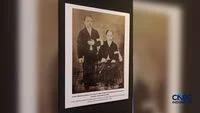
The Brutal Fate of Pieter Erberveld: How a Colonial Betrayal Forged the Dark History of Kampung Pecah Kulit and VOC Justice in Batavia


The imposition of capital punishment for acts of treason is not a modern legal novelty, nor is it a phenomenon exclusive to contemporary jurisprudence. Centuries ago, foreign and domestic potentates ruling the sprawling archipelago of Nusantara exercised absolute authority, swiftly and ruthlessly dispensing death sentences to individuals accused of orchestrating rebellions against established regimes. Among the most gruesome and enduring examples of this draconian brand of colonial justice is the execution of Pieter Erberveld, a Eurasian entrepreneur whose plot to overthrow the Dutch East India Company, universally known as the Vereenigde Oostindische Compagnie (VOC), ended in unimaginable horror in the heart of Batavia, the administrative capital of the Dutch East Indies, now modern-day Jakarta.
This historical account forms a critical chapter of CNBC Insight, an editorial rubric dedicated to examining historical narratives to illuminate contemporary conditions through their undeniable relevance in the past. The execution of Erberveld in 1722 remains etched in the collective memory of the city, not merely as a footnote of colonial cruelty, but as a chilling testament to the lengths to which mercantile corporations-turned-empire-builders would go to protect their monopolistic interests against internal subversion and native resistance.
The Rise and Fall of a Batavia Entrepreneur
Long before his name became synonymous with one of the most brutal executions in colonial history, Pieter Erberveld was recognized as a moderately successful merchant navigating the complex socio-economic landscape of early 18th-century Batavia. Born to a European father and a Javanese mother—placing him in the socially ambiguous yet economically active Eurasian demographic of the city—Erberveld carved out a niche for himself in the local commercial sector.
Historical records indicate that Erberveld built his enterprise primarily in the leather industry, eventually establishing a shoe manufacturing operation that catered to the growing urban population of Batavia. Through astute business acumen and relentless enterprise, his wealth steadily accumulated. Over the years, Erberveld expanded his portfolio far beyond manufacturing, acquiring substantial real estate holdings throughout Batavia and its surrounding peripheries. By the early 1700s, he stood as a man of property, influence, and relative security within the colonial hierarchy.
However, this hard-won stability proved ephemeral. The shifting policies and aggressive land acquisition strategies of the VOC soon directly threatened Erberveld’s burgeoning empire. In 1708, in a move characteristic of the corporation’s heavy-handed governance, the VOC confiscated a significant portion of Erberveld’s landed properties. This expropriation was not an isolated incident; the VOC routinely manipulated land titles, legal frameworks, and administrative decrees to consolidate economic control over Batavia and displace independent landowners who posed a challenge to corporate hegemony.
According to historical analyses, notably documented in the 2015 publication Zaman Perang: Orang Biasa dalam Sejarah Luar Biasa (Times of War: Ordinary People in Extraordinary History), this pivotal confiscation served as the primary catalyst for Erberveld’s profound resentment. Stripped of his land and deeply aggrieved by the arbitrary power of the Dutch merchant-rulers, Erberveld transitioned from a compliant colonial subject into a bitter opponent of the regime. The personal financial loss metastasized into a broader political grievance, ultimately setting the stage for a conspiracy designed to dismantle the VOC’s stranglehold on power through force of arms.
Anatomy of a Conspiracy: The Alliance with Banten
Driven by an intense desire for retribution and the restoration of his status, Erberveld began plotting the overthrow of the colonial administration. Recognizing that economic resistance was futile against a corporate entity backed by naval power and professional garrisons, he turned toward military insurrection.
To turn his vision of rebellion into reality, Erberveld forged a strategic alliance with Raden Ateng Kartadria, a prominent aristocrat from the neighboring Sultanate of Banten. Banten had long maintained a complex, often antagonistic relationship with the VOC, characterized by shifting trade treaties, territorial disputes, and proxy conflicts. Raden Ateng Kartadria brought to the conspiracy what Erberveld lacked: noble lineage, political legitimacy among indigenous populations, and access to a ready supply of loyal fighters.
The conspirators moved beyond mere expressions of discontent. They meticulously orchestrated a clandestine movement aimed at launching a coordinated uprising within Batavia. Erberveld’s sprawling residential compound in the city was transformed into a secure command center, doubling as an armory where weapons, ammunition, and supplies were quietly stockpiled.
The ambition of the plotters extended far beyond a localized riot; they envisioned a complete restructuring of political power in the region. In the event of a successful overthrow, a provisional government structure was already drafted. Erberveld, leveraging his financial acumen and Eurasian background, was slated to assume the position of governor of Batavia, effectively replacing the VOC’s Governor-General. Meanwhile, Raden Ateng Kartadria was designated to take on the role of patih, or chief minister, securing traditional aristocratic authority within the new administrative framework.
The Betrayal and the Collapse of the Plot
Despite the meticulous planning and the absolute secrecy maintained by the inner circle, the conspiracy harbored a fatal vulnerability common to many historical rebellions: reliance on enslaved labor within a rigidly stratified and coercive social order.
The turning point of the conspiracy occurred when an enslaved individual owned by Erberveld uncovered the dangerous nature of the discussions and military preparations unfolding within his master’s household. Recognizing both the immense peril and the potential leverage offered by such intelligence, the slave chose to breach his bond of servitude. He leaked comprehensive information regarding the planned insurrection directly to the VOC authorities.
By December 31, 1722, the high command of the VOC was fully cognizant of the existential threat brewing within their capital. Acting with characteristic speed and ruthlessness, the colonial administration initiated a sweeping counter-intelligence and military operation.
Security forces launched a surprise raid on Erberveld’s compound and associated safehouses. Pieter Erberveld and his primary co-conspirators were swiftly apprehended before the uprising could be set into motion. The crackdown was merciless; contemporary records indicate that approximately 23 individuals suspected of direct involvement in the plot lost their lives during the initial raids, skirmishes, and subsequent containment operations.
Those who survived the initial arrests were subjected to immediate incarceration, where they faced interrogation designed to extract confessions and uncover any remaining nodes of the rebellion. The legal process that followed was conducted entirely within the framework of the colonial judiciary—a system designed not to dispense impartial justice, but to reinforce absolute corporate dominance through public terror.
As detailed in the 2016 publication Kisah-Kisah Edan Seputar Djakarta Tempo Doeloe, the prisoners endured systematic torture while confined in the dungeons of Batavia. "In the detention cells, they were cruelly tortured by Dutch soldiers. Then they were tried in a colonial-fabricated court and eventually handed down horrifying sentences," the text notes.
A Spectacle of Terror: The Execution of 1723
The culmination of the trial set the stage for one of the most grotesque public spectacles in the history of the Dutch East India Company. According to historian Alwi Shahab in his seminal work Betawi: Queen of The East (2002), the execution of Pieter Erberveld and his key supporters was deliberately designed to transcend simple capital punishment; it was intended as an enduring psychological weapon aimed at deterring any future thoughts of sedition among the diverse populace of Batavia.
The method of execution chosen by the VOC was the brutal practice of quartering by four horses, a form of capital punishment reserved exclusively for high treason against the state. On the scaffold, the condemned men were securely bound by their limbs to heavy wooden beams shaped like crosses. Each limb was then tethered via stout ropes to four separate horses, each directed to pull in opposite, divergent directions.
Upon a given signal, the horses were driven forward simultaneously. The immense tension generated by the four-way pull tore the bodies of the convicts apart, resulting in instantaneous dismemberment.
Even this catastrophic trauma was not deemed sufficient by the executioners. The suffering of the victims was systematically prolonged: historical accounts confirm that the mutilated bodies were repeatedly slashed and punctured with sharp weapons by executioners to ensure death was agonizingly slow. Following their demise, the remains were not granted traditional burial rites. Instead, the dismembered body parts were left exposed to the elements, suspended or laid out in public view until scavenging birds consumed the flesh, leaving behind bleached bones as a stark warning to all who passed.
The Legacy of Kampung Pecah Kulit
The VOC recognized the psychological power of physical monuments in cementing their absolute sovereignty. To ensure that the treason of Pieter Erberveld would never be forgotten—and that his fate would serve as a permanent deterrent—the colonial government erected a special monument at the site of his former estate.
The structure consisted of a stone monument measuring approximately one by two meters, topped by a macabre centerpiece: the actual skull of Pieter Erberveld, pierced through with an iron spike. Affixed to the monument was a plaque inscribed in Dutch, Javanese, and Malay, explicitly warning the populace against the perils of treason and rebellion against the VOC.
Though the original monument and skull were eventually removed by subsequent municipal authorities in the 19th century as urban development reshaped Batavia, the historical resonance of the event proved indestructible. The gruesome memory of Erberveld’s execution—specifically the tearing apart of his skin and body—permanently stamped the local geography. To this day, the area in North Jakarta where these harrowing events transpired is known as Kampung Pecah Kulit, literally translating to "Skin-Tearing Village," preserving the dark legacy of colonial justice in the collective memory of the Indonesian capital.
Broader Implications and Historical Analysis
The conspiracy and execution of Pieter Erberveld offer profound insights into the structural dynamics of early modern colonial rule in Southeast Asia. The incident underscores several core characteristics of the VOC’s governance model during its peak operational century:
- Corporate Despotism: Unlike later state-run colonial administrations, the VOC was fundamentally a joint-stock mercantile corporation possessing sovereign rights. Its primary imperative was profit maximization and the protection of trade monopolies. Consequently, any challenge to its administrative monopoly was treated not merely as a criminal act, but as a direct assault on corporate assets, justifying extreme, disproportionate violence.
- Socio-Racial Stratification: Erberveld’s unique position as a Eurasian entrepreneur bridging European and indigenous spheres highlights the precarious nature of identity and loyalty in colonial Batavia. The harsh punishment meted out to him served to reinforce the strict racial and social hierarchies mandated by the Dutch, discouraging cross-cultural alliances that could threaten European supremacy.
- The Weaponization of Spectacle: Public executions in Batavia were carefully choreographed political theater. By subjecting high-profile traitors to extreme forms of corporal destruction, the VOC sought to project omnipotence in an environment where Dutch personnel were vastly outnumbered by indigenous populations, enslaved laborers, and foreign merchants.
Ultimately, the tale of Pieter Erberveld transcends local folklore. It stands as a grim historical marker of the human cost exacted by mercantile imperialism, illustrating how ruthless displays of state power were utilized to forge and maintain colonial order in the archipelago—a legacy that continues to be studied by historians seeking to understand the deep roots of modern governance and resistance in Southeast Asia.