When Foreign Airlines and Cold War Espionage Endangered Indonesia First President

Long before the Republic of Indonesia possessed its own dedicated long-range presidential aircraft capable of navigating the complex geopolitics of the mid-20th century, the nation’s founding father, President Sukarno, relied on chartered commercial airliners for international state visits. This operational necessity, born from the economic constraints and logistical limitations of a young post-independence nation, exposed the Indonesian government to severe national security vulnerabilities. During the height of the Cold War, the routine leasing of aircraft from Western commercial carriers transformed the Indonesian presidency into a high-value target for foreign intelligence agencies. Historical records, declassified documents, and memoirs from those closest to the Indonesian leader reveal that these chartered flights were systematically compromised, turning executive air travel into a covert theater for espionage, surveillance, and psychological warfare orchestrated by the United States Central Intelligence Agency.
The Main Facts of Presidential Charter Operations in the Early Republic
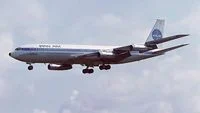
In the foundational years of the Indonesian republic, maintaining an independent fleet of long-range presidential transport was financially and technologically prohibitive. Consequently, the Indonesian state frequently turned to foreign commercial aviation giants to facilitate bilateral diplomacy abroad. According to historical accounts, the administration predominantly utilized the services of Pan American World Airways, commonly known as Pan Am.
Operating under standard commercial agreements, the Indonesian government allocated substantial financial resources—estimated between $300,000 and $400,000 annually—to secure these charter flights. These funds covered not only the physical aircraft but also the provision of complete flight crews, maintenance personnel, and logistical support. While the arrangement ensured that President Sukarno and his diplomatic delegations could travel globally to project Indonesia’s growing influence on the international stage, it created a profound structural risk. By embedding foreign civilian personnel within the inner circle of the Indonesian head of state, the administration inadvertently granted foreign entities unhindered physical access to the nation’s highest-ranking official.
Chronology of Cold War Infiltration and Pan Am Collaboration
The vulnerability of Indonesia’s chartered air transport did not go unnoticed by Western intelligence services. The chronology of this intelligence operation traces back to the late 1950s and early 1960s, a period marked by escalating diplomatic tensions between Jakarta and Washington. President Sukarno’s independent foreign policy, his vocal anti-imperialist rhetoric, the formation of the Non-Aligned Movement, and his increasing willingness to cooperate with the Indonesian Communist Party caused deep alarm within the Eisenhower and Kennedy administrations.
By the early 1960s, the CIA had intensified its covert operations aimed at curbing Sukarno’s influence or engineering his political downfall. Aviation history and intelligence archives indicate that Pan Am was uniquely positioned to assist in these endeavors due to the close institutional ties between the airline’s corporate leadership and the U.S. intelligence apparatus. Samuel Pryor, the vice president of Pan Am, served as a primary liaison between the commercial carrier and the CIA, facilitating intelligence operations disguised as routine commercial aviation activities.
During this critical window, specific aircraft chartered by the Indonesian government for Sukarno’s international state visits were systematically intercepted during routine maintenance or pre-flight staging. Intelligence operatives installed sophisticated electronic eavesdropping equipment within the cabins and communication systems used by the Indonesian delegation. Furthermore, the standard flight crews assigned to Sukarno’s charters were occasionally vetted, supplemented, or replaced by individuals maintaining clandestine relationships with American intelligence.
Supporting Data and Declassified Intelligence Revelations
The mechanics of these espionage operations have come to light decades later through declassified government documents, investigative journalism, and historical literature. Author Scott Van Wynsberghe, writing in the National Post, detailed how the structural integration of Pan Am into U.S. foreign intelligence frameworks made the airline an ideal vehicle for clandestine surveillance. The cooperation between corporate aviation and state intelligence was systematic rather than incidental.
Further elaboration on the scope of these operations appears in Tim Weiner’s seminal work, Legacy of Ashes: The History of the CIA. Weiner documents that the intelligence-gathering mission extended far beyond electronic wiretaps and audio surveillance of diplomatic discussions. In one instance, a Pan Am flight crew member on the payroll of the CIA was tasked with extracting biological intelligence. Peter Sichel, the head of the CIA station in Hong Kong, coordinated an operation where the compromised flight crew obtained a biological sample of President Sukarno during a transit. This sample was subsequently smuggled out for medical analysis in an attempt by Western intelligence to assess the aging leader’s physical health and stamina, providing predictive data for geopolitical contingency planning.
Official Responses and Diplomatic Context
During the era in question, the government of Indonesia operated under the banner of Guided Democracy, facing severe domestic economic turmoil, hyperinflation, and immense geopolitical pressure. The administration’s official public focus remained fixed on consolidating national identity, reclaiming Western New Guinea (Irian Barat), and positioning Indonesia as a leading voice of the Post-Colonial Global South through the 1955 Bandung Conference and the creation of the Non-Aligned Movement.
Internally, the security apparatus surrounding President Sukarno struggled to balance the operational necessity of foreign travel with the abstract threats of foreign subversion. Bambang Widjanarko, a key military aide to Sukarno, documented in his memoir Sewindu dekat Bung Karno (1988) that the president genuinely enjoyed the high standard of service provided by the Pan Am crews, remaining largely oblivious to the sophisticated espionage apparatus operating quietly in the background of his official journeys.
While formal diplomatic protests regarding specific covert interventions were difficult to substantiate publicly at the time—given the clandestine nature of the operations—the Indonesian state’s underlying distrust of Western powers ultimately manifested in Sukarno’s famous "Go to hell with your aid" speech in 1964 and a decisive severing of ties with Western financial institutions. The systemic exposure of Indonesian state secrets via compromised logistics underscored the perilous reality of depending on foreign infrastructure for sovereign statecraft.
Broader Impact and Long-Term Implications
The historical episode of Pan Am’s complicity in CIA surveillance of the Indonesian presidency holds profound implications for modern international relations, national security architecture, and aviation sovereignty.
First, the incident established a critical historical precedent regarding the intersection of commercial enterprise and national security. It demonstrated that critical infrastructure, including civilian aviation and logistics networks, can be co-opted by state intelligence apparatuses during periods of geopolitical competition. For developing nations, the lesson was stark: true political sovereignty is incomplete without logistical and infrastructural independence. Relying on foreign assets for executive transport introduces a vector for espionage that can compromise high-level state decision-making, national defense strategies, and diplomatic leverage.
Second, the fallout from this era fundamentally transformed how modern Indonesian administrations handle presidential logistics. Contemporary Indonesian heads of state travel aboard dedicated, state-owned, and state-secured aircraft managed directly by the Indonesian Air Force and equipped with advanced, sovereign secure communication systems. This evolution reflects a direct institutional learning curve derived from the vulnerabilities exposed during the early republic.
Ultimately, the covert wiretapping and biological surveillance of President Sukarno aboard commercial charter flights serve as a compelling case study in the dark arts of Cold War intelligence. It illustrates how the vast asymmetry of power between a developing post-colonial state and an entrenched global superpower manifested not only on the battlefield or at the negotiating table, but inside the very cabins where presidents planned the future of their nations.