The Hidden Hand of Javanese Mysticism: How a Spiritual Mentor Shaped the Destiny of President Suharto

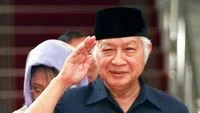
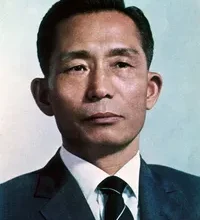
The influence of a mentor often extends far beyond the traditional confines of a classroom, occasionally shaping the trajectory of nations rather than merely guiding individual students. Throughout history, political leaders have frequently sought counsel from philosophers, advisors, and spiritual guides before making monumental decisions. In the case of Indonesia’s second president, General Suharto, his political longevity and rise to absolute power were intimately connected to his deep adherence to Javanese mysticism and the private guidance of his spiritual teacher, Raden Panji Soediyat Prawirokoesoemo, widely known as Rama Diyat or Romo Lengkung.
Behind a formidable military career characterized by calculated moves and ruthless pragmatism lay a deeply superstitious leader who relied heavily on esoteric consultations. The relationship between Suharto and Rama Diyat illustrates a fascinating intersection of Indonesian political history, traditional Javanese culture, and military ambition during the turbulent era of the mid-20th century.
Main Facts and the Origins of a Powerful Bond
The connection between Suharto and Rama Diyat began long before the general assumed the presidency in 1967. Rama Diyat was not a traditional academic or a career politician; he was a former military captain who had actively participated in Indonesia’s War of Independence against Dutch colonial forces. However, in 1950, following the formal recognition of Indonesian sovereignty, Diyat chose to leave the armed forces to pursue a life dedicated to kejawen (Javanese mysticism) and esoteric philosophy.
Operating out of Central Java, Diyat quickly gained a reputation as a master of mysticism, attracting a large following of disciples. Among these students was Suharto, then a rising mid-level military officer navigating the complex and factionalized landscape of the newly formed Indonesian National Armed Forces (TNI).
Historical accounts, such as those found in Ahmad Moestahal’s memoir Dari Gontor ke Pulau Buru: Memoar H. Achmadi Moestahal (2002), highlight how Diyat transitioned from a fellow soldier into a revered spiritual advisor. For Suharto, who had grown up immersed in traditional Javanese cultural values in rural Central Java, turning to spiritual mentors for life decisions was a natural extension of his worldview. This reliance on mysticism was established early in his life; his autobiography, Pikiran, Ucapan, dan Tindakan Saya (1989), details how he sought out spiritual teachers and healers, such as Kyai Darjatmo, during his youth and early military career in the 1950s to seek prognostications and guidance during personal crises.
The Near-Resignation of 1965: A Turning Point in Indonesian History
The most critical intervention by Rama Diyat in Suharto’s life occurred at the precipice of national history in mid-1965. At this juncture, Suharto’s military career had reached a demoralizing stagnation. Despite being a senior general, he felt sidelined, overshadowed by contemporaries, and alienated from the inner circle of Army Commander Lieutenant General Ahmad Yani. Observers and historians, including Jusuf Wanandi in his political memoir Shades of Grey: A Political Memoir of Modern Indonesia (2012), noted that Suharto suffered from perceived disadvantages, including a more localized background, limited foreign language proficiency, and a reserved demeanor that distanced him from the elite, cosmopolitan faction within the military high command.
The frustration peaked during the Indonesia-Malaysia Confrontation (Konfrontasi) in 1963, when Suharto found himself placed under the operational command of Air Vice Marshal Omar Dhani—a military junior—further aggravating his sense of professional irrelevance. Despondent and convinced that his career had hit an insurmountable ceiling, Suharto made the momentous decision to resign from the military. He reportedly drafted a formal letter of resignation.
However, this critical document caught the attention of Soedjono Hoemardani, a trusted confidant and subordinate who also shared a connection to Rama Diyat. Recognizing the gravity of the moment, Soedjono intervened, urging Suharto to abandon his resignation plans. Soedjono reminded Suharto of the prophecy previously delivered by Rama Diyat during earlier consultations: that Suharto was destined for greatness and must patiently endure his trials because a massive historical role awaited him.
Persuaded by the spiritual weight of Diyat’s prophecy, Suharto shelved his resignation letter. Just months later, on October 1, 1965, the tumultuous events of the 30 September Movement (G30S) unfolded. The assassination of key army generals created a sudden power vacuum. Suharto, acting swiftly and decisively, seized operational control of the army, outmanoeuvred his political rivals, and systematically dismantled the influence of the Indonesian Communist Party (PKI). This pivotal juncture propelled him to the pinnacle of power, eventually leading to his ascension as Indonesia’s second president, effectively fulfilling the mystical prediction.
Chronology of Influence: From Mystic to Presidential Advisor
The timeline of Rama Diyat’s relationship with Suharto spans decades, evolving alongside the general’s rise through the political hierarchy:
- 1950: Rama Diyat retires from the military rank of Captain to teach Javanese mysticism, attracting Suharto into his circle of disciples.
- 1950s–1960s: Suharto regularly consults both Kyai Darjatmo and Rama Diyat for personal and professional guidance, integrating mysticism with his military duties.
- Mid-1965: Facing career stagnation and feeling marginalized under Ahmad Yani’s command during the Konfrontasi, Suharto drafts a military resignation letter.
- Mid-1965 (Later): Soedjono Hoemardani intervenes, invoking Rama Diyat’s prophecy of future greatness to convince Suharto to tear up the resignation letter.
- October 1965: The G30S incident occurs. Suharto takes charge of the military situation, initiating his ascent to national leadership.
- Post-1967: Following his formal inauguration as President, Suharto officially appoints Rama Diyat as his spiritual advisor (Spri or Penasihat Spiritual), granting him the honorary rank of Brigadier General.
- 1970s: Rama Diyat resides in a heavily guarded residence on Jalan Sriwijaya, Jakarta, complete with military escorts, while continuing to direct mystical rituals, such as those at Jambe Pitu on Mount Selok along Java’s southern coast, as documented by historian M.C. Ricklefs.
Institutionalizing Mysticism: Official Recognition and Security
Following Suharto’s consolidation of power, Rama Diyat’s status shifted from a clandestine mentor to an institutionalized figure within the inner circles of the New Order regime. According to historical accounts, Diyat was formally designated as a Presidential Spiritual Advisor and bestowed with an honorary military rank of Brigadier General.
This appointment underscored the syncretic nature of Indonesian political power during the New Order era, where modern bureaucratic and military structures coexisted with traditional Javanese spiritual practices. Diyat, frequently referred to as Romo Lengkung, maintained a discreet yet profoundly influential presence.
Physical evidence of his elevated status was unmistakable to those in the capital. Former Supreme Court Justice Adi Andojo Soetjipto, recounting his experiences in his 2007 memoir Menyongsong dan Tunaikan Tugas Negara Sampai Akhir, Sebuah Memoar, noted that during the 1970s, he lived as a neighbor to Rama Diyat on Jalan Sriwijaya in Jakarta. Soetjipto observed that the property was continuously guarded by military vehicles and personnel, signaling the high-level state protection afforded to the president’s mystic advisor.
Furthermore, academic research highlights the geographical and ritualistic extent of Diyat’s influence. Noted historian M.C. Ricklefs, in his authoritative work Mengislamkan Jawa (2013), details how Rama Diyat frequently led esoteric rituals at Jambe Pitu, located on Mount Selok near the southern coast of Java—a region historically significant in Javanese mythology as the domain of Kanjeng Ratu Kidul, the Queen of the Southern Sea. While historical records do not definitively confirm whether Suharto physically attended every ceremony or dispatched representatives on his behalf, the state facilitation of these rituals underscores the profound integration of traditional mysticism into the governance of the world’s most populous Muslim-majority nation.
Broader Impact and Analytical Implications
The reliance of a modern head of state on spiritual advisors like Rama Diyat provides critical insight into the political culture of the New Order regime. Far from being an isolated personal quirk, Suharto’s engagement with kejawen reflects a broader pattern among Indonesian political elites who utilized traditional sources of legitimacy to complement modern legal-rational authority.
In traditional Javanese political thought, power (wahyu or pulung) is viewed as a concrete, divine energy that descends upon an individual, marking them as a legitimate ruler. By maintaining close ties with revered spiritual masters who purportedly understood the cosmic order, Suharto reinforced his perception among the populace as a leader blessed with divine mandate. This cultural framing helped insulate his regime against political dissent, as opposition was often interpreted not merely as a disagreement over policy, but as a disruption of cosmic harmony.
At the same time, the reliance on secret advisors created an opaque layer of governance. Decisions of profound national importance were frequently influenced by private esoteric consultations rather than transparent institutional deliberation. This dynamic concentrated power heavily within Suharto’s inner circle—dominated by loyalists like Soedjono Hoemardani—who managed the intersection between state administration and spiritual patronage.
Ultimately, the story of President Suharto and Rama Diyat transcends political gossip. It serves as an essential historical reminder that the architecture of modern power in Indonesia cannot be fully understood through Western political paradigms alone. The unseen currents of Javanese mysticism, channeled through figures like Rama Diyat at critical moments such as the crisis of 1965, played a decisive role in shaping the destiny of the archipelago for over three decades.