The Chemical Engineering of Pour Over and Immersion Coffee: Deconstructing Extraction, Equipment Design, and the Pursuit of the Ideal Brew

The pursuit of the optimal cup of coffee remains one of the most enduring challenges in culinary science, merging fluid dynamics, thermodynamics, and organic chemistry. While casual coffee drinkers often view brewing as a straightforward morning routine, food scientists and specialty coffee professionals understand it as a complex chemical extraction process. Every single compound present in roasted coffee possesses a unique solubility rate and extraction profile. Rather than yielding a uniform solution, a successful extraction relies on orchestrating a delicate imbalance of chemical compounds to achieve an optimal sensory experience.
Understanding the chemical realities of coffee extraction requires a departure from the colloquial pursuit of an "even extraction." From a biochemical perspective, maximizing flavor requires an uneven extraction where individual compounds dissolve at varying rates. If every compound extracted at an identical rate, the resulting beverage would lack the dynamic complexity and acidity that define specialty coffee. While grinding coffee beans to ultra-fine particles and boiling them indefinitely—akin to a traditional Turkish preparation—yields a high extraction yield approaching 30 percent, it often introduces harsh, undesirable flavors. Consequently, modern specialty brewing techniques focus on selective extraction, favoring percolation methods such as pour-over systems to control precisely which compounds enter the final cup.
The Fluid Dynamics and Hidden Complexities of Percolation
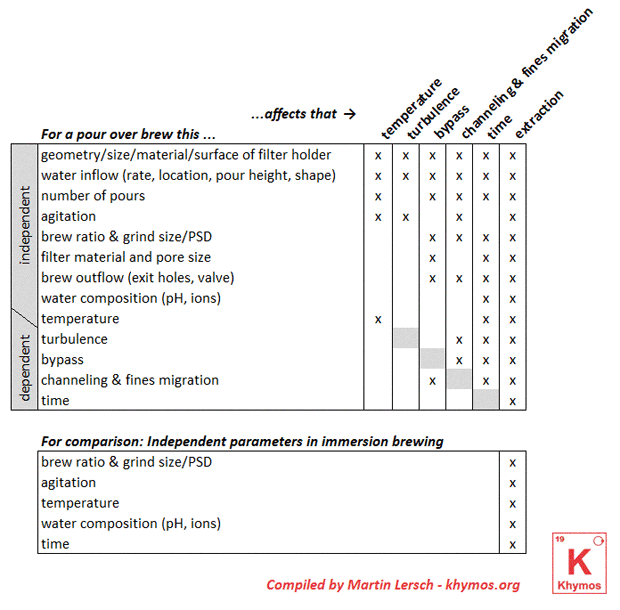
Pour-over brewing appears deceptively simple: hot water passes through a bed of ground coffee, driven by gravity through a paper or metal filter. However, this method introduces a staggering array of independent and dependent variables. Core parameters such as brew ratio, particle size distribution, water temperature, mineral composition, filter material, and pour velocity interact in complex ways. Furthermore, many of these variables are directly correlated, creating cascading effects throughout the brewing cycle.
Consider the role of particle size distribution. Finer grinds increase the total surface area available for extraction, which initially enhances flavor yield. However, finer particles also pack more densely, severely restricting water flow and increasing contact time. This prolonged contact introduces a significant risk of filter clogging and channel formation. Because water naturally follows the path of least resistance—a phenomenon often summarized by the principle that "water is lazy"—a choked coffee bed forces liquid to bypass the coffee entirely, trickling down the sides of the filter without extracting solubles. This uncontrolled bypass dilutes the brew and introduces random variations, ultimately giving rise to widespread coffee preparation myths and irreproducible home recipes.
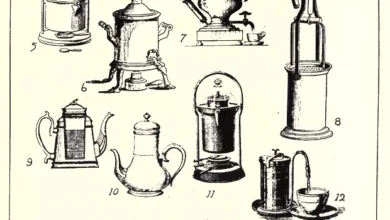
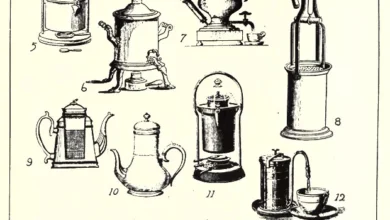
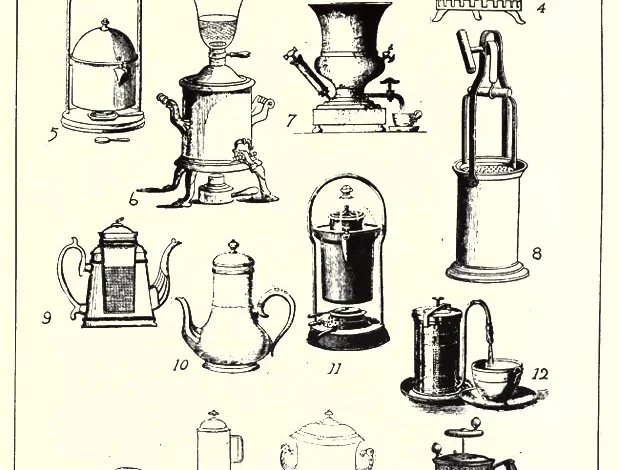
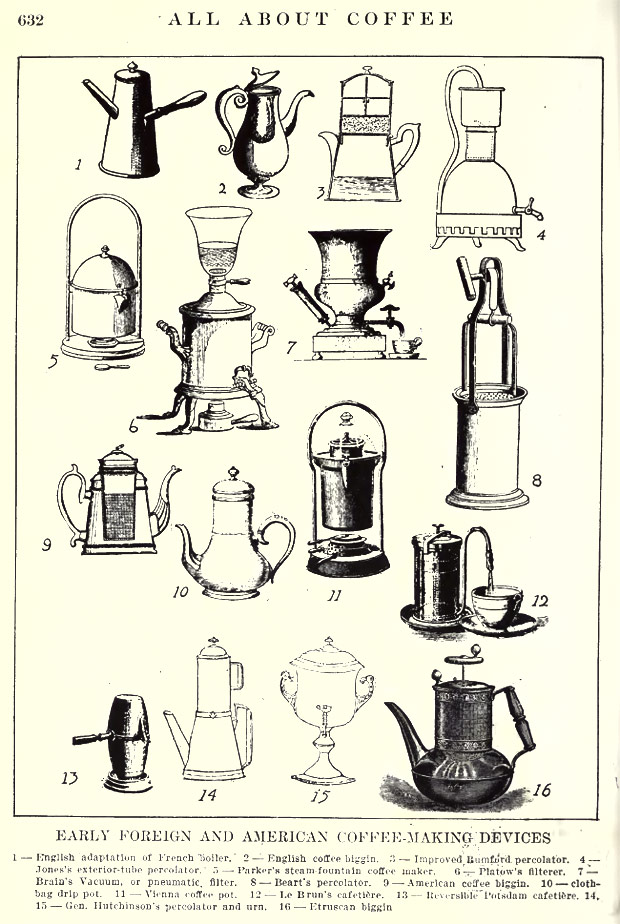
To combat these challenges, equipment designers have spent decades reimagining the geometry of drip coffee makers. Historical archives, including illustrations from William H. Ukers’ seminal 1922 publication All About Coffee, demonstrate that inventors have spent more than a century attempting to solve the fundamental mechanical flaws of percolation. Modern equipment manufacturers continue this legacy, introducing specialized drippers designed to manipulate material insulation, thermal mass, internal wall geometry, and bypass ratios.
Comparative Analysis of Brewing Hardware and Material Science
The hardware market features an extensive array of devices engineered to address the physical limitations of manual brewing. Selecting a filter holder involves balancing multiple thermodynamic and hydrodynamic factors:
- Material and Thermal Stability: Maintaining a stable water temperature throughout the extraction process is critical. While metal conducts heat rapidly—making single-walled metal cones prone to thermal loss—vacuum-insulated metal drippers or high-thermal-mass ceramic and heavy plastic holders help retain optimal brewing temperatures. Plastic and ceramic alternatives offer an ideal balance of cost, thermal retention, and structural durability.
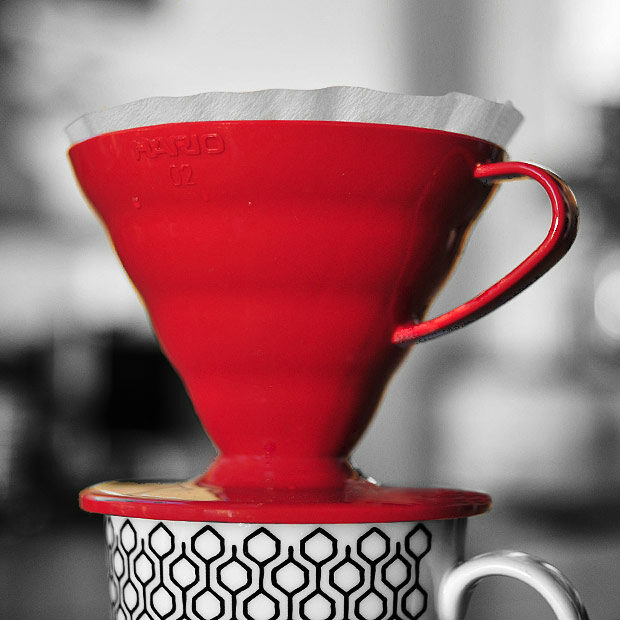
- Geometry and Bed Depth: Cone-shaped drippers, such as the ubiquitous Hario V60, create a deep, narrow coffee bed that encourages extended water-to-coffee contact. Conversely, flat-bottomed brewers, such as the Kalita Wave, utilize a flat bed that promotes a faster flow rate, though they remain susceptible to localized channeling if water distribution is uneven.
- Surface Interaction and Bypass Control: Smooth-walled glass vessels, such as the classic Chemex, allow wet filter paper to cling directly to the interior surface. While this eliminates side-wall bypass entirely, it can restrict flow. To counter this, most modern drippers incorporate internal ribs, fluted walls, or specialized paper filters (like W-folded designs) to maintain interstitial airflow and prevent a complete vacuum seal.
- Flow and Valve Regulation: Advanced hybrid brewers incorporate mechanical shut-off valves, allowing baristas to execute an initial immersion phase followed by a controlled drawdown percolation phase. This capability decouples grind size from contact time, providing unprecedented control over total dissolved solids and extraction yields.
Despite these innovations, percolation methods remain vulnerable to operator error and unpredictable channeling. For consumers and professionals prioritizing consistency and repeatability, the industry frequently turns toward an alternative physical mechanism: immersion brewing.
The Robust Alternative: Immersion Brewing and Scientific Standardization
Immersion brewing—exemplified by the French Press, traditional vacuum pots, and the steep-and-release Clever Dripper—offers a stark contrast to the fluid-dynamic volatility of pour-over systems. From a chemical engineering standpoint, immersion brewing is a robust, highly repeatable process. Because all brewing water is introduced simultaneously and coffee grounds steep for a predetermined duration, recipes can be replicated across different operators with minimal variance.
In an immersion system, extraction progresses until the chemical concentration approaches equilibrium between the liquid and the solid coffee grounds. Because extraction temperatures naturally decline below 90 degrees Celsius during the steeping period, immersion extraction remains inherently selective, albeit less prone to catastrophic channeling than percolation.
However, immersion techniques introduce their own sensory trade-offs. Traditional immersion devices that rely on metal mesh filters—most notably the standard French Press—permit a high concentration of microscopic insoluble particles, known as "fines," to pass into the final beverage. While these suspended solids contribute significant body, tactile weight, and mouthfeel, they also introduce residual bitterness and leave a noticeable sediment at the bottom of the cup. Introducing a paper micro-filter to an immersion setup successfully strips away these fines and excess oils, yielding a cleaner cup profile, though some critics argue the resulting beverage can taste somewhat muted compared to its unfiltered counterpart.
Broader Implications and the Future of Extraction Technology
The ongoing evolution of coffee brewing equipment highlights a central tension in modern gastronomy: the balance between artisanal control and scientific reproducibility. While pour-over systems provide deep customization at the expense of high variability, immersion methods trade micro-adjustments for steadfast consistency.
As coffee researchers and equipment manufacturers continue to deconstruct the physics of fluid flow, thermal dynamics, and solute extraction, the industry moves steadily toward hardware designed to eliminate unintended variables. Whether through advanced valve-controlled drippers, uniform particle-sorting grinders, or precision water-distribution showerheads, the ultimate objective remains unchanged: decoding the complex chemistry of the coffee bean to deliver an optimal, repeatable, and scientifically sound sensory experience.