Spring Pea Panna Cotta Salad: A Modernist Approach to Seasonal Gastronomy

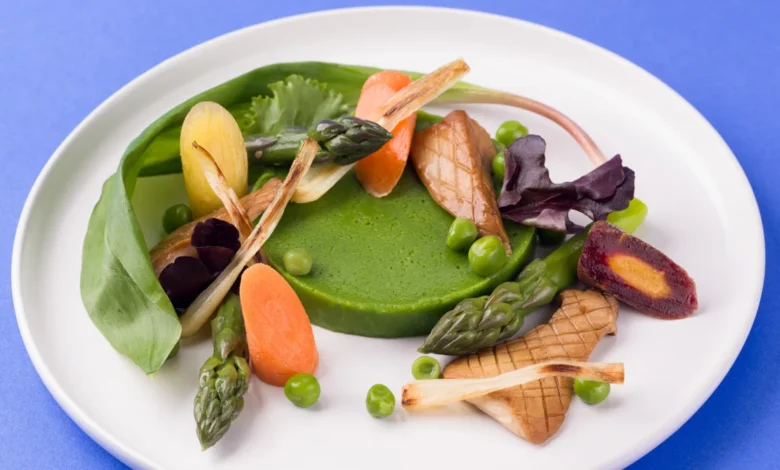
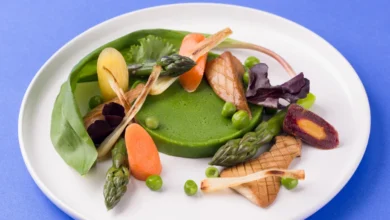
The evolution of modern culinary arts has increasingly favored the integration of traditional techniques with unconventional ingredient profiles, a trend exemplified by the emergence of the Spring Pea Panna Cotta Salad. This dish represents a significant departure from standard salad preparation, moving away from leaf-based greens toward a structurally sophisticated, plant-based composition. By utilizing hydrocolloids and precise thermal processing, chefs are transforming the humble garden pea into a savory, silky centerpiece that challenges the conventional definition of a salad.
The Technical Evolution of Plant-Based Textures
The Panna Cotta, traditionally a dairy-based dessert originating from the Piedmont region of Northern Italy, relies on the gelatinization of cream and sugar. However, the contemporary iteration featured here transitions into the realm of vegan gastronomy. This transition is not merely a matter of ingredient substitution but a complex exercise in food chemistry. To achieve the requisite stability and mouthfeel without animal-derived gelatin, practitioners often employ refined stabilizers such as agar-agar, gellan gum, or carrageenan.
These ingredients allow the high water content of fresh spring peas to be suspended in a firm yet delicate matrix. The "Spring Pea" profile requires careful handling to preserve its vibrant chlorophyll content, which is susceptible to degradation at high temperatures. Modernist techniques, such as rapid chilling and pH balancing, are employed to ensure that the final product maintains a bright, verdant hue and a clean, herbaceous flavor profile.
Chronology of Modernist Culinary Trends
The rise of savory panna cotta in fine dining can be traced back to the late 20th century, as chefs began experimenting with the deconstruction of classic dishes. The timeline of this movement is categorized by three distinct phases:
- Experimental Phase (1990–2005): During this era, chefs in experimental kitchens, particularly in Spain and the United States, began exploring the use of hydrocolloids in savory applications. The focus was largely on the novelty of texture, with savory foams and gels appearing on tasting menus.
- Refinement Phase (2006–2018): As the "Molecular Gastronomy" movement matured, there was a pivot toward ingredient integrity. Chefs shifted away from the "science experiment" aesthetic, focusing instead on how these tools could enhance the natural essence of seasonal produce.
- Sustainable Integration Phase (2019–Present): The current landscape emphasizes sustainability and plant-based innovation. The Spring Pea Panna Cotta serves as a direct result of this phase, utilizing the efficiency of plant-based thickeners to create dishes that are both environmentally conscious and aesthetically elevated.
Ingredient Composition and Culinary Methodology
The construction of this dish involves a two-stage process: the creation of the pea emulsion and the preparation of the accompanying seasonal accompaniments. The pea base is typically comprised of blanched peas, a stable fat source such as high-quality olive oil or nut milk, and the chosen hydrocolloid.
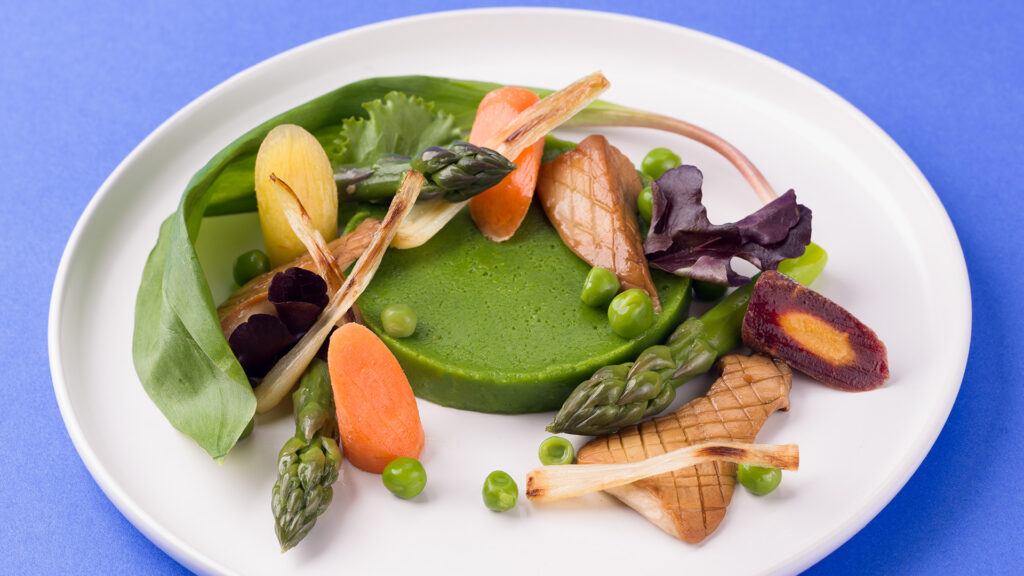
The preparation timeline is structured to prioritize texture over speed. While the active preparation time is estimated at approximately one hour, the total time required for the panna cotta to set—a crucial step for achieving the correct structural integrity—is six hours. This extended resting period allows for the complete hydration of the stabilizing agents and the settling of the flavor profile.
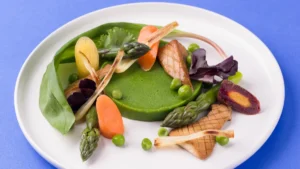
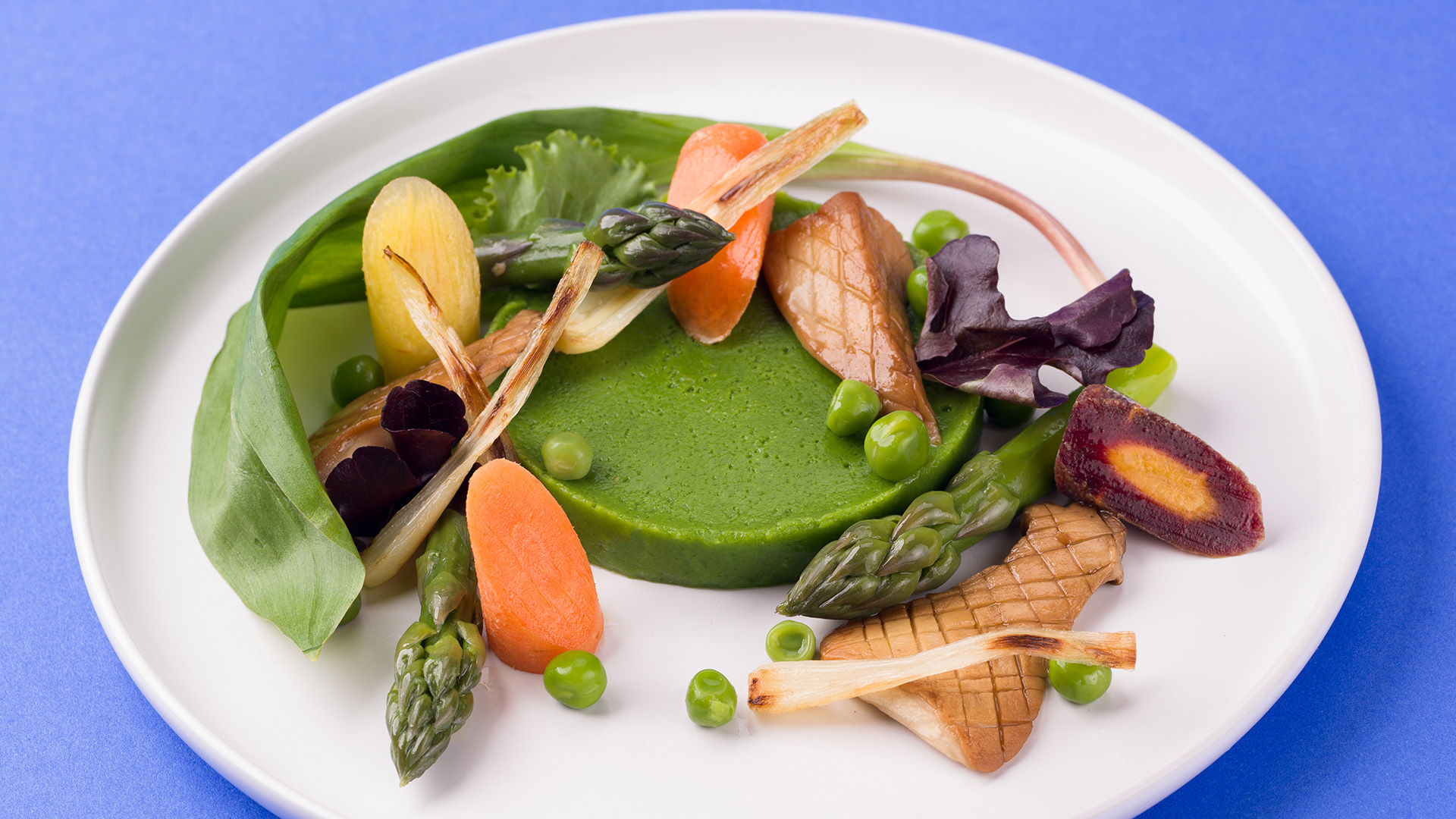
The accompanying elements are chosen for their contrast. By pairing the soft, cooling texture of the panna cotta with crisp components like wild mushrooms (often sautéed to enhance umami), shaved asparagus, and tender micro-herbs, the dish achieves a balanced sensory experience. The absence of traditional leafy greens does not detract from its status as a salad; rather, it highlights the nutritional density and textural variety of the vegetables involved.
Economic and Nutritional Implications
From a market perspective, the adoption of such dishes in high-end culinary establishments reflects a broader shift in consumer behavior. Data from recent industry reports indicate that demand for plant-forward, protein-rich, and chemically stable vegan options has increased by approximately 15% annually over the last five years.
Nutritionally, the Spring Pea Panna Cotta offers a unique profile. Peas are a significant source of plant-based protein, dietary fiber, and vitamins A, C, and K. When combined with the high-quality fats required for the emulsion, the dish provides a satiating experience that exceeds that of a traditional vinaigrette-dressed lettuce salad. Furthermore, the reliance on seasonal produce minimizes the carbon footprint associated with imported, out-of-season salad greens, aligning with the "farm-to-table" ethos that remains a pillar of modern restaurant management.
Official Perspectives and Industry Reception
Culinary experts note that the success of such dishes lies in the "clean" finish of the palate. "When you remove the distraction of heavy dressings and fibrous leaves, the actual flavor of the vegetable takes center stage," says a consultant for independent food laboratories. "The panna cotta format is, in essence, a delivery system for the pure, unadulterated essence of the pea."
The industry reception has been largely positive, with critics citing the dish as a testament to the versatility of modernist equipment in the home kitchen. By making these techniques accessible—through standardized measurements and clear equipment requirements—the barrier to entry for complex culinary techniques is significantly lowered.
Impact on Domestic and Professional Cooking
The implications of this recipe for the average home cook are significant. It demonstrates that the equipment once relegated to professional laboratories—immersion blenders, precision scales, and specialized hydrocolloids—is becoming standard in modern residential kitchens.
Furthermore, the "Spring Pea Panna Cotta Salad" serves as a case study for future culinary education. It moves the focus of training away from traditional knife skills alone and toward an understanding of ingredient chemistry. This interdisciplinary approach—combining biology, physics, and gastronomy—is likely to define the next decade of culinary development.
Broader Implications for Global Gastronomy
The movement toward "composed salads" that eschew traditional leaf bases represents a broader trend of challenging the "normative" structure of the meal. As global food systems face pressures from climate change and resource scarcity, the ability to create satisfying, nutrient-dense dishes from local, abundant ingredients like peas becomes an essential skill for the modern chef.
The Spring Pea Panna Cotta is not merely a recipe; it is a manifestation of the intersection between environmental necessity and technical advancement. By rethinking how we consume seasonal produce, the culinary industry is establishing a new paradigm—one that values the inherent qualities of the ingredient, the precision of the method, and the sustainability of the sourcing. As more restaurants and home cooks adopt these techniques, the definition of a "salad" will continue to expand, encompassing a wider array of textures, flavors, and creative possibilities that honor the seasonal cycle.
In conclusion, the meticulous preparation and conceptual depth of the Spring Pea Panna Cotta Salad highlight a sophisticated evolution in the culinary arts. Through the fusion of traditional techniques and modern scientific application, this dish provides a blueprint for the future of seasonal cooking—a future that is as sustainable as it is delicious.