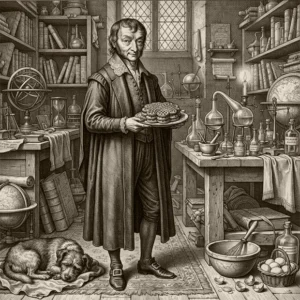
The 250th Anniversary of Amedeo Avogadro Inspires the Launch of a Parametric Waffle Generator Rooted in Food Science

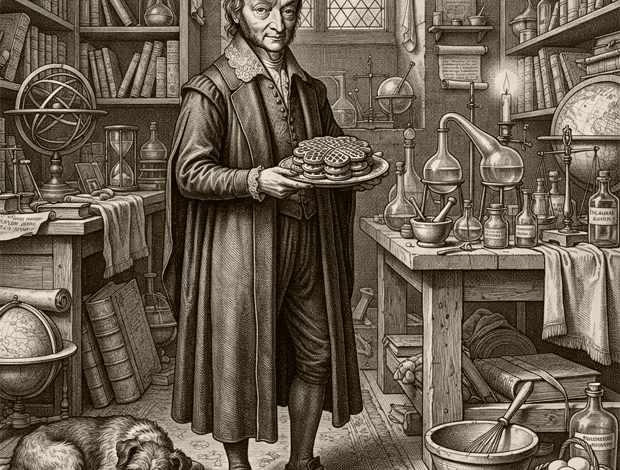
The culinary science community and chemical history enthusiasts alike are marking a unique milestone today with the launch of an innovative digital tool that merges molecular science with baking. Unveiled on August 9, 2026—the 250th anniversary of the birth of renowned Italian physicist and chemist Amedeo Avogadro—a new parametric waffle recipe generator promises to alter how home cooks and culinary scientists approach batter formulation.
Developed by food science platform Khymos, the application titled “Avogadro” eliminates traditional static recipe databases in favor of a dynamic, algorithm-driven calculation engine. Rather than retrieving pre-existing instructions, the tool computes custom waffle batters in real time based on user-selected ingredients and sliding scales of sensory properties such as sweetness, richness, and tanginess.
The launch represents the culmination of a project that began over a decade ago as a conceptual sketch, bridging the gap between historical scientific legacy and modern computational gastronomy.
The Evolution of a Decade-Long Culinary Project
The conceptual roots of the Avogadro generator stretch back to 2014, when the project’s creator first outlined dummy user interfaces and constructed a rudimentary spreadsheet model. For years, the initiative remained dormant, constrained by the technical limitations of translating qualitative culinary tacit knowledge into quantitative parameters.
The breakthrough arrived through the analysis of a comprehensive corpus of approximately 1,000 traditional waffle recipes, predominantly sourced from Norway and Scandinavia. Historical baking texts frequently omitted precise measurements, relying instead on qualitative instructions such as "add flour until the batter has the right consistency." This reliance on inherited, unwritten knowledge presented a fundamental research question for food scientists: What precisely constitutes a viable waffle batter, and at what structural threshold does a mixture cease to function as one?
Answering this question required shifting from fixed proportions to a parametric framework. Over the years, the initial spreadsheet designs evolved into a fully interactive web application featuring dual user interfaces: a simplified standard mode for novice bakers and an expert mode that grants access to a comprehensive ingredient list and eight distinct control sliders. The interface updates live, recalculating gram measurements and evaluating structural integrity with every adjustment made by the user.

Mathematical Scale and the Avogadro Constant
The name of the application pays homage to Amedeo Avogadro, born in Turin, Italy, on August 9, 1776. Avogadro is best celebrated for his foundational hypothesis proposed in 1811, which established that equal volumes of all gases, at the same temperature and pressure, contain the same number of molecules. This concept led to the definition of the mole and the establishment of Avogadro’s number ($6.02214076 times 10^23$), a fundamental constant in physical chemistry used to quantify microscopic entities like atoms and molecules.
In a deliberate nod to this scientific milestone, the mathematical architecture of the waffle generator spans an immense combinatorial scale. By multiplying the possible variations of ingredient selections and slider positions, the tool is calculated to yield approximately $10^27$ distinct control settings. When compared against Avogadro’s number, the application theoretically encompasses roughly 1,660 moles’ worth of unique waffle batter permutations.
Despite this astronomical figure, the developer notes important practical caveats regarding the output. While the control settings number in the septillions, rounding protocols and the pruning of trace ingredients mean that many distinct configurations resolve to functionally identical batters. Furthermore, certain parameter combinations yield structural profiles that fall outside the bounds of physical viability—a phenomenon flagged immediately by the application’s built-in "waffle heart quality indicator."
Structural Mechanics and Quality Indicators
The core utility of the Avogadro generator lies in its instant feedback mechanism. When users manipulate variables such as fat content, starch ratios, dairy types, and leavening agents, the application evaluates the physical plausibility of the mixture.
The interface features a diagnostic visual indicator shaped like a waffle heart, which serves a dual diagnostic purpose:
- It determines whether the computed batter possesses the rheological properties necessary to bake successfully in a standard iron.
- It measures how typical the resulting composition is compared to historical, commercial, and traditional Scandinavian waffle profiles.
Significantly, the developer emphasizes that an unconventional or "fringe" composition does not automatically equate to a culinary failure. Analysis of the foundational database revealed that several highly rated commercial waffle mixes maintain chemical compositions that sit surprisingly far outside traditional baseline averages. By allowing users to push beyond the boundaries of standard cookbooks, the platform opens pathways to experimental baking previously unexplored in domestic kitchens.
Implications for Computational Gastronomy
The introduction of the Avogadro generator highlights a growing trend within food science: the application of parametric modeling to domestic cooking. By treating traditional recipes as multi-dimensional data points rather than rigid instructions, creators can map the entire design space of a specific food item.

Culinary scientists note that tools of this nature provide valuable insight into the functional roles of core ingredients. For instance, shifting the ratio of liquid to starch alters viscosity and starch gelatinization during cooking, while adjustments to fats and sugars impact browning via Maillard reactions and caramelization. By quantifying these relationships, applications like Avogadro transform baking from an empirical art form into a predictable, reproducible science.
Industry observers have also drawn parallels between this project and broader developments in food technology, where artificial intelligence and algorithmic modeling are increasingly deployed to formulate novel food products, optimize nutritional profiles, and reduce kitchen waste through precise scaling.
Future Outlook and Community Engagement
As the Avogadro generator goes live to the global public, its creator has adopted an open-source ethos regarding its future refinement. Because testing $10^27$ individual batter combinations is physically impossible for a single researcher, the platform relies on crowd-sourced empirical feedback to correct edge cases where the algorithm might misinterpret structural physics.
Bakers, scientists, and cooking enthusiasts exploring the platform are encouraged to report anomalous outputs, structural failures, or exceptionally successful culinary discoveries. Feedback of this nature is expected to refine the underlying algorithms, ensuring that the model’s interpretation of optimal batter consistency aligns more closely with real-world culinary execution.
With celebrations for Avogadro’s 250th anniversary underway across scientific institutions and educational bodies worldwide, the launch offers a pragmatic, delicious way to honor a pioneer of modern chemistry. Whether users opt for the streamlined standard interface or venture into the unchartered territories of expert mode, the tool invites the public to engage directly with the intersection of mathematics, chemistry, and culinary arts—one custom waffle at a time.