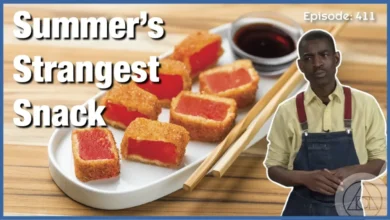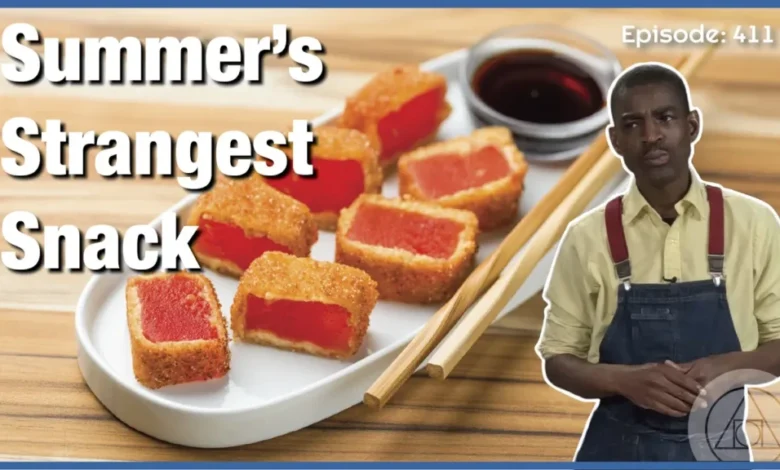
The intersection of modernist culinary techniques and traditional agricultural staples has long been a focal point for experimental gastronomy. In the latest installment of the long-running series "We Transform Food" (WTF), episode 411 investigates the unconventional application of high-heat deep frying to varieties of melon, including watermelon, cantaloupe, and honeydew. While the practice of frying fruit is well-documented in various global cuisines—ranging from banana fritters in Southeast Asia to deep-fried apple rings in North America—the application of these techniques to high-moisture melon varieties challenges established thermodynamic expectations regarding texture and moisture retention.
Culinary Thermodynamics and the Challenge of High-Moisture Produce
Deep frying is fundamentally a process of dehydration and Maillard reaction induction. When a food item is submerged in oil heated to temperatures typically between 350°F and 375°F (175°C to 190°C), the water at the surface of the food evaporates rapidly, creating a barrier that prevents oil absorption while simultaneously crisping the outer layer.
Melons, however, present a unique set of challenges for the culinary scientist. Watermelon, for instance, consists of approximately 92% water. Honeydew and cantaloupe also maintain exceptionally high water content compared to starchy fruits or tubers typically subjected to the fryer. The introduction of such high-moisture items into boiling oil poses a significant safety risk—a phenomenon known as "splatter potential"—but also presents a structural hurdle. If the moisture is not managed through specialized battering or vacuum-sealing techniques, the fruit risks turning into an unpalatable, mushy consistency. The "We Transform Food" team explored how specific coatings can serve as a thermal insulator, allowing the interior of the melon to undergo a phase shift, effectively softening the fruit into a custard-like state without losing its structural integrity.
Chronology of Culinary Experimentation
The history of "We Transform Food" reflects a broader trend in the culinary arts: the democratization of high-end, modernist kitchen technology. Since its inception, the series has systematically explored how home chefs can utilize hydrocolloids, vacuum chambers, and specialized thermal equipment to replicate the techniques seen in professional kitchens.
- Early Phase (2014-2016): The series focused on basic ingredient manipulation, such as the use of xanthan gum for thickening and basic molecular gastronomy kits.
- Growth Phase (2017-2020): Content shifted toward complex equipment, including sous-vide immersion circulators and anti-griddles, establishing a baseline of knowledge for a growing audience of food enthusiasts.
- Current Phase (2021-Present): The series has moved into high-concept experimentation, such as the manipulation of produce textures through extreme heat or pressure, leading to experiments like the deep-fried melon.
The episode focusing on fried melon marks a shift toward "culinary alchemy," where the goal is to alter the inherent physical properties of common grocery store items to create sensory profiles previously unattainable without industrial-grade technology.
Supporting Data: Nutritional and Structural Shifts
When melon is subjected to the high-heat process demonstrated in the episode, its internal chemistry undergoes subtle changes. While deep frying is often associated with a net increase in caloric density due to oil absorption, the internal structure of the melon experiences a breakdown of pectin. Pectin is the structural polysaccharide that holds the cell walls of the fruit together. By introducing heat, the "We Transform Food" team observed that the melon loses its raw, crunchy structure and transitions into a semi-solid, viscous state.
From a nutritional standpoint, the process is inherently reductive regarding heat-sensitive vitamins, particularly Vitamin C, which is abundant in cantaloupe. However, the study suggests that for many consumers, the objective of such experiments is not nutritional optimization but rather the "culinary experience." According to industry data on consumer trends in gastronomy, there is a measurable uptick in the search for "novelty food preparation" techniques, with interest in modernist techniques growing by approximately 12% annually since 2019.

Official Responses and Modernist Perspectives
Representatives from Modernist Pantry, the organization behind the WTF series, have noted that the goal of their content is to bridge the gap between "science-heavy research and home kitchen application." While they acknowledge that frying fruit is not a common practice in mainstream Western diets, they argue that the technique is a fundamental exercise in understanding how coatings—such as tempura or cornstarch-based batters—interact with internal moisture.
"The goal is not to suggest that deep-fried melon will become a staple of the average diet," a spokesperson for the series noted. "Rather, we aim to demonstrate that with the right preparation and protective coating, the limitations of traditional produce can be expanded. It is about understanding the boundaries of heat and moisture."
Broader Implications for the Food Industry
The implications of this experiment extend beyond the home kitchen. In the professional culinary world, the use of fruits in savory or fried applications is a growing trend as chefs look for ways to reduce food waste and explore "nose-to-tail" or "root-to-stem" consumption. Utilizing the entire melon, including the rind or the flesh in creative, non-standard ways, aligns with current sustainability efforts in the hospitality sector.
Furthermore, the technique highlights the importance of moisture control in commercial food processing. Manufacturers of frozen snack foods often utilize similar "protective coat" methodologies to keep interior fillings moist while achieving a crispy exterior. By documenting these processes, the WTF series provides a case study for how these industrial standards can be scaled down for the consumer market.
Analytical Summary: The Future of Experimental Cooking
The experiment with deep-fried melon serves as a microcosm for the evolution of contemporary cooking. It highlights the shift toward an era where the home cook is no longer limited by the inherent characteristics of raw ingredients. Through the application of physics—specifically the management of thermal transfer—the home kitchen is becoming a laboratory for textural discovery.
While deep-fried melon may remain a niche experiment for the time being, the principles discussed in this episode are foundational. As technology continues to lower the barrier to entry for professional-grade culinary tools, we can expect to see more experimentation with common fruits and vegetables, pushing the boundaries of what is considered "palatable" or "culinary."
Ultimately, the WTF episode 411 succeeds as an educational piece by stripping away the mystique of modernist cooking and replacing it with reproducible, evidence-based methodologies. Whether or not the viewer decides to attempt the process in their own home, the value lies in the understanding of the underlying science. The transformation of a raw, watery fruit into a custard-like delicacy is a testament to the fact that with the right application of heat and timing, the conventional can be made extraordinary. As the series continues to explore new ingredients and gadgets, it remains a critical resource for those interested in the nexus of science, technology, and the culinary arts. The project serves as a reminder that the kitchen is not just a place for sustenance, but a place for ongoing scientific inquiry.
Related posts: