
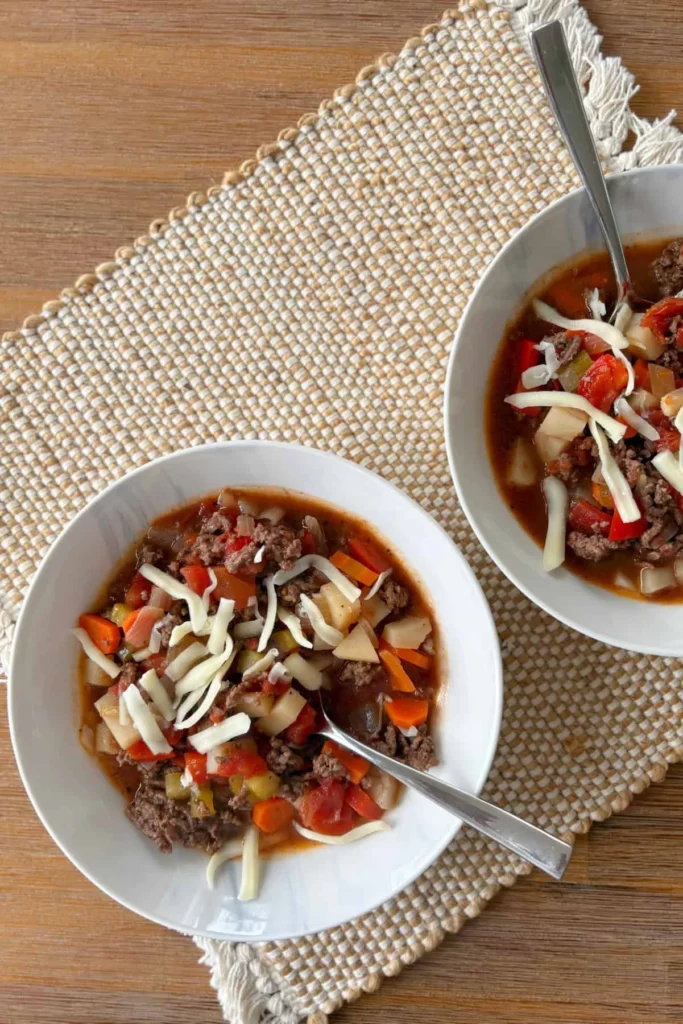
The evolution of home-style cooking in the 21st century has seen a significant shift toward efficiency without sacrificing the nutritional profile of traditional comfort foods. Among these adaptations, the hamburger stew has emerged as a staple for households seeking a time-conscious alternative to the labor-intensive beef stews that have historically defined American cold-weather dining. Unlike traditional stews, which require several hours of braising to tenderize large cuts of bovine muscle, the hamburger stew utilizes ground beef, drastically reducing preparation and cooking times while maintaining a robust flavor profile. This dish represents a broader trend in domestic food preparation: the deconstruction and modernization of heritage recipes to suit the contemporary, fast-paced lifestyle of the average consumer.

Historical Context and Culinary Transition
For decades, the classic beef stew—characterized by slow-cooked chuck roast or brisket, root vegetables, and a red-wine-infused gravy—served as the cornerstone of winter meals. The preparation of such dishes typically demanded a commitment of three to five hours of stovetop or oven time. However, shifting socioeconomic factors, including the increased participation of dual-income households in the workforce, have necessitated a pivot toward "expedient comfort."
The integration of ground beef into stew formats dates back to the mid-20th-century American kitchen, gaining popularity during periods of economic austerity when stretchable meals were prioritized. While early versions were often dismissed as "poor man’s stew," modern iterations have reclaimed the dish by emphasizing high-quality ingredients and the use of Dutch ovens or heavy-bottomed stockpots. Today, the hamburger stew is viewed not as a compromise, but as a deliberate culinary choice that favors texture, consistent seasoning, and the integration of aromatics like celery, onions, and garlic.
Restaurant Style Salsa

Chronology of Preparation and Efficiency
A standard hamburger stew, when prepared using modern kitchen techniques, follows a structured timeline that allows for a total completion window of approximately 55 minutes. The process is divided into three distinct phases: preparation, browning, and simmering.
The initial phase, lasting approximately 15 minutes, involves the mise en place—peeling and dicing yellow or Yukon Gold potatoes, slicing carrots, and prepping the mirepoix of onions and celery. The selection of potato variety is critical; culinary experts often advise against high-starch Russets in favor of waxy or semi-waxy varieties that maintain their structural integrity during the 40-minute simmering phase.

The second phase, the browning of the ground beef, serves as the foundation for the dish’s Maillard reaction. By searing the meat until it achieves a deep brown color, the cook develops the savory, complex base required for a rich broth. The subsequent inclusion of tomatoes—either crushed or diced—provides the necessary acidity to balance the richness of the beef fat.
The final phase involves the reduction of the liquid. Unlike soup, which is defined by its high water-to-solid ratio, the stew is defined by its viscosity. A well-executed hamburger stew uses the natural starches released by the potatoes, combined with the reduction of the tomato liquid and a minimal amount of water or beef broth, to create a thick, coating consistency.

Nutritional Profile and Dietary Implications
From a nutritional standpoint, the hamburger stew offers a balanced macronutrient distribution. A single serving, typically defined as one-eighth of a standard recipe, contains approximately 178 kilocalories. This caloric density is relatively low for a main course, yet the dish remains satiating due to its high protein content (approximately 14 grams per serving) and dietary fiber from the root vegetables.
Data indicates that such meals contribute significantly to daily micronutrient intake, particularly Vitamin A and Iron. However, health professionals often caution regarding the sodium content inherent in the use of canned tomatoes and processed stocks. To mitigate these health risks, culinary researchers suggest the use of low-sodium beef broth and fresh herbs to compensate for the reduction of added salt. The versatility of the recipe also allows for the inclusion of legumes or additional fibrous vegetables, which can further lower the glycemic index of the meal.

Broader Economic and Household Impact
The rise of the hamburger stew has broader implications for household budgeting and food waste management. Ground beef is consistently one of the most affordable protein sources in the United States, and the ability to use "leftover" vegetables—such as the last of a bag of carrots or a slightly wilted stalk of celery—aligns with national efforts to reduce food waste.
Consumer behavior studies suggest that the popularity of one-pot meals is correlated with a desire for simplicity in kitchen equipment management. The ability to cook an entire meal in a single Dutch oven reduces post-meal labor, which serves as a significant psychological incentive for busy families. Furthermore, the dish is highly scalable; it is frequently cited as a "batch cooking" candidate, as the flavors often deepen during refrigeration. The ability to reheat the stew without losing texture makes it an ideal candidate for meal prep, a strategy increasingly used by households to ensure access to nutritious food throughout the work week.

Expert Perspectives on Recipe Optimization
Professional chefs often emphasize that while the ingredients of a hamburger stew are modest, the technique is where the final quality is determined. A common pitfall in amateur preparation is the failure to properly deglaze the pan after browning the meat. By adding a liquid—whether it be a splash of wine, beef stock, or even water—and scraping the brown bits (fond) from the bottom of the pot, the cook incorporates a layer of flavor that cannot be replicated by seasoning alone.
Furthermore, the timing of vegetable addition is crucial. While potatoes and carrots require the full duration of the simmer, delicate additions such as frozen peas, corn, or fresh herbs should be folded in during the final minutes of cooking. This prevents the vegetables from becoming overcooked or losing their vibrant color and texture, which is essential for maintaining the "stew" identity rather than a "mush" consistency.

Future Outlook and Culinary Trends
As culinary technology continues to advance, the methods for preparing such staples are also evolving. While the stovetop method remains the gold standard for controlling the thickness of the broth, some home cooks are experimenting with pressure cookers to achieve similar results in less than 20 minutes. However, the consensus among food historians and chefs is that the slow, controlled evaporation of a stovetop simmer is superior for developing the depth of flavor associated with traditional stew.
The hamburger stew persists as a vital component of the American diet, bridging the gap between the rapid-fire demands of modern existence and the psychological need for home-cooked comfort. By balancing nutritional value, economic accessibility, and ease of preparation, this dish serves as a testament to the enduring nature of simple, well-executed food. As society moves forward, it is likely that such recipes will continue to be refined, yet their fundamental character—a hearty, one-pot combination of meat and vegetables—will remain a permanent fixture in the domestic culinary landscape.







0 Komentar
Sampaikan opini dan diskusi yang membangun dengan bahasa yang santun.
No Comments Yet
Be the first to share your thoughts on this story.