How McDonald’s Franchises Used COVID-19 Relief Loans to Pay Rent to the Corporate Landlord

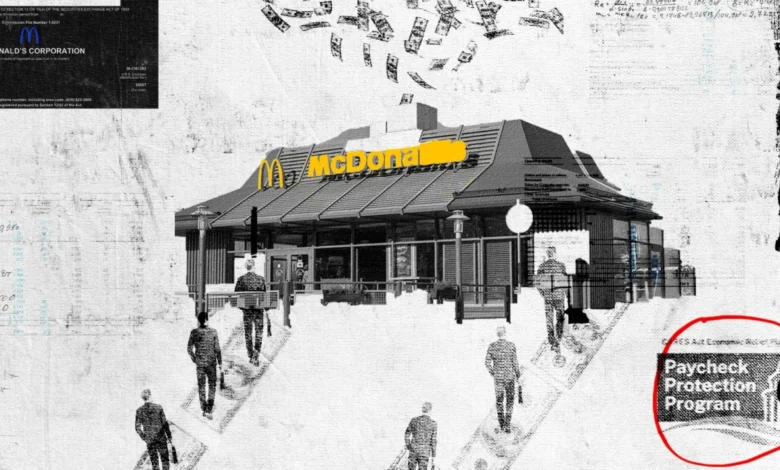
When the COVID-19 pandemic paralyzed the global economy in the spring of 2020, small businesses across the United States faced an unprecedented existential crisis. To prevent mass bankruptcies and keep employees on payroll, the federal government enacted the historic $789 billion Coronavirus Aid, Relief, and Economic Security (CARES) Act, which established the Paycheck Protection Program (PPP). Administered by the Small Business Administration (SBA), the taxpayer-backed initiative offered low-interest, forgivable loans designed explicitly to preserve jobs. However, an investigative analysis of loan application data reveals a troubling byproduct of the program’s structural loopholes: millions of dollars in federal aid funneled directly from struggling small-business franchisees to one of the world’s largest corporate landlords—McDonald’s Corporation.
While the primary legislative intent of the PPP was safeguarding worker payrolls, the economic realities of fast-food franchising created a systemic detour for these relief funds. Unlike many traditional retail and hospitality operations, McDonald’s relies heavily on a unique business model pioneered in the 1950s that prioritizes real estate acquisition over burger sales. Through this setup, the parent corporation buys or long-term leases the land and buildings for the vast majority of its U.S. locations, subsequently leasing those properties back to independent franchisees. Consequently, McDonald’s functions largely as a massive real estate empire, collecting billions of dollars annually in base and percentage-based rent. In 2019 alone, the corporation amassed a staggering $7.5 billion globally in rental income, solidifying property management as its primary engine of wealth generation.
The Chronology of a Corporate Stand-Off
The collision between federal relief funds and corporate real estate began in March 2020. As government-mandated lockdowns and social distancing protocols forced dining rooms to close, independent McDonald’s operators saw their traditional revenue streams plummet. Recognizing the impending financial catastrophe, the National Franchisee Leadership Alliance—a prominent organization representing the chain’s store owners—approached the corporate office with an urgent request. They asked for something well within the company’s vast financial capacity: temporary rent relief.
Specifically, operators petitioned the corporation for a straightforward two-week rent forgiveness period to help them weather the sudden market shock. To the astonishment and frustration of many franchise owners, McDonald’s corporate leadership flatly refused the request. According to insiders and former executives familiar with the confidential negotiations, store owners were left bewildered that the world’s largest restaurant chain was unwilling to provide the type of localized financial cushioning that smaller, independent restaurant groups were routinely extending to their tenants.
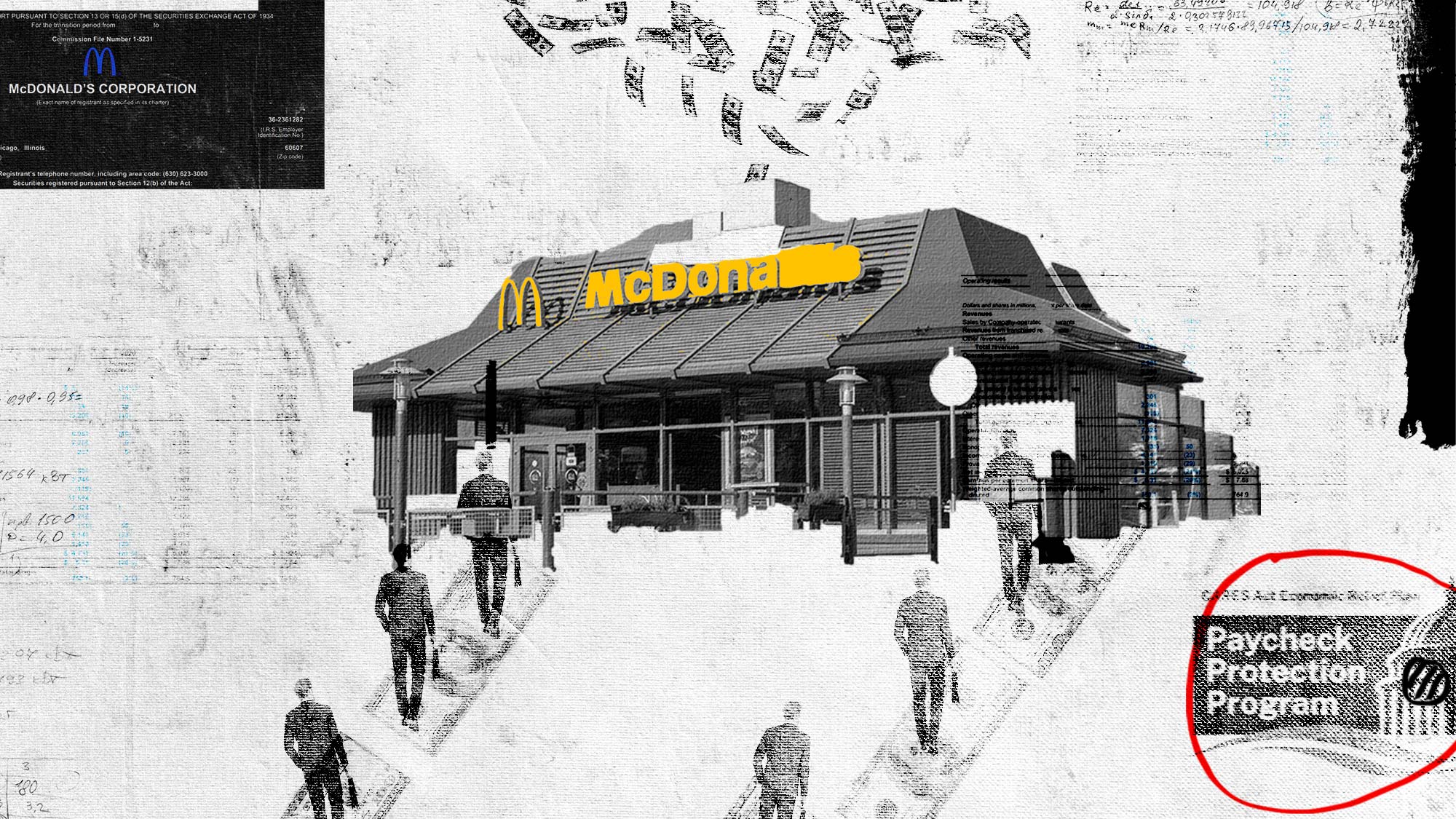
With corporate avenues for relief shut, franchise associations swiftly pivoted to the federal government. Recognizing that state-backed loans represented a viable alternative source of liquidity, groups like the National Owners Association mobilized their members to act rapidly. In an April 2020 memo to executives, National Owners Association chair Blake Casper noted that the organization had prepared its members to secure funding early, observing that the federal government was stepping in to provide the vital liquidity that the global corporate entity had denied them.
Massive Inflows of Taxpayer Dollars
As the SBA opened the floodgates of the PPP, independent McDonald’s operators surged into the application queues. According to official loan data released by the agency, a total of 2,389 McDonald’s franchises ultimately collected approximately $1.3 billion in PPP funds. This massive total made McDonald’s the second-largest corporate franchise recipient of COVID-19 relief funds nationwide, trailing only automotive dealership networks affiliated with General Motors.
Although the vast majority of borrowers checked application boxes indicating that 100 percent of their requested funds would be dedicated to payroll—a reporting requirement intended to maximize the likelihood of loan forgiveness—specific line items told a more complex story. An analysis of available loan documentation shows that at least 421 individual McDonald’s franchise applications explicitly allocated funds for rent, totaling over $31 million destined directly for corporate coffers.
Experts note that this $31 million figure likely represents only a fraction of the total taxpayer money that ultimately changed hands. Sean Moulton, a senior policy analyst at the Project on Government Oversight (POGO), pointed out that initial loan applications contained nonbinding estimates of intended expenditures. Because the SBA outsourced the processing and forgiveness of these loans to a decentralized network of private banks and credit unions, comprehensive category breakdowns of final spending were rarely centralized or publicly disclosed.
When investigative reporters attempted to verify how these funds were ultimately spent, few franchise owners were willing to speak on the record. Those who did confirm using the loans to pay corporate rent requested strict anonymity, citing a persistent fear of retaliation from the powerful corporate hierarchy.

Shifting Regulatory Rules and Lobbying Efforts
As the pandemic wore on, business lobbying groups aggressively pushed for structural changes to the PPP to ease compliance burdens. In June 2020, Congress passed the Paycheck Protection Program Flexibility Act, a legislative victory heavily supported by bodies such as the International Franchise Association (IFA). This new law significantly altered the rules governing how relief funds could be deployed, raising the allowable threshold for non-payroll expenses—including rent, mortgage interest, and utilities—from 25 percent to 40 percent.
While trade associations argued that strict regulatory limitations were unfairly penalizing small businesses and threatening to sink otherwise viable operations, critics contend that the rule changes effectively institutionalized a pipeline for federal relief to bypass workers and flow directly to landlords and utility providers. Because the SBA failed to track comprehensive categorization data on final forgiveness applications, independent watchdogs have found it mathematically impossible to evaluate whether the billions of dollars distributed under the program genuinely fulfilled their core mission of job preservation.
Corporate Responses and Financial Rebound
Throughout the unfolding public relations controversy, McDonald’s corporate leadership maintained a carefully calibrated public stance. Representatives repeatedly emphasized that the corporation itself never applied for or accepted direct government assistance through the CARES Act. Joseph LaPaille, a McDonald’s global communications manager, asserted in statements to reporters that the enterprise sought no government bailouts.
Later, as scrutiny mounted over the indirect collection of rent via PPP-funded checks, a corporate spokesperson issued a formalized defense: "As the Paycheck Protection Program intended, some independent small business owner franchisees independently applied for and used PPP loans to support payroll for the continued employment of the nearly 800,000 local restaurant employees who work in McDonald’s-brand restaurants throughout the U.S."

Despite initial resistance to granting rent forgiveness, McDonald’s corporate office eventually implemented a temporary deferral program. Rather than forgiving financial obligations, the company deferred the collection of roughly $490 million in rental income, alongside nearly half a billion dollars in royalty payments, during the height of the spring 2020 lockdowns. However, corporate financial disclosures later revealed that this relief was remarkably short-lived. By the end of 2020, McDonald’s had successfully recouped more than 80 percent of the deferred rent, remaining on track to collect the remainder throughout 2021.
Broader Implications for Emergency Relief Design
The financial trajectory of McDonald’s Corporation following the initial shock of the pandemic underscores a rapid and robust recovery. In early statements reflecting on the 2021 fiscal year, top executives characterized the period as a "banner year" for the enterprise. Driven by robust drive-thru sales, digital app adoption, and steady property revenues, McDonald’s reported global revenues of $23.2 billion for 2021—representing its highest total since 2016.
The capacity of a multinational fast-food titan to successfully navigate a historic public health crisis while indirectly leveraging federal relief funds to protect its real estate income has sparked intense debate among economists, public interest advocates, and policymakers. Critics argue that the episode highlights fundamental flaws in the architecture of crisis response legislation, illustrating how decentralized oversight and ambiguous spending guidelines can allow massive corporate entities to insulate their asset portfolios at taxpayer expense.
Public interest organizations like Public Citizen have pointed to the McDonald’s case study as a textbook example of systemic policy vulnerability. While the initial intentions behind emergency economic lifelines are widely acknowledged as vital to national survival, the lack of transparent tracking mechanisms leaves lasting questions about accountability. Without granular data on how billions in forgiven loans were ultimately utilized, economists remain unable to definitively measure the net public benefit of the spending, leaving open the possibility that a substantial tranche of public capital served primarily to prop up commercial landlords rather than vulnerable workers.