The Hidden Legal Chains Keeping Low-Income Neighborhoods Trapped in Food Deserts

When first-year law student Karissa Kang arrived at Yale University, her daily routine quickly exposed a glaring paradox in New Haven’s urban landscape. Desiring to cook her own meals and lacking a personal vehicle, Kang set out to find a nearby supermarket within walking distance. In her hometown of Atlanta, grocery options such as Publix and Kroger were ubiquitous. Yet, in New Haven, she discovered that her neighborhood’s sole full-service grocery option was a single Stop & Shop located roughly a half-mile from campus. More telling was the demographic divide she observed: fellow law students with automobiles bypassed the local store entirely, driving to a Trader Joe’s in an adjacent town. This daily pedestrian journey prompted a persistent question: why did this section of the city rely on just one national grocery chain?
The answer, as Kang discovered through subsequent legal and industry research, extends far beyond simple market dynamics. Across the United States, major supermarket chains routinely utilize legal instruments known as restrictive covenants and deed restrictions to stifle competition, maintain regional monopolies, and artificially shape the retail food landscape. While these corporate practices are entirely legal, consumer advocates, urban planners, and legal scholars argue they play a direct role in perpetuating food deserts, compounding urban poverty, and restricting consumer choice in vulnerable communities.
The Anatomy of Restrictive Covenants in the Grocery Industry
Restrictive covenants are legally binding provisions written into property deeds and commercial lease agreements that dictate how a parcel of land or a building can—and cannot—be utilized. Originating prominently in the mid-20th century as commercial real estate expanded, these clauses were designed by major corporate retailers to protect substantial capital investments. Building a modern supermarket requires a massive footprint—often sprawling 5,000 square feet or significantly more—along with extensive parking infrastructure. To insulate these expensive brick-and-mortar investments from future competition, chains frequently embed clauses into real estate contracts that prevent subsequent tenants or buyers from operating competing food businesses on the same premises.
The mechanics of these restrictions are straightforward yet devastating for local food access. For instance, a national supermarket chain operating under a corporate parent, such as Stop & Shop owner Ahold Delhaize, might open a store in an underserved neighborhood. If corporate strategy eventually dictates that the location should be closed or relocated, the company often retains control over the lease or the deed. When subleasing or selling the property, the chain can attach clauses explicitly prohibiting the incoming tenant from operating a grocery store, bodega, farm stand, or any commercial vendor selling food products for off-premises consumption.
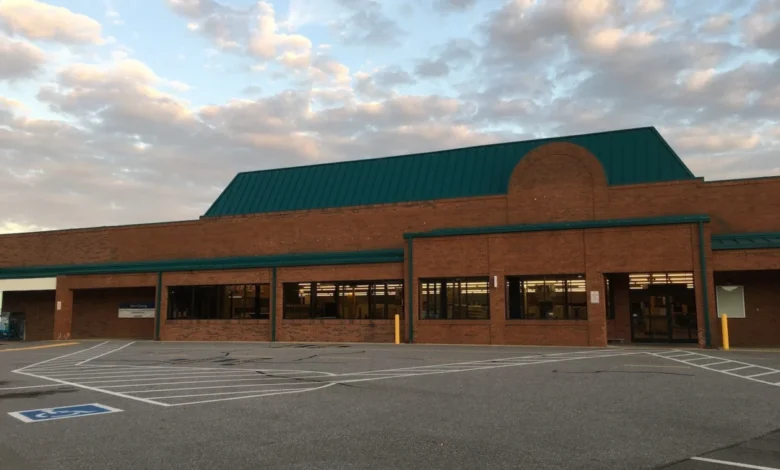
Instances of this practice extend across multiple states. In Stonington, Connecticut, Stop & Shop famously refused to sublease a storefront following a relocation, leaving the municipal commercial space vacant rather than allowing a potential competitor to occupy it. Similarly, in Eastham, Massachusetts, Stop & Shop purchased an 11-acre parcel for $1.3 million allegedly to preempt a rival supermarket from moving into the area. When the company eventually sold the land back to the town for $1.6 million, the transaction included a restrictive deed clause barring the community from using any part of the property for a food supermarket, superstore, warehouse store, specialty food shop, butcher, fish market, or convenience store.

Monopolizing Real Estate Through Vacancy and Speculation
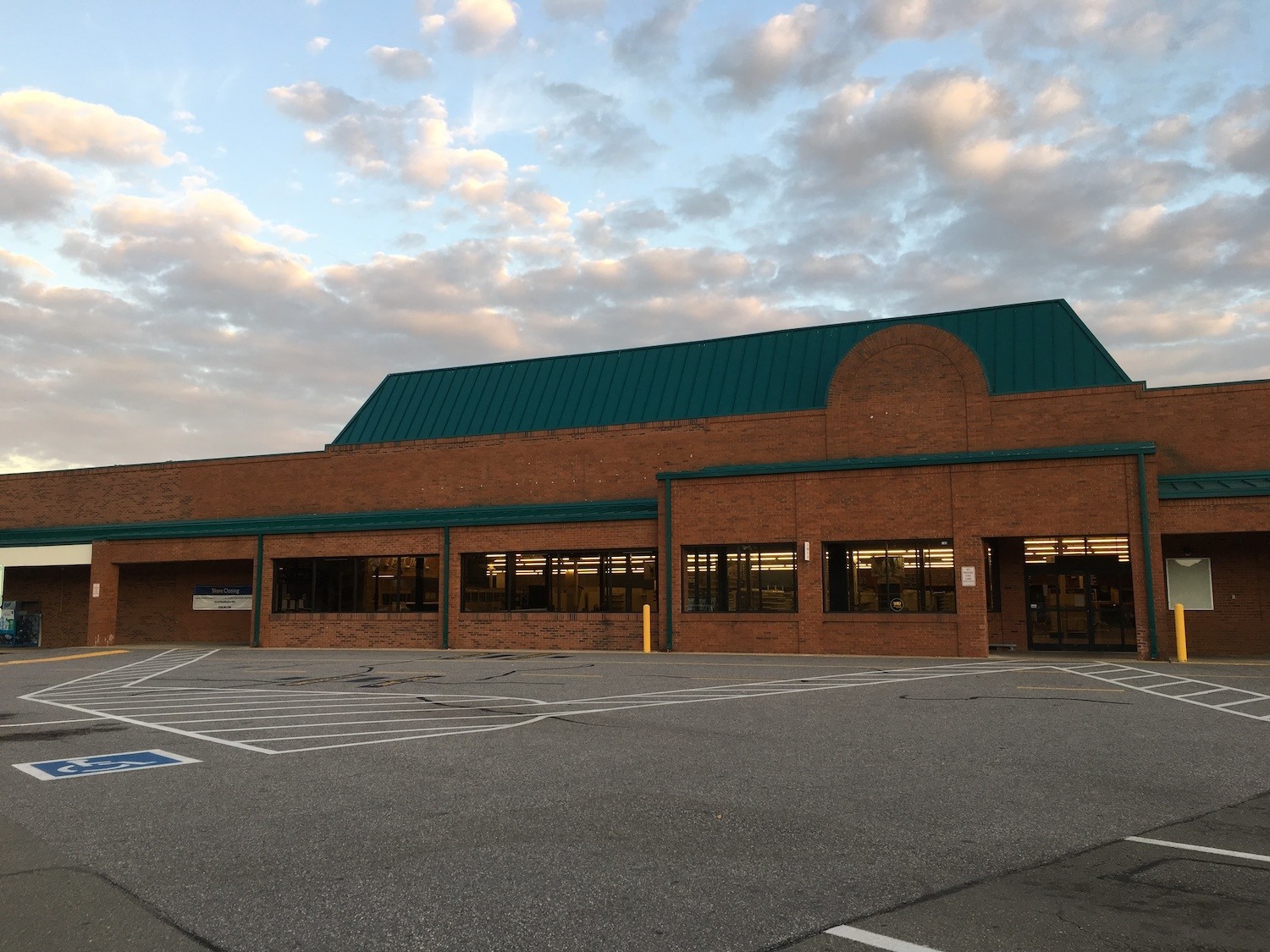
Beyond lease restrictions, major grocery chains frequently engage in real estate speculation to lock out competition. Rather than selling vacant properties, companies sometimes continue renting or holding the land simply to keep it dark. This strategy denies communities not only alternative grocery options but also any form of neighborhood development, whether it be a pharmacy, a senior center, or community housing.
In Greenfield, Massachusetts, Stop & Shop paid a local realtor for a decade specifically to prevent the development of a vacant property that might have attracted a competing supermarket. Laurie Beyranevand, director of the Center for Agriculture and Food Systems at Vermont Law School, notes that these vacant properties carry severe secondary consequences for municipalities. "Having an empty storefront probably impacts people’s property values, and increases the potential for there to be crime," Beyranevand explained, noting that the vast, asphalt-paved parking lots accompanying these abandoned structures represent lost opportunities for beneficial community development.
Legal experts point out that the strategy is viewed by corporations as sound business self-preservation. In 2010, defending similar real estate practices, a Walmart representative told the Sheboygan Press that the company welcomed market competition but refused to provide infrastructure for its direct competitors. Because courts have historically upheld the freedom of contract between private commercial entities, these exclusionary real estate tactics have largely survived judicial scrutiny.
Broader Industry Trends and Antitrust Concerns
Stop & Shop is far from an isolated actor. According to research published by the Institute for Local Self-Reliance (ILSR), restrictive covenants and vacancy tactics are widely deployed across the American grocery sector by major regional and national players, including Albertsons, its subsidiary Safeway, and most notably Walmart, the largest grocery retailer in the United States. ILSR data indicates that U.S. consumers spend approximately 25 percent of their total grocery budgets at Walmart, a staggering market concentration that policy analysts cite as evidence of systemic antitrust policy failures.
Critics argue that federal antitrust legislation should be invoked to dismantle these barriers. Karissa Kang notes that the issue appears conceptually straightforward because restrictive covenants serve no discernable purpose other than blocking lawful competition. However, federal regulators, including the Federal Trade Commission (FTC), have historically prioritized massive corporate mergers over localized real estate practices.
Nevertheless, legal scholars suggest pathways exist within existing statutory frameworks. Beyranevand posits that the FTC could potentially address restrictive covenants by invoking the Robinson-Patman Act, a depression-era antitrust law originally designed to protect small, independent businesses from predatory pricing discrimination by dominant corporate entities with massive purchasing power.
Municipal Resistance and Legislative Roadblocks
In the absence of aggressive federal intervention, some local and state governments have begun attempting to curb restrictive covenants independently. In 2018, Washington, D.C., passed legislation explicitly prohibiting the use of restrictive covenants that block grocery stores. However, municipal approaches face inherent limitations. Because local laws cannot be applied retroactively to existing contracts, newly enacted bans only affect future commercial agreements. Furthermore, a piecemeal municipal approach means that discriminatory clauses can persist undetected elsewhere until a store closes and a community attempts to redevelop the site.
To counter these systemic challenges, urban planning experts advocate for proactive zoning regulations. Vermont’s longstanding Act 250 serves as a prominent model, requiring comprehensive environmental and socioeconomic reviews for large-scale commercial developments that exceed specific acreage thresholds. Such statutory oversight can prevent corporate entities from acquiring multiple land parcels solely for speculative warehousing or anti-competitive blockades. Additional policy proposals include empowering municipalities to mandate building reuse plans prior to corporate abandonment or granting cities eminent domain options to convert stagnant retail spaces into public-use food hubs.
Socioeconomic Impacts on Vulnerable Communities
The economic repercussions of grocery consolidation extend far beyond the immediate inconvenience of a vacant building. When dominant supermarket chains enter a local market, their immense purchasing power allows them to temporarily undercut prices, driving independent, family-owned neighborhood grocers out of business. Once these local competitors fold, the likelihood of their return is virtually nonexistent.
This dynamic initiates a downward economic spiral. Large-scale supermarkets typically employ neighborhood residents in low-wage positions, effectively forcing workers to rely on the very stores where they are employed for their sustenance. If corporate leadership decides the location is insufficiently profitable and closes its doors, both the food source and the local jobs vanish simultaneously. Combined with a restrictive covenant, the community is stripped of both economic vitality and basic nutritional access.
In New Haven—where the non-Yale resident poverty rate approaches 26 percent and food insecurity rates remain twice the national average—residents have long contended with the harsh realities of urban food deserts. When Stop & Shop opened its central location in 2011, it ended a year-long stretch where the neighborhood lacked a single national chain supermarket, a milestone celebrated by local officials. Yet, legal researchers and community advocates like Kang remain deeply concerned about the precarious nature of corporate food access. For populations without reliable private transportation or the physical mobility to travel miles outside their neighborhoods, the arbitrary closure of a single corporate store—compounded by invisible legal barriers in property deeds—can transform an already vulnerable community into an active nutritional wasteland.