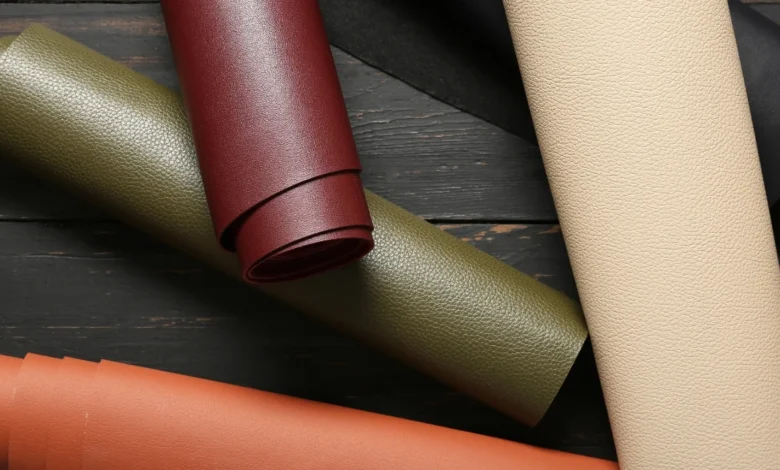
The British leather trade, once the bedrock of a global manufacturing empire, faced a period of near-total obsolescence at the turn of the 21st century. As international supply chains shifted toward lower-cost synthetic alternatives and overseas tanning hubs—often in regions with lax environmental oversight—the domestic infrastructure required to process hides crumbled. Today, the landscape of the UK leather industry is shifting once more, driven by a convergence of sustainability mandates, the circular economy movement, and a renewed interest in provenance-led luxury.
The Decline of a Domestic Legacy
For decades, the standard path for a hide from a British farm was a journey of degradation. As local demand for domestic leather plummeted, the economic value of raw hides fell to the point where they became a liability rather than an asset. Farmers and processors were increasingly forced to treat hides as waste, leading to the common practice of shredding, sending them to biodigesters, or, most damagingly, consigning them to landfill.
This decline was not merely an economic footnote; it represented a structural failure in the UK’s agricultural supply chain. The viability of local abattoirs is inextricably linked to the ability to market byproducts like hides. When the leather market evaporated, the profit margins of regional abattoirs narrowed, accelerating their closure. This decline has created a "food security trap": fewer local abattoirs mean farmers must transport livestock over longer distances, which negatively impacts animal welfare and weakens the traceability of the meat supply.
Chronology of the Shift
- 1990s – 2010: The rise of “fast fashion” and synthetic polymers (such as PU and PVC) creates a global surplus of low-cost, mass-produced materials. UK tanneries, unable to compete with low-cost international labor and chemical-heavy, high-volume production, shutter at an unprecedented rate.
- 2015 – 2020: Growing consumer awareness regarding the environmental impact of synthetic plastics and the hidden costs of globalized supply chains leads to the first “conscious consumer” movements.
- 2021 – 2024: Luxury brands face mounting pressure to prove the sustainability of their supply chains. Legislation in the UK and EU (such as the EU Deforestation Regulation) forces firms to look for traceable, low-impact raw materials.
- 2025 – 2026: British Pasture Leather (BPL) and similar circular initiatives gain traction, proving that small-scale, high-welfare, vegetable-tanned leather can be commercially viable for high-end retail.
The Sustainability Paradox: Data and Disruption
The current discourse surrounding leather is polarized by the rise of vegan alternatives. However, the environmental reality is more nuanced than marketing campaigns often suggest. A recent study published in ACS Sustainable Chemistry and Engineering underscores the complexity of this comparison. While synthetic "leathers" often claim superiority, they are frequently derived from petroleum-based plastics that contribute to microplastic pollution and have a finite, non-biodegradable lifespan.
Conversely, conventional industrial leather production has historically relied on chromium tanning—a process that uses heavy metals, requires vast quantities of water, and creates toxic effluent. The carbon footprint of a finished bovine leather product can be high, but when that product is a byproduct of the food industry, the accounting changes. If the hide is not used, it becomes waste; when it is used, it replaces a synthetic, fossil-fuel-based material.
The Rise of Circular Craft
The resurgence of British leather is defined by a shift away from industrial mass production toward "regenerative" supply chains. Initiatives such as British Pasture Leather (BPL) are demonstrating that a model based on local abattoirs and traditional tanning is not just nostalgic—it is a functional economic model.
In this model, the supply chain is hyper-localized:

- Regenerative Grazing: Cattle are raised on species-rich pastures, supporting soil health and biodiversity.
- Local Processing: Hides are collected from local abattoirs, preventing the waste of a primary agricultural byproduct.
- Traditional Tanning: Instead of rapid-fire chemical processing, hides are treated with vegetable tannins—natural compounds derived from tree bark or leaves. This process takes months rather than days, eliminating the use of chromium and heavy toxins.
This approach has caught the attention of high-end labels. Mulberry, for instance, has integrated this traceable, local leather into its production lines in Somerset. This partnership signals a shift in the luxury sector: the "Made in Britain" label is being redefined from a mere branding exercise to a verifiable standard of environmental and ethical stewardship.
Implications for the Future of Farming
The impact of this revival on the farming community is significant. For farmers like Wiltshire-based Andy Rumming, the ability to derive value from hides provides a necessary buffer against the volatility of meat prices. By offering on-farm workshops and direct-to-consumer leather goods, farmers are bypassing the traditional, opaque supply chains that have historically squeezed their margins.
However, the transition is not without challenges. To scale this model, the industry must overcome two primary hurdles: transparency and cost. Vegetable-tanned leather is inherently more expensive to produce than chrome-tanned leather. To justify this price point to the consumer, the industry requires a standardized, science-based framework for measuring "sustainability."
The Global Farm Metric is emerging as a critical tool in this effort. By providing a comprehensive assessment of a farm’s environmental and social impact—covering everything from soil carbon to animal welfare—the metric allows brands to provide the "proof" required by today’s discerning consumer. It turns the narrative from an abstract concept of "sustainability" into hard, auditable data.
Analysis: A Resilient Path Forward
The revitalization of British leather is not an attempt to return to the industrial scale of the 19th century. Instead, it is an exercise in "right-sizing." By decoupling the production of leather from deforestation and toxic pollution, and by linking it to the local food system, the industry is positioning itself as a key component of the circular economy.
The broader implications are clear: if fashion is to meet its net-zero and biodiversity targets, it must move away from the "take-make-waste" model. The British leather revival suggests that the solution may lie in the past—utilizing traditional, low-impact methods—supported by the transparency of modern data frameworks.
As the sector moves toward 2027, the success of this revival will hinge on whether consumers are willing to accept the higher costs associated with regenerative production. If they do, the British leather industry may provide a blueprint for other sectors—demonstrating how regional manufacturing can be harmonized with ecological health and food security. The transition is currently in its nascent stages, but the infrastructure being built today—from the pasture to the tannery to the luxury atelier—suggests that the era of treating livestock hides as trash is, thankfully, coming to an end.